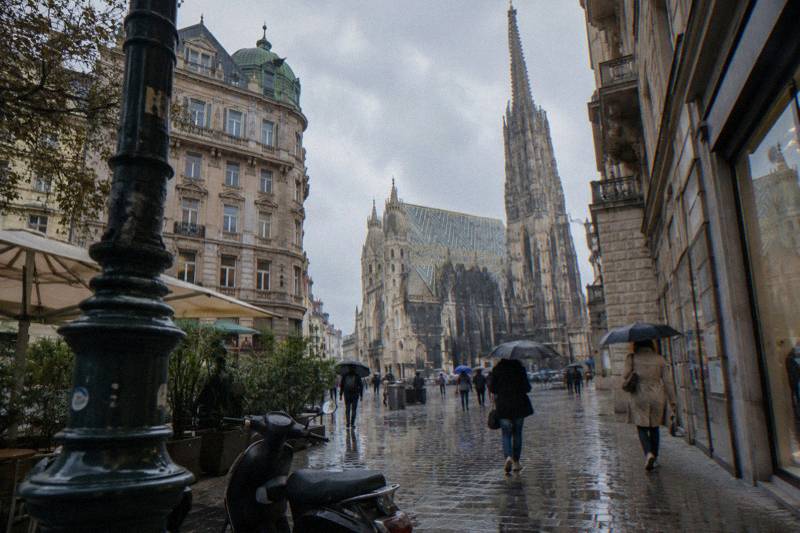
Vienna In Winter And Christmas Market Season
Vienna does not stop cycling when the temperature drops. Here is what winter riding is actually like, which tours and markets run between November and February, and how to plan a cold-day ride without guesswork.
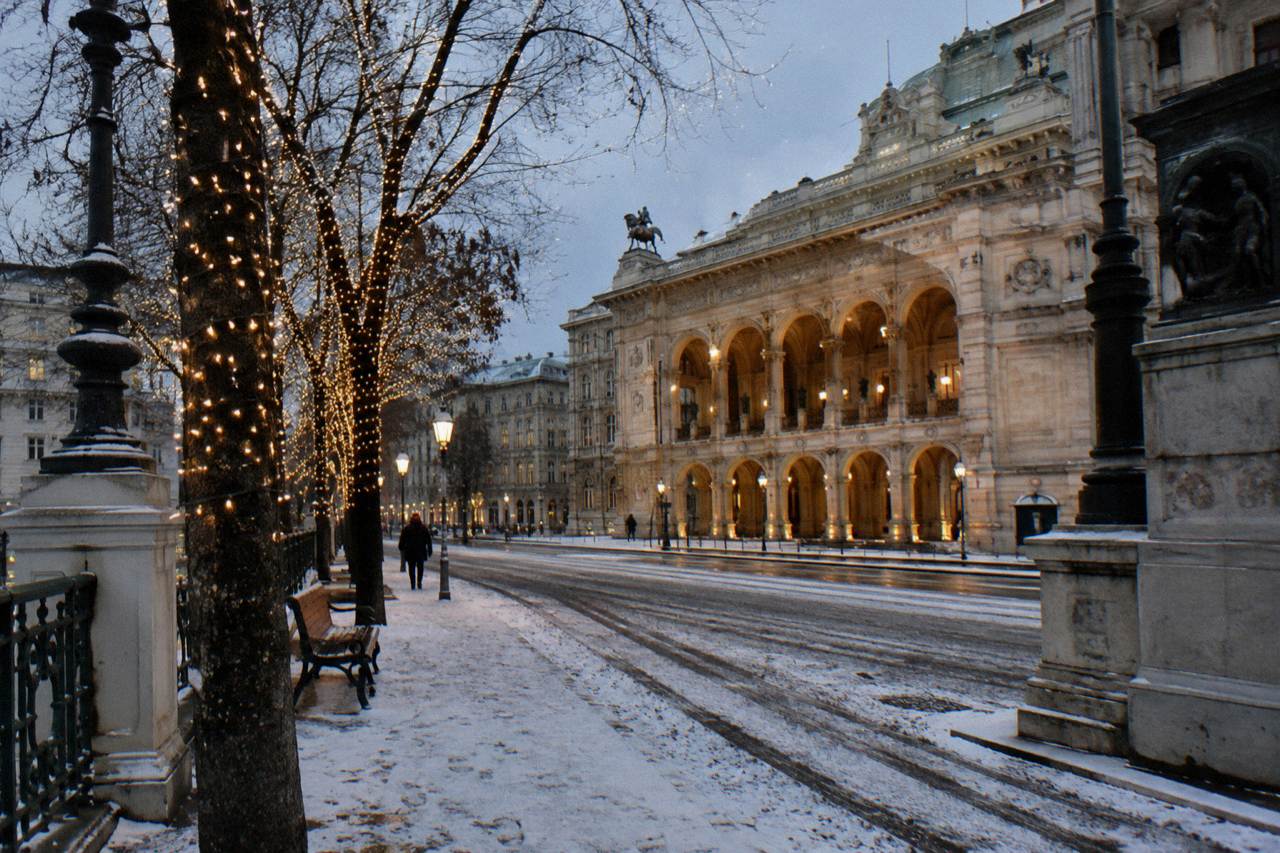
Short answer
Vienna stays rideable through winter: the city clears central high-traffic bike paths of snow on a published priority plan, guided bike and e-bike tours keep running year round, and the main Christmas markets open from 6 November (Schoenbrunn) and 13 November (Rathausplatz) to late December. Expect short daylight, cold air near the Danube, and fewer crowds than summer.
Vienna records more overnight stays every year, 14.9 million in the first nine months of 2026 alone, and a growing share of those visitors arrive between November and December, when the Christmas markets turn the city centre into a chain of lit stalls and food huts. Most of them walk. Few realise the city keeps its cycling network running through the cold months, and that a bike, used sensibly, is one of the fastest ways to hop between markets without queueing for trams carrying coats, shopping bags and small children. Better still, once you have the bike, most of the riding itself costs nothing, and the guide to free sights and parks you can reach by bike in Vienna lists routes and stops that pair neatly with a day of market-hopping.
This guide is about what winter actually does to a Vienna bike ride: what stays open, which guided tours still depart, how to dress, which routes make sense when the air is cold, and where the season's quirks, snow clearing, path closures and short daylight, change the plan. If you want the month-by-month picture for the rest of the year, the companion guide on the best time to cycle in Vienna covers spring through autumn.
What Is Vienna Really Like For Cycling In Winter?
Vienna winters are cold but rarely shut the city down: the average July temperature at Hohe Warte is 21.9°C for comparison, winter days sit far below that, and the city clears snow from central high-traffic bike paths first under a published winter plan, so the main commuter axes stay rideable while side paths may stay icy for days.
The honest picture is mixed, in a good way. Vienna is a continental-climate capital, which means winter days are short, often grey, and frequently around or below freezing, but heavy snow that paralyses the streets is the exception rather than the rule. What matters for a visitor on a bike is that the city treats cycling as transport, not a summer hobby. The municipal winter clearing plan prioritises exactly the routes a visitor would use: the Ringstrasse corridor, the Danube Canal paths, and the main commuter axes into the centre. You can download the plan from the city's winter bike path clearing page and see which segments are on the priority list before you plan a route.
Two things genuinely change. Daylight is scarce: by late December the sun sets before 16:30, so lights are not optional and a morning departure gives you the full usable day. And the summer crowd pressure vanishes. The paths that feel busy in July, especially along the Danube Canal and around the Ring, are quiet, and the city reads differently at low speed with bare trees and steaming market stalls.
One structural note for this winter in particular: the Ringstrasse bike path is being rebuilt in stages, with work starting in October 2026 between Schottentor and Franz-Josefs-Kai to convert the service road into a 4.50 meter wide two-way cycle path, with the first phase targeted for summer 2027. Until that finishes, follow the local diversions rather than assuming the old line. The full story of the route itself is in the guide to cycling the Ringstrasse, its stops and timing.
Which Christmas Markets Open In Vienna And When?
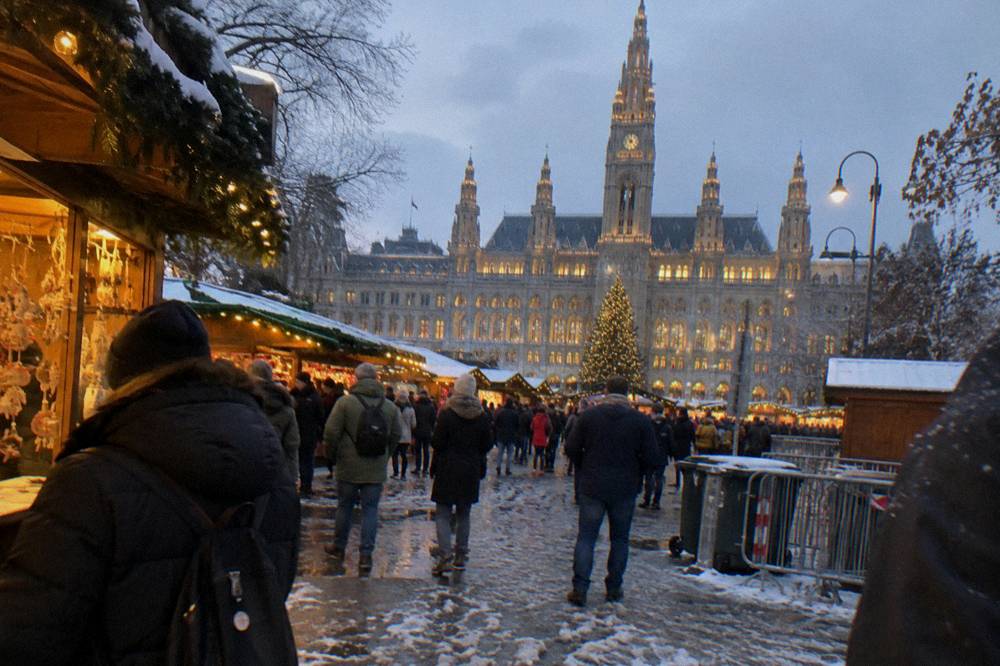
The Wiener Christkindlmarkt on Rathausplatz runs from 13 November to 26 December 2026, the Weihnachtsmarkt at Schoenbrunn opens earlier, on 6 November, and stays until 6 January 2027, and the city's press office counts 15 markets with 814 stalls across Vienna this season.
Those two anchor markets are the ones most visitors come for, and they bracket the season nicely: Schoenbrunn starts a week earlier and lasts past New Year, while the Rathausplatz market is the biggest and finishes on Boxing Day. A third cluster worth planning around is the one at the Belvedere and the smaller Advent markets scattered through the inner districts, all reachable on the flat central grid. Since the city officially announced the season figures, the municipal press release is the source for exact counts if you want to plan beyond the big two.
For a cyclist, the practical question is not which markets exist but how they connect. The answer is: surprisingly well. Rathausplatz sits directly on the Ringstrasse corridor, Belvedere is a short ride down the canal-side routes, and Schoenbrunn is a longer but almost entirely flat ride west through the Gürtel-adjacent streets, or a quick hop with the bike on the U-Bahn within the permitted hours, more on that below.
| Market | Opens | Closes | Best bike approach |
|---|---|---|---|
| Weihnachtsmarkt Schloss Schönbrunn | 6 November 2026 | 6 January 2027 | Longer flat ride west, or U-Bahn hop in permitted hours |
| Wiener Christkindlmarkt, Rathausplatz | 13 November 2026 | 26 December 2026 | Directly on the Ringstrasse corridor |
| Belvedere and inner-district Advent markets | Vary by market | Vary, most late December | Canal-side routes, short flat rides between them |
Riding between markets in the early evening is the single best winter cycling experience Vienna offers: the streets are lit, traffic is calmer than summer peak, and the cold that makes standing at a stall uncomfortable is exactly what makes pedalling pleasant. The trade is simple, you trade warmth for speed.
A short guided ride is one way to get the layout without studying a map in the cold. The options below cover the formats that suit a winter day best: a short e-bike spin, a classic three-hour city tour, and a highlights e-bike tour.
Can You Still Join A Guided Ride In Winter?
Yes: Vienna's guided bike and e-bike tours are bookable year round as products, and winter bookings simply mean smaller groups and more frequent weather-driven schedule changes, so the practical advice is to book with free cancellation and reconfirm the departure time a day ahead.
The tour calendar in Vienna does not have an official closed season the way Alpine destinations do. Operators list departures through the cold months, and the listings that this site features, the classic three-hour city tour, the e-bike highlights rides, the private options, remain bookable. What changes is frequency: some departure slots disappear in the low weeks of January and February, and a hard-weather day can push a ride earlier, shorter, or onto a different route. Check the booking page for the specific day you want rather than assuming the summer timetable. Cold-weather riding shifts a few things beyond the timetable, so the guide to cycling cautions in Vienna covers the tram tracks, e-moped rules, and path etiquette worth knowing before you set off.
Winter also shifts which format makes sense. A three-hour ride at 2°C is a different proposition from the same ride in June. The classic city format works if you are properly dressed, because the pace is steady and the stops are short. E-bikes help more than most visitors expect, not because of hills, Vienna is famously flat, but because steady pedal assistance keeps you from sweating into your base layer and then chilling at every stop. Sweat management, not distance, is the real winter constraint on a guided tour.
The featured pick for this page is the short guided e-bike tour: roughly ninety minutes on an e-bike with a guide, which is about the right dose of cold air before a warm-up stop, and it leaves the rest of the day for markets and museums. Check availability on the operator's page for winter departure times.
The classic three-hour format still suits riders who want the full Ring and centre loop in one go, and in winter it doubles as a moving tour of the market lights.
For visitors who want the longer e-bike format with hidden sights folded in, that option exists too, and winter's low sun actually flatters the courtyard stops that feature on it.
How Do You Stay Warm On A Winter Ride?
The working rule is three layers on the torso, windproof outer, gloves and a hat under the helmet, and a pace slow enough that you never sweat through the base layer, because in winter the enemy is not cold air but damp fabric against skin at minus two.
Vienna winter riding rewards cyclists who dress like cross-country skiers, not like downhill skiers. You generate a surprising amount of heat pedalling on flat ground, so the mistake almost everyone makes is overdressing at the hotel and arriving at the first stop soaked. Start slightly cold. Within ten minutes you will be comfortable, and at every market or café stop you can add the outer layer you stripped off and stuffed in the basket.
Extremities are where rides fail. Fingers go first on the Ringstrasse where the wind runs along the corridor, then toes, then ears. Full-finger gloves, a thin hat that fits under the helmet, and closed shoes with a wind-resistant upper cover most of it. If you are renting rather than bringing gear, ask the operator or shop what they can provide; not every rental includes gloves, and the listing or the shop will say.
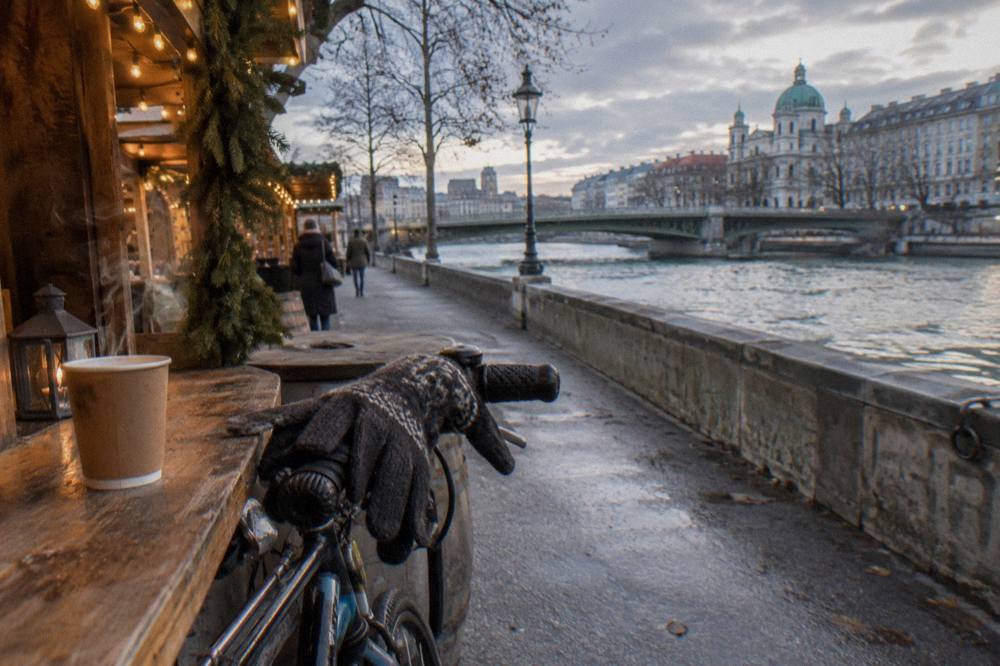
There is also a helmet point specific to families. Children in Austria must wear a helmet on any bicycle up to their 12th birthday, and a recent rule change extends a helmet requirement to children and youths under 14 on e-bikes as of 1 May 2026. For adults there is no general helmet duty from age 14, but wearing one is recommended, and in winter the case is stronger with ice around. If you are riding with kids in the cold season, the family-specific advice is in cycling in Vienna with kids.
| Body zone | What works | Why it matters in winter |
|---|---|---|
| Torso | Base layer, insulating mid layer, windproof shell | Ventilate the shell on climbs, close it at stops |
| Hands | Full-finger windproof gloves | Wind runs straight along the Ring corridor |
| Head | Thin hat under helmet, plus a neck tube | Ears and neck lose heat fastest on a flat fast ride |
| Feet | Closed shoes, wool socks, wind-resistant upper | Toes numb before you notice on short days |
| Eyes | Clear or light-tint glasses | Low sun and wind-driven grit along the canal |
One drink-related note for market riders: glühwein is part of the experience, and the sensible pattern on a bike day is to enjoy it at your final stop rather than mid-route. Follow the operator's rules on guided rides and local rules generally; there is no verified Austrian cycling alcohol figure this site can responsibly print, so the safe advice is simply to keep the drinking and the riding in separate chapters of the evening.
Which Routes Work Best When It Is Cold?
The best winter routes are the cleared priority paths: the Ringstrasse corridor (noting the staged rebuild and its diversions), the Danube Canal routes through the centre, and the network's 1,811 kilometres overall, of which the city's winter plan keeps the central high-traffic segments rideable while residential side paths may wait days for clearing.
Route choice in winter is a clearing-schedule question. Vienna's total cycling network runs to roughly 1,811 kilometres, but in a snow week you want the subset the city clears first. That means the Ring, the canal, and the main radial routes. It also means the Prater's long straight alley and the Danube Island paths, which are recreation routes, are lower on the priority list than commuter axes, so check conditions there before committing a cold afternoon. Other pages covering the same trip are gathered on Bike Tours Vienna.
Two ongoing items shape this winter's route planning. The Ringstrasse bike path rebuild, starting with the Schottentor to Franz-Josefs-Kai section, will have staged diversions until the first phase completes in summer 2027. And a section of the Danube Island's main path between Nordbrücke and Floridsdorfer Brücke is closed for water works until 2030, with cyclists diverted via the Neue Donau path. The city publishes the diversions, and the official diversion page is the thing to check on the morning of your ride. Do not take street-level route guesses from a blog, including this one; closures move.
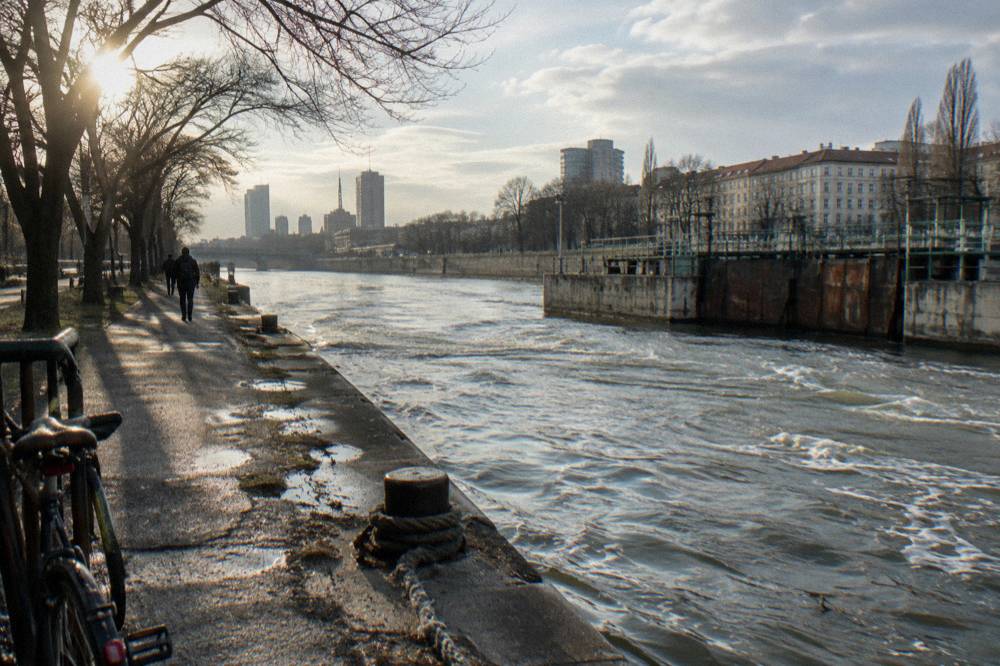
For market-hopping, the compact winter loop is hard to beat: Rathausplatz on the Ring, down to the canal and along to the Schwedenplatz side, then across to Stephansdom, which sits at the centre of the stall clusters. That is a short ride, deliberately so, because in winter the joy is in the stops, not the distance. Riders who want a longer loop can extend along the canal north, where the new two-way path on Obere Donaustrasse, opened in 2026, now links the 2nd and 20th districts continuously, a genuinely useful winter connection because it is wide, straight and lit.
The Danube side is also where an e-bike tour focused on the island and green parks fits a mild winter day; the format keeps the ride structured and the guide carries the route decisions.
What Happens To The Prater And Danube Island In Winter?
The Danube Island's 135 kilometre path network and up to 21 kilometres of paved cycling routes stay physically open in winter, but a central section is closed for construction until 2030 with a diversion via the Neue Donau path, and the Prater's main alley remains rideable while its fairground rides run reduced winter schedules. If those wintry city stretches leave you curious about the bigger river route, our full guide to cycling the Danube covers the banks, islands and guided rides well beyond Vienna.
The Danube Island is Vienna's summer beach backyard, 42 kilometres of shoreline and a nature reserve, and in winter it becomes something else entirely: empty, grey-silver, and quietly beautiful in the way only big rivers are. The island's rules do not change with the seasons, normal traffic rules apply on all island paths, but usage collapses, so you will share the paths with joggers and the occasional commuter rather than festival crowds. The one thing to know before you ride out there is the closure: the main path between Nordbrücke and Floridsdorfer Brücke is shut for water works until 2030, and the signposted diversion runs via the Neue Donau path. Plan around it rather than discovering it.
The Prater is a different winter proposition. The great alley (Hauptallee) is a straight, wide, flat car-free line that works beautifully on a cold clear morning, and it is on the city's commuter network, so it clears relatively early after snow. The Wurstelprater fairground side, including the Riesenrad, stays open through winter with reduced hours; an adult Riesenrad ticket is €14.50 in 2026 if the Ferris wheel is on your list. The full Prater and island picture for the warm season is in cycling the Prater and Danube Island.
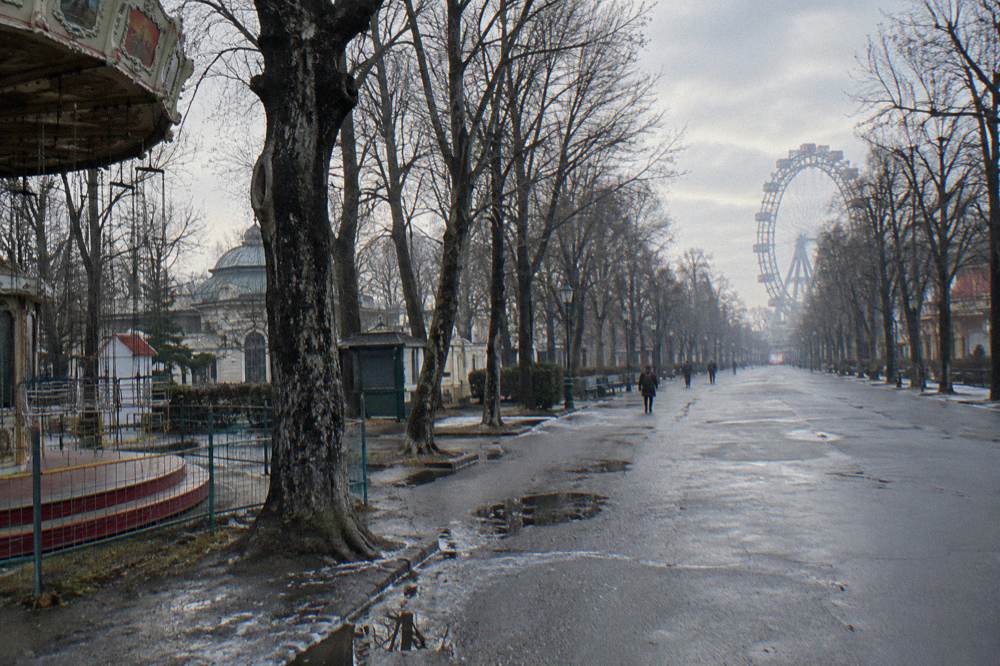
A practical winter note on both areas: they are exposed. The island in particular funnels wind along the river corridor, and what feels like a fresh breeze in July is a cutting wind at the same speed in January. If you ride to the island in winter, ride the windward leg first, so the return leg, when you are tired and colder, is downwind.
Is Bike Share Worth It In Cold Months?
WienMobil Rad keeps all its stations running across the 23 districts year round, with standard bikes at 0.80 euros per started 30 minutes capped at 20 euros per 24 hours and e-bikes at 3.30 euros per started 30 minutes capped at 40 euros, so for winter market-hopping the standard bike cap is usually the whole cost.
Winter is arguably when bike share is at its best in Vienna, because the trips are short: station to market, market to museum, museum to café. At 0.80 euros per started 30 minutes, three or four short hops in a day still land under the daily cap, and you never park a bike you are responsible for. The system, run by Wiener Linien with over 3,700 bikes including 600 e-bikes at more than 250 stations, does not hibernate in winter; stations near the main markets stay busy through the season.
Hold an annual transit pass or a KlimaTicket and the mix tariff drops to 0.37 euros per started 30 minutes for standard bikes, capped at 10 euros per day, with e-bikes at 2.30 euros per started 30 minutes. Most visitors will not have those passes, but the standard tariffs need no subscription at all, you simply rent and ride. The full mechanics, apps and station logic are covered in the guide to bike share and city bikes in Vienna.
| WienMobil Rad option | Price | Daily cap | Winter fit |
|---|---|---|---|
| Standard bike, standard tariff | 0.80 EUR per started 30 min | 20 EUR per 24 h | Best for short market hops |
| E-bike, standard tariff | 3.30 EUR per started 30 min | 40 EUR per 24 h | Longer cold rides, less sweat |
| Standard bike, mix tariff | 0.37 EUR per started 30 min | 10 EUR per 24 h | Only with eligible annual passes |
| E-bike, mix tariff | 2.30 EUR per started 30 min | Listed tariff | Only with eligible annual passes |
| Annual subscription | 63 EUR per year | First 30 min free per trip | Poor value for a short visit |
One cold-specific caveat: e-bike batteries deliver less range in freezing temperatures across the industry, so if you take a share e-bike on a longer winter loop, do not plan to the edge of the listed range. The same applies to rental e-bikes; one Donauinsel rental shop lists e-bikes at 75 euros and comfort bikes at 35 euros for a 6 to 12 hour day, which tells you a full-day rental in winter is a big commitment, worth it only if you genuinely plan to ride all day.
Can You Take A Bike On Public Transport In Winter?
Bikes ride free on the U-Bahn only, on weekdays between 9:00 and 15:00 and after 18:30, and all day on weekends and public holidays, they must be pushed not ridden in stations, escalators are prohibited, and non-foldable bikes are not allowed on trams and buses at all.
This rule is a winter ally. The pattern it enables is the "warm start": take the U-Bahn with your bike out to Schoenbrunn or out toward the west in the permitted window, then ride the flat route back through the centre with the markets as your waypoints. Because the carriage is free and the hours are generous, it costs nothing to reposition, and on a bitterly cold day it can rescue a ride plan by cutting the exposed outward leg.
Read the details exactly, though, because they are strict. Bikes must be pushed within stations and on platforms, never ridden. Escalators are off limits with a bicycle; use the stairs or lifts. There is a limit of two bikes or e-scooters per entrance area, and wheelchairs and prams have priority, which in the pre-Christmas crush at Stephansplatz station is a real constraint, not a formality. And the conditions of carriage are explicit that bicycles with start-assist, cargo bikes and transport bikes are prohibited, so an e-bike with pedal assistance is a different case from the heavier start-assist class; if in doubt about your specific rental, ask the operator before you roll to the station. Trams and buses take no non-foldable bikes, period.
What Should A One-Day Winter Bike Plan Look Like?
Start late morning when the paths are cleared and temperatures have lifted, ride the Ring corridor between market clusters in the early afternoon, put the longest exposed leg before 15:00 while daylight holds, and finish at a market around dusk so the lights, not the cold, are your closing impression.
The shape of a good winter day is almost the inverse of a summer one. In July you ride early to beat heat and crowds. In December you wait for the thaw: the morning after an overnight snowfall is the worst time on two wheels, while early afternoon, after the priority paths have been cleared and gritted and the sun, however weak, has done its work, is the best. Daylight runs out shortly after 16:00, so plan the riding inside the 11:00 to 15:30 window and let the evening be a walking, eating, market evening.
A concrete skeleton: morning at the Rathausplatz market when it is quieter, a late-morning short guided e-bike ride to get oriented (the featured 90-minute e-bike tour fits before lunch), lunch and a museum in the early afternoon darkness, then a canal-side ride south to Belvedere, and the final market stop at dusk. Total ridden distance stays modest by design, because winter days reward rhythm over kilometres. Riders with more appetite can extend the plan across several days; the three days in Vienna with one bike day guide shows how to balance ride days and non-ride days.

What About The Weeks After The Markets Close?
Between early January and late February Vienna is at its quietest: markets are gone, hotel rates drop, guided tours keep running on thinner schedules, and cycling is a low-crowd, high-warm-clothing proposition best built around the canal, the Ring and indoor stops in between.
The post-market trough is the season's hidden value. The 814 stalls pack away in the first days of January, and the visitor volume that pushed Vienna to 14.9 million overnight stays in the first nine months of 2026 recedes sharply. Paths are empty, the Ring's rebuild diversions are easier to read with less traffic, and the few riders out are locals. The trade-off is weather: this is the coldest stretch, the days are shortest, and the exposed Danube routes lose their appeal for all but the hardy.
Build February days around warmth stops. The Belvedere and museum quarter ride well in winter because the distances between them are short and every destination is indoors; an Upper Belvedere adult ticket is €23 in 2026 with a Vienna City Card discount bringing it to €21.50, if art is on the plan. The e-bike highlights format also earns its keep in this window, covering the city's core sights in three hours with pedal assistance doing the cold-day work.
By late March the season turns: the Bike Festival and its RADpaRADe return to Rathausplatz on 28 and 29 March, the Wachau's apricot blossom follows from late March into early April, and the winter chapter closes. Until then, Vienna in winter is a city that keeps riding, quietly, along cleared paths, between lit stalls, and mostly by itself.
Whether you ride your own route or join a guide, the choice between formats is worth settling early: the short e-bike spin, the classic three-hour city tour, or the longer e-bike highlights ride.
Common Questions About Vienna In Winter
Is Vienna Worth Visiting In Winter For Cycling?
Yes, if you dress for it. The city clears central high-traffic bike paths first under a published winter plan, guided tours keep running, and the Christmas market season, 15 markets from November, gives winter rides a destination the summer cannot match.
Do Bike Tours In Vienna Run In December?
Yes. Guided bike and e-bike tours are bookable year round, though some departure slots thin out in the low weeks of January and February. Check the booking page for the day you want and reconfirm the departure time in cold snaps.
When Do Vienna's Christmas Markets Open?
The Weihnachtsmarkt at Schoenbrunn opens on 6 November 2026 and runs to 6 January 2027. The Wiener Christkindlmarkt on Rathausplatz runs from 13 November to 26 December 2026. Smaller Advent markets follow their own dates.
Can You Take A Bike On The Vienna U-Bahn In Winter?
Yes, free of charge, on weekdays between 9:00 and 15:00 and after 18:30, and all day on weekends and public holidays. Bikes must be pushed in stations, never taken on escalators, and non-foldable bikes are not allowed on trams or buses.
What Should You Wear Cycling In Vienna In Winter?
Three layers on the torso with a windproof shell, full-finger gloves, a thin hat under the helmet and closed shoes. Start slightly cold: pedalling on flat ground generates heat, and sweating through your base layer is what makes stops miserable.
Is Bike Share Available In Vienna During Winter?
Yes. WienMobil Rad runs stations across all 23 districts year round, with standard bikes at 0.80 euros per started 30 minutes capped at 20 euros per 24 hours and e-bikes at 3.30 euros per started 30 minutes capped at 40 euros.