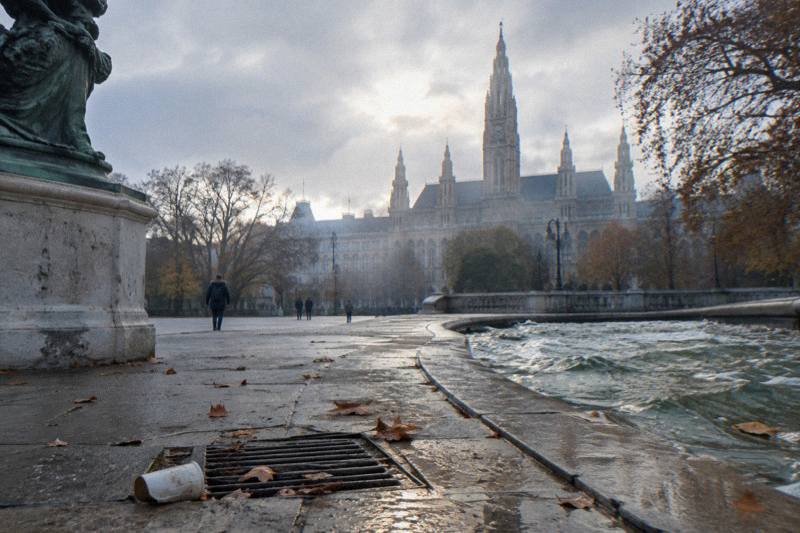
What To Beware Of In Vienna?
The cycling-specific cautions worth knowing in Vienna: tram tracks, new e-moped rules, bike-path etiquette, theft basics and season traps, with a calm guided option.
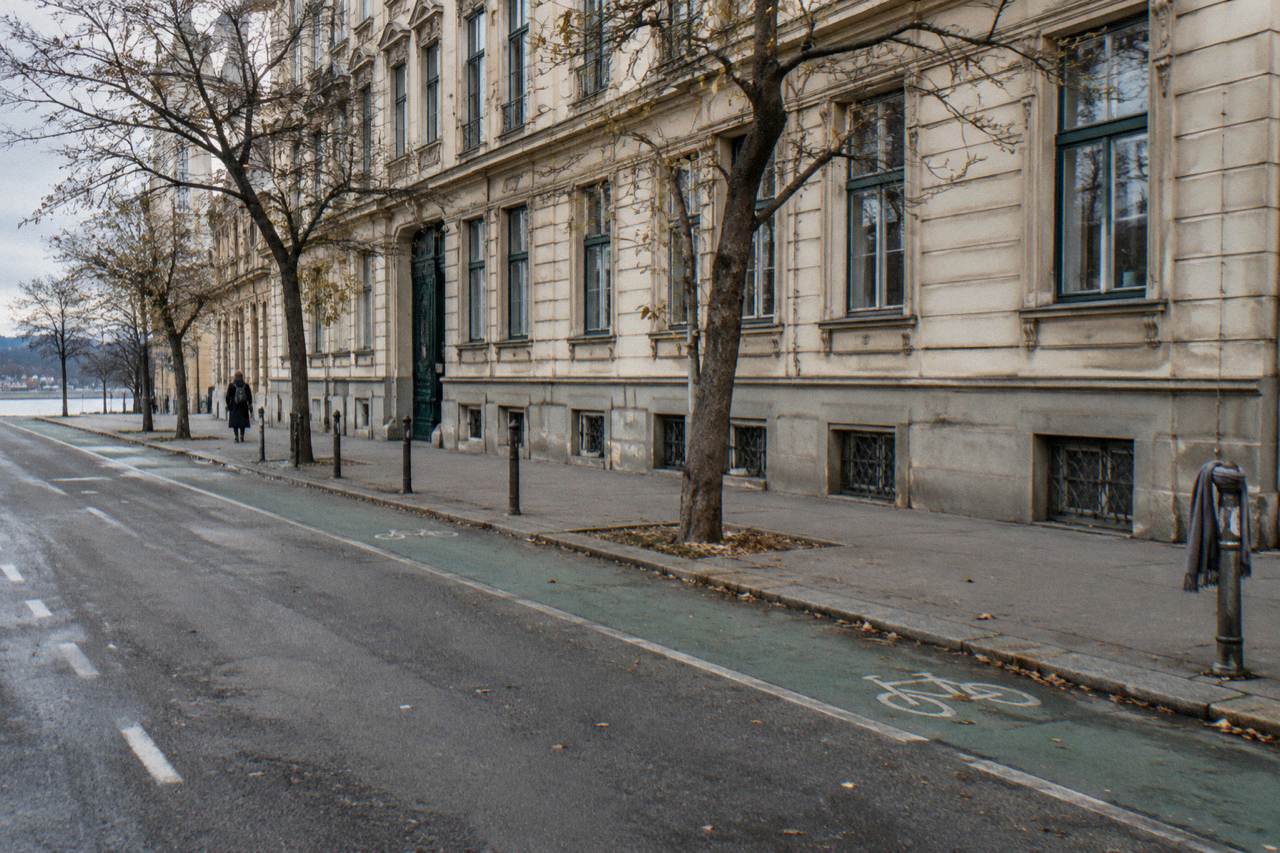
Vienna is a safe, well-organised city for cyclists, and the things worth minding are mostly mechanical and local: slippery tram rails crossing your line at shallow angles, a new E-moped ban on cycle paths, narrow two-way lanes shared with faster commuters, and opportunistic bike theft in the inner districts. None of these are reasons to skip riding; they are reasons to know the local habits before you set off. Once you've picked up those habits, our guide to free sights, parks and cycling routes around Vienna shows you how to see the city without spending a euro.
For a city of its size, Vienna keeps its cycling friction low. The network runs to about 1,811 kilometres of routes, the terrain is famously flat, and drivers are generally accustomed to bikes. The cautions that matter here are the quiet ones, the kind a first-time visitor would not notice until the moment they bite. Tram rails are the classic: wet, polished steel set into the cobbles of the inner districts, waiting for a wheel turned slightly too parallel. Then there are the rules that changed recently, including a ban on E-mopeds using cycle paths since 1 October 2026, which changes who you will share a lane with and how. And once you have the tram rails figured out, the quiet river lanes of the Wachau make a rewarding next ride, as our guide to cycling Wachau wine and apricot country from Vienna lays out.
If your instinct is that a guided first ride would take the guesswork out of all this, that instinct is sound. A guide who rides these streets daily picks the angles across the rails, knows which path sections are closed, and absorbs the local etiquette for you.
The rest of this article walks through the specific cautions in the order you are likely to meet them: rails and road surface first, then the new vehicle rules, then path etiquette, then theft and parking, and finally the seasonal traps. Throughout, the same principle applies. Almost every trap in Vienna has a calm workaround, and most of the workarounds are things a local does without thinking.
Where Cyclists Actually Slip: Tram Rails And Cobbles
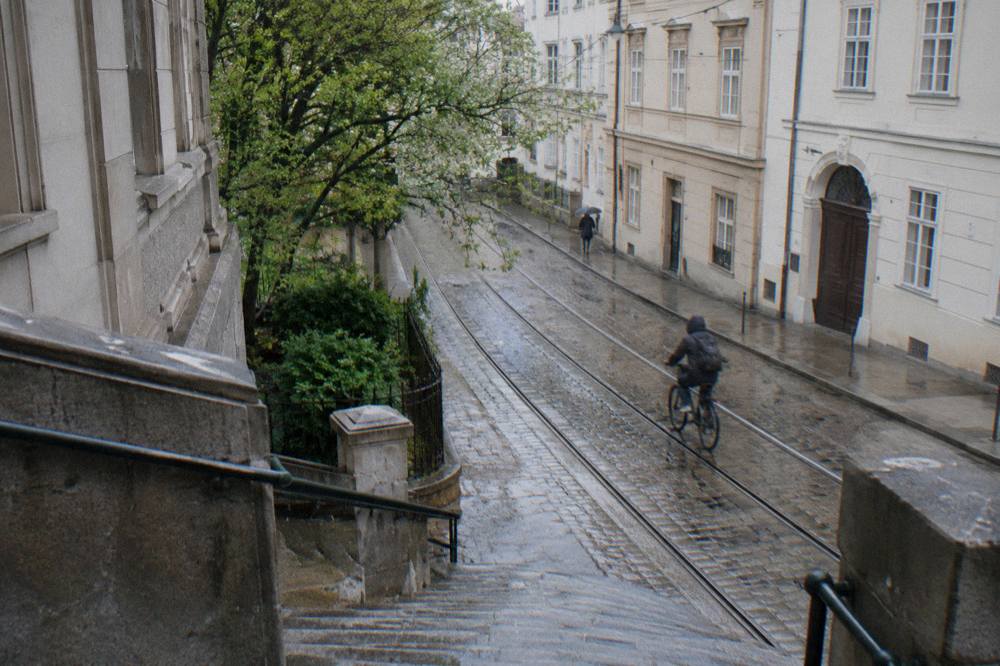
The single most common cause of cyclist falls in central Vienna is tram rails, and the risk is angle, not speed: a wheel that meets a rail at a shallow angle can slide along it and drop you before you react. The fix is simple and universally taught, cross rails as close to perpendicular as you can, brake before the crossing rather than on it, and treat wet cobbles with the same respect.
Vienna's inner districts are threaded with tram lines, many set into cobblestone or polished asphalt. In dry weather a competent rider crosses them dozens of times without incident, which is exactly why they catch visitors out. The rail that is harmless at a right angle becomes a channel at a parallel one, and the front wheel follows the channel rather than the rider's line. Rain, fallen leaves in autumn, and the light film of damp that follows street cleaning all lower the margin further.
Cobbles deserve a mention of their own, less because they are dangerous than because they punish inattention. They shake the bike, blur your steering inputs, and hide the exact lip where the cobbled strip meets the asphalt. Riders who brake hard mid-cobblestone patch, or who corner with the bike leaned over, are the ones who find the limit. Straighten up, ease off, roll through, then reapply speed once the surface settles. Wider tyres help; this is one honest argument for a comfort bike or e-bike over a skinny road setup in the centre.
None of this is a reason to avoid the inner city by bike. It is a reason to ride it deliberately rather than on autopilot, and if you would rather someone else carry that mental load on day one, the Classic Vienna: 3-Hour Guided Bike Tour does the route-choosing for you across a 3-hour loop of the centre. Our companion guide on cycling rules and safety in Vienna covers the traffic-law side of the same terrain.
E-Mopeds, E-Scooters And The New Path Rules
Since 1 October 2026, E-mopeds are classified as motor vehicles and are prohibited from cycle paths in Vienna, which should, over time, remove one of the faster and heavier things that used to share your lane. E-scooters remain on paths, with riders under 16 required to wear helmets and a lowered alcohol limit of 0.5 per mille since 1 May 2026, so expect mixed traffic and keep your line predictable.
The E-moped ban is the headline change, published on the city's own mobility rules page. In practice it means the bike path should increasingly contain bikes and scooters rather than moped-class vehicles, which is a genuine quality-of-life improvement for anyone riding with children or at a relaxed pace. But rules bed in slowly, and shared e-scooters are still very much present: the city caps them at 250 vehicles in the Innere Stadt and other central areas, and adds no-ride and no-park zones in parks and some residential districts.
For a cyclist, the practical cautions are behavioural rather than legal. Scooter riders vary enormously in skill; some track a straight line, others weave with their eyes on a phone mount. Give them room when passing, avoid slotting yourself directly beside one at a pinch point, and expect sudden stops near landmarks where riders pause for photos. You are not responsible for their choices, only for not being surprised by them.
Helmets are their own question and the rules are age-based. Children up to their 12th birthday must wear a helmet on any bicycle, and a recent change extends a helmet requirement to riders under 14 on e-bikes since 1 May 2026, per the city's cycling rules page. From 14 onward there is no general helmet duty for cyclists, though helmets are recommended at every age, and tour operators may set their own policies regardless of the law, so check the booking page for the ride you are considering.
| Caution | Who or what it involves | The calm response |
|---|---|---|
| Tram rails at shallow angles | All riders, worst in rain | Cross as perpendicular as possible, brake before the rail |
| Wet cobbles in the inner districts | All riders | Straighten up, ease speed, no mid-patch hard braking |
| E-mopeds on paths | Banned since 1 October 2026 | Reportable, but simply give space if you meet one |
| Shared e-scooters | Capped at 250 in central zones | Pass with room, never beside one at a pinch point |
| Path closures for works | Ringstrasse rebuild, Donauinsel section | Check the city's diversion page before a long ride |
Bike Path Etiquette Vienna Style
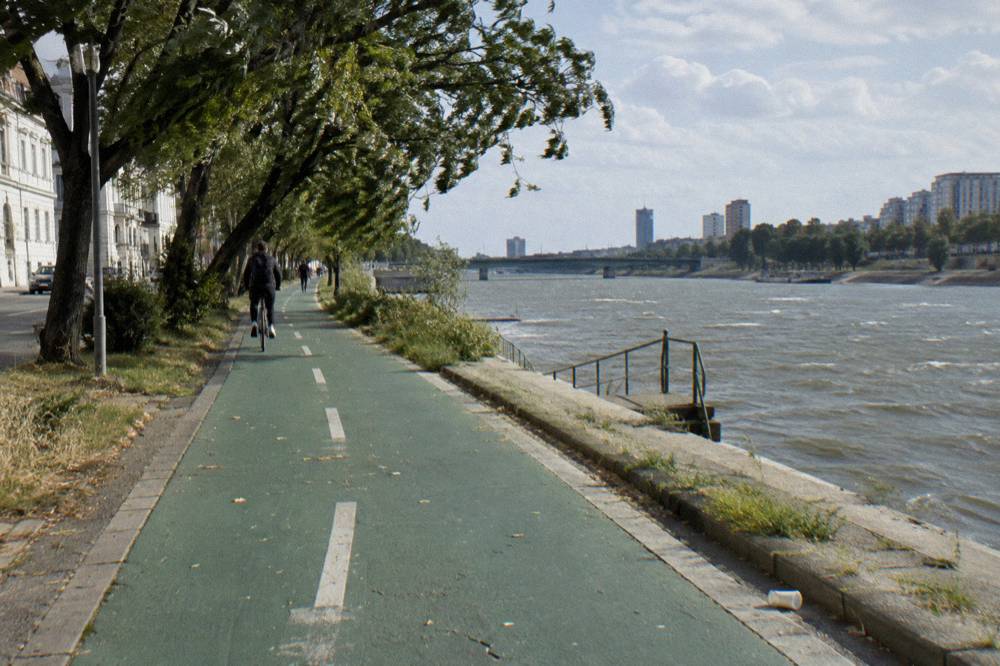
Vienna's two-way cycle paths are narrower than they look, the local convention is to keep right, pass left with a clear signal, and never stop dead in the lane, and the strongest local expectation is that you do not ride side by side when anyone is behind you. Treat the bell as information, not aggression, and hold a steady line so faster commuters can plan around you.
Two-way paths are the thing that most often wrong-foots visitors. On a bidirectional lane, your right-hand side is yours and the opposite side belongs to oncoming riders, so drifting left to look at a facade puts you head-on with a commuter doing 25 km/h. The locals ring a bell early and expect you to acknowledge it by holding or easing right, not by jumping sideways. If you hear a bell behind you, the correct response is the least dramatic one: keep your line, keep right, let them past.
Stopping in the lane is the other cardinal sin. Photo stops happen, and Vienna invites them constantly, but the habit is to pull fully out of the path, to the kerb side or a plaza edge, before the wheels stop. A rider who halts mid-lane on the Ringstrasse path during the morning run creates a genuine hazard, because the traffic behind is moving with expectation rather than caution. The same logic applies at junctions: clear the box, then decide.
If reading this makes a first solo ride feel like an exam, that is overstating it, thousands of visitors ride these paths weekly without incident, but a guided first outing does compress the learning curve. The Vienna: City Highlights Guided Bike Tour runs a 3-hour shared format with a guide setting the pace and the etiquette, and similar guided 3-hour city rides start from around $53 per person. For riders who want the orientation in a shorter dose before exploring alone, the Vienna: Guided E-Bike Tour offers a compact 1.5-hour e-bike format.
Group size matters here too. Shared tours listed as small-group cap the number of riders, which keeps the group's own footprint polite on narrow lanes. Private formats, covered in our guide on private guided cycling in Vienna, go further still: the route, the stops and the pace are yours, which is the cleanest possible answer to path etiquette anxiety.
Theft, Parking And Locking Up
Bike theft in Vienna is opportunistic rather than professional in most cases: unattended bikes with weak locks or none, parked overnight in dim spots, are the target profile. Use the frame lock plus a cable or U-lock where the operator provides them, park at formal stands rather than railings, and never leave luggage, panniers or helmets attached to a parked bike.
On a guided tour this section mostly dissolves into irrelevance, because the bike is the operator's concern at every stop and the group parks together. It matters if you rent independently or use bike share. WienMobil Rad, the city's system with bikes at stations across all 23 districts, resolves the parking problem entirely: you return the bike to a station and walk away, and the standard tariff works out at 0.80 euros per started 30 minutes capped at 20 euros per 24 hours. Our guide to bike share and city bikes in Vienna walks through the tariffs in full.
For a rented or own bike, the habits are ordinary but worth stating. Lock the frame to a fixed stand, not to a signpost the bike can be lifted over. Take the lights and anything detachable with you. In the inner districts, formal stands are dense enough that improvising with railings is rarely necessary, and railings sometimes carry the added problem of blocking pedestrians. E-bikes warrant the better lock, and the charging cable stays with you.
One Vienna-specific note: don't leave a bike attached to a rack overnight on the street if you can avoid it, especially near stations. Daytime parking in busy areas is low-drama; overnight parking in quiet ones is where the risk concentrates. Hotels frequently offer storage, and asking at the desk costs nothing.
Season And Weather Traps
The seasonal cautions are predictable: summer 2026 brought Vienna's first 40-degree days, making midday riding in July and August a heat-management exercise, and the Christmas market season from mid-November crowds the Rathausplatz and inner-city paths with pedestrians who drift across bike lanes. Winter clearing prioritises central high-traffic paths, and a downloadable city plan shows which routes are kept rideable. Timing matters even more once you leave the city limits, and our guide to cycling from Vienna to Budapest walks through how to plan the longer ride around the seasons.
Heat is the underestimated one. Vienna's long-term July average sits at 21.9 degrees, but averages hide the extremes, and the summer just past set a record for hot days. Riding at 39 degrees on unshaded boulevards is a choice, not a necessity: shift to early morning or evening, carry more water than feels reasonable, and treat the Donauinsel's 21 kilometres of paved routes and riverside shade as the summer escape valve, with the caveat that the section between Nordbruecke and Floridsdorfer Bruecke on the main island path stays closed for water works until 2030, with a diversion via the Neue Donau path.
Market season is the autumn-to-winter counterpart. The Wiener Christkindlmarkt on Rathausplatz opens 13 November 2026 and runs to 26 December, and the Schoenbrunn market opens 6 November. Neither is a cycling hazard as such, but the surrounding lanes fill with pedestrians whose attention is on gluhwein, not bikes. Slow to walking pace at the edges, and expect the closures and crowding to reshape the usual routes through the centre.
Construction is the year-round variable. The Ringstrasse bike path is being rebuilt in stages, with work starting between Schottentor and Franz-Josefs-Kai to convert the service road into a 4.50-metre two-way cycle path, first phase targeted for summer 2027. Present closures as a reason to check the city's diversion page rather than a reason to avoid the ride. Our guide on cycling the Ringstrasse covers the route as it stands.
| Season | The trap | The workaround |
|---|---|---|
| July and August | First 40-degree days on record; unshaded boulevards | Ride early or late; use riverside and island routes |
| Autumn | Wet leaves on rails and cobbles | Cross rails perpendicular; drop speed in the centre |
| Mid-November to December | Christmas market crowds across central lanes | Slow to walking pace near Rathausplatz |
| Winter | Only priority paths are cleared | Follow the city's winter clearing plan for route choice |
| All year | Path works: Ringstrasse rebuild, Donauinsel closure | Check the city's diversion page before long rides |
The Guided-Ride Shortcut
A guided tour converts nearly every caution in this article into someone else's job: the guide crosses the tram rails at the right angle, knows the diversions, sets a pace the group can hold, and handles the bike between stops. That is the honest case for booking a first ride rather than improvising one, and it is why this site leans on shared and private guided formats for first-time visitors.
The economics support it too. A 3-hour guided city ride starts from around $53 per person, which is a few euros more than a full-day independent rental from some shops, and the guided price carries the route, the etiquette and the bike itself. Check each booking page for the current price, meeting point and inclusions, since these shift seasonally and by format. That convenience is the core idea behind Bike Tours Vienna and the roster of guided rides it compares.
None of the cautions above amount to a case against cycling Vienna. They amount to a case for the first hour of your visit being calmer with a guide in front of you, and for the hours after that being better informed. Ride deliberately, cross the rails square, hold your line, lock the frame, and check the diversion page. Everything else is scenery.
Common Questions About Vienna
What To Beware Of In Vienna?
For cyclists, the main cautions are tram rails crossed at shallow angles, wet cobbles, mixed traffic with e-scooters, opportunistic bike theft, and path closures for the Ringstrasse rebuild. All have simple workarounds: cross rails perpendicular, lock the frame to a stand, and check the city's diversion page before long rides.
Are Tram Tracks Really Dangerous For Cyclists?
They are the most common mechanical hazard. A wheel meeting a rail at a shallow angle can slide along it and cause a fall, especially in rain. Cross rails as close to perpendicular as possible and brake before the crossing, not during it.
Can E-Mopeds Use Bike Paths In Vienna?
No. Since 1 October 2026, E-mopeds are classified as motor vehicles and are prohibited on cycle paths. Shared e-scooters remain on paths, capped at 250 vehicles in central zones, with a helmet requirement for riders under 16.
Is Bike Theft A Big Problem In Vienna?
Theft is mostly opportunistic: weakly locked or unattended bikes parked overnight in quiet spots. Use a frame lock plus a cable or U-lock, park at formal stands, take detachable items with you, and ask your hotel about indoor storage.
Do I Need A Helmet To Cycle In Vienna?
Children up to their 12th birthday must wear a helmet on any bicycle, and since 1 May 2026 riders under 14 must wear one on e-bikes. From 14 onward there is no general helmet duty, though helmets are recommended at every age and operators may set their own policies.
Does A Guided Tour Help With All Of This?
Yes, that is its quiet advantage. A guide chooses the rail crossings, knows the diversions and path etiquette, sets a sustainable pace, and looks after the bike at every stop. Guided 3-hour city rides start from around $53 per person; check the booking page for current details.