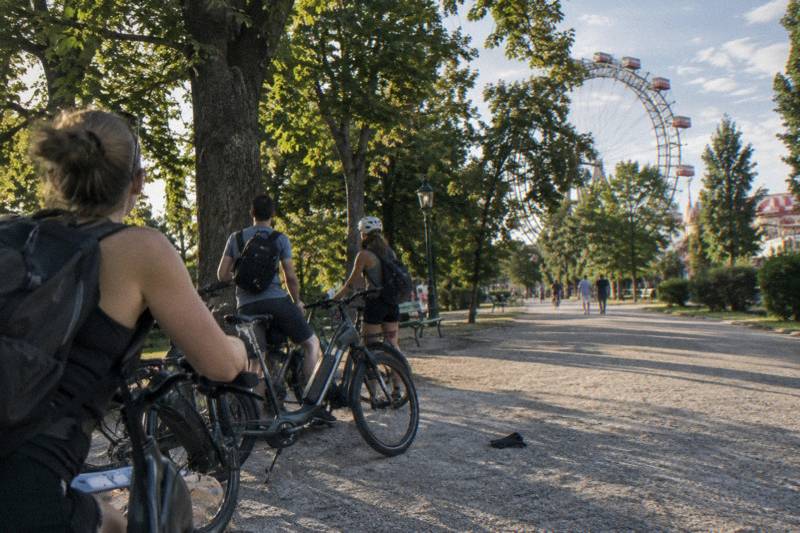
Cycling The Prater And Donauinsel
The Prater and the Danube Island form Vienna's biggest open-air cycling playground: a chestnut-lined avenue on one side, a 21 kilometre river island of paved paths and swimming banks on the other, with a short connecting ride between them.
Short answer
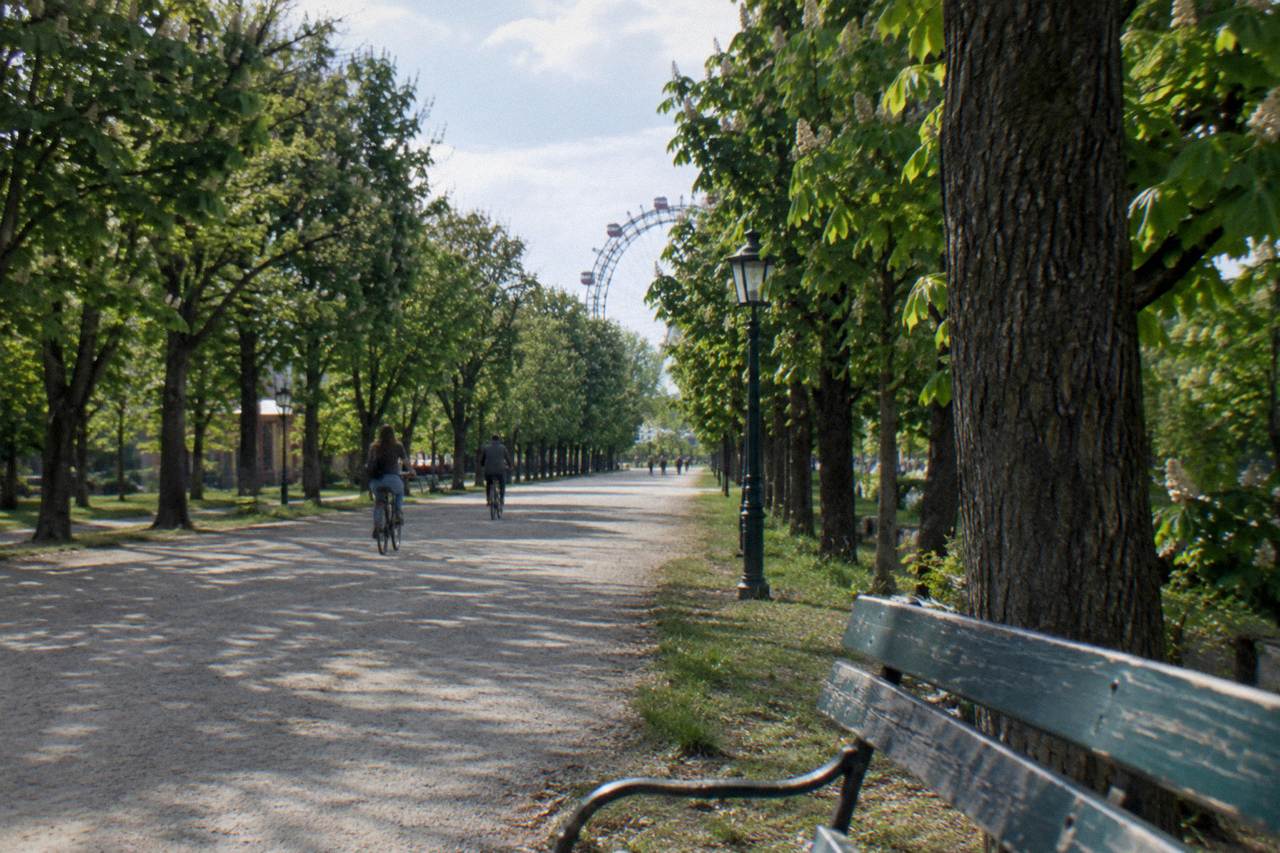
The Prater Hauptallee is a flat, straight gravel avenue through parkland, and the Danube Island offers up to 21 kilometres of paved cycling routes inside a 135 kilometre path network. Rent a bike or e-bike near the Prater, cross the Danube Canal, and swim from the island's banks in summer.
Vienna's east side is where the city stops being a museum and starts being a playground. Two green giants sit side by side here: the Prater, the old imperial hunting ground with its famous chestnut avenue, and the Danube Island, a sliver of land between the Danube and the New Danube that locals treat as their beach, barbecue spot and training circuit all at once. Together they make up the largest continuous stretch of easy, mostly car-free cycling in the city, and they sit close enough that a single afternoon covers both.
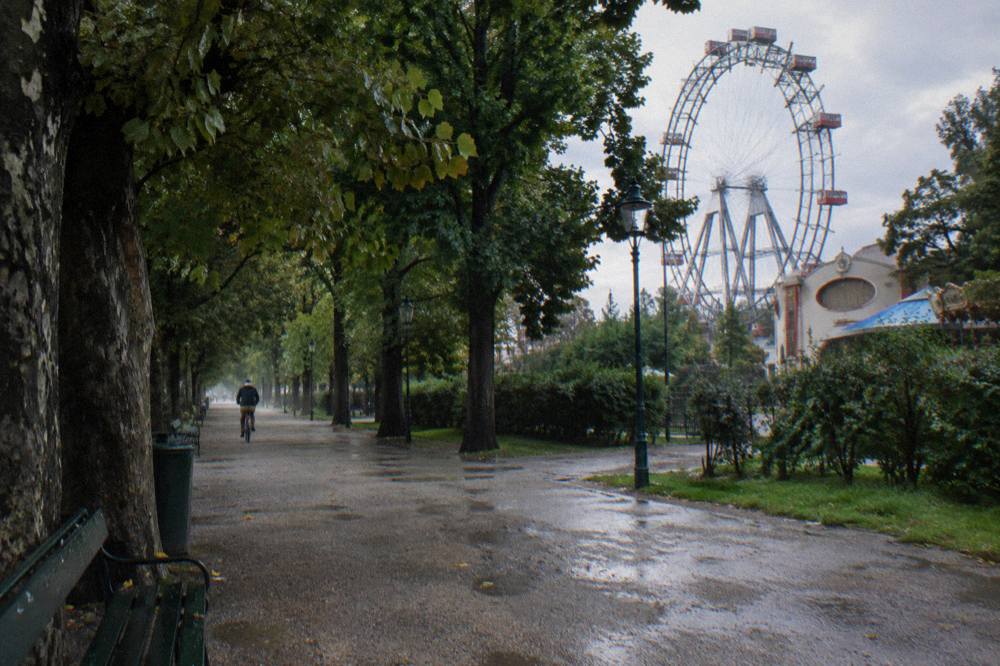
This guide walks through both: what the surfaces actually feel like, how far things are, where to get wheels, where to swim, and what is under construction right now, because the riverside path network is being rebuilt in stages and one island section is closed until 2030. If you are weighing a self-guided ride against joining a tour, there is a section for that too.
What Makes The Prater And Donauinsel So Good For Cycling?
The Prater gives you a long, flat, car-free avenue through mature parkland, and the Danube Island gives you up to 21 kilometres of paved routes inside a 135 kilometre path network on a 3.9 square kilometre island, so the pair suits everyone from wobbly beginners to riders chasing distance. Neither requires traffic confidence; both are forgiving, mostly shade-covered and free to ride.
Start with the Prater because it is the easier of the two to picture. The Hauptallee is the great straight artery through it, an avenue of chestnut trees running between the Praterstern amusement-park end and the Lusthaus, the old hunting lodge at the southeastern corner. The surface is asphalt, a wide avenue with room for several riders abreast, and closed to through car traffic. Joggers, horse-drawn carriages and inline skaters share it, so the rhythm is leisurely rather than racing, but there is room for everyone. Around the avenue the wider Prater park spreads out into meadows and side paths, most of them equally flat.
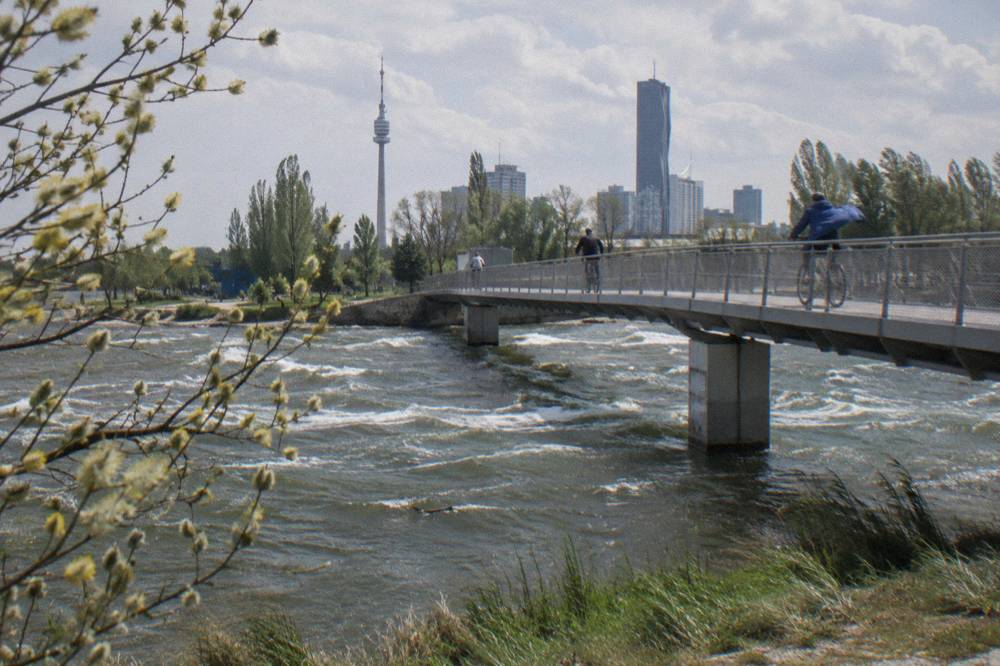
The Danube Island, the Donauinsel, is a different animal. The city's own figures describe an island of 3.9 square kilometres carrying a 135 kilometre network of paths, with paved stretches running up to 21 kilometres in length along a shoreline the city bills as 42 kilometres of beach. In practice that means you can ride for an hour along the water, past bathing meadows, playgrounds, barbecue zones and marinas, and barely touch a road. The island is roughly 21 kilometres long end to end as the crow flies along its paved spine, though no official single-loop figure exists, so plan by time and appetite rather than a fixed circuit.
What links the two is the Danube Canal and the river itself. Riding out of the Prater's northwest corner you pick up the canal-side paths and, a few minutes later, the footbridges and rail bridges that cross onto the island. Our companion route guide, Cycling The Danube Canal In Vienna, covers that connecting corridor in detail if you want to string the whole east side together.
One thing to know before you plan around it: the island's main path between the Nordbruecke and the Floridsdorfer Bruecke is closed for water works construction until 2030, and cyclists are diverted via the New Danube path. The city publishes a diversion page for exactly this kind of works, and it is worth a glance at the official cycle diversion overview before you set off, since staged projects move.
| Area | Surface | Character | Good for |
|---|---|---|---|
| Prater Hauptallee | Fine gravel, wide | Straight, tree-lined, shared with joggers and carriages | Warm-up laps, families |
| Prater side meadows | Gravel and dirt tracks | Loose, quiet, shaded | Exploring, kids |
| Danube Island paved routes | Asphalt, up to 21 km | Riverside, flat, busy on weekends | Distance, commuting pace |
| New Danube east bank | Asphalt | Straight bathing shoreline | Swim-stop rides |
| Danube Canal paths | Asphalt | Urban, lit, café-lined | Linking Prater to the island |
How Do You Ride From The Prater To The Danube Island?
Leave the Prater at its northwest end near the Praterstern, follow the Danube Canal paths north until the canal meets the river, then cross to the island on one of the footbridges or bridge footways. The connecting ride is short and almost entirely on separated paths, so the whole crossing takes minutes rather than a project.
The Praterstern end of the Prater is the natural start because that is where the U-Bahn, the amusement park and the Giant Ferris Wheel concentrate, and it is also where most rental demand sits. Riding away from the Hauptallee and out of the park's northwest edge puts you on the canal corridor. The canal-side routes run on both banks, asphalt-surfaced, lit at night and lined with bars in the warmer months, so even the connector is a ride worth taking slowly.
Where the canal meets the Danube proper you have choices. The easiest for most riders is to continue north and swing onto the Reichsbruecke footway, which links the Prater's riverbank to the island, or to use one of the smaller bridge crossings that connect the eastern bank paths to the island's network. Signposting along the corridor is in place and the whole sequence of Prater, canal and island is rideable without touching mixed traffic beyond the occasional crossing.
If you are coming from the centre instead, the Ringstrasse loop feeds into the same corridor from the west. Note that the Ringstrasse bike path is being rebuilt in stages, with the first section between Schottentor and Franz-Josefs-Kai under construction since early October, converting the service road into a 4.50 metre two-way cycle path with the first phase targeted for summer 2027. During the works the city maintains diversions; our Ringstrasse Route, Stops And Timing guide explains the loop and what to expect while it changes.
Riders who want the whole thing packaged rather than self-navigated have a good match in the Vienna: E-Bike Tour with Danube Island & Green Parks, a 3-hour shared e-bike ride that pairs the island and the city's green spaces with a guide and bikes included; the booking page states the meeting point. That tour is the closest thing on the menu to exactly this article's ride, and it sits alongside the classic 3-hour city tour and the city-highlights e-bike option as the three most natural picks for this kind of day.
For riders going alone, the practical advice is to ride the connector on the west bank of the canal heading north, cross at the stadium bridges, and return on the island's western shoreline so the water stays on your right the whole way. Wind on the Danube corridor is the one variable no route choice solves; the corridor funnels it, and on gusty days the return leg along the New Danube can feel longer than the way out.
Where Can You Rent A Bike Near The Prater And Donauinsel?
The nearest full-service option is the bike-share system WienMobil Rad, with stations in all 23 districts, standard bikes from 0.80 EUR per started 30 minutes capped at 20 EUR per 24 hours, and e-bikes at 3.30 EUR per 30 minutes capped at 40 EUR; one shop near the Danube Island lists comfort bikes at 35 EUR and e-bikes at 75 EUR for a 6 to 12 hour day.
WienMobil Rad is the system that replaced the old Citybike Wien, and it is run by the transit operator Wiener Linien. The city's bike-share fleet is a large one, e-bikes included, and stations are spread right across Vienna, so finding a dock near the Praterstern or the island bridges is rarely a problem in the daytime. Tariffs are on the official WienMobil Rad page: the standard bike costs 0.80 EUR per started 30 minutes capped at 20 EUR per 24 hours, and holders of a Wiener Linien annual pass or KlimaTicket pay a lower mix tariff capped at 10 EUR per 24 hours. E-bikes price at 3.30 EUR per started 30 minutes with a 40 EUR daily cap. An annual subscription at 63 EUR per year includes the first 30 minutes of each trip free.
For a full day with a guaranteed machine, a rental shop is the safer bet. One rental operation serving the Danube Island area lists comfort bikes at 35 EUR for a 6 to 12 hour day and e-bikes at 75 EUR for the same window; that is one shop's list price, not a market average, so treat it as a planning figure and check the room. Rental stock is genuinely competitive on summer weekends, and summer 2026 brought Vienna its first 40 degree days and a record number of heat days, so anything with a battery books out early on hot afternoons.
The third option is to let a tour operator supply the bike. A guided 3-hour city bike tour runs from 53 USD per person, and the e-bike tours include the machine as a matter of course. If your whole day is the Prater, the island and a swim, a tour covers the riding and a rental covers the swimming, which brings its own trade-offs we unpack later in this guide. For a fuller comparison of the two approaches, see Rent A Bike Or Join A Guided Ride In Vienna.
| Option | Price as listed | Best for |
|---|---|---|
| WienMobil Rad standard bike | 0.80 EUR per 30 min, 20 EUR daily cap | Short hops, spontaneous rides |
| WienMobil Rad e-bike | 3.30 EUR per 30 min, 40 EUR daily cap | Beating headwind on the corridor |
| Donauinsel-area shop, comfort bike | 35 EUR per 6-12 hour day | Full-day island circuits |
| Donauinsel-area shop, e-bike | 75 EUR per 6-12 hour day | Distance plus Prater plus swim |
| Guided 3-hour city bike tour | from 53 USD per person | Navigation-free first ride |
Whatever you rent, check the helmet situation in advance. Children up to their 12th birthday must wear a helmet on any bicycle under Austrian rules, and since 1 May 2026 the helmet duty extends to children and youths under 14 on e-bikes; from 14 there is no general requirement, only a recommendation. Rental fleets carry children's helmets, but sizes run out on peak days, and tour operators can tell you what they stock if you ask on the booking page.
What Surfaces And Distances Should You Expect?
The Prater Hauptallee is a wide paved avenue, the Prater's side meadows add loose dirt tracks, and the Danube Island runs asphalt along up to 21 kilometres of paved route within its 135 kilometre path network, all of it flat with no climbs worth naming. Gravel on the avenue means road bikes work but feel it; everything else is smooth.
Surface is the one place where expectations need calibrating. Riders arriving on narrow road tyres will find the Hauptallee fine, though the side tracks are firmer dirt and better suited to wider tyres. Hybrid, city and e-bikes, the default rental types, are perfectly at home. The island's paved routes are proper asphalt and roll fast, which is why the local road-cycling crowd uses the corridor for interval sessions early in the morning before the families arrive. Everything else covered here is indexed on Bike Tours Vienna.
Distance is flexible by design. There is no official single "island loop" figure, and we will not invent one; the numbers the city publishes are the 135 kilometre total path network, the up to 21 kilometres of paved stretches and the island's 3.9 square kilometre area. In practice a Prater avenue out-and-back plus a crossing to the island and a run down one shoreline makes a satisfying half-day ride at family pace, while adding the far northern sections toward the Danube National Park turns it into a proper day. Our Cycling In Vienna With Kids guide covers the family version of this same terrain.
The wider context matters too, because Vienna has been building hard for cyclists. The city counts roughly 1,811 kilometres of cycle network, and 2026 alone brings 33 projects with around 12.5 kilometres of new infrastructure under the Radweg-Offensive, concentrated on closing gaps on major axes. Two recent additions touch this ride directly: a new two-way path on Obere Donaustrasse in Leopoldstadt now links the 2nd and 20th districts continuously, and the seven-kilometre Northern Cycling Highway via Praterstrasse and Lassallestrasse to Kagran, finished in 2025, runs right through this corridor on its way toward the Danube.
| Figure | Prater | Danube Island |
|---|---|---|
| Main riding surface | Fine gravel on the Hauptallee | Asphalt on the paved routes |
| Paved route length | Avenue and park tracks, no official total | Up to 21 km of paved stretches |
| Total path network | Unmeasured as a single figure | 135 km of paths |
| Area | Expansive parkland, no figure published | 3.9 square kilometres |
| Traffic | Closed to through car traffic | Service vehicles only |
| Crowds peak | Weekend afternoons near the Praterstern | Hot weekends at the bridgeheads |

Timing changes the experience more than distance does. Weekday mornings the avenue and the island belong to commuters and fitness riders; weekend afternoons the same paths fill with barbecue traffic, tandem hire and children, and average speeds drop accordingly. The island's event calendar matters too: the huge Donauinselfest festival closed parts of the island for its July weekend, and any large event means checking the city's pages before you pin your route. For month-by-month planning, Best Time To Cycle In Vienna By Month breaks down the seasons.
Is A Guided E-Bike Tour Better Than Riding Alone?
A guided e-bike tour suits riders who want the Danube Island and green-park loop decoded, a bike supplied and no navigation decisions, while riding alone suits anyone confident reading a riverside path, since the corridor is flat, signed and hard to get truly lost on; cost and flexibility, not ability, usually decide it.
The case for the tour is not the terrain, it is the friction. A guided ride removes the rental counter, the tariff maths, the diversion checking and the "which bank is better" question, and on the e-bike formats it flattens the one real enemy here, the wind funneling down the Danube corridor. The Vienna: E-Bike Tour with Danube Island & Green Parks format runs 3 hours as a shared ride, pairing exactly the places this guide describes with a guide who knows which bank is quiet today. You can see the Danube Island and green parks e-bike tour here, and check availability if the timing fits your dates.
The classic alternative is the 3-hour Classic Vienna guided bike tour, which trades the riverside for the inner-city highlights and makes more sense if this is your first day in Vienna and the island is day two.
Between those sits the Vienna: E-Bike Tour of City Highlights & Hidden Sights, an e-bike format that covers the centre with the same battery assist, useful for riders who like the sound of e-bikes but want the old town in the frame.
The case for going alone is freedom. Swim when you want, stop at the barbecue meadows, extend north to the national park edge on a whim, and pay only the rental. Bike-share caps make a full island day cost roughly a rental day anyway, so money rarely separates the two. What does separate them is knowledge: if you have read this far, you already know the surfaces, the crossing and the closure, which is most of what a guide adds on flat ground.
One more riverside format worth knowing: the E-Bike Vienna's Danube River & Green Park Routes ride, another shared 3-hour e-bike tour that covers the same river-and-park territory in the operator's own arrangement.
Whatever you choose, book the waterworks into your expectations, not your optimism. The closed island section between the Nordbruecke and the Floridsdorfer Bruecke runs until 2030 with a diversion via the New Danube, so any route that promises that exact stretch, guided or solo, is describing it through a detour. Ask the operator how the closure affects their loop if it matters to you.
Where Can You Swim Or Rest Along The Danube Island?
The New Danube's banks along the island are Vienna's bathing shoreline, with the city describing 42 kilometres of strand; entry is free and informally organized, with meadow banks, fenced lidos and café terraces at intervals, so swim stops need no ticket, only a towel and a spot of shade.
The island works as a beach because of the New Danube, the parallel channel dug beside the river, which stays calmer and warmer than the main Danube. Along its edges the banks alternate between open meadow where people simply lay towels, small designated bathing areas and the occasional kiosk or café terrace. Water quality is monitored in season by the authorities and posted at the bathing areas, as it is across Austria's designated swim spots. There are no entry fees for the open banks, which is why the island fills on hot weekends; arriving by bike early beats the crowd with ease.
Rest stops cluster at the bridgeheads and the areas near the Underground station on the island, where the food stands, toilets and the rowing-club cafés sit. Westward along the New Danube shoreline it gets quieter and greener the farther north you ride, which is also the direction of the closed section's diversion, so a swim stop can double as a natural turning point. Prater-side, the amusement park at the Praterstern end supplies everything else, from ice cream to the Giant Ferris Wheel, whose 2026 adult ticket is 14.50 EUR if the rain clouds in.
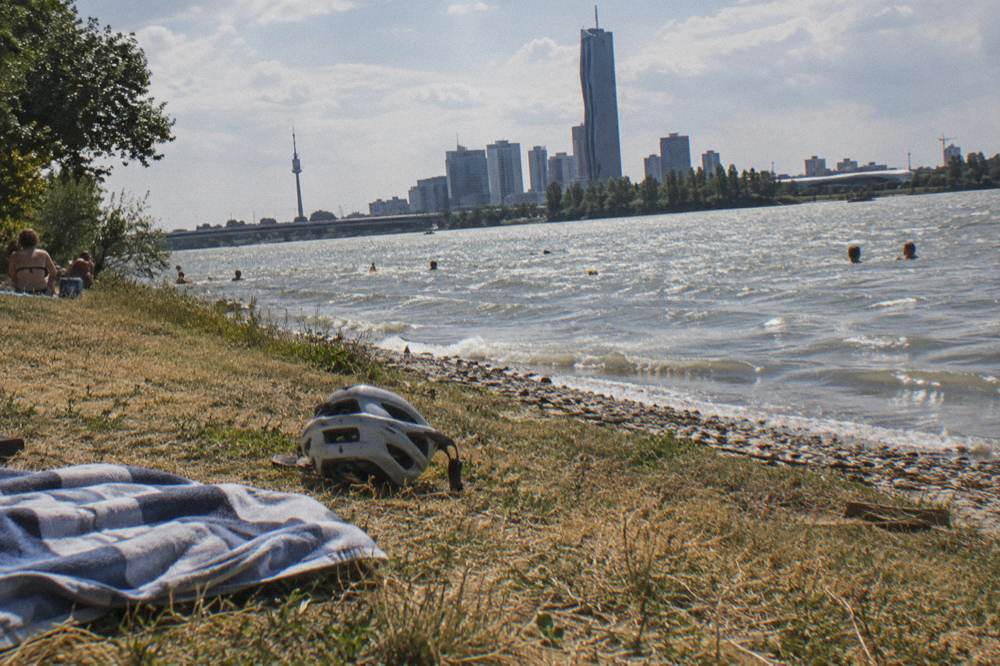
Season shapes this section more than any other. Swimming is obviously a May-to-September activity, and the summer of 2026 pushed that hard, with Vienna recording its first 40 degree days and a record count of heat days; on days like those the island is not just recreation but relief, and the city prioritises keeping it accessible. In the cooler months the same banks become the best birdwatching and empty-path riding in the city, and Vienna clears a network of central high-traffic bike paths of snow in winter, publishing a downloadable plan of which routes stay rideable; check the winter rideable-routes page if you are riding between November and March.
What Closures And Rules Affect The Ride Right Now?
Three things matter in late 2026: the island's main path between the Nordbruecke and Floridsdorfer Bruecke is closed until 2030 with a New Danube diversion, the Ringstrasse bike path is being rebuilt in stages starting between Schottentor and Franz-Josefs-Kai, and E-mopeds are banned from cycle paths since 1 October, while bikes ride the U-Bahn free in off-peak hours only. If the closures tempt you to ride farther out of the city instead, our guide to how flat the Danube Cycle Path really is helps you decide between a regular bike and an e-bike.
Take the island closure first because it is the longest-running. The water works between the two bridges lock up that section until 2030, and the signed diversion runs via the Neue Donau path. None of this blocks the classic Prater-to-island ride described above; it only affects riders heading to the island's far northern end, who should budget for the detour. The city's diversion page, linked earlier, carries the current staging.
The Ringstrasse works matter if you start from the centre. Converting the service road into a 4.50 metre two-way cycle path, the first phase between Schottentor and Franz-Josefs-Kai should finish by summer 2027, and until then the loop's east side runs through temporary arrangements. Riders starting at the Praterstern skip the Ring entirely, which is one quiet argument for starting this ride in Leopoldstadt rather than the old town.
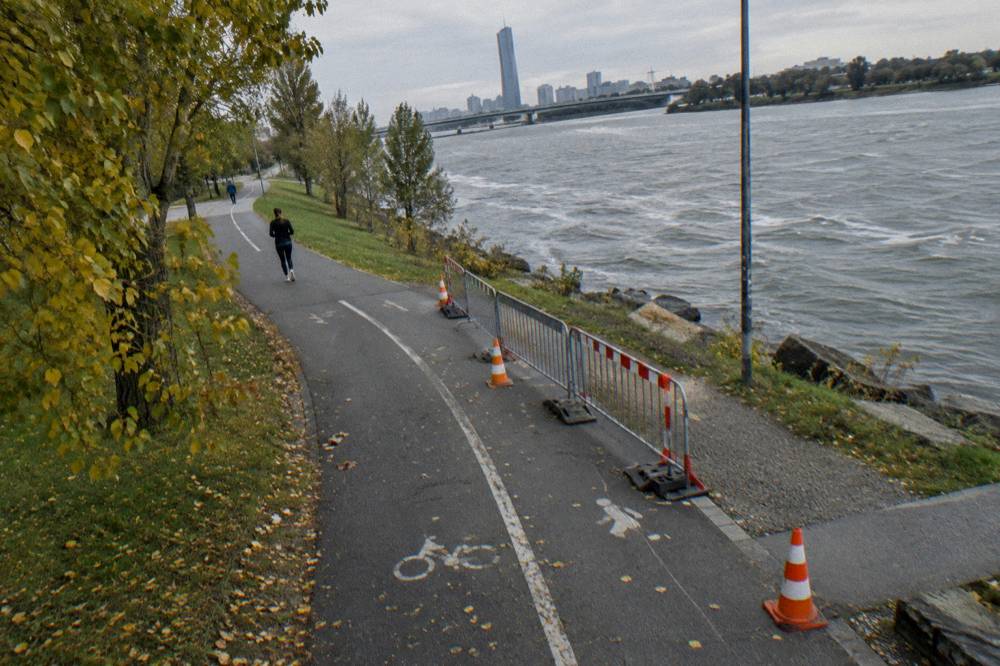
Rules-wise, the short list: children under 12 need a helmet on any bike, under-14s need one on e-bikes since May 2026, and E-mopeds, the sit-up electric scooters, have been banned from cycle paths since 1 October 2026, which has noticeably calmed the faster paths. Shared e-scooters are capped at 250 vehicles in the Innere Stadt and central areas, with no-ride zones in parks, so the Prater meadows stay largely scooter-free. Alcohol rules for cyclists are not something to state a number on; the safe advice for any ride, and especially any wine-adjacent one, is to follow the operator's guidance and local rules. Our Cycling Rules And Safety In Vienna guide carries the full picture. Once the rules are clear, the practical question is combining riding with transit, and our guide to taking a bike on the train spells out which trips are free and which carry a surcharge.
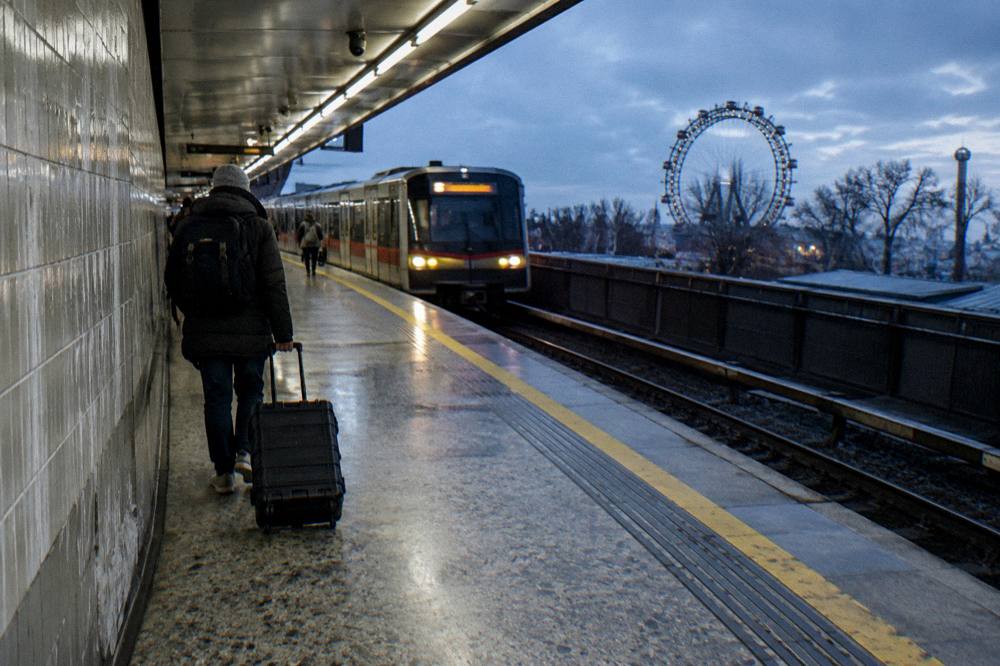
Public transport with a bike is a genuinely useful escape hatch on this ride, because the U-Bahn line from the Praterstern and the island's own station let you cut the day short. Bikes travel free on the U-Bahn on weekdays between 9:00 and 15:00 and after 18:30, and all day on weekends and public holidays, wheeled rather than ridden, with escalators off-limits and priority to wheelchairs and prams. Ordinary e-bikes ride the U-Bahn free during permitted hours, pushed rather than ridden. Only start-assist models, cargo and transport bikes are barred, and trams and buses take no non-foldable bikes at all. The Wiener Linien conditions of carriage are the authority on the details.
| Item | Status in late 2026 | Effect on this ride |
|---|---|---|
| Island path, Nordbruecke to Floridsdorfer Bruecke | Closed until 2030, diversion via Neue Donau | Only affects the far northern island end |
| Ringstrasse bike path, Schottentor to Franz-Josefs-Kai | Under construction, first phase due summer 2027 | Matters only if starting from the centre |
| E-mopeds on cycle paths | Banned since 1 October 2026 | Calmer riverside and avenue paths |
| Shared e-scooters in the Innere Stadt | Capped at 250 vehicles, park no-ride zones | Fewer scooters on the Prater meadows |
| Bikes on the U-Bahn | Free, weekdays 9:00-15:00 and after 18:30, all day weekends | Handy escape hatch from the Praterstern |
| Bikes on trams and buses | Non-foldable bikes not allowed | No bus fallback with a rental |
Once the practical side of your ride is sorted, our guide to Vienna's unmissable sights helps you decide where to point your wheels first.
For everything this ride can become, the same corridor connects onward to the Danube Cycle Path heading out of the city toward the Wachau wine country, which is a different day and a different bike bag.
Common Questions About Cycling The Prater And Donauinsel
Is The Donauinsel Good For Beginner Cyclists?
Yes. The island is flat, its main routes are asphalt, and traffic is limited to service vehicles, other bikes and pedestrians. Weekend afternoons get crowded near the bridgeheads, so beginners should ride early or head north along the New Danube where the paths thin out.
Can You Cycle From The Prater To The Danube Island?
Yes, easily. Leaving the Prater at its northwest end near the Praterstern puts you on the Danube Canal paths, which run north to the river, where footbridges and bridge footways cross onto the island. The connector is short and almost entirely on separated paths.
How Long Is The Ride Around The Danube Island?
There is no single official loop figure. The city publishes a 135 kilometre total path network on the island, with paved stretches running up to 21 kilometres, so a satisfying riverside out-and-back can be anything from a short spin to a half-day ride depending on how far north you go.
Can You Swim On The Danube Island Ride?
Yes. The New Danube channel is Vienna's bathing water, with free open meadow banks, designated bathing areas and monitored water quality in season. Bring a towel; the lockable options at rental points are limited, so plan for a bike you can watch from the bank.
Is Part Of The Danube Island Closed?
Yes. The main path between the Nordbruecke and the Floridsdorfer Bruecke is closed for water works construction until 2030, with a signed diversion via the New Danube path. The classic Prater-to-island ride is unaffected; only riders heading to the island's far north need to route around it.
Do You Need An E-Bike For The Prater And Danube Island?
No, the terrain is flat and no regular bike struggles. E-bikes earn their keep against the wind that funnels down the Danube corridor and on hot days, which is why the guided riverside rides use them, but a comfort bike from a rental shop covers the same route happily.