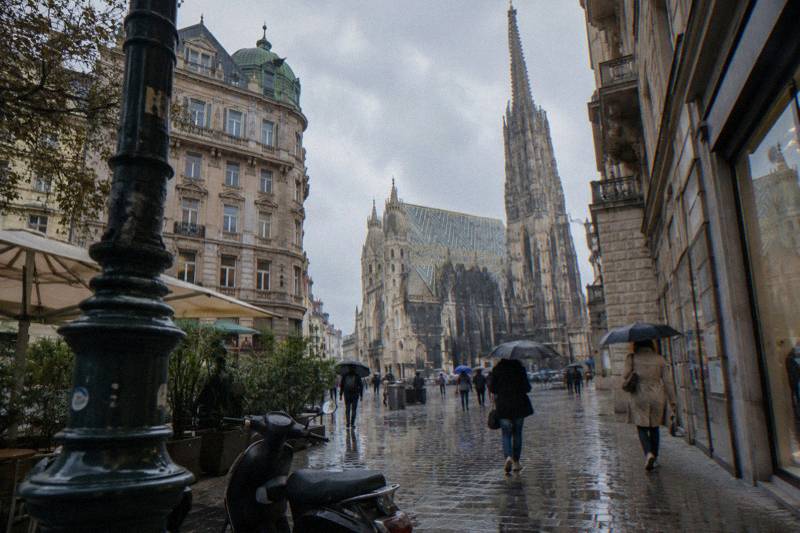
Cycling The Ringstrasse: Route, Stops And Timing
The Ringstrasse is Vienna's showcase boulevard, a 5.3 km loop that wraps the old city in state museums, opera houses and parkland. It is also one of the most rideable urban circuits in Europe, provided you know the stop order, the traffic and the hour to go.
Short answer
The Ringstrasse is a 5.3 km loop around Vienna's inner city, rideable at a relaxed pace in well under an hour without stops. Most riders take two to three hours to include the major stops. A guided 3-hour city ride covers the Ring together with the old town and starts from $53 per person on one operator's booking page.
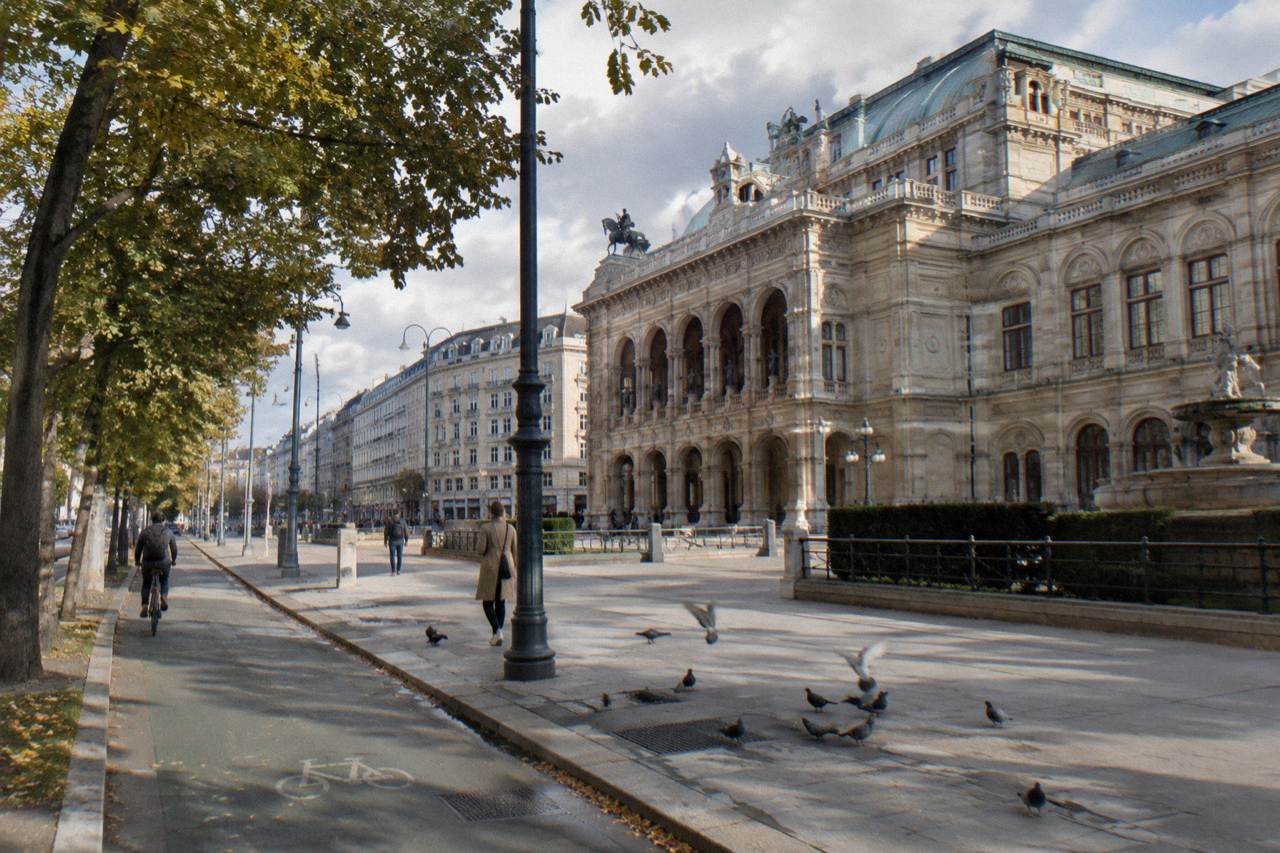
The Ringstrasse is the horseshoe of boulevard that Emperor Franz Joseph ordered torn open through Vienna's city walls, and every grand building that lined the result, the State Opera, the Burgtheater, the two museums facing each other across Maria-Theresien-Platz, the Parliament, the Rathaus, the university and the Votivkirche, still sits on that loop today. For a cyclist it is the single best piece of infrastructure in the city: a 5.3 km ring of asphalt and tree canopy with the entire Habsburg state on display, flat from end to end, and connected at every compass point to the Danube Canal, the Prater and the Wieden districts beyond.
It is also a working city street. Trams run down the middle of it, taxis cross it, and since October 2026 parts of its bike path have been torn up for a full rebuild. This guide walks through the loop as a ride: where it goes, which stops to make in which order, what the traffic is actually like, the best hour of the day to be out, and what a guided tour adds for riders who would rather not parse tram tracks and one-way lanes on their own. If tram tracks and bike-path etiquette have you second-guessing the ride, our cautions for cyclists in Vienna lays out the hazards and a calmer guided option.
What Is The Ringstrasse And Why Cycle It?
The Ringstrasse is a 5.3 km boulevard loop encircling Vienna's old city, built on the line of the former city walls, and it carries nearly every grand public building of the Habsburg era. Riding it by bike takes you past the Opera, Parliament, Rathaus, Burgtheater and State Museum quarter in one flat, connected circuit. The city's wider cycling network runs to roughly 1,811 km, per Stadt Wien's own network statistics, but no other single piece of it packs as much per kilometre.
The case for doing it by bike rather than on foot or by tram is simple arithmetic. Walking the full loop, with the stops that matter, eats most of a day; the Ring Tram shows you the road but not the buildings at a pace you control. A bicycle covers the loop in under an hour of pure riding, which leaves two or more hours for the things you actually came for: standing in front of the Rathaus, crossing to the Danube Canal, or looping into the Prater for the return leg.
The boulevard also works as a spine. Every outward ride from the centre, to the Danube Island, to the canal towpaths, to the Belvedere and the Wieden vineyard hills, starts by crossing or following the Ring. Learn it once and the rest of the city's cycling starts to make sense as a map. Our overview of renting versus joining a guided ride covers the equipment side of that decision.
Where Does The Ringstrasse Bike Route Go?
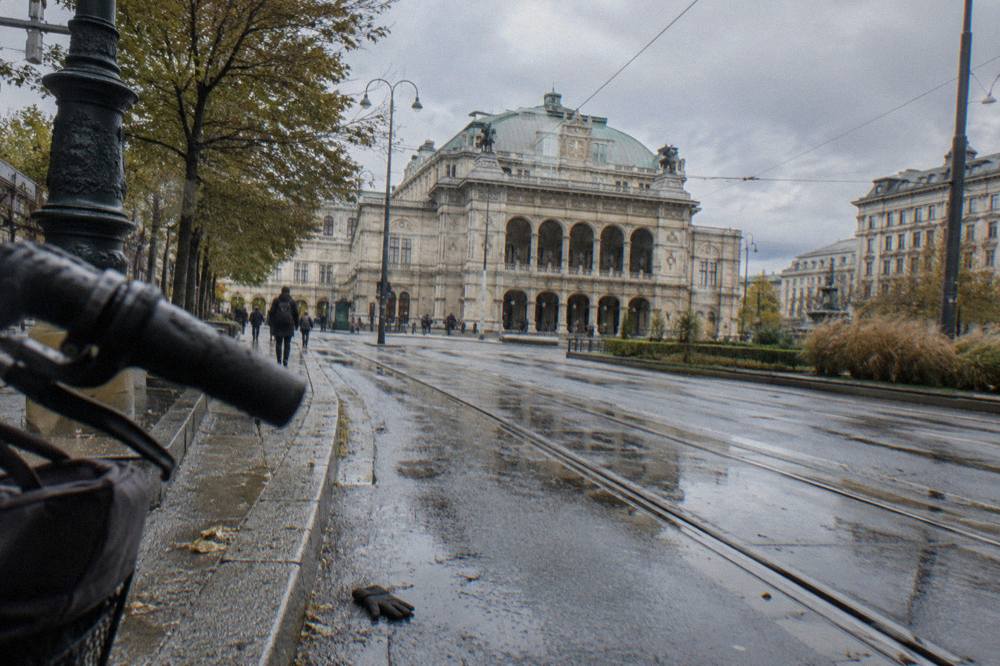
Ride the Ring clockwise from the Opera along the eastern side and you follow the Danube Canal edge of the loop, past the Stadtpark and the Urania, before the northern arc lifts you through Schottenring to the Votivkirche and the Rathaus. The return along the western side passes the university, Parliament, the museum quarter and the Burgtheater before closing at the Opera. Either direction works; clockwise puts the canal-side park sections early, when legs are fresh.
The classic starting point is the Opera end, Karlsplatz side, because it is a major U-Bahn interchange (U1, U2, U4) and because the first stretch, along the Opernring and the Parkring, is the greenest and gentlest quarter of the loop. The Stadtpark sits just inside the Ring here, and the Danube Canal is one block outside it. Riders heading for the Prater or the Danube Island leave the loop at the Urania end and follow the canal north; our guide to cycling the Prater and Danube Island picks up the route from exactly that point.
The loop is not hermetic. At Schottenring the northern arc meets the canal crossings; at Schwarzenbergplatz the Wieden routes push south toward the Belvedere; at Schottentor the university quarter feeds into the Alsergrund. Treat the Ring as a roundabout with grand scenery: you join it, ride the arc you need, and exit. Riders who want a structured version of this, with someone else reading the intersections, are the core audience for the three-hour city rides below.
All three tours above are shared three-hour city rides; the classic guided tour is the longest-established, the city highlights tour starts from $53 per person per its booking page, and the small-group highlights tour caps the group at a smaller size. Check each booking page for the current meeting point; the listings state them individually.
What Are The Best Stops Around The Ring, In What Order?
Go clockwise from the Opera: Stadtpark, Urania, the Danube Canal spur, Votivkirche, Rathaus, Parliament, the Maria-Theresien-Platz museums, and the Burgtheater, looping back to where you started. This order front-loads the quiet parks, saves the monumental northern arc for the midpoint, and ends in the museum quarter, nearest to coffee and the U-Bahn, in roughly two to three unhurried hours.
| Order | Stop | What You See | Time To Allow |
|---|---|---|---|
| 1 | Vienna State Opera | Ringstrasse's flagship opening building | 10 min |
| 2 | Stadtpark | Green pause, canal-side paths, monuments | 10 to 15 min |
| 3 | Urania | Canal views, junction to Prater routes | 5 min |
| 4 | Votivkirche | Neo-gothic twin-spire church, university quarter | 10 min |
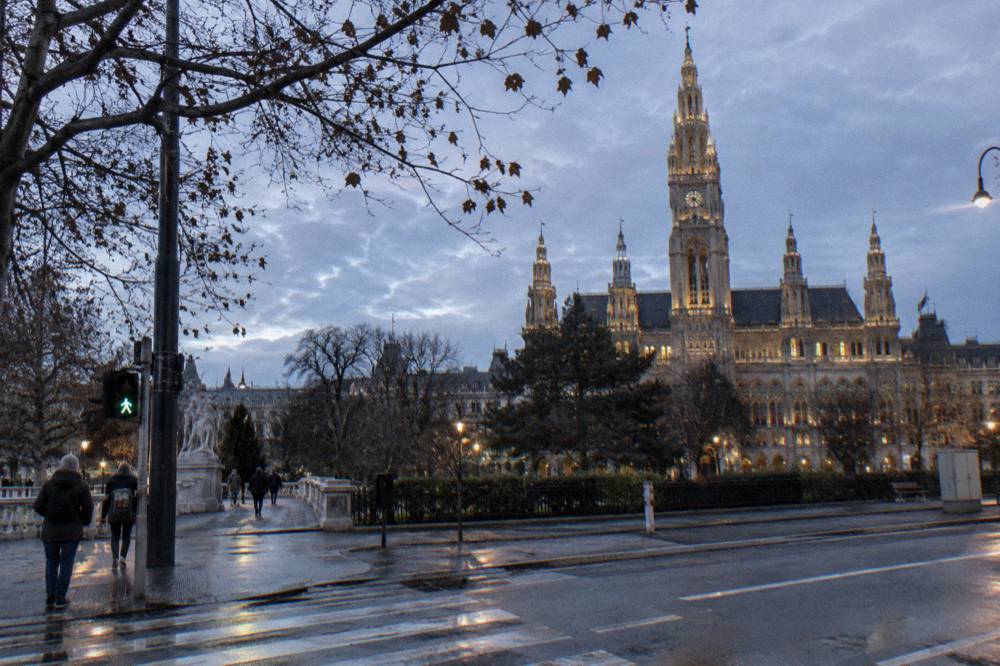
| 5 | Rathaus | Gothic revival city hall, seasonal event square | 15 min |
| 6 | Parliament and Burgtheater | Greek-revival parliament, the court theatre | 10 min |
| 7 | Maria-Theresien-Platz | Museum of Art History and Natural History facing off | 15 to 20 min |
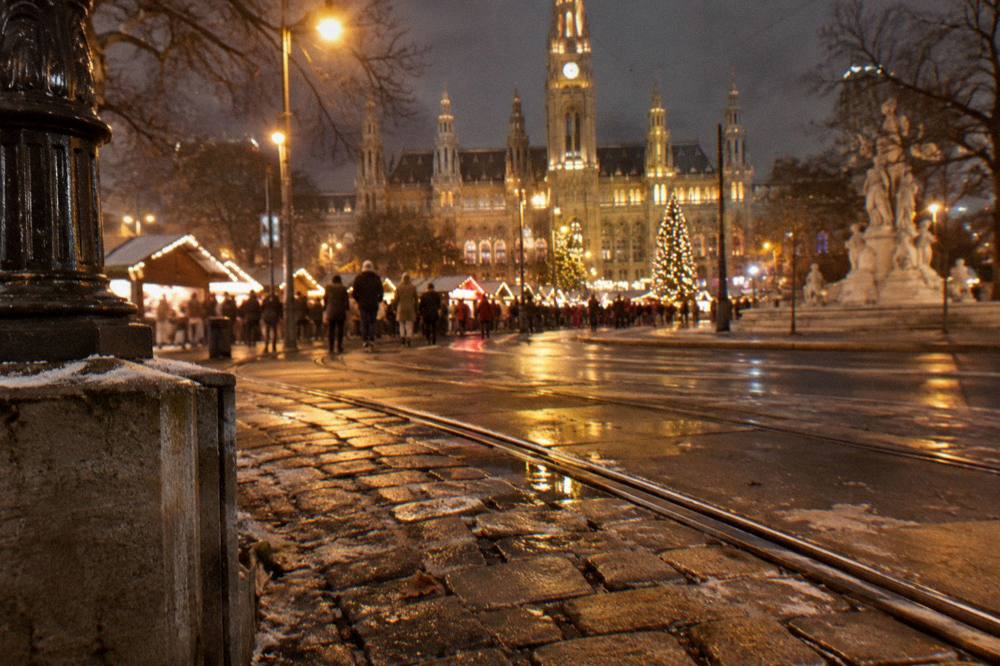
Two of these stops earn more time than the table suggests, depending on season. The Rathausplatz in front of the Rathaus becomes the Wiener Christkindlmarkt from 13 November to 26 December 2026, one of fifteen markets the city runs with 814 stalls in total, and it changes the whole character of the square. The Rathaus square also hosts the Bike Festival each spring. The museum quarter deserves the longest pause if you plan to go inside; the State Apartments at Schönbrunn are the headline imperial interior, but the two Ring museums hold the collections.
A word on pacing: the Ring rewards the slow rider. The buildings are set back behind lawns and tree lines, and the facades read at walking pace. Riding it as a time trial gets you a blur and a tram track to worry about. Budget three unhurried hours for the full circuit with the stops above, which is, not coincidentally, the duration the main guided city rides choose.
The classic 3-hour guided ride is the structured version of exactly this circuit, with the old town folded in; the tour's listing states three hours and a central meeting point, and the booking page carries the current details.
When Is The Best Hour Of The Day To Ride The Ring?
Early morning, from about 7:00 to 9:00 on weekdays, gives the emptiest road surface, the best light on the eastern facades, and tram lanes free of traffic; late afternoon after 17:00 is the second-best window, and the hour to avoid is the 12:00 to 16:00 band when tour groups, taxis and delivery vehicles stack up. Weekend mornings are quiet everywhere on the loop.
The light argument is real and directional. Riding clockwise in the morning puts the sun behind you on the eastern arc, so the Stadtpark and Urania sections glow, and the monumental west-facing facades of the museum quarter and Parliament are front-lit by the time you reach them mid-morning. Reverse the ride in late afternoon and you get the same effect west-to-east. Photographers should treat the loop as a clock face and pick the hour that lights their priority stops.
| Time Band | Traffic On The Ring | Light | Verdict |
|---|---|---|---|
| 7:00 to 9:00 | Light on weekdays | Low, warm, east | Best overall |
| 9:00 to 12:00 | Building, school runs done | Bright, even | Good |
| 12:00 to 16:00 | Heaviest, coaches and tours | Flat, harsh at noon | Avoid for riding |
| 17:00 to dusk | Easing after rush peak | Golden, west | Second best |
| Evening | Light traffic | Lit facades, market season | Good, mind tram glare |
Evening riding deserves a mention. The Ring's buildings are floodlit, the boulevard traffic thins after 20:00, and in market season the Rathausplatz section turns into a lit spectacle. The trade-off is tram glare and late-season cold; Vienna's July long-term average temperature is 21.9°C, but late October evenings are jacket weather. Our month-by-month breakdown in the best time to cycle in Vienna handles the seasonal side in detail.
How Difficult Is The Traffic On The Ringstrasse?
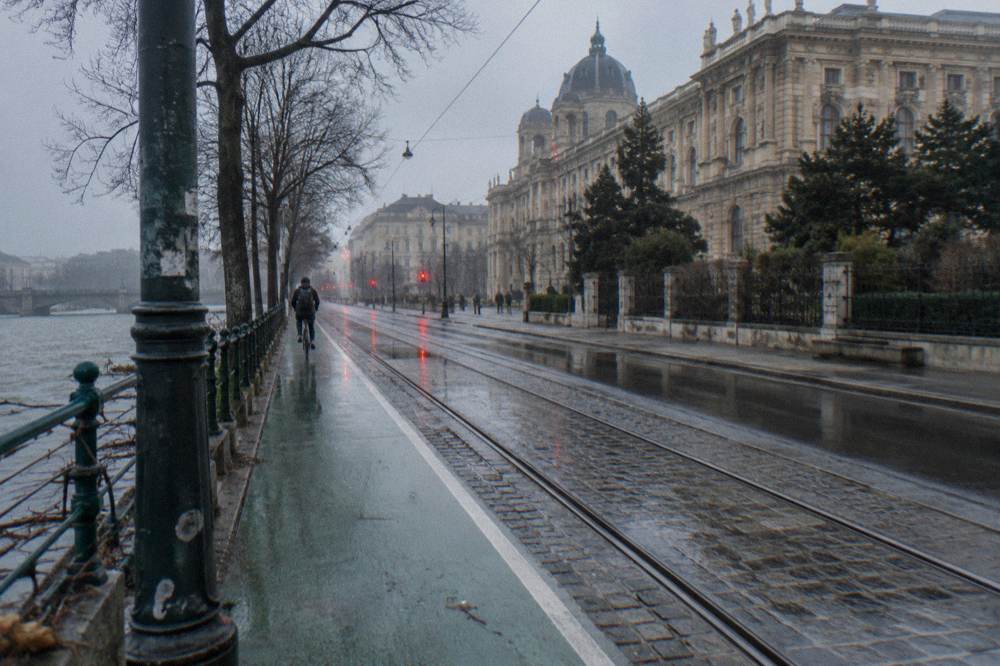
The Ringstrasse is a working boulevard with two to four tram lines down its spine, taxi and bus lanes, and separated bike paths along most but not all of its length; it is manageable for a confident street cyclist and the single biggest reason hesitant riders book a guide. The loop is flat throughout, so difficulty here is about attention, not effort.
The tram tracks are the thing to respect. Crossing them at a shallow angle is the classic mistake, and the tracks run down the centre of the boulevard with crossings at every intersection. The separated paths help: on the sections where the bike lane runs inside the tree line, you share space with pedestrians rather than trams. The current rebuild, in stages from October 2026 starting between Schottentor and Franz-Josefs-Kai, is converting service roads into a 4.50 m two-way cycle path with clear pedestrian separation, which will make the northern arc the safest part of the loop when the first phase lands in summer 2027. Until then, the city's cycling pages carry the staged closure information, and riders should check the city's diversion page before setting out.
| Ring Section | Cycling Facility | Main Hazard | Confidence Needed |
|---|---|---|---|
| Opernring to Parkring | Separated path, park side | Pedestrians, café spill-out | Low |
| Urania to Schottenring | Mixed lanes, canal junctions | Turning traffic | Medium |
| Schottenring to Schottentor | Under staged rebuild | Works diversions | Medium |
| Schottentor to Rathaus | Service road sections | Crossing traffic | Low to medium |
| Museum quarter to Burgtheater | Separated path, wide | Tram track crossings | Low |
One rule change worth knowing regardless of where you ride: since 1 October 2026, e-mopeds are prohibited on cycle paths, having been reclassified as motor vehicles, so the Ring's paths are now bicycle-and-pedestrian space only on that front. For the broader picture on helmets, hand signals and where bikes may legally go, see our guide to cycling rules and safety in Vienna.
Can You Combine The Ring With The Danube And The Prater?
Yes, and it is the natural extension: the Ring's eastern arc sits one block from the Danube Canal, and the canal towpath runs traffic-free north to the Prater and the Danube Island, so a Ring-plus-river loop of the city is the single best half-day ride in Vienna. Leave the Ring at the Urania, drop to the canal, and follow the water. Once the loop is done, the guide to Vienna's must-see sights covers everything else a first visit should include.
The canal side has its own character: graffiti-clad embankments, the recreational paths on both banks, and straight connections to the Prater's Hauptallee. Riders with e-bikes or fresh legs continue past the Prater to the Danube Island, whose 135 km path network includes up to 21 km of paved cycling routes, per the city's own figures. Note one current closure: the main island path between Nordbrücke and Floridsdorfer Brücke is shut for water works until 2030, with cyclists diverted via the Neue Donau path. The wider set of guides lives on Bike Tours Vienna.
For riders who want that extension without planning it, one e-bike tour bundles the canal-side parks and the Danube Island into a single guided loop.
The listing describes three hours on e-bikes covering city highlights together with the Danube Island and green parks, which is precisely the Ring-plus-river geometry described above with the motor doing the headwind work.
What Does A Guided Ringstrasse Ride Actually Add?
A guided ride adds three things: a guide who reads the tram intersections and staged works so you can look at the buildings, a bike and helmet supplied so you carry nothing, and a fixed three-hour structure that folds the old town, the Ring and often a riverside section into one loop. For first-visit riders, that bundle is worth real money; for confident locals, it is not. That guided-versus-solo question gets sharper on longer rides, and the Vienna to Budapest by bike planning guide covers where a guide helps and where you're better off riding alone.
The traffic-reading point is the honest one. The Ring's tricky moments are short and specific, but they are exactly the moments a first-time visitor is also trying to photograph. A guide also carries the context: which facade is the Burgtheater and which is the Parliament, why the two museums face each other, what the 2026 works will leave behind. None of that is on the road signs.
| Factor | Self-Guided Ring Loop | Guided 3-Hour City Ride |
|---|---|---|
| Bike supplied | No, rental or bike-share needed | Yes, included |
| Route decisions | Yours, with this guide | Guide's, fixed structure |
| Traffic reading | You watch the trams | Guide leads |
| Historical context | Guidebook or audio | Live narration |
| Typical cost | Rental, one shop lists 35 EUR per day for a comfort bike | City highlights ride from $53 per person |
| Pace | Fully yours | Group pace, shared format |
The cost line above uses real figures with their bases: one Donauinsel rental shop lists a comfort bike at 35 EUR and an e-bike at 75 EUR for a 6 to 12 hour day, while the city highlights guided tour starts from $53 per person on its booking page. Bike-share is cheaper still for a short loop, at 0.80 EUR per started 30 minutes on WienMobil Rad's standard tariff, capped at 20 EUR per 24 hours. Full share-pricing detail sits in our bike-share and city bikes guide.
Riders who want the private version of the same idea have options too. One private tour with a licensed guide runs two hours on classic bikes, priced per group rather than per person; check the booking page for the current group rate.
That per-group basis is the key planning fact: a private licensed-guide ride splits well for families or three to four friends and poorly for solo travellers.
Should You Ride The Ring On An E-Bike Or A Regular Bike?
For the Ring loop alone, a regular bike is plenty: the circuit is flat, short and punctuated by stops, so battery assist buys almost nothing. An e-bike earns its keep only when you extend past the Ring into the Prater, the Danube Island or the hillier western districts, or when mixed-ability groups need to stay together.
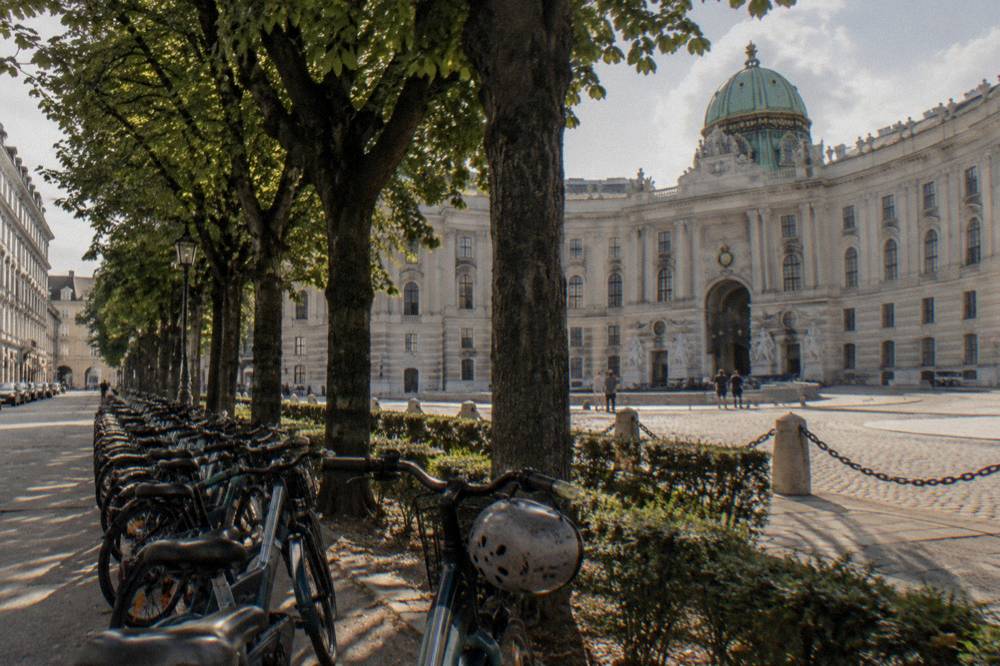
Vienna makes this an easy call because the terrain does the arguing. There is no climb anywhere on the 5.3 km loop; the only gradients a rider meets are bridge ramps on the canal. The case for assist is distance and group dynamics. A loop that continues to the Danube Island and back is a different ride from a boulevard circuit, and e-bikes flatten the difference between riders. Our fuller treatment of the trade-off is in choosing an e-bike or a regular bike for Vienna.
One e-bike city tour makes a good contrast with the classic three-hour rides: it runs three hours on e-bikes across city highlights and hidden sights, and suits riders who want the assist for the extension legs.
Price and review figures sit on the booking pages for both that ride and the classic tour; where a listing's numbers are not stated here, the booking page is the source of truth.

How Does The 2026 Rebuild Change Your Ride?
From October 2026 the Ringstrasse bike path is being rebuilt in stages, with the first section between Schottentor and Franz-Josefs-Kai converting the service road into a 4.50 m two-way cycle path; expect diversions on the northern arc until the first phase completes in summer 2027, and check the city's diversion page before you ride. The rest of the loop stays open through the works.
The rebuild is a genuine upgrade in progress rather than a disruption to fear. The staged plan separates pedestrians from cyclists on the converted sections and widens the path to 4.50 m, and the city frames it as part of the same push that added 33 projects and around 12.5 km of new cycling infrastructure in 2026 under the Radweg-Offensive. Riders visiting before summer 2027 should simply expect cone-dressed sections on the northern arc and follow the signed diversion, not the mapping app's memory of the old route.
The wider context is favourable. A new two-way path on Obere Donaustrasse opened in 2026, connecting the 2nd and 20th districts continuously just off the Ring's northern arc, and the Northern Cycling Highway, a seven-kilometre route to Kagran, was completed in 2025. The Ring is being stitched into a fast-growing network rather than rebuilt in isolation. Riders combining the Ring with a canal or island leg get the benefit of both at once.
What Should You Watch Out For On The Ringstrasse?
Watch four things: tram tracks crossed at a shallow angle, taxi and coach traffic at the museum quarter and Opera intersections, the staged works on the northern arc, and pedestrian spill-out on the park-side paths in good weather and market season. None of these is severe; all of them reward attention over speed.
The tram-track point bears repeating because it is the only genuinely common cause of falls. Cross tracks as close to perpendicular as the intersection allows, and never let a wheel run along a groove. The second quiet hazard is market season: from mid-November the Rathausplatz section hosts the Christkindlmarkt, and crowd density near the square changes the best riding line, pushing sensible riders onto the outer service roads. The third is seasonal light: floodlit buildings are lovely, but wet rails and dark glass storefronts at intersections are not. Helmet use is recommended for all ages and legally required for children, per the national rules portal; check with your tour operator about what they supply.
Solo riders carrying their own bikes should also remember the transport rules if they plan to start or end by U-Bahn: bikes ride free on U-Bahn trains only in the permitted windows, weekdays 9:00 to 15:00 and after 18:30, plus all day on weekends and public holidays, per Wiener Linien's conditions of carriage, and bikes are pushed, never ridden, inside stations. Non-foldable bikes are not allowed on trams or buses at all. Guided tours sidestep the whole question by supplying bikes at the meeting point.
Which Ringstrasse Ride Should You Book?
Book the classic 3-hour guided tour if you want the established all-round city ride, the city highlights tour if the from $53 per person entry price is the deciding factor, and the small-group highlights tour if you want fewer fellow riders on the same loop. All three are shared, three-hour, bike-included rides that cover the Ring with the old town; the differences are price basis, group size and emphasis.
For riders whose priority is the Ring-plus-river extension rather than the boulevard itself, the e-bike tour with the Danube Island is the format that matches. For families or small groups who want the loop to themselves, the private licensed-guide ride at its per-group price is the one to price out. Every option above states its meeting point on its booking page, and current times, prices and availability live there too.
Riders who want the Ring without watching the traffic the whole way book a guided ride; riders who want it at their own pace take a rental or a bike-share bike and this route. The loop itself, 5.3 km of flat boulevard with the Habsburg era lined up along it, is the same either way.
Common Questions About Cycling The Ringstrasse
How Long Does It Take To Cycle The Ringstrasse?
The 5.3 km loop takes under an hour of pure riding. With the main stops, Opera to Stadtpark to Rathaus to the museum quarter, plan two to three unhurried hours, which is why the main guided city rides run to three hours.
Is The Ringstrasse Safe For Cyclists?
Yes, with attention. The loop is flat and mostly carries separated bike paths, but tram tracks, turning traffic and the staged rebuild works on the northern arc demand care. Cross tram tracks squarely and check the city's diversion page for current works status.
What Is The Best Time Of Day To Ride The Ringstrasse?
Early morning, roughly 7:00 to 9:00, gives the lightest traffic and warm directional light. Late afternoon after 17:00 is second best. Avoid the midday to mid-afternoon band when coaches, taxis and tour groups are at their peak.
Do Vienna Bike Tours Include The Ringstrasse?
The main three-hour guided city rides cover the Ring together with the old town, and one e-bike version extends to the Danube Island and green parks. Bikes are included; check each booking page for the meeting point and current schedule.
Can You Rent A Bike Near The Ringstrasse?
Yes. Bike-share stations sit across all 23 districts at 0.80 EUR per started 30 minutes on the standard WienMobil Rad tariff, and rental shops ring the centre; one Donauinsel shop lists a comfort bike at 35 EUR for a 6 to 12 hour day.
Is The Ringstrasse Bike Path Affected By Construction?
Partly. A staged rebuild began in October 2026 between Schottentor and Franz-Josefs-Kai, converting the service road into a 4.50 m two-way cycle path, with the first phase targeted for summer 2027. Follow the signed diversions on the northern arc until then.