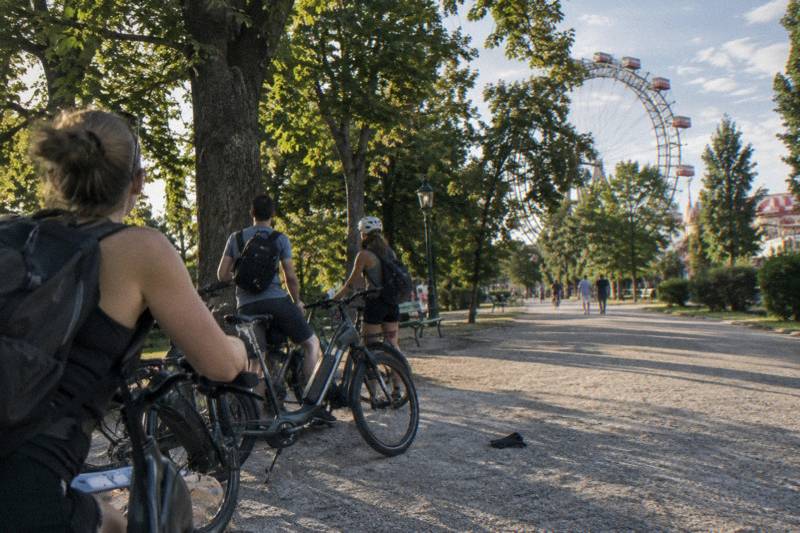
Can You Cycle Along The Danube?
Yes, the Danube is one of the most rideable rivers in Europe, and Vienna is one of the easiest places to prove it. Here is what the banks, islands and guided rides actually look like.
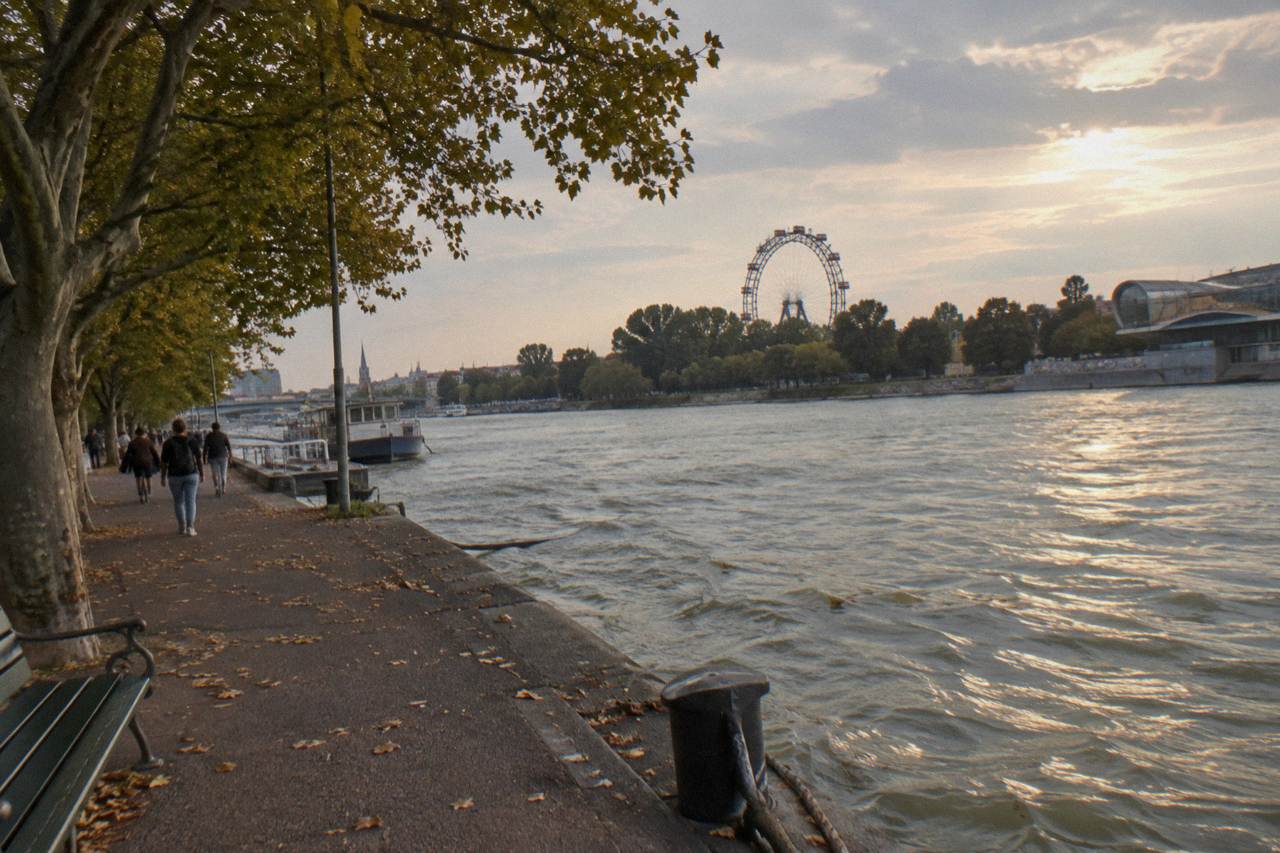
Yes, and it is one of the easiest rivers in Europe to cycle along. Vienna alone gives you a tree-lined canal through the centre, a broad regulated Danube, the calm Neue Donau and the Donauinsel, an island with up to 21 kilometres of paved cycling routes inside a 135 kilometre path network. A 3 hour guided e-bike ride covers the island and green parks comfortably, and self-guided riders can join the long-distance Danube routes that pass straight through the city. If you're starting to picture a longer ride on those flat riverside paths, our guide to Danube cycling times and daily distances helps you pace each day of the trip.
The question sounds almost too simple, but it hides a genuinely useful answer. The Danube in Vienna is not a single bank you ride along; it is a system of four parallel waters, each with its own paths, mood and traffic. Pick the wrong one and you get a busy shipping channel with a gravel shoulder. Pick the right one and you get car-free island paths, beach bars in summer and a river that barely moves.
The short version for planners: the Donaukanal is the urban ride, atmospheric and central; the Danube proper is the wide, windy one; the Neue Donau is the flat, family-friendly one; and the Donauinsel is where most locals actually go to ride. Vienna's total cycling network runs to about 1,811 kilometres, and the Danube corridors are its backbone, stitched together by recent projects like the two-way path on Obere Donaustrasse that now links the 2nd and 20th districts continuously.
This site exists because the riverside riding here is genuinely good, so the rest of this article walks through each waterway, the closures and rules that matter right now, what happens when you follow the Danube out of the city toward the Wachau, and when a guided ride earns its price over going alone.
Which Danube Are You Even Riding Along?
Vienna has four different Danube waters, not one, and each one is a completely different ride. Before you set off, learning which is which is the single most useful thing you can do, because the water you pick shapes the whole experience of your ride along it. The Donaukanal curves through the centre past street art and beach bars; the main Danube is the wide regulated shipping river; the Neue Donau is the calm parallel channel beside the island; and the Donauinsel itself is the nearly 4 square kilometre island between the two, holding a 135 kilometre path network with up to 21 kilometres of paved cycling routes. Confusing them is the number one trip-planning mistake, because each water attracts a different kind of rider.
Start with the canal, because most visitors meet it first. The Donaukanal is the historic river arm, and its towpaths sit minutes from the Innere Stadt. The riding is easy and almost entirely flat, and the walls carry some of the city's best legal graffiti. Our guide to cycling the Danube Canal in Vienna breaks down which bank to pick and where the path dips.
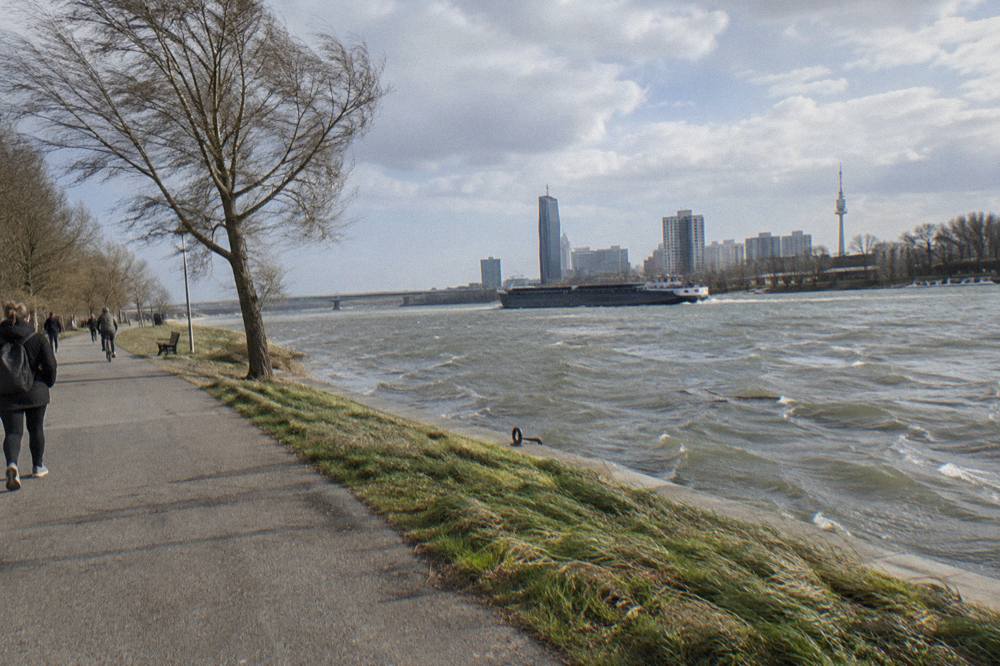
The main Danube, by contrast, is a working river. It is wide, it carries barges, and the wind off it can be surprisingly brisk on an exposed bank. The paths along it are good but the scenery is more industrial in places, which is exactly why the island next door was built as the people's riverside.
| Waterway | Character | Who it suits |
|---|---|---|
| Donaukanal | Urban, central, street art, bars | First-timers, short rides, evening |
| Danube (main channel) | Wide, exposed, working river | Long-distance through-riders |
| Neue Donau | Calm, sandy banks, shallow water | Families, swimmers, relaxed pace |
| Donauinsel | Island, up to 21 km paved routes | Locals, distance riders, e-bikers |
The Donauinsel: Vienna's Island Cycling Escape
The Donauinsel is the best pure cycling on Vienna's stretch of the Danube, and it is not particularly close. If you are looking for Vienna's island cycling escape, this is the answer: a genuine getaway on two wheels where the city feels left behind. The island stretches alongside the Neue Donau with roughly 21 kilometres of paved routes inside a total 135 kilometre path network, and the city describes about 42 kilometres of shoreline across the island and its banks. Normal traffic rules apply on the island, the paths are wide and separated from cars, and in summer the bathing areas sit right next to them, which makes it the one place where a long ride and a swim break share the same route. Rides like this are a big part of why our comparison of Europe's best countries for a cycling holiday puts Austria near the top.
One caveat matters for route planning. A section of the main island path between Nordbrücke and Floridsdorfer Brücke stays closed for water works construction until 2030, and cyclists are diverted onto the Neue Donau path. It is a signed diversion, not a dead end, but if your route assumed a straight run down the island side, check the city's diversion page before setting off.
If riding the riverside on an e-bike appeals, the Vienna E-Bike Tour with Danube Island and Green Parks is the natural pairing. It is a 3 hour shared guided ride on e-bikes, which matters here: the island is long enough that pedal assistance turns a partial crossing into a full one within the same outing. Bikes are included, so there is nothing to rent or carry, and the guide handles the diversion question for you.
Getting there independently is simple too. The U-Bahn serves the island at several stations, and standard bikes travel free on the U-Bahn on weekdays between 9:00 and 15:00 and after 18:30, plus all day on weekends and public holidays, pushed rather than ridden through stations. Bikes are not allowed on trams and buses, so plan the last leg on foot or by rail.
What Rules And Closures Should You Know Before Riding?
Before you ride, three rules shape almost every Vienna Danube trip: a helmet law applies to children, a specific rule governs the U-Bahn carriage windows, and one long island closure on the Danube has outlasted most trip plans, so check current access before you commit to a route across that stretch. Children up to their 12th birthday must wear a helmet on any bicycle, and since 1 May 2026 that duty also covers children and youths under 14 on e-bikes, a recent rule change worth confirming with your tour operator. Bikes ride the U-Bahn only, in the permitted hours, pushed not ridden. And the Donauinsel closure between Nordbrücke and Floridsdorfer Brücke runs until 2030 with a signed diversion via the Neue Donau path.
The helmet point matters most for families. From age 14 there is no general helmet duty, and helmets are simply recommended at every age, which matches how most adult tour groups ride. If you are booking a family tour, ask the operator how they handle helmets for children, because operators differ and the listing does not always spell it out.
One more recent change: since 1 October 2026, e-mopeds are banned from cycle paths as classified motor vehicles. This does not affect bicycles or e-bikes, but it has made the riverside paths noticeably calmer where shared mopeds used to cut through. Our wider primer on cycling rules and safety in Vienna covers hand signals, one-way paths and lights in detail.
| Rule or closure | What applies |
|---|---|
| Child helmets | Required up to the 12th birthday; under 14 on e-bikes since 1 May 2026 |
| Bikes on U-Bahn | Weekdays 9:00 to 15:00 and after 18:30, all day weekends and holidays; pushed, two per entry area |
| Bikes on trams and buses | Not permitted if non-foldable |
| Donauinsel closure | Main path between Nordbrücke and Floridsdorfer Brücke closed until 2030, diversion via Neue Donau |
| E-mopeds | Banned from cycle paths since 1 October 2026 |
Can You Follow The Danube Beyond Vienna By Bike?
Yes, you can keep riding the Danube long after Vienna fades behind you. The classic extension is the Wachau Valley upstream, a UNESCO-listed stretch of terraced vineyards, apricot orchards and river loops that feels like a different country just an hour from the city. The Wachau sits between Krems and Melk, and the bookable way to ride it from Vienna is a full-day guided wine-tasting bike tour that runs roughly 11 hours door to door, with bikes and tastings arranged for you. Independent riders can also reach the valley by train and ride under their own steam, using the same riverside paths on their own schedule. If you want the full case for why this valley tops every other stretch of the river, our guide to the best part of the Danube to cycle covers the scenery, the riding, and both ways to do it from Vienna.
The Wachau is where the Danube stops being flat and urban and starts bending between hillsides. Apricot blossom usually lands between late March and early April with a peak of ten days to three weeks, and the harvest follows in early to mid July, so the valley looks and tastes different depending on when you ride. Our long guide to the Wachau Valley by bike from Vienna covers trains, ferries and route choice in full.
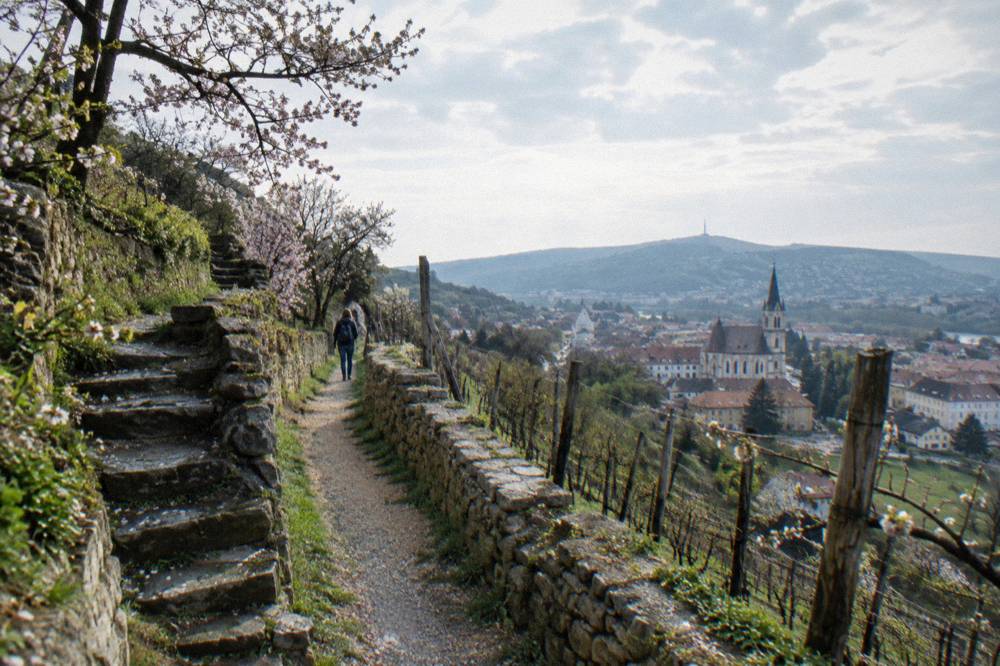
For riders who want the valley without the logistics, the Wachau Valley Wine Tasting Bike Tour from Vienna is the standout option: the listing states roughly 11 hours, the ride is shared, and wine tasting is part of the day. Check the booking page for the current price, the meeting point and what the day includes, since those details sit on the listing rather than in a fixed schedule. More of these guides are collected on Bike Tours Vienna.
Downstream, the Danube Cycle Path continues toward Budapest, and the upstream long-distance route is the famous Passau to Vienna run. If you are weighing the full journey, start with how long the Danube Cycle Path is before committing to a stage plan.
What Does A Guided Danube Ride Add Over Going Alone?
A guided ride buys three things going alone does not: route knowledge on a river system with four parallel channels, a bike that is already waiting at the meeting point, and someone else's answer to the closure and construction questions. Vienna's riverside paths are signposted and mostly flat, so confident riders can absolutely go alone, but beginners often spend their first hour on the wrong bank before realizing it. Guided rides also fold in context, from the story of the island itself to why the canal walls are painted, and they reroute around works without you noticing there was a decision to make.
The city-side pairing for that is the Classic Vienna 3-Hour Guided Bike Tour, a shared classic-bike ride that covers the centre and the Ringstrasse before touching the riverside. It suits riders whose main interest is the city with the Danube as one stop among many, and it pairs naturally with a second day on the island e-bike ride for the full riverside picture. Meeting point and inclusions sit on the booking page, so check them there before you plan the day around it.
One caution for independent riders: the Ringstrasse bike path is being rebuilt in stages from October 2026, starting between Schottentor and Franz-Josefs-Kai, with the first phase targeted for summer 2027. If your self-guided loop includes the Ring, expect work zones. Guided tours reroute around them as a matter of course.
When Is The Best Season To Cycle The Danube?
Late spring through early autumn, roughly May to September, forms the core cycling season along the Danube, and while July and August bring the hottest weather and the biggest crowds, the true sweet spot for most riders falls in late spring and early autumn, when conditions stay pleasant and the paths feel calmer. Vienna recorded its first 40 degree days and a record number of heat days this past summer, against a long-term July average of about 21.9 degrees at Hohe Warte, so midsummer rides reward early starts and the island's shade. The river does not close in the other seasons; it just changes character, and so does the right clothing.
The riverside calendar matters too. The island's big festival weekend fills the Donauinsel in early July and changes the path traffic entirely, while the Christmas markets from mid-November shift the cycling interest back toward the centre and the canal. Winter riders should know the city clears a network of central high-traffic bike paths as a priority, with a published plan of which riverside segments stay rideable in snow.
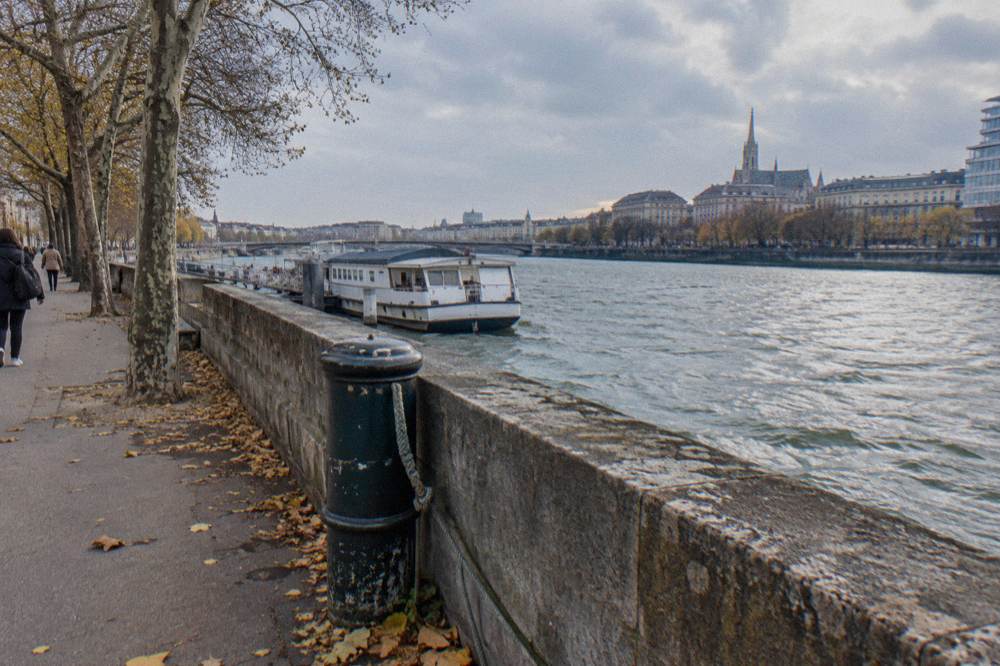
For rental costs on a self-guided day, one Donauinsel rental shop lists a comfort bike at 35 EUR per day and an e-bike at 75 EUR per day, which is one shop's list rather than a market average. The bike-share option, WienMobil Rad, charges from 0.80 EUR per started 30 minutes for a standard bike, capped at 20 EUR per 24 hours, with e-bikes from 3.30 EUR per started 30 minutes capped at 40 EUR. Our guide to bike share and city bikes in Vienna explains the tariffs and stations in detail.
By season's end the choice is simple. Summer for swimming breaks between kilometres of island path, spring for the Wachau in blossom, autumn for vineyard colour and empty paths, and even winter for a cleared canal-side commute past the murals. The river is rideable in all of them; only the outfit changes.
Common Questions About Cycling The Danube
Can You Cycle Along The Danube?
Yes. Vienna alone offers a canal through the centre, the wide main Danube, the calm Neue Donau and the Donauinsel with up to 21 kilometres of paved cycling routes, and long-distance Danube routes continue upstream and downstream through the city.
Do I Need My Own Bike To Ride Along The Danube In Vienna?
No. Guided tours include the bike in the price, one Donauinsel rental shop lists comfort bikes at 35 EUR and e-bikes at 75 EUR per day, and WienMobil Rad bike-share runs from 0.80 EUR per started 30 minutes across more than 250 stations.
Is The Danube Ride In Vienna Flat?
Essentially yes. The canal, the Neue Donau and the Donauinsel paths are almost entirely flat, which is why families and e-bike tours cluster there. Only the Wachau stretch upstream adds real climbing along the terraced valley sides.
Can Children Ride Along The Danube Paths?
Yes, the island paths in particular are wide and car-free. Children up to their 12th birthday must wear a helmet on any bicycle, and since 1 May 2026 that duty also applies to children and youths under 14 on e-bikes. Our guide to cycling in Vienna with kids covers the rest.
Is Any Part Of The Danube Route Closed Right Now?
One section of the Donauinsel main path, between Nordbrücke and Floridsdorfer Brücke, is closed for water works construction until 2030, with a signed diversion along the Neue Donau path. Check the city's diversion page before a long island ride.