Danube Cycle Path From Passau To Vienna
The downriver run from Passau into Vienna is the busiest stretch of long-distance cycling in Europe, and almost all of it is flat, signed and riverside. Here is how to plan the stages, the luggage question, the Wachau detour and the last kilometres into the city.
Short answer
The route follows the Danube downstream from Passau to Vienna on mostly flat, dedicated riverside paths, and riders typically split it into a week or more of daily stages, either self-guided or with luggage transfer. The Wachau between Melk and Krems is the scenic high point. The city entry runs past the Danube Island and the Prater.
How Does The Passau To Vienna Route Actually Work?
The route runs downriver along the Danube from Passau, on mostly separate, paved cycling paths on the river embankments, all the way into Vienna. It is fully signed as a cycle route, traffic-light for most of its length, and it descends so gently that riders experience it as flat. Most people ride it over roughly a week of daily stages, resting in small riverside towns between one bed and the next. If you want to know which stretches still ask a little of your legs, and whether a regular bike or an e-bike is the better choice, our guide to how flat the Danube Cycle Path really is has the answers.
Downstream is the whole trick. The current sets the direction of travel, the wind is the only real variable, and nobody rides this route uphill because there is, functionally, no uphill. The path surface is asphalt or fine gravel for nearly the whole way, and the signing is dense enough that a wrong turn usually costs a few hundred metres rather than an afternoon. You do not need to be a strong cyclist. You need to be able to sit on a saddle for a few hours a day and to enjoy moving at the speed of a river.
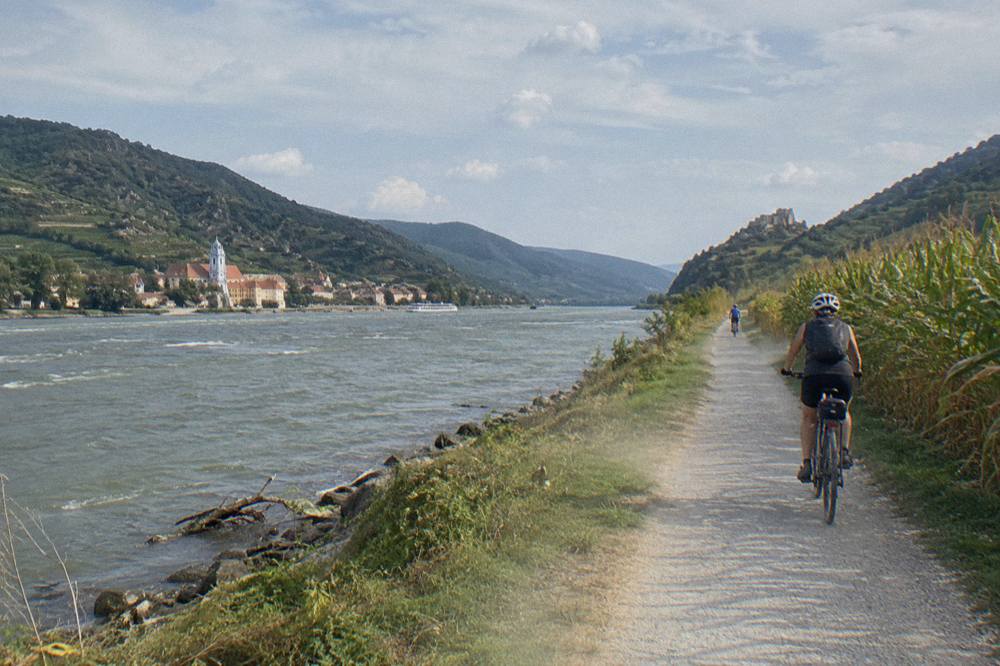
What surprises many first-time riders is how social it is. This is the most heavily ridden long-distance cycle route in Europe, and in summer the guesthouse terraces along it fill with people doing exactly what you are doing, at exactly your pace. That density has a practical upside: the towns along the route are set up for cyclists, with bike-friendly accommodation, repair help and places to lock up everywhere. It also has a downside, which is that July beds in the popular sections book out early. Once you roll into Vienna at the end of the route, our guide to cycling in Vienna as a visitor explains how the city keeps that same bike-friendly welcome going.
If you want the numbers for the full distance, the kilometre totals and the official stage breakdowns are published in the current route materials, and the figures differ slightly between publishers depending on which riverbank variant they count. Check the official route guide for the version you will follow, and treat anything else as folklore. What matters for planning is not the total but the daily stage length you choose, and that is yours to set.
For readers planning the whole corridor, our companion piece on how long the Passau to Vienna ride takes works through the pacing question in detail.
What Does A Typical Stage Look Like?
A typical stage is three to six hours of easy riding, bookended by breakfast and a riverside dinner, with the luggage either on your bike or in a transfer van. You follow the river, cross it occasionally on bridges or small ferries, stop at a monastery town or a wine village, and finish before you are tired. The route exists to make days like this repeatable.
The rhythm settles quickly. Mornings are cool and fast, the path is quiet before ten, and the classic mistake is leaving late and riding the hot hours. Midday belongs to a long lunch, ideally somewhere with apricot dumplings if you are in the Wachau by July. Afternoons are shorter, and most riders aim to arrive at the night's stop by mid to late afternoon, in time for a swim in the river at the managed bathing areas, or a beer on a terrace watching other cyclists roll in.
Because the route is linear and rail-served almost throughout, stages are forgiving. Miss your planned town and there is usually a train along the valley that takes you and your bike forward or back. That safety net is the real reason families and less confident riders choose this route over Alpine alternatives: a bad day has an exit. Bikes travel on the mainline trains along the Danube corridor with a bike ticket, and you should check the operator's conditions for reservations before you rely on it.
For many riders, the question is not whether to ride the route but whether to ride it alone or with support. The trade-offs look like this:
| Approach | What you carry | What you organise | Who it suits |
|---|---|---|---|
| Fully self-guided with panniers | Everything, on the bike | Your own bookings each night | Riders who want flexibility and low cost |
| Self-guided with luggage transfer | Only a day bag | A booking, or a transfer service arranged per stage | Couples and families who want easy riding |
| Supported group ride | Nothing | Almost nothing, the operator handles it | Riders who want company and fixed dates |
| Day rides only, based in Vienna | Nothing | Nothing beyond one booking | Visitors with limited time |
This site does not sell a Passau to Vienna tour, but it covers the Vienna end of the corridor well. If a full multi-day ride is more than your trip can hold, the bookable alternative is the Wachau, the route's most celebrated section, as a single supported day from Vienna, roughly 11 hours door to door with wine tasting built in.
Is The Passau To Vienna Route Really Flat?
Yes, in every way that matters to your legs. The route descends downstream at a gradient so slight that riders describe it as flat, and there are no sustained climbs anywhere on the main river path. The only hills are short detours up to viewpoints, monasteries or accommodation set back from the bank, and every one of them is optional.
The elevation story is simple: you start in Passau at the confluence of three rivers, you finish in Vienna at the edge of a lowland city, and in between the Danube flows through a wide valley it cut itself. The path hugs the water. Where the valley narrows, most dramatically in the Wachau between Melk and Krems, the route threads between the river and the rock, and the riding stays level even when the scenery turns vertical. That combination, flat pedalling with cliff-and-vineyard views, is exactly why this section gets the crowds.
The honest caveat is the surface and the headwind, not the gradient. Gravel sections suit wider tyres better than racing bikes, and a strong upstream wind on an exposed embankment can make a flat day feel like work. E-bike rental has softened even that problem: one Wachau rental lists e-bikes at 38 EUR per day, and day rental changes the calculus for riders who are unsure of their range.
If flatness is the reason you are considering the route, read our comparison of e-bike or regular bike for seeing Vienna, because the same logic applies to the last day of the ride as to the city riding that follows it.
| Route characteristic | What to expect | Planning note |
|---|---|---|
| Gradient | Gentle downstream descent, felt as flat | No gearing worries on any bike |
| Surface | Asphalt and fine gravel embankment paths | Wider tyres ride more comfortably |
| Traffic | Separated path almost throughout | Short shared sections near towns |
| Main obstacle | Headwind on open stretches | Start early, ride the calm hours |
| Optional hills | Viewpoint and monastery detours | Skip any of them freely |
Do You Need Luggage Transfer Or Can You Carry Everything?
Most riders can carry everything on a hybrid or touring bike without trouble, because the route is flat and the days are short. Luggage transfer, where a service moves your bags between booked accommodation each day, buys comfort rather than capability. It costs more, removes the panniers from the equation, and suits families and anyone on a bike with limited carrying capacity.
The decision usually comes down to the bike. If you ride your own touring bike or rent a hybrid with racks, two rear panniers hold a week of clothes easily, and on a flat route the weight barely registers. If you rent an e-bike, luggage capacity varies by model and shop, and that is the case where transfer genuinely changes the trip. Check with the rental shop what the bike can carry before you decide.
Booking-wise, the transfer services along the route are well established: they collect bags at one guesthouse and deliver them to the next, usually with a same-day cutoff in the morning. They work best when your overnight stops are fixed in advance, which is also the practical requirement in peak season anyway, since July and August beds in the Wachau and the Strudengau go early. Ride without bookings only in shoulder season, and even then carry a phone and a fallback list.
There is a third pattern worth naming: base yourself in Vienna and ride the highlight sections as day trips by train. Vienna to Melk Bahnhof trains run every 30 minutes with an average journey time of 51 minutes, which puts the start of the Wachau under an hour from the city. Some visitors find that a week of day rides out of one hotel beats a week of one-night stands, and the train does the luggage carrying for free.
For riders weighing the whole question of guided versus independent, our guide on whether to rent a bike or join a guided ride in Vienna sets out the same trade-off for the city end of the route.
When Is The Best Season For The Ride?
The main season runs from late April to early October, matching the Danube shipping season in the Wachau, which operates 28 March to 1 November 2026 with its main season from 25 April to 4 October. Late spring and September balance good weather, open services and thinner crowds. Summer works but runs hot, and Vienna recorded its first 40 degree days in the summer of 2026.
Spring has one spectacular drawcard: apricot blossom in the Wachau, which typically runs late March to early April, with the peak lasting ten days to three weeks. The orchards sit right on the river, the riding is cool, and the villages hold blossom festivals, but services at that time of year are thinner and river weather can swing. April into May is the safer spring bet if blossom timing is a bonus rather than the point.
High summer is the busiest and hottest window. The route's own infrastructure, ferries, guesthouses, ship excursions, runs at full tilt, but so does everyone else's holiday. Water and shade planning matter more than fitness planning. By contrast, early to mid July brings the apricot harvest in an average year, which is its own reason to be in the Wachau with a basket.
| Period | Conditions | Crowds | Notes for riders |
|---|---|---|---|
| Late March to early April | Cool, blossom in the Wachau | Low | Thinner services, changeable weather |
| Late April to June | Mild, green | Moderate | The all-round best window |
| July to August | Hot, full services everywhere | Highest | Book beds far ahead, ride mornings |
| September to early October | Warm days, quieting down | Moderate | Excellent, especially early in the month |
| November to March | Cold, short days, reduced services | Minimal | Winter clearing applies to key Vienna paths only |
What Makes The Wachau Section The High Point?
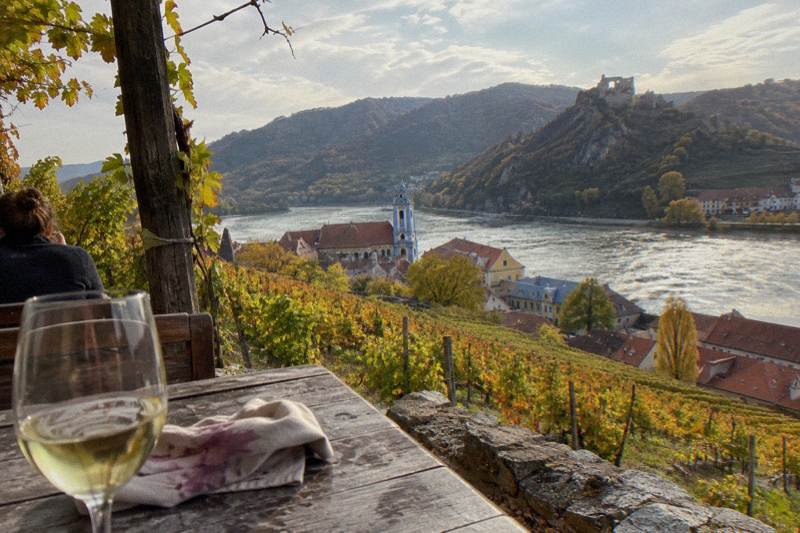
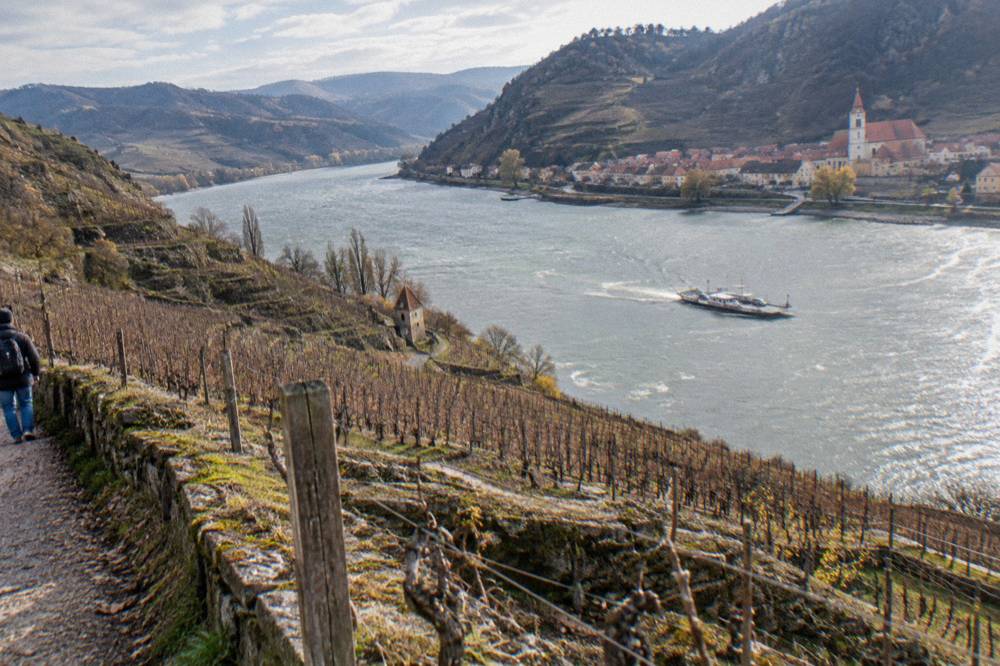
The Wachau, the narrow Danube valley between Melk and Krems, packs terraced vineyards, apricot orchards, a baroque abbey at each end and a river small enough to cross by roll ferry, into the shortest and most photographed stretch of the whole ride. Most riders call it the section they would repeat, and the one that justifies the route on its own.
Start, as almost everyone does, above it: Melk's abbey sits over the river like a golden gate, and the ride downstream begins with the valley closing in. From there the path weaves between water and rock face, past the wine villages of Spitz and Weissenkirchen, under castle ruins, and through orchards that define the local economy twice a year, blossom in spring, harvest in July. The valley is a UNESCO cultural landscape, which sounds like brochure language until you ride it and realise the phrase is doing accurate work.
Practical details are unusually good for such a rural-feeling stretch. The Spitz-Arnsdorf roll ferry crosses the river March to October, Monday to Friday from 06:15 and weekends from 08:15, running to 19:00 and 19:30, and charges 4.70 EUR for a bicycle including rider, or 3.10 EUR for a foot passenger. The DDSG ships connect Krems and Melk on the water, with a one-way ticket at 40 EUR and a return at 49 EUR in 2026. Put together, ferry, ship and train let you ride the valley one way and skip the backtrack: our page on Wachau wine and apricot country by bike maps those combinations out.
There is also a bookable shortcut for riders who cannot spare the week. A supported day tour from Vienna covers the Wachau with wine tasting, lasting roughly 11 hours, bikes included, and it exists precisely because this section rewards a visit even without the full ride. You can see the Wachau Valley wine tasting day ride here, or check availability if the date matters to your planning.
| Way to travel the Wachau | Cost as listed | Source of the figure |
|---|---|---|
| Spitz-Arnsdorf roll ferry, bicycle with rider | 4.70 EUR | Ferry operator listing |
| Spitz-Arnsdorf roll ferry, foot passenger | 3.10 EUR | Ferry operator listing |
| Ship, Krems to Melk one-way | 40 EUR | 2026 shipping listing |
| Ship, Krems to Melk return | 49 EUR | 2026 shipping listing |
| E-bike rental in Spitz or Melk | 38 EUR per day | One Wachau rental lists |
| Train, Vienna to Melk Bahnhof | Fare on the operator's site | Trains every 30 minutes, about 51 minutes |
How Does The Final Approach Into Vienna Work?
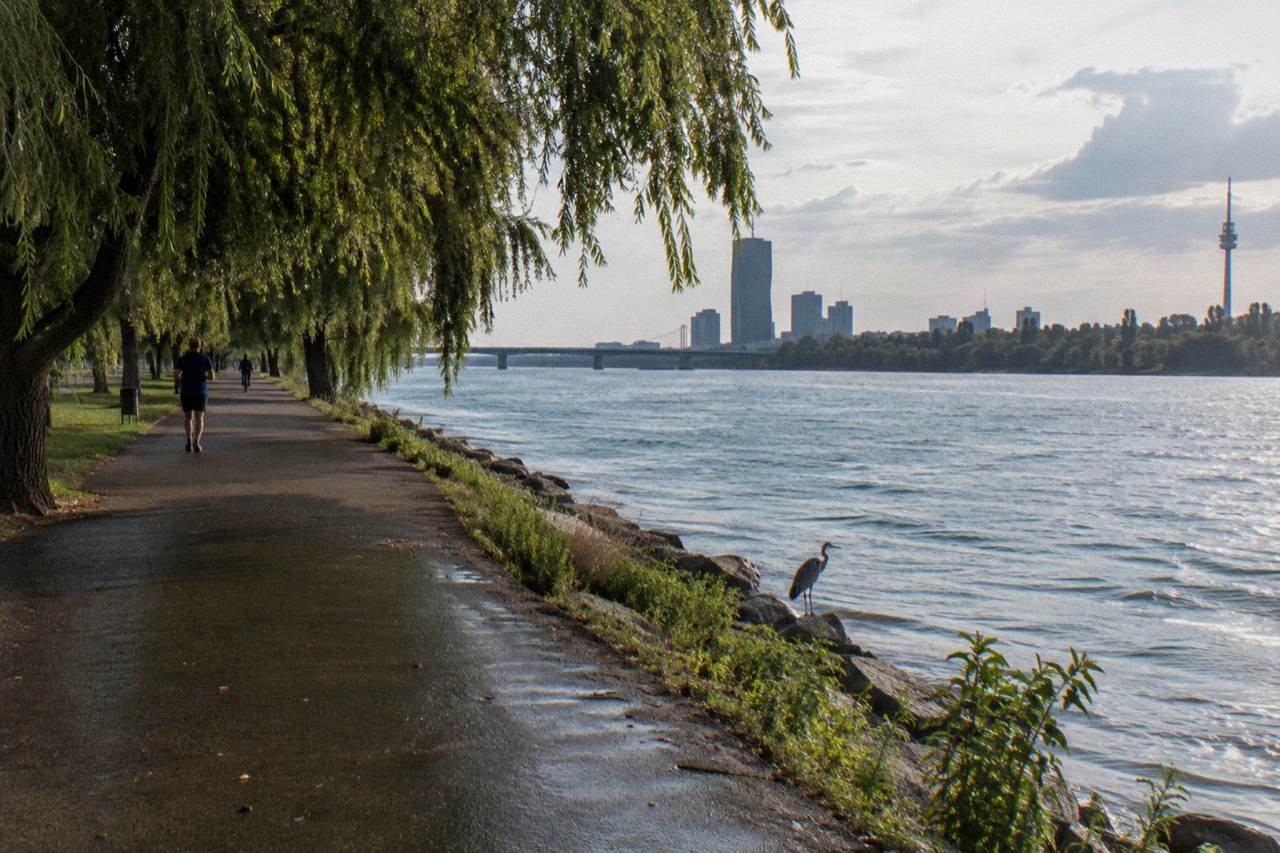
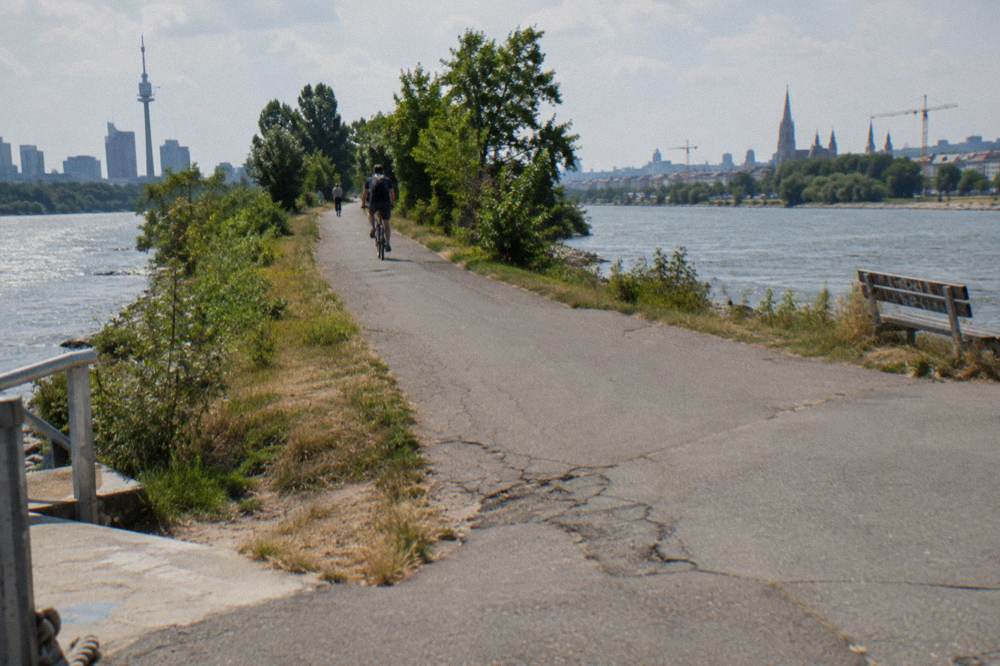
The last stage runs off the long-distance path and into the city along the New Danube and the Danube Island, past the recreation zone at the Prater, and then either along the Danube Canal or the Ringstrasse into the centre. It is the strangest day of the ride: river wilderness in the morning, imperial architecture by lunch. One path section on the island is closed for water works until 2030, with a signed diversion.
The transition is more gradual than the map suggests. Suburbs appear, then the water splits into the Old Danube, the New Danube and the island between them, and suddenly you are riding through a landscape that half a million people use at the weekend. The Danube Island carries roughly 21 kilometres of paved cycling routes within a 135 kilometre path network on the island, according to the city's own figures, so there is plenty of room, but the main route through it needs care at junctions where day trippers wander across the path.
Two current works items matter here. The closed island section between Nordbruecke and Floridsdorfer Bruecke diverts riders via the Neue Donau path until 2030, so follow the city's diversion signage rather than the old line. And the Ringstrasse bike path is being rebuilt in stages, with work starting in October 2026 between Schottentor and Franz-Josefs-Kai and the first phase targeted for summer 2027. The end result is a proper two-way cycle path, but during construction the classic victory lap around the Ring needs a check of current conditions. The city maintains a diversion page for exactly this, and the same page covers winter, since Vienna prioritises clearing of central high-traffic bike paths with a published plan. If you're weighing how Austria stacks up against its neighbours for cycling holidays, our guide to the best European country for bike touring makes the case that the Danube route alone puts it near the top.

Once you are on the Ring, the ride is over in the best way: opera, parliament and city hall sliding past at cycling speed. Our route guide to cycling the Ringstrasse picks up exactly where the long-distance path hands you over.
What Does The Ride Cost To Organise Yourself?
Counting rental, beds, food and the occasional ferry or ship, a self-guided week rides at the cost of a modest hotel holiday, with rental and luggage transfer as the two big variables. Bike rental in Vienna runs from about 0.80 EUR per started 30 minutes for bike-share up to 75 EUR per day for a rental-shop e-bike. Beds and dinners dominate the total either way.
Rental pricing splits into three tiers. Bike-share, the WienMobil Rad system, charges 0.80 EUR per started 30 minutes capped at 20 EUR per 24 hours for standard bikes, with e-bikes at 3.30 EUR per started 30 minutes capped at 40 EUR, and cheaper rates for holders of local annual passes or the KlimaTicket. That is ideal for city days but the wrong tool for a multi-day route. Day rental is the multi-day tool: one rental shop at the Danube Island lists a comfort bike at 35 EUR for a 6 to 12 hour day and an e-bike at 75 EUR, and shops along the route quote similar patterns, so treat those as one shop's list rather than a market average.
| Item | Listed price | Basis |
|---|---|---|
| Bike-share standard bike | 0.80 EUR per started 30 min | Capped at 20 EUR per 24 hours |
| Bike-share e-bike | 3.30 EUR per started 30 min | Capped at 40 EUR per 24 hours |
| Bike-share with eligible annual pass | 0.37 EUR per started 30 min | Capped at 10 EUR per 24 hours |
| Rental-shop comfort bike | 35 EUR per day | One Danube Island shop, 6 to 12 hours |
| Rental-shop e-bike | 75 EUR per day | One Danube Island shop, 6 to 12 hours |
| Wachau e-bike (Spitz or Melk) | 38 EUR per day | One Wachau rental lists |
Guided and supported options sit on top of that. A 3-hour guided city bike tour in Vienna costs from 53 USD per person, which is a fair reference point for what a professional guide adds per half day; a full supported Wachau day with wine tasting, roughly 11 hours, is priced on its booking page, as are the operator's current terms. Neither figure is hidden, but both move with season and demand, so read them live rather than from memory.
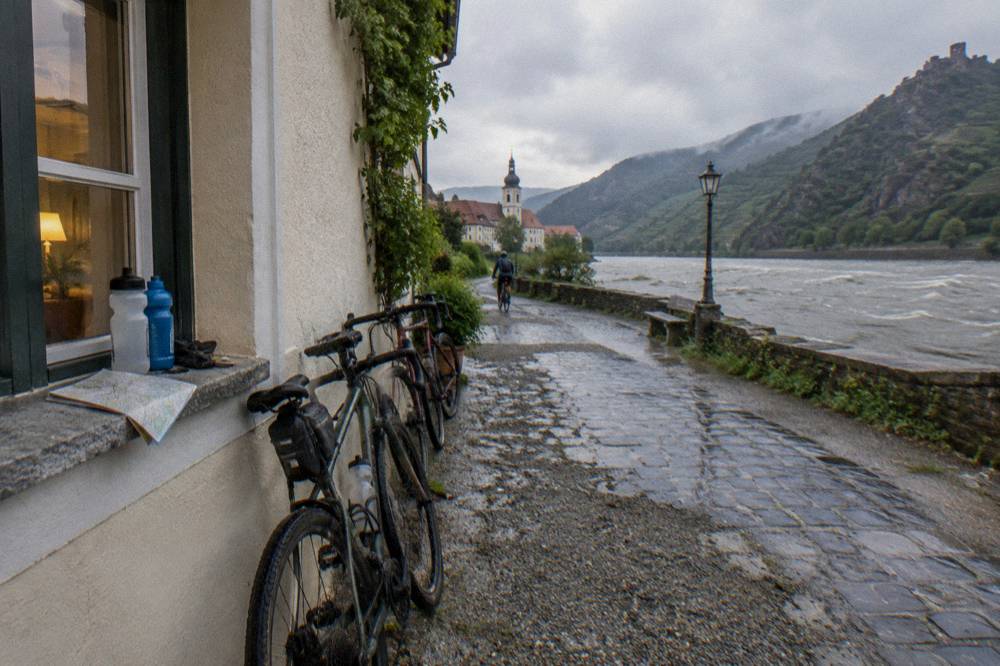
Trim the budget by riding shoulder season, skipping luggage transfer, and using the train for a stage or two. Raise it with e-bikes, riverside hotels in the Wachau in July, and a ship leg for the pure pleasure of it. What you should not trim is the contingency: a repair, a taxi or an extra night somewhere pleasant is part of the realistic total.
What Should You Know Before You Set Off?
Three things carry most of the practical weight: children under 12 must wear a helmet on any bicycle, and since 1 May 2026 that duty extends to under-14s on e-bikes; bikes travel on the Vienna U-Bahn only in permitted hours, wheeled rather than ridden; and the route's signed diversions, the island closure and the Ringstrasse works, are current and worth a check before your final day.
Helmets are legally required for children up to their 12th birthday on any bike, and a recent rule change extends the duty to children and youths under 14 on e-bikes. For adults there is no general helmet duty from 14, though helmets are recommended at every age. Tour operators may set their own requirements regardless of the law, so ask yours, as the city's cycling rules page sets out the baseline.
Public transport with a bike is narrower than people assume. Bikes ride free on the U-Bahn on weekdays between 9:00 and 15:00 and after 18:30, plus all day on weekends and public holidays, must be pushed inside stations, cannot use escalators, and are limited to two bikes per entrance area. Ordinary pedal-assist e-bikes are allowed on the U-Bahn in the permitted hours, just like standard bikes. Only start-assist models, cargo bikes and transport bikes are barred, and non-foldable bikes cannot board buses or trams at all. Plan the last day accordingly: ride in, rather than hoping to board.
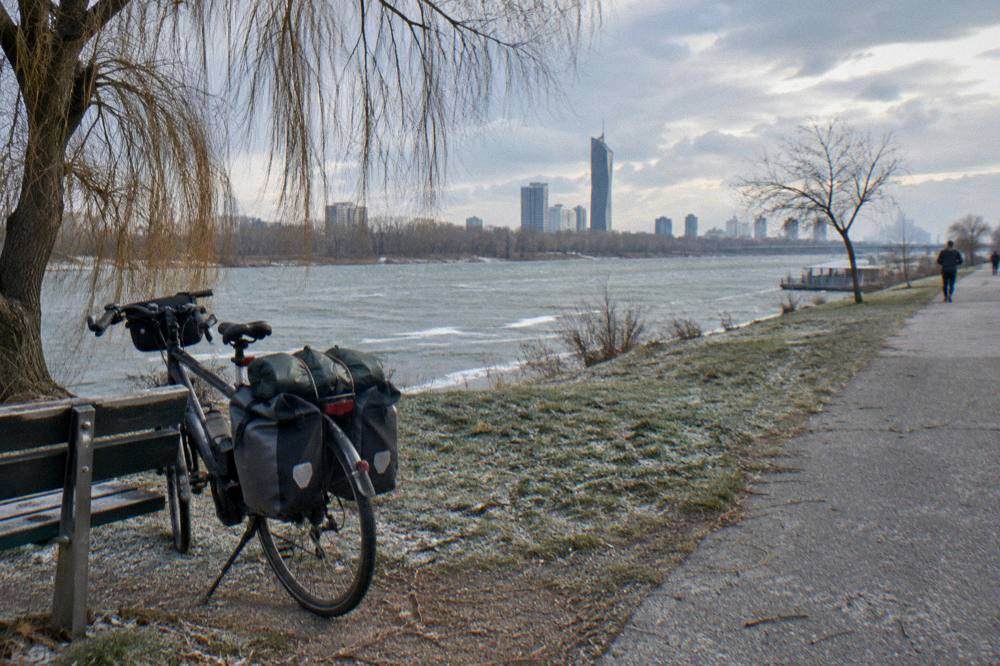
Beyond the rules, respect the river's calendar. The Wachau ships stop on 1 November, ferries wind down in October, and guesthouses in the small towns close or reduce service outside the warm half of the year. Autumn rides are beautiful and quiet, but verify each overnight stop is actually open before you commit to a stage. And once you arrive, the riding does not have to end: Bike Tours Vienna keeps the whole city end of the corridor, from the island to the canal to the Wachau day options, in one place. For packing specifics, see what to wear and bring on a Vienna bike ride.
Common Questions About The Danube Cycle Path From Passau To Vienna
Is The Passau To Vienna Route Really Flat?
Yes, in every way that matters. The route runs downstream on gentle gradients riders experience as flat, with no sustained climbs on the main river path. The only hills are optional detours to viewpoints, monasteries and accommodation set back from the bank.
How Does The Final Approach Into Vienna Work?
The last stage follows the New Danube and the Danube Island, passes the Prater recreation zone, then runs along the Danube Canal or the Ringstrasse into the centre. One island path section is closed for water works until 2030 with a signed diversion via the Neue Donau, and the Ringstrasse bike path is being rebuilt in stages from October 2026.
Do You Need Luggage Transfer Or Can You Carry Everything?
Most riders can carry a week of gear in two panniers on a flat route. Luggage transfer buys comfort, not capability, and suits families and e-bike riders whose bikes carry less. It works best with fixed overnight bookings, which peak season requires anyway.
When Is The Best Season For The Ride?
Late April to June and September to early October offer the best balance of weather, open services and manageable crowds. The Wachau shipping season runs 28 March to 1 November, with the main season from 25 April to 4 October. Summer works but is hot and busy.
What Makes The Wachau Section The High Point?
The Wachau compresses vineyards, apricot orchards, baroque abbeys at Melk and Krems and a narrow river valley into one short stretch, crossed by a roll ferry at 4.70 EUR for a bicycle with rider. It is also the one section with a bookable supported day tour from Vienna, roughly 11 hours with wine tasting.
Can You Take A Bike On Vienna Public Transport?
Only on the U-Bahn, free, on weekdays between 9:00 and 15:00 and after 18:30, and all day on weekends and public holidays. Bikes must be pushed in stations and bikes with start-assist are prohibited. Buses and trams do not take non-foldable bikes at all.