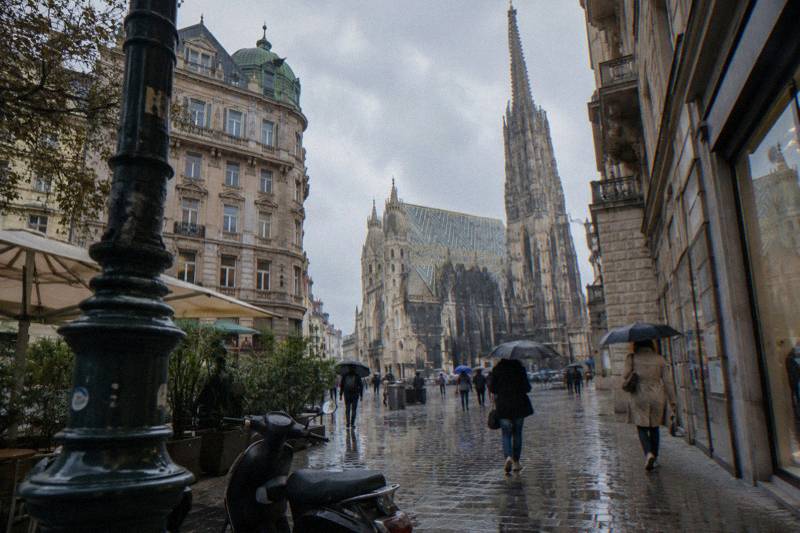
E-Bike Or Regular Bike For Seeing Vienna
Vienna is one of the flattest capitals in Europe for cycling, so the e-bike question here is less about hills and more about distance, comfort and who you are travelling with.
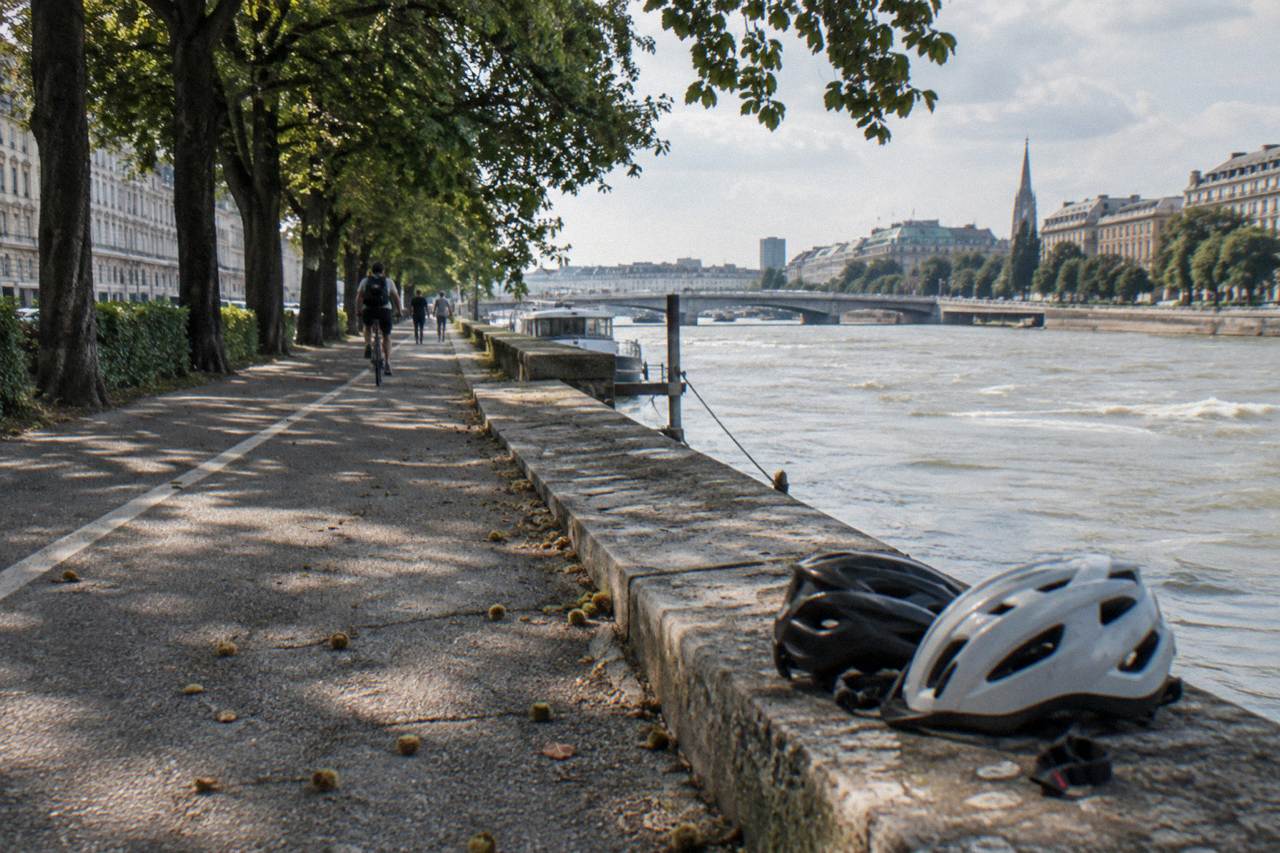
Short answer
Most Vienna guided rides cover the Ringstrasse and the Danube side in about 3 hours on nearly flat ground, so a regular bike suits most visitors. An e-bike helps if you want the 4-hour wine rides, a longer self-planned day, or a mixed group with different fitness levels. A 3-hour guided city bike tour starts around $53 per person.
Vienna's cycling network runs to roughly 1,811 kilometers across the city, and almost none of it climbs. That single fact shapes the whole e-bike-versus-regular-bike decision here: in hillier capitals the motor is a necessity, in Vienna it is a comfort. The city's famous sightseeing ring, the Ringstrasse, sits on flat ground, the Prater and the Danube Island are pancake-flat parkland, and even the wine hills at the city edge are optional detours rather than anything the route forces on you.
What the motor actually buys you in Vienna is distance tolerance and ease, not summit access. A guided tour that rides the Ringstrasse, dips into the Prater and traces the Danube Canal covers a lot of ground in about 3 hours, and on a regular bike that is a pleasant workout rather than an ordeal. If your group includes a rider who dreads 3 hours in a saddle, or you are pairing a city morning with a wine-country afternoon, the electric assist starts earning its price gap. This guide compares the two options honestly: the terrain, the distances, the battery question, the costs and the rules, so you can pick the bike that matches your trip rather than the one with the better marketing.
How Hilly Is Vienna For Cycling?
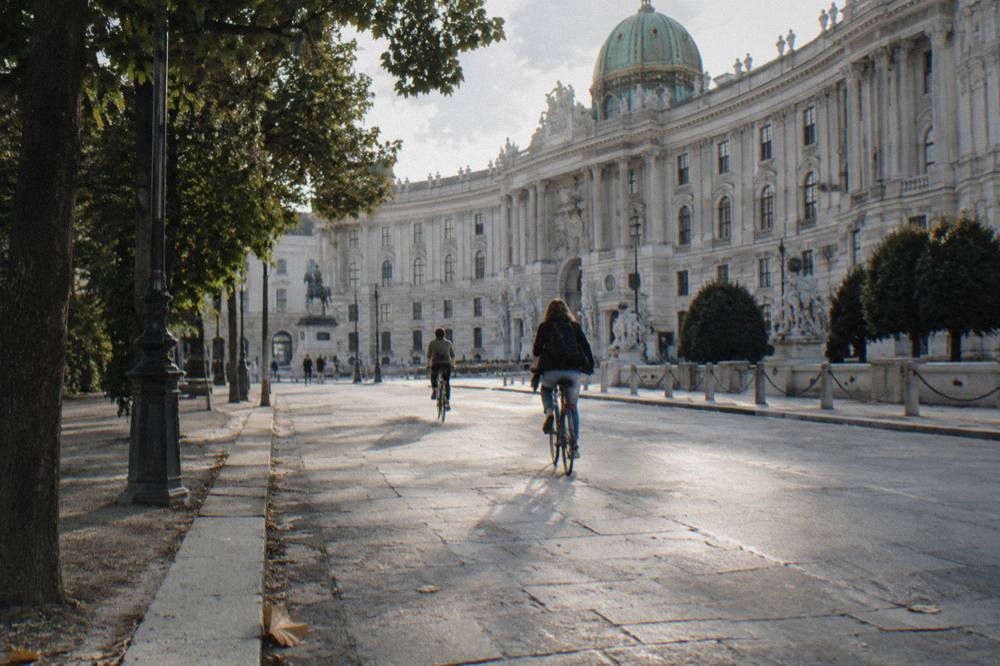
Vienna is essentially flat where tourists ride: the Ringstrasse loop, the Innere Stadt, the Danube Canal banks, the Prater and the Danube Island all sit on level ground, and the city's cycling network of about 1,811 kilometers was built for everyday transport cycling. Gentle rises appear at the western and northwestern edges near the Vienna Woods, but no standard city tour route requires climbing them. Treat hills as a non-issue in central Vienna.
The terrain argument that sells e-bikes in Lisbon or Edinburgh simply does not apply here. The classic sightseeing rides follow the Ringstrasse boulevard, which loops the old centre on land that was once flat city fortification ground, and the riverside routes along the Danube Canal and the Danube itself lose and gain almost nothing in elevation. The Danube Island offers about 21 kilometers of paved cycling routes on dead-level island ground, with a wider 135-kilometer path network across the island for exploring.
Where a modest gradient appears is on the way out to the wine villages at the city's edge, the direction several e-bike tours and the wine-tasting rides head. Even there the climbs are short and rolling rather than alpine, and an e-bike turns them from a sweaty half hour into a non-event. Riders with knee problems or low cycling confidence notice the difference more than the gradient map suggests.
One caveat on the flat-city claim: roadworks, not hills, are the thing that reshapes Vienna routes at the moment. The Ringstrasse bike path is being rebuilt in stages starting from October 2026 between Schottentor and Franz-Josefs-Kai, and a section of the main Danube Island path between Nordbruecke and Floridsdorfer Bruecke is closed for water works until 2030, with riders diverted via the Neue Donau path. Operators reroute around both, and a motor helps neither more than the other, so treat these as things to ask your guide about rather than bike-choice factors.
If hills are off the table, the real decision comes down to what kind of ride you want, and that starts with the tours themselves. The three below span the classic and electric options on roughly the same flat terrain.
The classic 3-hour guided tour and the e-bike city highlights ride cover the same city on the same flat streets, which makes them a clean head-to-head test of whether the motor matters to you. The short 90-minute e-bike option is the third format: less distance, electric assist, a lower commitment for riders who want to try a guided ride without giving up half a day.
Does Battery Range Matter On A City Ride?
For a 3-hour guided city tour, battery range is a non-concern: the routes are short, operators charge bikes between departures, and the guide manages the pace. Range matters mainly on the longer formats, the 4-hour wine rides and the full-day options, or if you rent an e-bike independently. The battery question to actually ask on a guided tour is what happens if a motor fails mid-ride.
Guided-tour e-bikes are fleet vehicles on defined routes, and the operator's job includes sending you out with a charged battery suited to the distance. A 3-hour city loop with assist used lightly on flat ground draws very little from a modern battery. The 3-hour formats that pair the city with riverside greenery, like the e-bike ride with Danube Island and green parks, still stay comfortably inside what a charged fleet bike covers. Check the booking page for anything unusual, but on the standard tours this is not the constraint it would be on an all-day self-guided rental.
Renting changes the equation. One rental shop at the Danube Island lists an e-bike day price of 75 euros for a 6-to-12-hour hire, against 35 euros for a comfort bike, and on a full-day self-planned ride you are the battery manager. Assist level, headwind, rider weight and how many riverside detours you stack up all decide whether you finish the day on the motor or on your own legs. If your plan is a self-guided loop combining the Prater, the Danube Island and the northern edge of the city, plan charging stops or ride the first half on lower assist. If you're still deciding where to actually pick up your wheels, this plain guide to how renting a bike in Vienna works walks through the shops, the share stations, and the guided tour option.
Vienna's bike-share system also rents e-bikes by the half hour: WienMobil Rad's e-bike standard tariff is 3.30 euros per started 30 minutes, capped at 40 euros per 24 hours, with a cheaper rate for holders of a Wiener Linien annual pass or a KlimaTicket at 2.30 euros per started 30 minutes. Standard pedal bikes cost 0.80 euros per started 30 minutes capped at 20 euros per 24 hours. That per-minute pricing makes share e-bikes ideal for short hops and expensive for long days, the mirror image of a tour or a day rental.
| Option | Bike type | Price basis | Best for |
|---|---|---|---|
| WienMobil Rad standard | Pedal bike | 0.80 EUR per started 30 min, capped 20 EUR per 24 h | Short hops between sights |
| WienMobil Rad e-bike | E-bike | 3.30 EUR per started 30 min, capped 40 EUR per 24 h | Beating a headwind on a short ride |
| WienMobil Rad Mix tariff | Pedal bike, with eligible pass | 0.37 EUR per started 30 min, capped 10 EUR per 24 h | Pass holders doing repeated hops |
| Donauinsel rental shop, one listed | Comfort bike | 35 EUR per day (6 to 12 hours) | A full self-guided day |
| Donauinsel rental shop, one listed | E-bike | 75 EUR per day (6 to 12 hours) | A long self-guided day with assist |
The pattern in the table repeats across every way of getting a bike in Vienna: the e-bike costs roughly twice the pedal bike for the same time on flat ground. Whether that premium is worth paying is the next question.

How Much More Does An E-Bike Tour Cost?
On guided tours in Vienna, the e-bike premium is modest rather than doubled: a 3-hour guided city bike tour starts around $53 per person, while the same-duration e-bike highlights tour carries its own listed price, so the exact gap takes seconds to check. Expect the opposite on rentals and bike-share, where an e-bike can run up to twice the pedal-bike price.
Start with what the guided market shows. A 3-hour guided city bike tour in Vienna costs from $53 per person, while the e-bike versions start around $77, roughly half again as much for the same duration. The motor choice on a guided tour is therefore partly a comfort decision and partly a budget one. Check each booking page for the current figure, since tour pricing moves with season and demand. Where costs genuinely diverge is time: the 4-hour e-bike wine formats and the roughly 11-hour Wachau day trips sit well above the 3-hour city rides, and the e-bike is often what makes those longer formats pleasant rather than punishing.
Private tours are priced differently again, often per group rather than per person, so never compare a per-group figure with a per-person headline. If you are weighing private versus shared, the guide to private guided cycling in Vienna breaks down how those bookings are priced and what a licensed guide adds.
The shortest ride on the roster is also the cheapest e-bike format: the 90-minute guided tour exists for visitors who want to try an e-bike without committing half a day or a half-day price.
For the opposite extreme, the full cost picture including rentals, share bikes and tours is laid out in how much a Vienna bike ride costs, which is worth a read before you commit to a multi-day plan.
What About Fitness And Group Mix?
The strongest case for an e-bike in Vienna is not your fitness, it is the gap between your fitness and your travel companions'. A mixed group, a reluctant rider, someone recovering from injury or a parent holding a tired child's pace all ride better when the weakest rider has a motor. Solo travellers in normal health will finish a 3-hour flat city tour comfortably on a regular bike.
Think about who sets the pace on a shared tour. Everyone rides at the speed of the group, and a guide keeps a touring pace, but the rider who is anxious about 3 hours in the saddle spends the tour tense, which no amount of flat terrain fixes. The assist removes that anxiety, and it costs a modest premium on a guided tour. That is the honest trade: you are not buying hill capability in Vienna, you are buying ease and confidence.
Fitness alone rarely decides it. Vienna's flat centre means a 3-hour tour is roughly equivalent to a relaxed evening ride at home for anyone who cycles occasionally, and slower riders on regular bikes are not left behind on guided formats because the guide sets a group pace. Regular cyclists who ride weekly will find the city tour genuinely easy either way, and for them the regular bike at the lower price is the rational pick.
Group mix gets more complicated with children. Helmets are mandatory for children up to their 12th birthday on any bicycle, and since 1 May 2026 helmet use is also required for children and youths under 14 on e-bikes, per the city's traffic rules page. From age 14 there is no general helmet duty, though helmets are recommended at every age, and tour operators have their own policies for younger riders. Families weighing the whole question should read the cycling in Vienna with kids guide, which covers child seats, trailer rules and family-friendly formats.
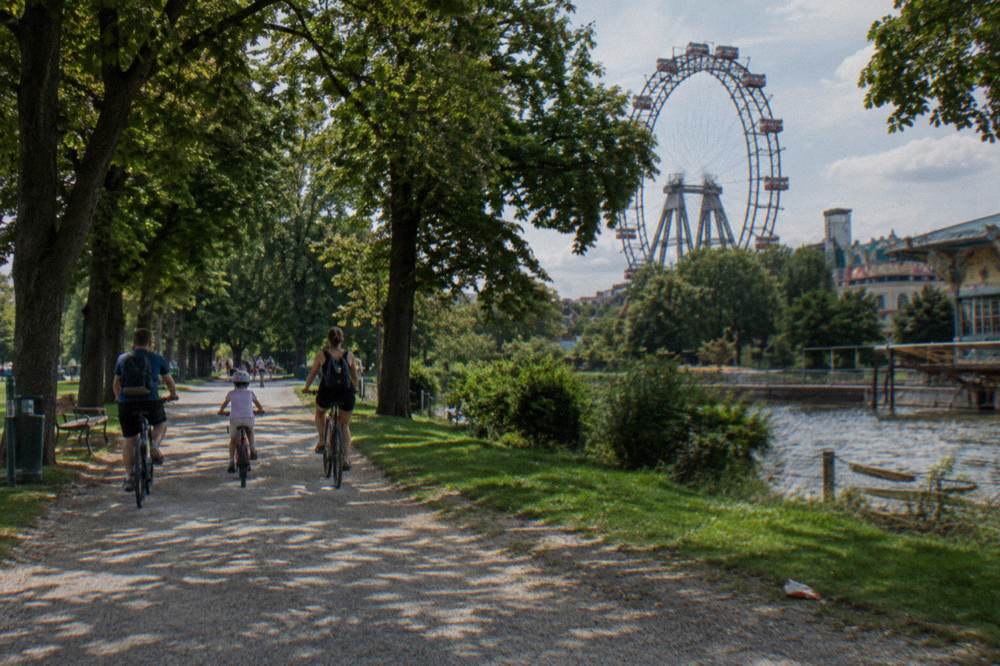
| Rider profile | Recommended bike | Why |
|---|---|---|
| Occasional cyclist, 3-hour city loop | Regular bike | Flat route, lower price, comfortable pace |
| Anxious or first-time rider | E-bike | Assist removes saddle-time anxiety |
| Mixed-fitness group | E-bikes for slower riders | Keeps the group together |
| Rider with knee or health limits | E-bike | Motor absorbs strain on longer formats |
| Weekly cyclist | Regular bike | The city tour is genuinely easy either way |
| Family with children under 14 | Check operator policy | Helmet rules differ for e-bikes under 14 |
The classic pedal tour is the natural fit for confident groups, and the classic 3-hour guided ride is the format most first-time visitors land on: bikes included, a guide leading, and a flat route through the core sights.
Which Vienna Routes Suit Each Bike Best?
The Ringstrasse, the Danube Canal and the Prater suit either bike equally because they are flat, short and guided on defined paths. The e-bike earns its keep on the longer formats: the 4-hour wine-tasting rides, the Danube Island and green-parks loops, and any day that stacks a city tour onto an afternoon of independent riding. For the Wachau day trip, roughly 11 hours door to door, the motor question depends on your plan.
The classic 3-hour city formats exist because the core sights sit close together on flat ground. The State Opera, the Hofburg, St. Stephen's Cathedral and the Ringstrasse monuments are strung along a loop that a regular bike covers at touring pace without strain, and the Prater's long straight avenues add distance without adding difficulty. Riders who want to understand that loop in detail before choosing can follow the cycling the Ringstrasse route guide.
The e-bike formats in the city lean into range rather than relief. The e-bike city highlights tour adds hidden sights to the headline stops, and the Danube Island and green-parks e-bike format strings riverside parkland onto the city loop. Both are flat; the motor simply buys endurance and headwind immunity, and Vienna's riverside paths do catch wind along the Danube corridor. The cycling the Prater and Danube Island guide covers what that side of the city involves.
Wine is where the bikes genuinely diverge. The e-bike wine-tasting formats run about 4 hours and head for the hills at the city's edge, and the Wachau valley day trip runs roughly 11 hours from Vienna; the rolling vineyard lanes around the Wachau are the one popular route where an e-bike changes the character of the day. The Wachau valley by bike from Vienna guide lays out that trip in full.
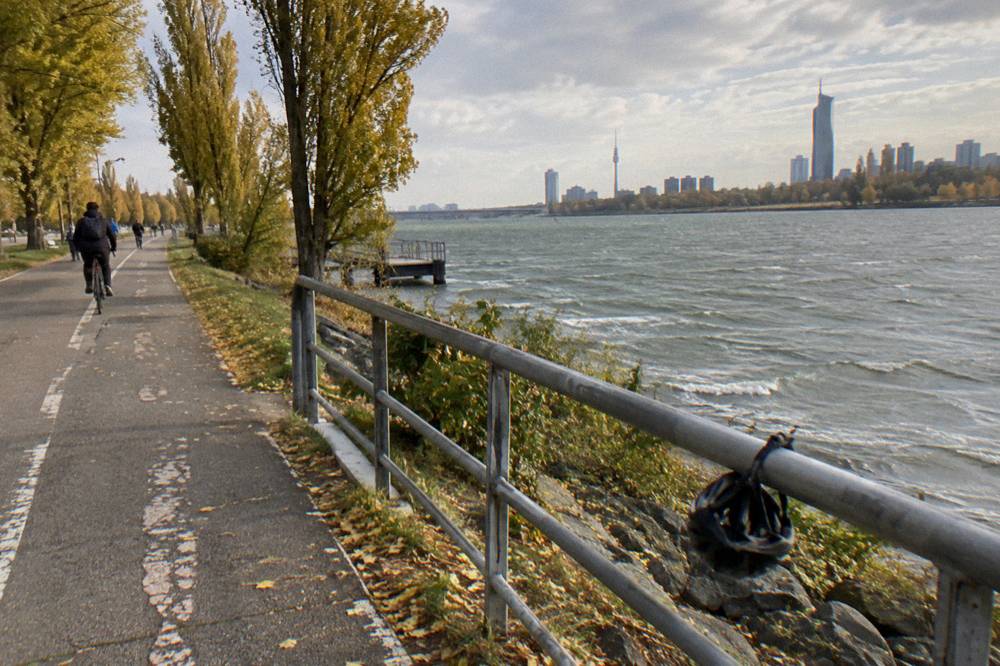
| Route or format | Typical duration | Terrain | Where the motor helps |
|---|---|---|---|
| Ringstrasse and city centre loop | About 3 hours | Flat | Barely, comfort only |
| Prater and Danube Island | About 3 hours | Flat, exposed to wind | Headwind days |
| Wine-tasting e-bike rides | About 4 hours | Rolling at the edges | Genuinely useful |
| Wachau valley day trip from Vienna | Roughly 11 hours | Rolling vineyard lanes | Significantly |
| Self-guided full-day rental | Your plan | Varies | Battery planning needed |
Durations above are the listing durations for the tour formats and general descriptions for the self-guided row; check each booking page for the current schedule and inclusions.
What Rules Differ For E-Bikes In Vienna?
E-bikes follow ordinary bicycle rules in Vienna, with two practical differences: helmets are required for children under 12 on any bike and, since 1 May 2026, for youths under 14 on e-bikes, and the city's U-Bahn restricts which bikes you may carry, with conditions on bikes that have start-assist motors. E-mopeds, a separate category, are banned from cycle paths since 1 October 2026.
The helmet rule is the one families hit first. Children up to their 12th birthday must wear a helmet on any bicycle, including in a trailer, and the duty now extends to under-14s riding e-bikes following the recent rule change. From 14 there is no general helmet obligation, only a recommendation, but guided tours frequently require or provide helmets regardless, so check the operator's policy when booking. The full picture, including hand signals and path etiquette, is in the cycling rules and safety in Vienna guide.
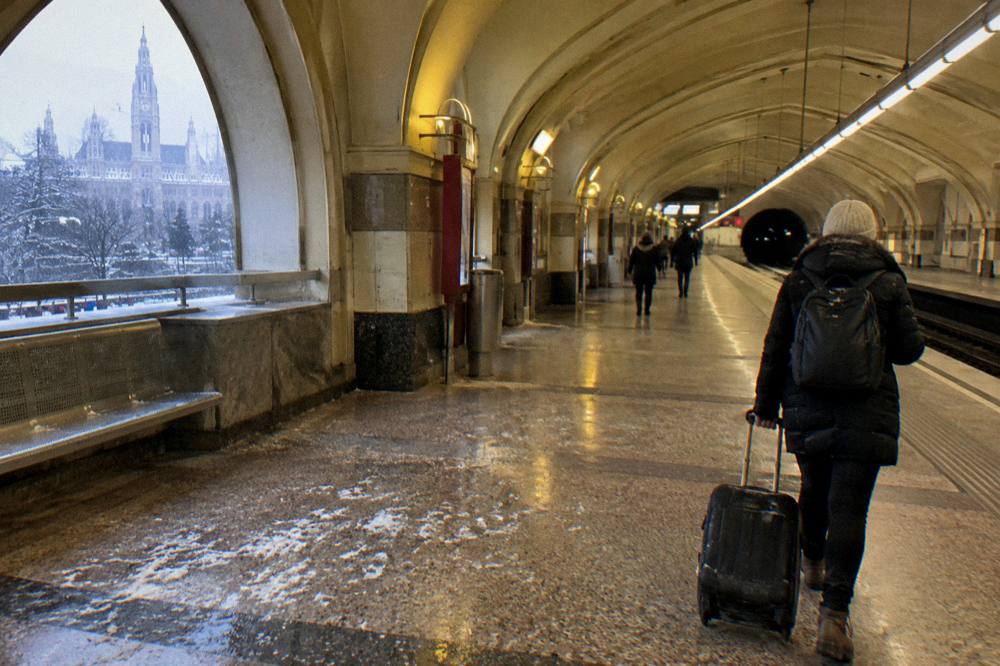
Public transport matters mostly to independent riders, because tour bikes stay with the tour. Bicycles may be carried on the U-Bahn free of charge on weekdays between 9:00 and 15:00 and after 18:30, and all day on weekends and public holidays, and they must be pushed, never ridden, inside stations, with escalators off limits. Non-foldable bikes are not allowed on buses and trams at all, and the conditions of carriage bar only start-assist models, cargo bikes and transport bikes. Typical pedal-assist e-bikes are carried in the permitted hours, pushed rather than ridden. In practice: rent a regular bike if your plan involves train hops, keep the e-bike for plans that start and end on the surface.
The 2026 rule changes cut both ways for cyclists. The e-moped ban on cycle paths since 1 October 2026 makes bike paths calmer by removing faster motorised two-wheelers, and the Ringstrasse rebuild, converting the service road into a 4.50-meter two-way cycle path on the first section, will eventually give the city's marquee ride a wider, separated lane, with the first phase targeted for summer 2027. Vienna is also adding about 12.5 kilometers of new cycling infrastructure across 33 projects during 2026 under the Radweg-Offensive programme.
So Which One Should You Book?
Book a regular-bike tour if you cycle occasionally, want the lower price and your group rides at a similar level: Vienna's flat 3-hour city loops suit pedal power perfectly. Book an e-bike tour if your group is mixed, a rider wants reassurance, or you are choosing a longer format like the 4-hour wine ride. One sentence: on a 3-hour city tour the motor is a comfort, on every longer format it is an advantage.
Run the decision in order. Terrain: flat everywhere tourists ride, no points to the motor. Distance: 3 hours flat suits either bike; 4 to 11 hours favours the motor. Group mix: any confidence gap in your party favours the motor, regardless of terrain. Budget: the tour premium is modest, the rental and share premium is large. Rules: near-identical, with the under-14 e-bike helmet duty the only family-relevant difference. Season matters too: Vienna recorded its first 40-degree days and a record number of heat days in the summer of 2026, and an e-bike in summer heat spares you arriving at St. Stephen's Cathedral soaked, which is a quieter argument for the motor than any gradient. The month-by-month angle is covered in the best time to cycle in Vienna.
| Decision factor | Points to regular bike | Points to e-bike |
|---|---|---|
| Terrain (central Vienna) | Flat, no assist needed | No advantage |
| Ride length | 3-hour city loops | 4-hour wine rides and longer days |
| Group profile | Similar fitness, confident riders | Mixed pace, anxious or limited riders |
| Budget | Lower tour price, cheap share bikes | Modest tour premium, large rental premium |
| Summer heat | Fine at touring pace | Arrive unruffled |
| U-Bahn hops | Carried in permitted hours | Start-assist bikes excluded |
For the majority of first-time visitors, the classic 3-hour guided tour is the rational choice, and Bike Tours Vienna pairs it against the electric formats so the comparison takes a click rather than an afternoon of research. The e-bike city highlights ride is the pick when the answer above pointed you to the motor: same city, same flat loop, assist included, bikes provided.
If you are still split, the 90-minute guided e-bike tour is a low-commitment way to test the format before booking a longer ride.
Whichever you pick, book the format that matches your slowest rider and your longest day, not the one with the biggest engine, and check the booking page for current prices, meeting points and cancellation terms before you commit.
Common Questions About E-Bikes And Regular Bikes In Vienna
Is Vienna Too Hilly For A Regular Bike Tour?
No. The routes tourists ride, the Ringstrasse, the Danube Canal, the Prater and the Danube Island, are essentially flat, and the city's roughly 1,811-kilometer network is built for everyday transport cycling. Hills appear only on the wine-hill detours at the city edge, and those are short and rolling.
Do I Need An E-Bike For A 3-Hour Vienna City Tour?
Most riders do not. A 3-hour flat loop at a guided touring pace is comfortable for anyone who cycles occasionally. The e-bike is worth it if a companion is anxious about the distance, you are riding in summer heat, or you simply prefer arriving unruffled.
How Much More Does An E-Bike Tour Cost Than A Regular Bike Tour?
On guided city tours the premium is substantial: a 3-hour guided city bike tour starts around $53 per person, while 3-hour e-bike city rides start at $77.31 and $78.53, roughly 45 to 50 percent more. Current figures are on each booking page. On rentals the gap is larger: one Donauinsel shop lists e-bikes at 75 euros per day against 35 euros for a comfort bike.
Are Helmets Required On E-Bikes In Vienna?
Children up to their 12th birthday must wear a helmet on any bicycle, and since 1 May 2026 helmet use is also required for children and youths under 14 on e-bikes. From 14 there is no general helmet duty, only a recommendation, though tour operators may set their own policies.
Can I Take My Rental Bike On The U-Bahn?
Standard bicycles may be carried free on the U-Bahn on weekdays between 9:00 and 15:00 and after 18:30, and all day on weekends and public holidays, pushed rather than ridden, with escalators off limits. Only bikes with start-assist (throttle) motors are barred from the U-Bahn; ordinary e-bikes ride along fine in permitted hours, and non-foldable bikes stay off buses and trams.