How Long Does It Take To Cycle From Passau To Vienna?
How long the Passau to Vienna cycle ride takes, what changes the answer, and the supported Wachau day trip that covers the highlight stretch without the full multi-day commitment.
The honest answer is that the ride takes as long as your route and your daily distance allow, and no single verified stage or kilometre total covers every option. Most riders plan it as a multi-day trip on the Danube Cycle Path, spreading the distance over successive days at a touring pace. If a multi-day commitment does not fit your trip, the bookable alternative is a supported Wachau Valley wine tasting bike tour from Vienna, roughly 11 hours door to door, which covers the most celebrated stretch in one day. If you want to keep riding past Vienna, the guide to cycling times further along the Danube shows how the river's flat paths make longer daily distances surprisingly manageable.
There is no single fixed number of days, since the total depends on which bank of the Danube Cycle Path you follow, where you overnight and how many detours you take. Most touring cyclists spread Passau to Vienna over several relaxed days, riding one stage per day, while a bookable alternative from Vienna is a Wachau Valley wine tour of roughly 11 hours covering the famous stretch in a single day.
The question sounds like it should have a clean answer, the way a train timetable does. It does not, and any page that hands you a precise figure without saying which route it measured is guessing. The Danube runs roughly southeast from Passau toward Vienna, and the cycle path network along it offers choices the whole way: two banks in many sections, small detours into towns, and cutoffs where you can shorten a day by hopping on a train. Each choice moves the total.
What you can plan around is pace. A touring pace on flat riverside terrain lets most riders cover a comfortable stage in a morning and still arrive with energy for a late-afternoon walk through whatever town they have landed in. Riders who want long days can compress the trip; riders who want cellar doors and long lunches stretch it. The route itself rarely decides the schedule, the rider does.
The practical framing is this: if you have the days, ride the whole thing self-supported or with a baggage-transfer operator, and let your daily comfort set the count. If you have one day, or you want to test whether a bike trip suits your group before committing to a week, ride the Wachau segment from Vienna on a supported tour and see the part of the river that guidebooks photograph most. Both are real answers to the same question.
| Approach | Time commitment | What you get | Best for |
|---|---|---|---|
| Full Passau to Vienna ride | Multi-day, stage count varies by route | The complete Danube Cycle Path experience in Austria | Riders with a week and their own (or rented) bikes |
| Train-assisted stages | Varies; a train can shorten any day | Flexibility to skip a stretch or end early in bad weather | Weather-aware planners |
| Wachau day trip from Vienna | Roughly 11 hours door to door | The famous wine-country stretch with tastings, bikes and logistics handled | Visitors with one day and no gear |
Once you've picked an approach, the stage-by-stage route guide helps you plan each day of riding.
What Sets Your Pace On The Danube Route?
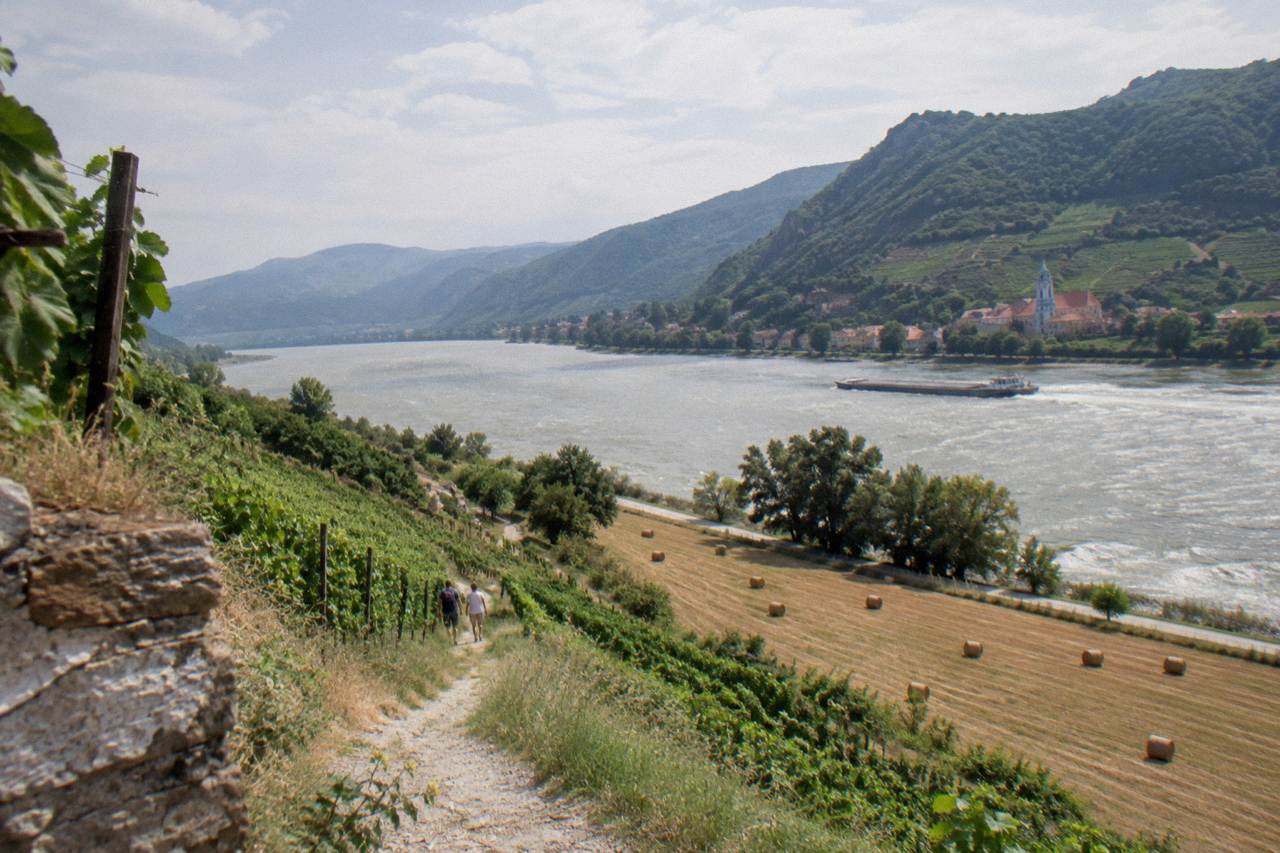
Terrain is rarely the limiting factor: the Austrian Danube corridor is famously gentle, and the path stays close to the river through most of it. What actually sets your daily total is stop frequency, sightseeing depth, and whether you build in rest days. Wind direction on exposed river sections also matters more than elevation, and summer heat changes how early people start.
Cyclists coming from alpine or coastal riding are often surprised by how forgiving this corridor is. The path hugs the river, towns sit close together by touring standards, and the surface is predominantly paved or fine gravel in the Austrian sections. That is why the planning question shifts from "can I do it" to "how do I want to spend the afternoons".
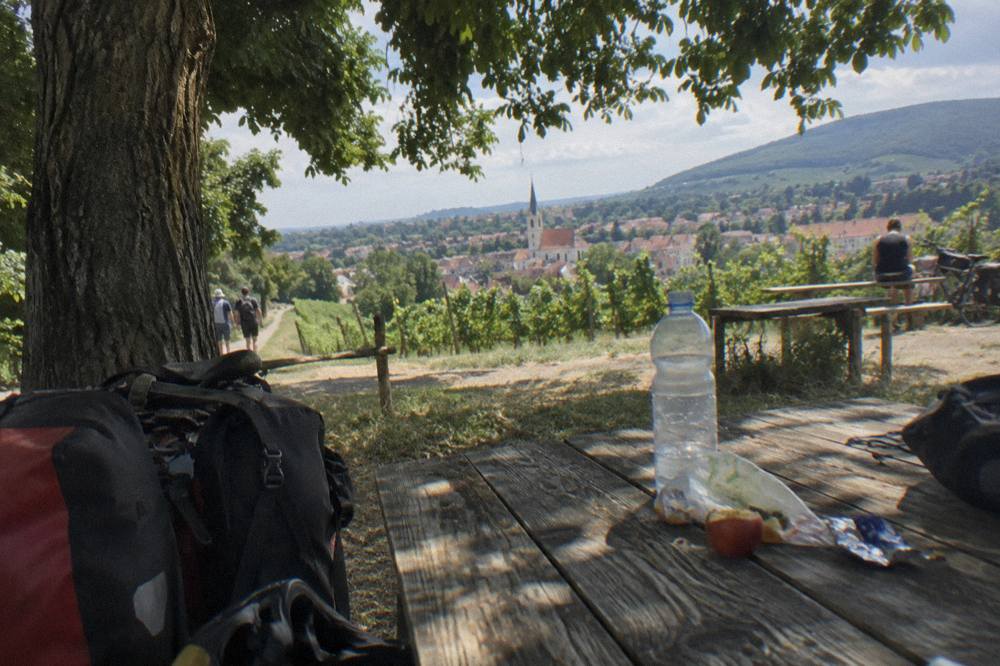
Stops are the real variable. The Wachau alone can absorb a full day if you take the abbey at Melk seriously, wait for the Spitz to Arnsdorf roll ferry, and stop at a heuriger or two. Riders who plan cellar stops should either add a day or accept that their riding hours shrink accordingly, and should follow the operator's guidance and local rules on alcohol when a tasting is part of the day.
Season plays in too. Vienna recorded its first 40 degree days and a record number of heat days in summer 2026, and the long-term average July temperature at Hohe Warte is 21.9 degrees Celsius, which tells you how far above normal a hot stretch can run. In heat like that, touring riders start at dawn and finish by early afternoon. Spring and autumn bring cooler air but shorter days, which squeezes the same stage into fewer usable hours.
How Do You Get To The Start At Passau?
You reach Passau, the German border town where three rivers meet, by long-distance rail with a bike reservation, typically changing in Munich or taking direct services from Vienna, and you should book the bike space at the same time as your seat because bike slots on Austrian and German trains are limited and sell out in peak season.
That last fact is more useful than it looks. Trains threading the corridor every half hour mean a multi-day ride can be shortened at almost any point without abandoning it: if a day collapses, whether from weather, a sore knee or a better-than-planned lunch, you can roll to a station and jump forward. Self-supported riders plan rest days around exactly this flexibility.
For the pure logistics of reaching Passau, check the rail operators' current bike-carriage rules before you travel, since reservation requirements and bike quotas change between countries and seasons. As a rule, treat the bike reservation as part of the ticket, not an afterthought; riders who arrive at the platform without one are the riders standing in the aisle holding a bicycle.
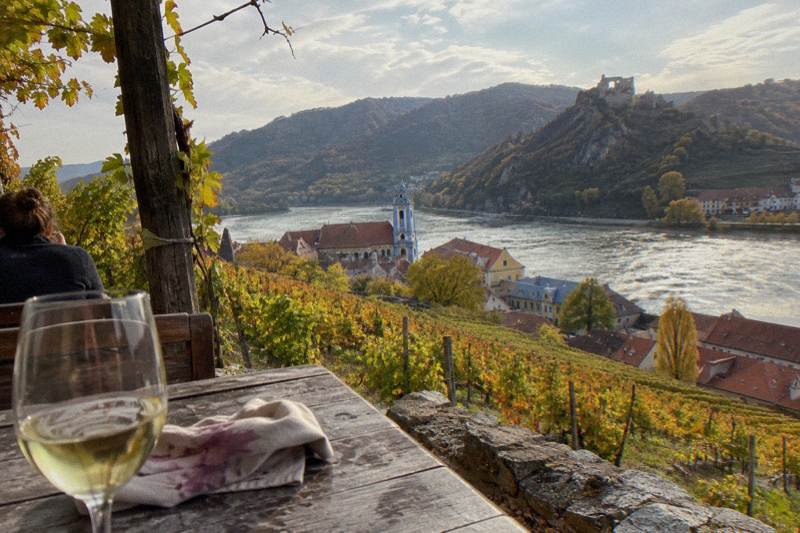
If managing a bike on a cross-border train sounds like the stressful part of the holiday, that is a signal worth listening to. The one-day supported option from Vienna removes every one of those logistics, and the Wachau Valley Wine Tasting Bike Tour covers the Wachau stretch, where the Danube runs between terraced vineyards and small wine villages.
A calmer first step for riders who want to confirm they enjoy cycling in this region at all is a short city ride; the three-hour Classic Vienna guided tour is a low-commitment way to test legs and interest before booking anything multi-day.
Which Stretch Should You Prioritize If Time Is Short?
The Wachau Valley between Melk and Krems is the stretch that justifies the whole route for most riders: terraced vineyards, apricot orchards, the abbey above Melk and a string of riverside villages. It is also the only part of the corridor with a fully supported bookable day trip from Vienna, which makes it the natural answer when the full Passau ride does not fit the calendar. For a closer look at why so many riders rank this stretch above everything else on the river, our guide to the stretch of the Danube cyclists love most covers the highlights and how to ride them from Vienna, guided or on your own.
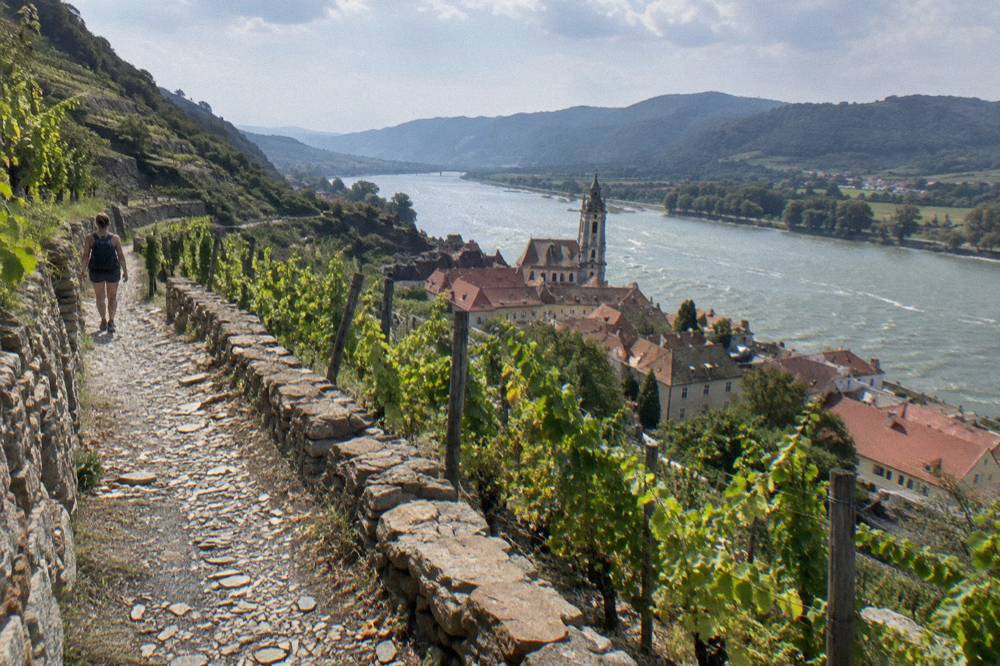
The Wachau's appeal is density. Within one river bend you get a baroque abbey, working vineyards on stone terraces, apricot farms that turn into blossom in late March to early April with a peak lasting ten days to three weeks, and a harvest in early to mid-July in an average year. Timing a visit to either of those windows changes the character of the ride completely, from white blossom and cool air to heavy fruit and heat. Everything else covered here is indexed on Bike Tours Vienna.
Two river crossings and connections are worth knowing. The Spitz to Arnsdorf roll ferry runs March to October, Monday to Friday from 06:15 to 19:00 and weekends and holidays from 08:15 to 19:30, and charges 3.10 euros for a foot passenger or 4.70 euros for a bicycle including the rider. The DDSG ships on the Wachau operate a season from late March to early November with a main season from late April to early October, and a Krems to Melk one-way ship ticket costs 40 euros, or 49 euros return. A combined Wachau-Ticket bundles the train from Vienna, the ship between Melk and Krems, and Melk Abbey entry.
| Wachau connection | Price | Notes |
|---|---|---|
| Spitz to Arnsdorf roll ferry, foot passenger | 3.10 EUR | Runs March to October, weekday start 06:15 |
| Spitz to Arnsdorf roll ferry, bicycle with rider | 4.70 EUR | Weekends and holidays from 08:15 |
| Krems to Melk ship, one way | 40 EUR | Season runs late March to early November |
| Krems to Melk ship, return | 49 EUR | Main season late April to early October |
The supported Wachau Valley wine ride from Vienna wraps this stretch into one bookable day: roughly 11 hours total, with the bike and the logistics handled by the operator, and tastings built into the itinerary rather than improvised. For a visitor whose trip is anchored in Vienna, it converts the route's best segment into a single decision.
When Is The Best Window To Ride?
The shoulder seasons do the most work here: late April to early June and September to early October balance rideable temperatures against open ferries, ships and cellar doors. Summer brings the fullest service schedule and the fullest paths, plus the strongest heat. Late March to early April adds apricot blossom, and the Wachau ship season runs from late March to early November, which brackets everything else.
Riders coming for the wine rather than the ride should look at autumn, when harvest season overlaps warm days and the vineyards are at their most active. Riders coming for scenery and quiet paths should aim spring, accepting that water-side services may run reduced schedules at the very edges of the season. Summer riders should plan dawn starts and midday shade, following the pattern locals adopted during the record heat of recent summers.
One scheduling note for anyone ending their ride in Vienna: the Christmas market season opens in mid-November, with the Rathausplatz market running from 13 November and the Schoenbrunn market from 6 November. A late-season rider who arrives in Vienna in November trades riverside greenery for one of Europe's better market cities, which is not a bad trade, but it is a different trip. Winter riders should also know Vienna prioritizes clearing of central high-traffic bike paths, with a downloadable winter plan, so city riding stays practical in the cold months.
What If You Only Want To Ride Around Vienna?
Vienna itself carries the Danube theme convincingly: the Danube Island offers up to 21 kilometers of paved cycling routes inside a 135-kilometer path network on the island, and the city's total cycling network runs about 1,811 kilometers. A rider can spend a full and satisfying day on Danube-themed paths without ever leaving the city, which is the honest fallback when a Passau trip does not fit.
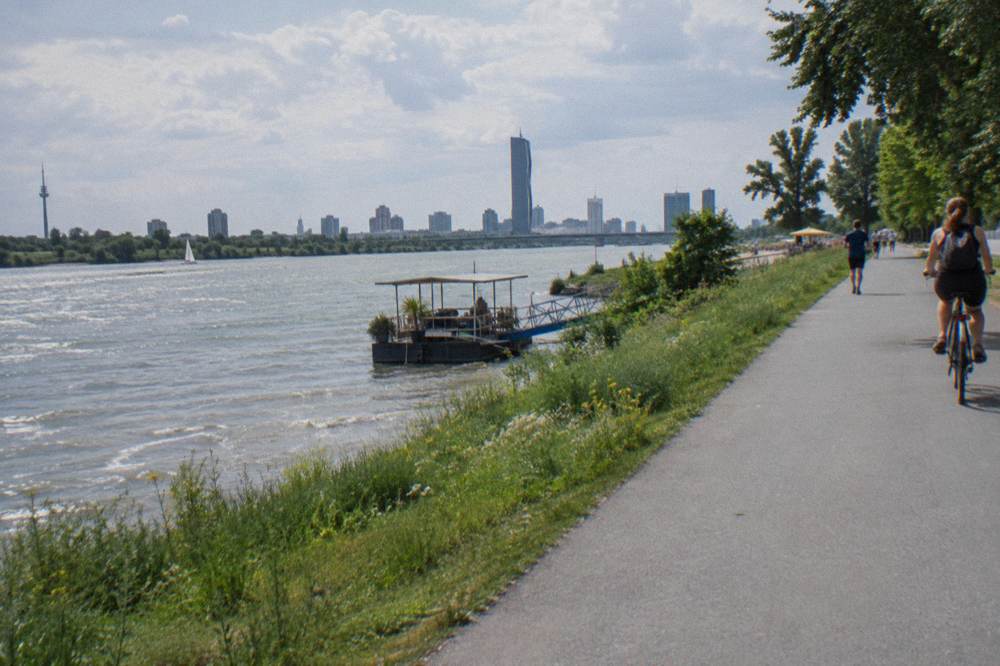
The Island is the closest thing Vienna has to the riverside riding the long-distance route delivers: car-free, flat, and long enough that a return ride makes a real outing. The city's own cycling network, detailed by Stadt Wien's cycling pages, keeps growing, with 33 projects and around 12.5 kilometers of new infrastructure delivered under the 2026 path program, much of it aimed at closing gaps on major axes. Our guide to cycling the Prater and Danube Island covers where the two green spaces connect.
One infrastructure note matters for anyone riding the river corridor into the city: a section of the main Danube Island path between Nordbruecke and Floridsdorfer Bruecke stays closed for water works until 2030, with cyclists diverted via the Neue Donau path. Check the city's diversion page rather than a map app before you ride that stretch.
The supported way to see this side is the Danube Island and green parks e-bike tour, a three-hour guided ride that covers the island and the city's green corridors with an e-bike doing the work. It pairs naturally with a morning at the markets or an afternoon in the old town, and it answers the "what if I only have a day" question without any long-distance planning at all. Riders weighing whether an e-bike changes the experience can compare options in e-bike or regular bike for seeing Vienna.
Common Questions About Cycling From Passau To Vienna
How Long Does It Take To Cycle From Passau To Vienna?
There is no single verified figure, because routes and stage plans vary. Most riders treat it as a multi-day touring trip on the Danube Cycle Path, with the daily distance set by their own pace and stop schedule. If a multi-day trip does not fit, the supported alternative is a Wachau Valley day trip from Vienna of roughly 11 hours.
Is The Route Flat Enough For A Casual Rider?
The Austrian Danube corridor is gentle, riverside riding, and terrain rarely limits the daily distance. Stop frequency, wind and heat usually matter more than elevation. Casual riders should still build short first days to test their pace before committing to longer stages.
Can I Shorten The Ride If A Day Goes Badly?
Yes. Trains thread the corridor frequently, with Vienna to Melk Bahnhof services roughly every 30 minutes and an average journey of about 51 minutes, so stages can be shortened at many points. Check the rail operator's rules for bike reservations before you rely on this.
Which Stretch Should I Ride If I Only Have One Day?
The Wachau between Melk and Krems, combining vineyards, apricot orchards, Melk Abbey and riverside villages. It is also the only stretch with a fully supported bookable day trip from Vienna, with bikes and logistics handled by the operator.
When Is The Best Season For The Ride?
Late April to early June and September to early October balance temperature against full ferry and ship service. Apricot blossom runs late March to early April, harvest is early to mid-July in an average year, and the Wachau ship season runs from late March to early November.
Do I Need To Bring My Own Bike?
No. Rental options exist along the corridor, and the supported day trip from Vienna includes the bike in the booking. For self-supported riders, check rental availability in your start town before booking accommodation, since fleets are finite in peak season.