Which European Country Is Best For Bike Touring?
Austria makes the strongest single-country case for bike touring in Europe: the Danube Cycle Path, the Wachau wine country, and a capital city built for two wheels. Here is how the comparison actually works.
No single country wins outright, but Austria has the strongest overall case: a cycling network of roughly 1,811 kilometers in Vienna alone, the Danube Cycle Path running flat and signed through the country's best wine region, and a capital where a guided ride takes three hours rather than three days of planning. The Netherlands wins on sheer bike saturation, France wins on variety, and Denmark wins on calm. Austria is the country that puts a world-class touring route, a famous wine valley, and a rideable capital into one trip without a car. For a closer look at the routes and terrain themselves, see our guide to cycling in Austria.
The question usually arrives from people planning a first touring trip, and it deserves a direct answer rather than a diplomatic shrug. The comparison matters because bike touring is unusually sensitive to infrastructure. A beautiful landscape with no separated path, no bike-friendly trains, and no repair shops becomes a logistics problem by day two. A flatter landscape with dedicated routes becomes a holiday. That asymmetry is what pushes Austria up the ranking: the country has spent years deliberately building for exactly this kind of travel, and the numbers show it.
Vienna alone reports a cycling network of approximately 1,811 kilometers, according to the city's own cycle network statistics page. In 2026 the city's Radweg-Offensive is delivering 33 projects and around 12.5 kilometers of new cycling infrastructure, focused on closing gaps along major axes, per the city's project page. A visitor never rides all of that, but it is the environment your ride happens in, and it is the difference between a country that tolerates cyclists and one that designs for them.
The other reason the honest answer leans Austrian is trip shape. Most touring riders have one or two weeks, not a summer. Austria compresss a full arc into that window: a capital city you can ride across in an afternoon, a flat river route out of it, a wine valley a short train ride away, and national rail that carries bikes. The alternatives each demand more logistics or more days to reach their best riding.
If you want to test the Austrian case in miniature before committing to a week of it, a Vienna ride is the cheapest proof. The city sits at the start of the country's best-known route, and a single guided afternoon tells you whether the flow of Austrian cycling suits you.
Why Austria Keeps Winning The Comparison
Austria keeps winning because it comes out ahead on the three things that actually decide a touring trip: route continuity, terrain forgiveness, and transport backup. Routes connect instead of dead-ending, the terrain stays manageable for tired legs, and a transport backup is there when the ride falls apart, a combination that keeps Austria on top of the comparison. The Danube Cycle Path runs flat and signed along the country's length, trains accept bikes with the right ticket, and the riding season stretches comfortably from spring apricot blossom through autumn. Other countries beat Austria on individual points, but none combines all three as neatly. For a closer look at that terrain question, the guide to the path's flatness explains which stretches still climb and whether an e-bike makes sense for your ride.
The flat point deserves emphasis because it quietly decides most first tours. The classic Austrian route follows a river downstream, which means gradient is close to irrelevant and daily distance becomes a choice rather than a fight. Riders who have struggled through hilly regions know the difference: on a river route, a headwind is the only real opponent, and the Wachau section shelters between hills much of the way. For a companion who is not a committed cyclist, that forgiveness is what makes the trip happen at all.
Route continuity matters just as much. Gaps are what break a tour: a stretch where the signed path ends, dumps you onto a busy road, and ends the relaxion of the previous three hours. River routes minimize gaps by nature, and Austria has invested decades in closing the ones that remained. The result is a corridor where you can ride for days barely consulting a map, which is precisely the experience touring riders are buying.
Transport backup is the third leg. Vienna to Melk Bahnhof trains run every 30 minutes with an average journey time of 51 minutes, which turns a one-way river ride into a loop you never have to retrace. Check the operator for current bike carriage rules and any supplementary fare before you commit to a specific departure; those details sit on the rail operator's pages, not in any tour description.
Here is how the leading candidates actually stack up against each other:
| Country | Strongest card | Main trade-off |
|---|---|---|
| Austria | Flat, signed Danube route plus a rideable capital | Alpine riding elsewhere is genuinely hard |
| Netherlands | Highest cycling saturation in Europe | Scenery is subtle rather than dramatic |
| Denmark | Calm, flat, well-signed national routes | Distances between highlights can feel long |
| France | Enormous variety, from canals to cols | Infrastructure quality varies sharply by region |
| Germany | Long river routes and strong rail links | Popular sections are busy in midsummer |
A note on honesty: the table is a planning frame, not a verdict. A rider who dreams of Alpine cols should be in Austria or France's mountains, not on a river path, and a rider who wants car-free calm above all may still prefer Denmark. The Austrian case is strongest for the median first-time or second-time touring rider, which is most people asking the question.
How The Danube Cycle Path Shapes Austria's Case
The Danube Cycle Path is the single most important reason Austria tops this comparison, because it delivers a flat, continuous, signed route past genuinely famous scenery, with bail-out points every few hours. That combination means you can ride all day without serious climbing, follow the markings without guessing, and shorten any stage that turns out longer than planned. It is the route that turned central European bike touring from an enthusiast niche into something families and casual riders book, and its downstream logic means fitness matters less than time available. Since the classic stretch of the route finishes in Vienna, it makes sense to add a few days of city riding, and our guide to biking around Vienna explains what a visitor can expect from the capital's bike network.
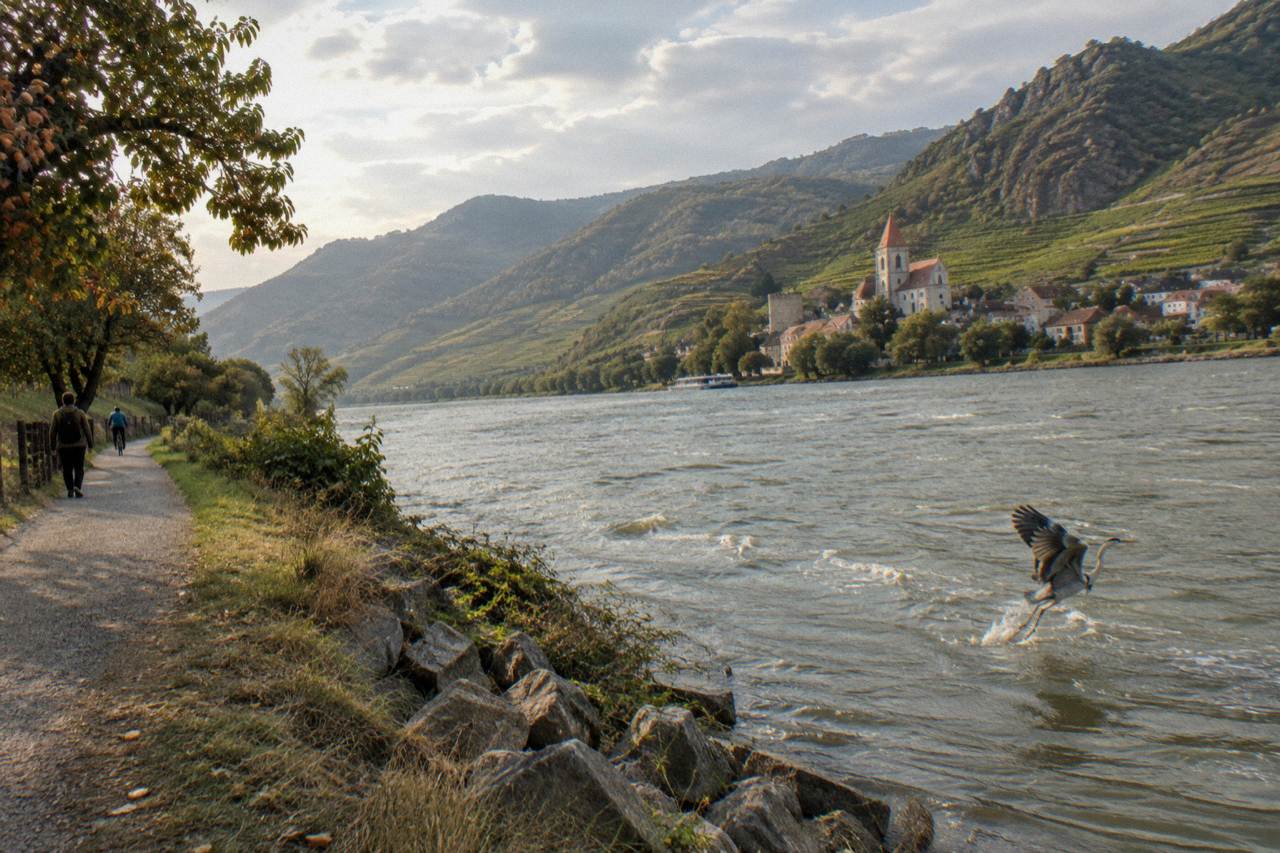
The path's character comes from the river itself. You ride along the water, through towns that exist because of the water, with rail lines shadowing the valley for almost the entire way. That last detail is the quiet genius of the route: tired legs are never more than a short ride from a station. It changes the psychology of a touring day completely when you know the day can be shortened without anyone's permission.
Vienna anchors the downstream end of the Austrian section, and that is a practical advantage over routes that start in towns built purely around tourism. You can fly into a major hub, spend a day or two in the capital, and roll out onto the path without a transfer or a car. Our companion piece on the full length of the Danube route covers the longer-distance questions if Austria is just one leg of a bigger plan.
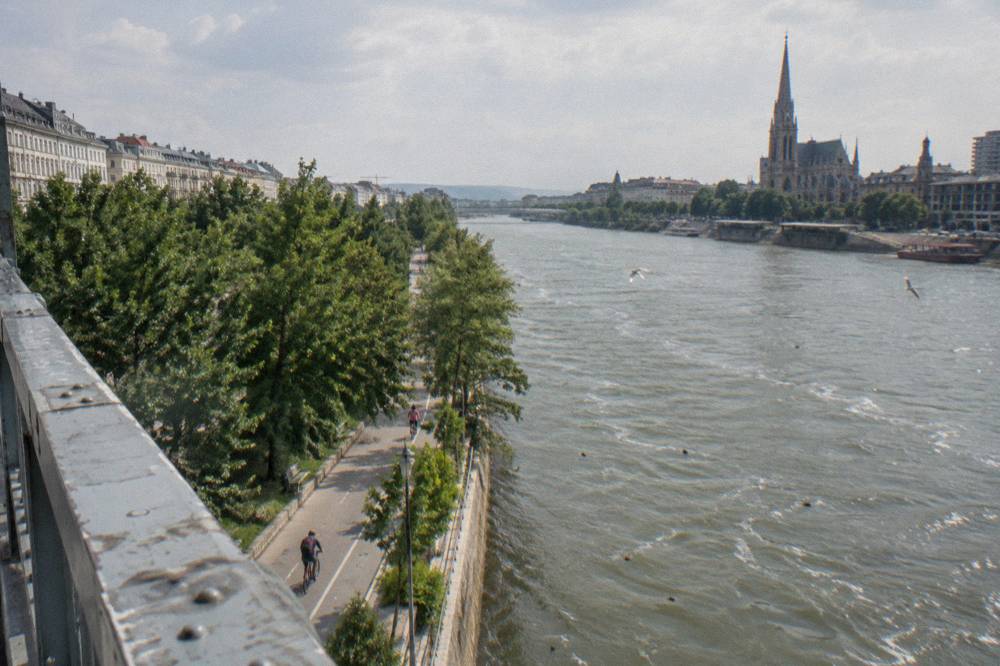
The rideable-capital point is worth dwelling on, because it is where Austria separates itself from countries whose best cycling lies far from the arrival city. Vienna's cycling is not a fringe activity: the city is rebuilding the Ringstrasse bike path in stages, with the first section between Schottentor and Franz-Josefs-Kai under construction since early October 2026, converting the service road into a 4.50 meter wide two-way cycle path. A city redesigning its grandest boulevard around bikes is making a statement about priorities.
For riders who want the flavor of the route without the multi-day commitment, a guided option exists: a Wachau Valley wine-tasting bike tour runs from Vienna at roughly 11 hours door to door, covering the valley's core with a tasting built in. It is the single best shortcut to the region the Danube path is famous for, and it pairs naturally with a self-guided day or two on either side.
The guided day does not replace touring, it previews it. Riders who love the Wachau section almost always come back for the full point-to-point ride, and riders who find the pace too gentle learn that cheaply, in one day, before booking a week of it.
Wachau Valley: Wine, Apricots And A River Ferry
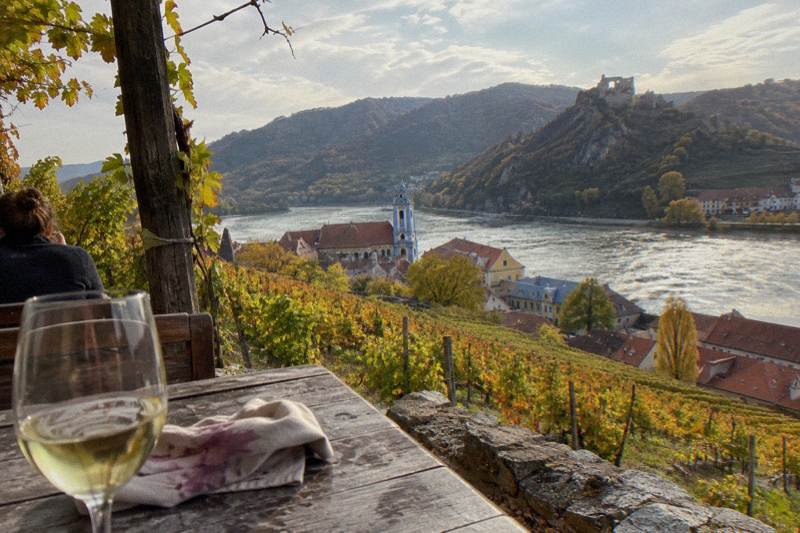
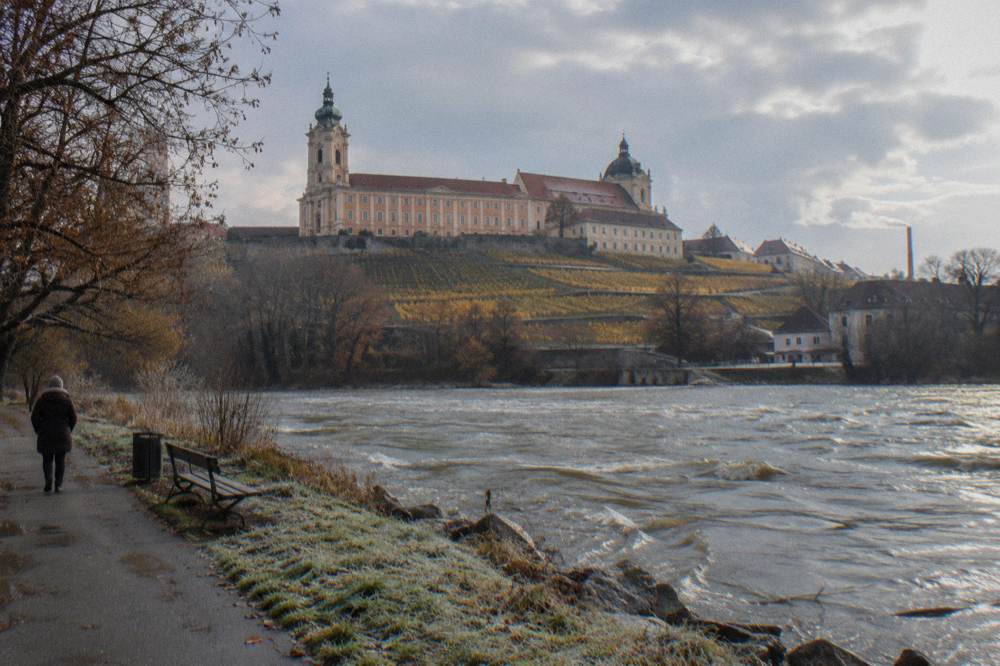
The Wachau is the 30-odd kilometers of the Danube where Austria's touring argument becomes irresistible, a compact valley that packs terraced vineyards, apricot orchards, and riverside villages into one short stretch, with small ferries crossing the river for the price of a coffee to tie it all together. It is the stretch that photographs end up on the route's brochures, and it sits barely an hour from Vienna by train, which is why so many touring itineraries treat it as the essential core even on short trips.
The valley's calendar shapes when to come. Apricot blossom typically runs late March into early April, with the peak lasting 10 days to three weeks, and the harvest lands early to mid-July in an average year. Between those poles the valley is simply wine country beside a wide river, with tasting rooms in villages you can ride between at an unhurried pace. Tasting fees vary by producer, so check at the door rather than planning around a fixed figure. Other pages covering the same trip are gathered on Bike Tours Vienna.
The river logistics are a small pleasure of their own. The Spitz-Arnsdorf roll ferry operates March through October, Monday to Friday from 06:15 and weekends from 08:15 into the evening, and charges 4.70 EUR for a bicycle including rider, with foot passengers at 3.10 EUR. The DDSG ships run the valley through the season, which ends 1 November 2026, with main season from late April to early October. A one-way Krems to Melk ship ticket costs 40 EUR, return 49 EUR.
| Wachau item | Figure | Notes |
|---|---|---|
| Spitz-Arnsdorf ferry, bicycle with rider | 4.70 EUR | Operating March to October, times vary by day type |
| Spitz-Arnsdorf ferry, foot passenger | 3.10 EUR | Same ferry, without a bike |
| Krems to Melk ship, one way | 40 EUR | DDSG valley service, seasonal |
| Krems to Melk ship, return | 49 EUR | Same service, round trip |
| Vienna to Melk Bahnhof train | 51 minutes average | Departures about every 30 minutes |
| Wachau-Ticket | Train, ship and Melk Abbey combined | Price on the rail operator's ticketing page |
The Wachau-Ticket bundles the train from Vienna, the DDSG ship between Melk and Krems in either direction, and Melk Abbey entry, which makes it the tidy car-free frame for a ride-and-float day. Its current price sits on the rail operator's ticketing page and shifts with season and class, so check there rather than trusting a figure quoted second-hand. Our longer treatment of the region, the Wachau by bike from Vienna, walks the full day plan.
Where Vienna Fits Into An Austrian Bike Trip
Vienna fits as the bookend of an Austrian bike trip because you can ride the city in hours rather than days, so it opens or closes the ride without stretching your schedule. Its strongest routes, the Ringstrasse, the Danube Canal, and the Donauinsel, also preview the terrain you will meet downstream. Most touring riders spend one or two city days at either end of the trip, and the capital rewards that with riding that is genuinely part of the story rather than filler.
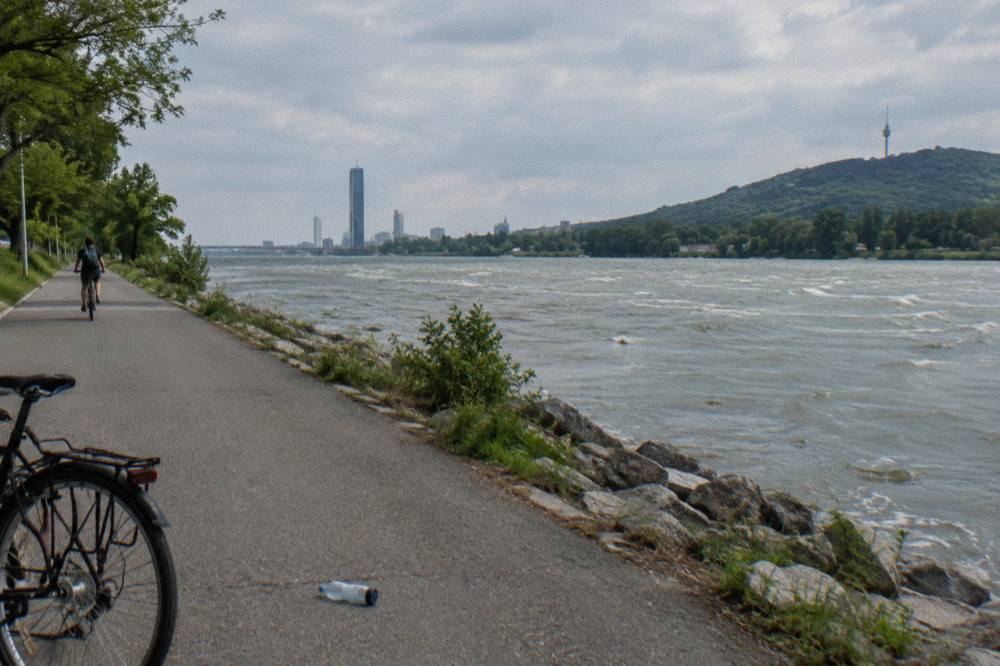
The Donauinsel is the natural warm-up. The island carries about 21 kilometers of paved cycling routes within a 135 kilometer path network, according to the city's own figures, and its traffic-calmed character is close to the feel of the river route beyond it. One caveat for planning: a section of the main path between Nordbruecke and Floridsdorfer Bruecke stays closed for water works until 2030, with riders diverted via the Neue Donau path, so check the city's diversion page before drawing your line.
The city's bike-share system, WienMobil Rad, makes the car-free version of a Vienna stop straightforward, with standard bikes at 0.80 EUR per started 30 minutes capped at 20 EUR per 24 hours, and e-bikes at 3.30 EUR per started 30 minutes capped at 40 EUR. Holders of eligible annual passes pay less under the mix tariff. Our full breakdown lives in the bike-share and city bikes guide.
For a first afternoon, a guided ride compresses the learning curve. The Classic Vienna 3-Hour Guided Bike Tour runs with a guide and a bike included, hits the city's core sights, and works well as the warm-up lap of a longer Austrian trip. Riders comparing pedal options can read our classic Vienna tour page for the full picture before booking.
E-bike variants change the calculus for companions. A three-hour e-bike tour of city highlights and hidden sights covers similar ground with the motor taking the sting out of any climb, and it lets a mixed-fitness pair ride together without negotiation. If your touring group contains one reluctant rider, the e-bike city day is often the thing that gets them to yes on the whole trip.
What A Guided Ride Adds Over Self-Guided
A guided tour buys three things self-guided riding does not: a bike that appears at a set meeting point, a route chosen by someone who rides it weekly, and an exit for weather or fatigue that is not your problem to solve. On a touring trip, most riders self-guide the point-to-point days and take a guided ride in the capital, which is exactly the pattern the Austrian itineraries tend to settle into.
The mechanics are simpler than newcomers expect. You arrive at the stated meeting point at the stated time, the operator supplies the bike, and the guide sets a pace for the group. What each tour includes varies, a wine-tasting day builds in the tasting, a city tour typically does not include attraction entries, so read the inclusions on the booking page for the specific ride you are weighing. Where a detail like a child seat or a specific bike type is not stated, ask the operator rather than assuming.
Guided days also carry a safety margin for riders new to European road norms. Austria's helmet rule requires children up to their 12th birthday to wear one on any bicycle, and a recent change extends a helmet requirement to under-14s on e-bikes as of 1 May 2026. Adults face no general helmet duty, though it is recommended at every age. Tour operators handle helmets for the riders who need them, which removes one more packing question; confirm with the operator what they provide.
The trade-off is freedom. A guided ride goes where it goes, and a touring rider's favorite moments are often the unplanned ones, the extra tasting, the wrong turn into a better village. The sensible split keeps guided rides for the city and the wine valley, where a guide's local knowledge earns its keep, and saves the empty river afternoons for going alone.
Which Month Should You Go?
The Austrian touring season runs roughly April through October, with late April to early June and September offering the best balance of weather, water levels, and crowd, and the Wachau's apricot blossom in late March adding a short, spectacular spring window. July and August work but run hot and busy, and winter riding is a different sport entirely.
Heat is the number to respect. Vienna recorded its first 40-degree days and a record number of heat days in summer 2026, and the city's long-term average July temperature sits at 21.9 degrees. Averages are not forecasts, but they explain why seasoned riders book the shoulder months: the route is the same, the towns are quieter, and the afternoons do not demand a two-hour lunch shelter.
Spring has its own logic. The apricot blossom draws people to the Wachau for 10 days to three weeks around late March into early April, and while the blossom is weather-dependent rather than guaranteed, the valley at that point is cool, green, and largely empty of the summer flotillas. The ferry and ship services are running by then, which keeps the logistics intact.
Autumn is the connoisseur's pick. September brings the wine harvest season, warm water, and the last full month of the main ship season on the Danube, which ends 1 November 2026. Riders who want a tasting-forward trip should anchor on September and early October, when the heurigen and wineries are at their liveliest. Our month-by-month breakdown in the best time to cycle guide goes deeper on the capital.
One planning footnote if your dates drift into late autumn: Vienna's Christmas market season opens with Schoenbrunn from 6 November 2026 and the Rathausplatz market from 13 November, and the city prioritizes winter clearing of central high-traffic bike paths, with a downloadable plan published. A cold-weather city ride is more feasible than most visitors assume, even if the touring days are done for the year.
Common Questions About Choosing A Country For Bike Touring
Which European Country Is Best For Bike Touring?
Austria has the strongest overall case for most riders: a flat, signed Danube route, the Wachau wine valley, trains every 30 minutes toward the starting points, and a capital city you can ride in an afternoon. The Netherlands, Denmark, France and Germany each win on a single dimension, but Austria combines route quality, terrain forgiveness and transport backup best.
Is The Danube Cycle Path Really Flat Enough For Beginners?
The Austrian sections follow the river downstream, so gradients are minimal and daily distance is the main variable. A headwind is the biggest physical challenge. Riders unsure of their fitness can use e-bikes, which rental shops and several guided tours in Vienna and the Wachau provide.
Can You Bike Tour In Austria Without A Car?
Yes, and that is a large part of the appeal. Vienna anchors the route, Vienna to Melk trains run about every 30 minutes with an average journey of 51 minutes, and the Wachau-Ticket bundles train, ship and Melk Abbey entry. Check the rail operator's rules for carrying a bike before each leg.
How Many Days Do You Need For The Austrian Part?
Most riders give the Austrian Danube three to five riding days, with a day or two in Vienna at either end. A compressed alternative is a Vienna city ride plus one guided Wachau day at roughly 11 hours, which fits inside a long weekend.
Do Children Have To Wear Helmets In Austria?
Children up to their 12th birthday must wear a helmet on any bicycle, and since 1 May 2026 the requirement also covers children and youths under 14 on e-bikes. Adults have no general helmet duty, though helmets are recommended at every age. Tour operators can confirm what they supply.