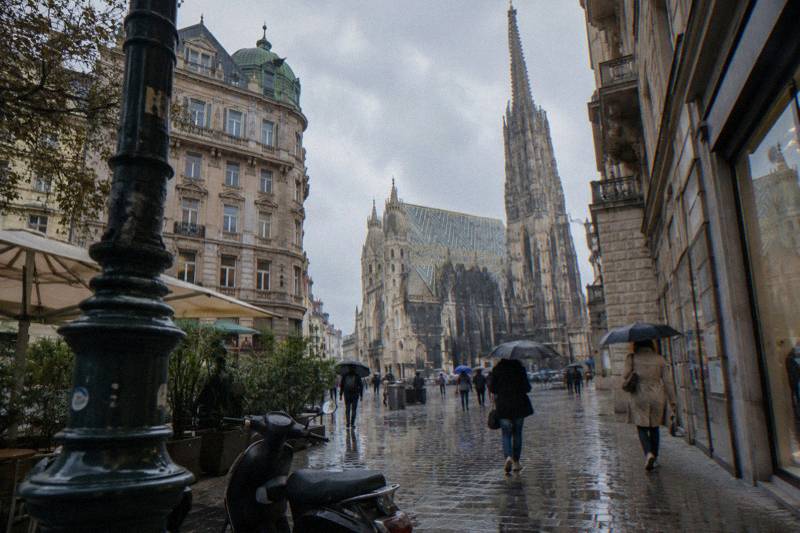
Is Vienna Good For Biking?
Vienna is one of Europe's most bike-friendly capitals, with about 1,811 kilometers of cycle network, flat terrain and a growing set of protected paths. Here is what that means for a visitor on two wheels.
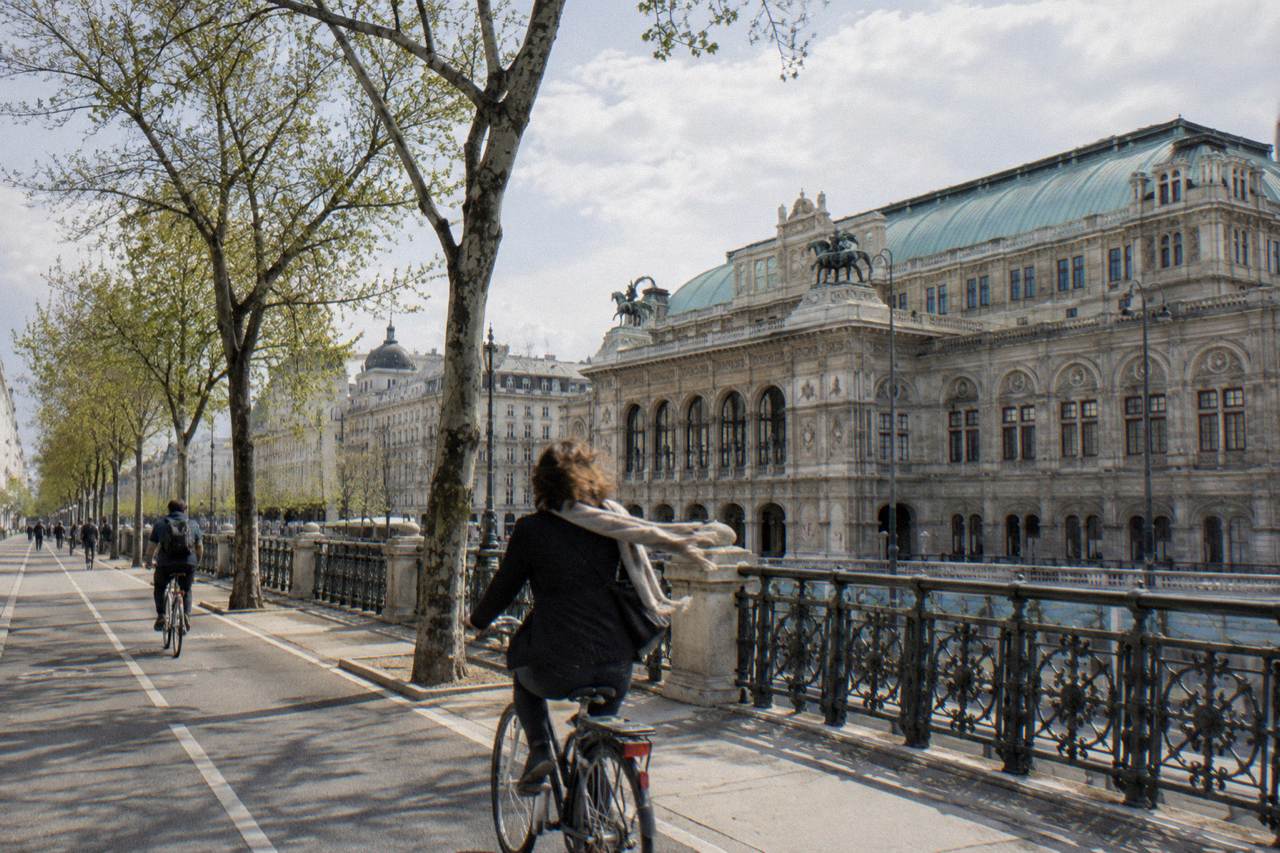
Yes. Vienna is genuinely good for biking, and measurably so: the city counts about 1,811 kilometers of cycling network across all 23 districts, the terrain in the central city is largely flat, and 2026 alone brought 33 new infrastructure projects totaling roughly 12.5 kilometers of new paths. For a visitor, that combination is rare. You get a capital city where the main sights sit within a short ride of each other, on routes the city has spent years connecting, separating from car traffic and signing. Biking here is not an enthusiast's project; it is a normal way to see the place. And if you want to take that same easy riding beyond the city limits, our guide to cycling across Austria covers the riverside routes and alpine climbs that make the whole country a strong pick for a bike trip.
That said, "good for biking" deserves an honest breakdown rather than a cheer. The city's network is strong but not uniformly strong: the famous Ringstrasse bike path is being rebuilt in stages starting from October 2026, which means some central sections are construction zones for now, with the first phase targeted for completion in summer 2027. A stretch of the Danube Island's main path between Nordbruecke and Floridsdorfer Bruecke is closed for water works until 2030, with riders diverted to the Neue Donau path. None of this makes Vienna bad for biking. It makes it a city where a little routing knowledge, or a guide who already has it, pays off. Being prepared also extends to what you put on and pack, and our guide to what to wear and bring on a Vienna bike ride covers the layers, shoes, and rain gear that make a detour day easier.
The flatness is the quiet advantage. Vienna's core, from the Ringstrasse out through the Prater and along the Danube Canal, sits on river plain. You are not climbing to reach the opera house or the cathedral. That is a large part of why a three-hour guided ride can comfortably cover the highlights, and why e-bikes, while pleasant, are optional in the center rather than necessary. The hills start where the city meets the Vienna Woods to the west and north, and that is exactly where e-bike and e-mountain tours earn their keep.
If you are weighing a first ride, three formats cover most visitors: a classic guided city tour on a regular bike, an e-bike version of the same idea, and a longer e-bike ride that reaches the green edges, like the Danube Island. The selection below shows that spread.
The featured option among those, the Classic Vienna: 3-Hour Guided Bike Tour, is the straightforward answer for a first-time visitor asking this exact question. Three hours, a guide, a bike, and the city's headline sights, with the current price and meeting details on the booking page. For a fuller comparison of doing it alone versus with a guide, our piece on whether to rent a bike or join a guided ride works through the trade-offs.
How Easy Is Cycling In Vienna For A First-Time Visitor?
Very easy in the center, with two honest caveats. The terrain is flat, the paths are signed, and the sights cluster within a compact ring, so a confident rider can cover the core in a morning. The caveats: cobblestones and tram tracks in the oldest streets demand attention, and the 2026 Ringstrasse rebuild means some detours on the city's most famous cycling street. Neither caveat is a reason to skip biking. Both are reasons to know the route before you set off, or to let someone who rides it daily lead.
The learning curve is short. Vienna's bike paths follow a recognizable grammar: red asphalt or marked lanes on bigger axes, shared calmed streets in residential quarters, and separated two-way paths on the newest routes. A 2026 example is the new two-way path on Obere Donaustrasse in Leopoldstadt, which finally connects the 2nd and 20th districts continuously. Riders who start on the Danube Canal routes and work outward rarely get lost, because the canal, the Danube and the Ring all act as handrails: linear features you can follow back toward the center.
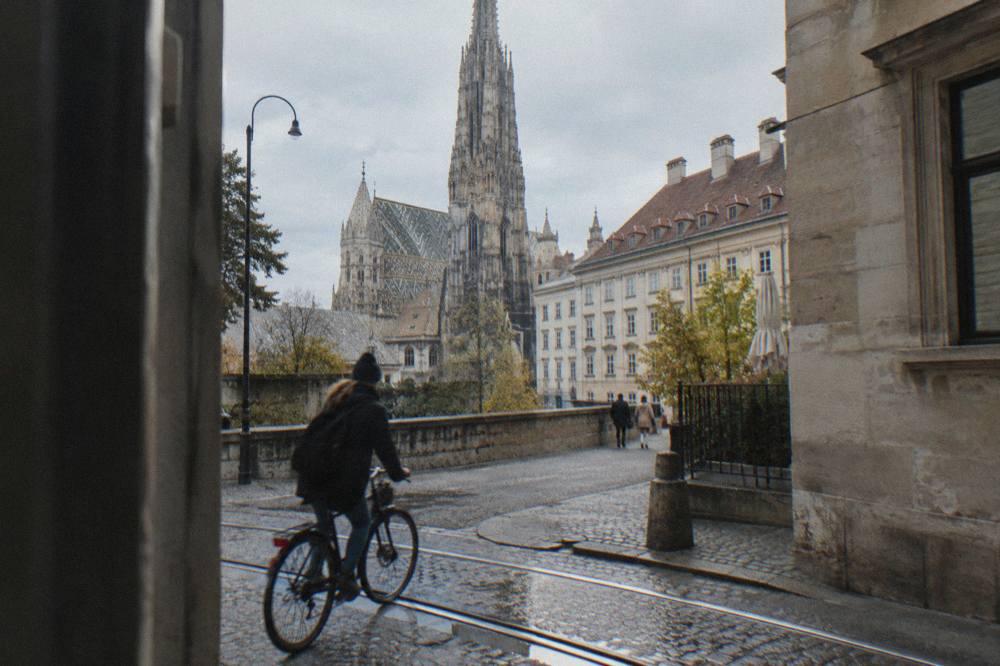
Cobblestones and tram tracks are the two things that catch newcomers. The Innere Stadt's oldest lanes are cobbled, which is bumpy but rideable at modest speed, and tram tracks demand crossing at a sharp angle, never parallel, so a wheel cannot drop into the groove. These are ordinary European city-cycling skills, and thousands of daily Viennese commuters demonstrate them every day. If that sounds like more friction than you want on day one, a guided ride absorbs it: the guide picks the crossing points, and you follow.
For families, the equation is friendly too. Children up to their 12th birthday must wear a helmet on any bicycle, and since May 2026 that duty extends to children and youths under 14 on e-bikes, so pack accordingly or ask the operator what they provide. Our guide to cycling in Vienna with kids goes deeper on trailer rentals, traffic-light roads and which routes keep the whole family calm.
The reassurance option, if you would rather not plan a single turn yourself, is a short guided classic ride.
What Does Vienna's Cycling Network Actually Look Like?
About 1,811 kilometers of routes in total, per the city's own statistics, spanning all 23 districts. The year 2026 alone added 33 projects and roughly 12.5 kilometers of new paths under the Radweg-Offensive program, including separated two-way routes on major axes. The network's shape is radial and riverside: routes converge on the center along the Danube Canal and the Danube, loop the old city on the Ringstrasse, and push outward on axes like the Northern Cycling Highway, a seven-kilometer route via Praterstrasse, Lassallestrasse and Wagramer Strasse to Kagran, completed in 2025. In December 2025 the nearly one-kilometer Alszeile connection in Hernals opened with separated two-way and one-way paths. This is a network under active construction in the best sense.
For a visitor, the useful mental model is three rings and two rivers. The inner ring is the Ringstrasse itself, the four-and-a-half-kilometer boulevard that traces the old city walls past the State Opera, the Hofburg, Parliament and City Hall. The rivers are the Danube Canal through the central districts and the Danube with its island on the eastern edge. Almost every headline sight sits on or inside that geometry, which is why Vienna feels compact by bike even though the city proper holds close to two million people.
The Ringstrasse deserves its own sentence of caution. Its bike path is being rebuilt in stages from October 2026, starting between Schottentor and Franz-Josefs-Kai, converting the service road into a 4.50 meter wide two-way cycle path with better separation from pedestrians. During the works, follow the city's diversion signage rather than assuming the old alignment. The city maintains a diversion page for exactly this purpose, and the project is a long-term win: it will give Vienna's most scenic ride a proper protected surface.
| Network element | What it is | Why a visitor cares |
|---|---|---|
| Ringstrasse loop | Boulevard loop past opera, Hofburg, Parliament, City Hall | Sights in one circuit, works in stages from Oct 2026 |
| Danube Canal routes | Riverside paths through central districts | Flat, continuous, connects Prater to the center |
| Danube Island (Donauinsel) | About 21 km of paved cycling on an island with 135 km of paths total | Car-free green riding; one section closed until 2030, diverted via Neue Donau |
| Northern Cycling Highway | Seven km route via Praterstrasse and Lassallestrasse to Kagran, completed 2025 | Straight, separated commuter-standard axis toward the Danube |
| Radweg-Offensive 2026 | 33 projects, about 12.5 km of new paths | Gap closures on major axes citywide |
The scale of the investment is the honest answer to anyone who arrives expecting a museum city hostile to bikes. Vienna recorded 14.9 million overnight stays in the first nine months of 2026, and the city is building cycling infrastructure for residents and visitors alike, not despite the tourism. Winter riders even get priority clearing on central high-traffic paths under the city's published winter plan.
Do You Need A Guided Bike Tour, Or Can You Go Alone?
No, you do not need a guided bike tour, and thousands of riders choose to go alone. That said, a guide solves the two things self-guided riders struggle with most: routing through the current Ringstrasse construction zones, and context, so a guided tour is worth considering if either of those gives you pause. A guide turns a pretty boulevard into a story, knows which canal ramp connects where, and handles the bike itself. For a visitor with one or two days in the city, three hours with a guide often delivers more usable sightseeing than a full day spent finding your own way street by street, and the cost difference against a day of rental plus trial and error is smaller than it looks.
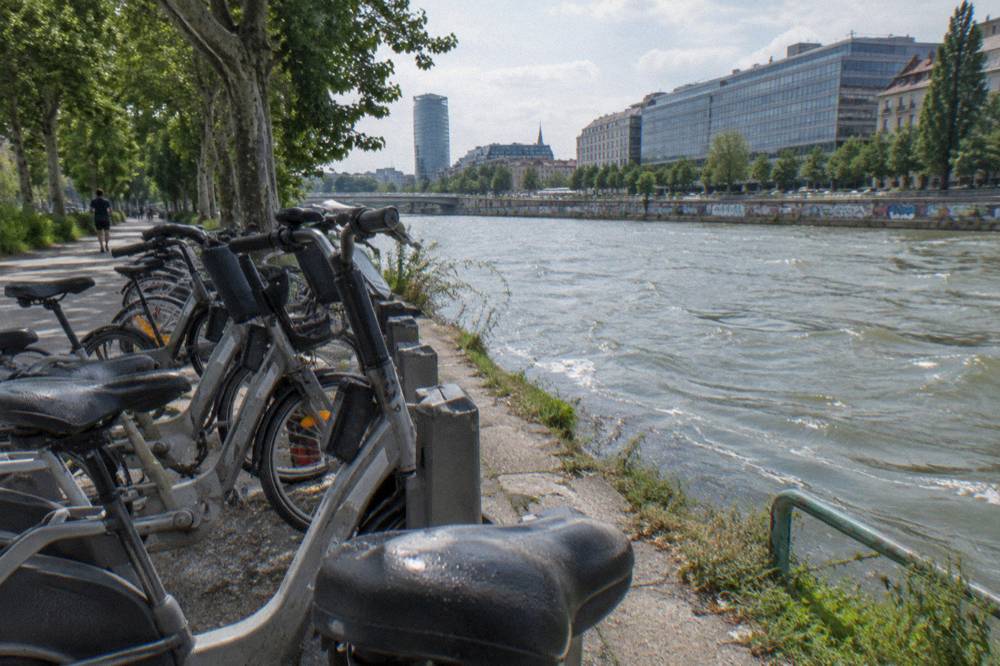
Rental pricing, for comparison, is not trivial in Vienna. One rental shop on the Danube Island lists a comfort bike at 35 euros for a six-to-twelve-hour day and an e-bike at 75 euros for the same window; those are one shop's list prices, not a market average. Bike-share via WienMobil Rad runs 0.80 euros per started 30 minutes on a standard bike, capped at 20 euros per 24 hours, which suits short hops more than a full sightseeing day. A guided city tour, by contrast, bundles the bike, the guide and the route into one price, with the figure on the booking page. More of these guides are collected on Bike Tours Vienna.
The e-bike question folds in here. In the flat center you do not need one, and a 3-hour guided classic ride covers the same ground. Where e-bikes change the experience is reach: they make the Vienna Woods hills, the longer green loops and the hotter days of summer far more comfortable. Vienna recorded its first 40-degree days and a record number of heat days in summer 2026, and an electric assist is a genuinely different proposition in that weather than a standard bike.
The middle-ground option is a guided e-bike tour of the city's highlights and hidden corners, which keeps the guide's routing and storytelling but smooths the effort. One e-bike highlights ride runs three hours with a shared group, and the listing on the booking page carries current pricing, the meeting point and what is included. Our comparison of e-bike or regular bike for seeing Vienna walks through the same choice in more detail.
If the classic three-hour format tempts you but you want the definitive version of that story, our article on what the classic guided bike tour of Vienna includes is the companion read.
Is The Danube Island And Prater Side Good For Biking?
Yes, and for many riders it is the best part of Vienna by bike. The Danube Island offers about 21 kilometers of paved cycling on car-free paths within a 135-kilometer island trail network, and the neighboring Prater adds wide tree-lined avenues that have served as a public cycling and strolling ground for generations. Where the center delivers architecture, this eastern side delivers space: water on both sides, shade in summer, and the kind of straight, flat, traffic-free riding that families and relaxed riders travel for.
The honest asterisk is the closure. The main path between Nordbruecke and Floridsdorfer Bruecke stays shut for water works until 2030, and cyclists are diverted via the Neue Donau path. The diversion is signed and the island remains fully usable end to end; you simply ride the riverside path for that stretch instead. Check the city's diversion page before a long ride, since works staging can shift.
The Prater side connects to the island naturally, which is why several guided routes pair them. The Prater's main avenue, the Hauptallee, runs dead straight under double rows of chestnut trees, closed to through car traffic, passing the Riesenrad ferris wheel, whose 2026 adult ticket is 14.50 euros if you want to add a ride to your day. This is the flattest, calmest big-city cycling imaginable, and it starts barely two kilometers from St. Stephen's Cathedral.
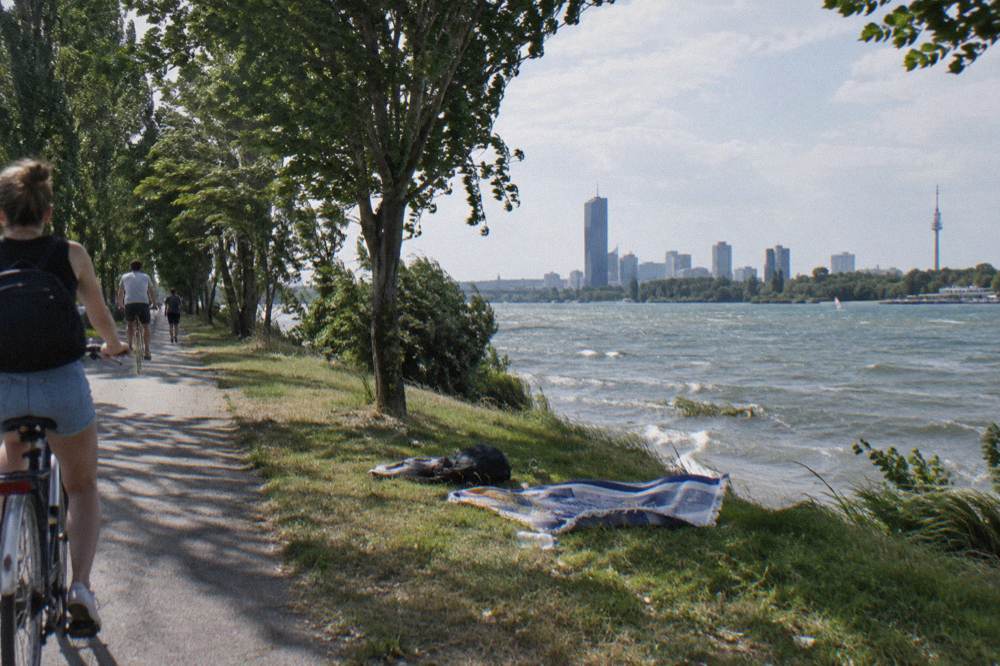
Guided options cover exactly this territory. One three-hour e-bike tour pairs the Danube Island with the city's green parks, bike included, which spares you the logistics of reaching the island with a rental. Our guide to cycling the Prater and Danube Island maps the standalone version if you would rather ride it yourself.
What Are The Cycling Rules A Visitor Should Know?
The core rules are few and easy: children under 12 must wear a helmet on any bicycle, since May 2026 the helmet duty also covers under-14s on e-bikes, bikes ride on the right, use lights after dark, and stay off sidewalks unless signed otherwise. Since 1 October 2026, e-mopeds are banned from bike paths, which keeps the paths clearer for actual bicycles. There is no general helmet obligation from age 14 up, though helmets are recommended at every age and most tour operators provide them on request.
Public transport interacts with bikes in specific ways. Standard bikes and ordinary e-bikes travel free on the U-Bahn, but only on weekdays between 9:00 and 15:00 and after 18:30, plus all day on weekends and public holidays; they must be wheeled, not ridden, and escalators are off limits. Under the carrier's conditions, the only exclusions are bikes with start-assist motors, cargo bikes and transport bikes. Non-foldable bikes are not allowed on trams and buses at all. For a day trip beyond the city, check the rail operator's bike terms before you go, since intercity bike fares are not uniform.
Alcohol deserves plain advice on a city famous for its wine culture: follow the operator's guidance and local rules, and if a wine-region ride appeals, save the serious tasting for the end of the route or the train home. Our pages on cycling rules and safety in Vienna and the Wachau Valley by bike from Vienna cover both the legal detail and the wine-country version of this question. For more on the region beyond the bottle, our guide to what makes the Wachau Valley famous covers the apricots, villages, and river scenery waiting at the end of the ride.
Seasonality matters more than rules for planning. The Christmas market season opens with Schoenbrunn on 6 November 2026 and the Rathausplatz market from 13 November, and a crisp market-to-market ride is a real winter pleasure on the city's priority-cleared paths. Summer brings the crowds and the heat, spring and autumn the balance; our month-by-month guide to the best time to cycle in Vienna has the detail.
| Season | Conditions for biking | Notes for visitors |
|---|---|---|
| Spring (March to May) | Mild, blossom season from late March in wine country | Bike Festival Wien held 28-29 March on Rathausplatz |
| Summer (June to August) | Hot; record heat days in 2026 including first 40°C readings | Ride mornings; e-bike assist helps; seek Danube Island shade |
| Autumn (September to November) | Stable and mild early, markets from early November | Schoenbrunn market opens 6 Nov, Rathausplatz 13 Nov 2026 |
| Winter (December to February) | Cold, short days, some snow | Central high-traffic paths get priority winter clearing |
Common Questions About Biking In Vienna
Is Vienna Good For Biking?
Yes. Vienna counts about 1,811 kilometers of cycling network across all 23 districts, the central terrain is flat, and 2026 alone added 33 infrastructure projects totaling roughly 12.5 kilometers of new paths. With guided city tours, e-bike options and car-free riverside riding on the Danube Island, it is one of the easiest major European cities to see by bike.
Is Vienna Flat Enough For Casual Cyclists?
Yes, in the center. The Ringstrasse, the Danube Canal routes and the Danube Island all sit on river plain with no meaningful climbs. Hills begin where the city meets the Vienna Woods to the west and north, which is where e-bike and e-mountain bike tours make sense.
Do I Need A Helmet To Cycle In Vienna?
Children up to their 12th birthday must wear a helmet on any bicycle, and since May 2026 that duty also applies to children and youths under 14 on e-bikes. From age 14 there is no general helmet obligation, but helmets are recommended and most tour operators can provide one; ask when booking.
Can I Take A Bike On The U-Bahn In Vienna?
Yes, with conditions. Standard bikes ride free on weekdays between 9:00 and 15:00 and after 18:30, and all day on weekends and public holidays. Bikes must be wheeled, not ridden, and bikes with start-assist motors are excluded under the carrier's conditions. Non-foldable bikes are not permitted on trams and buses.
Should A First-Time Visitor Take A Guided Bike Tour In Vienna?
It is a reasonable choice. A three-hour guided classic tour covers the headline sights with routing handled for you, which matters while the Ringstrasse bike path is rebuilt in stages. Confident riders can go alone, but the guide adds context and removes navigation friction for roughly the cost of a day's rental plus a good map.