Wachau Wine And Apricot Country By Bike
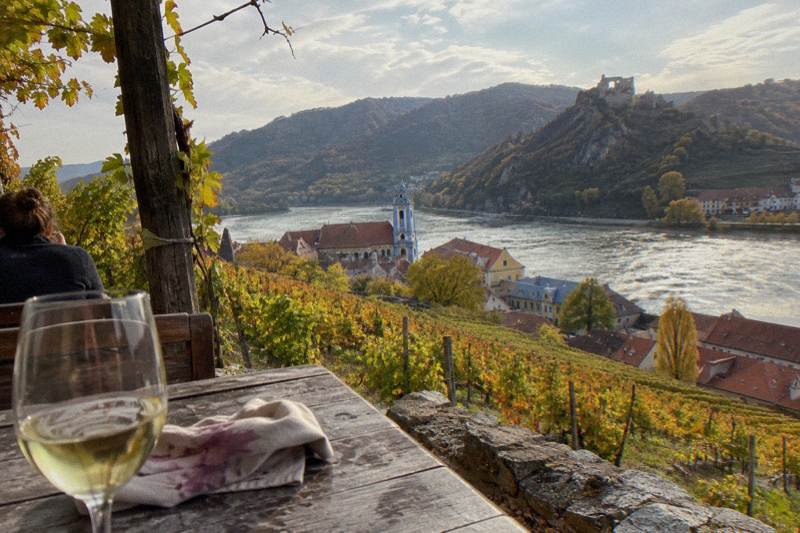
The Wachau Valley compresses terraced vineyards, apricot orchards and riverside villages into a stretch of the Danube easy to reach from Vienna. A bike makes the whole arc of it feel close, and a guided wine day removes the planning.
Short answer
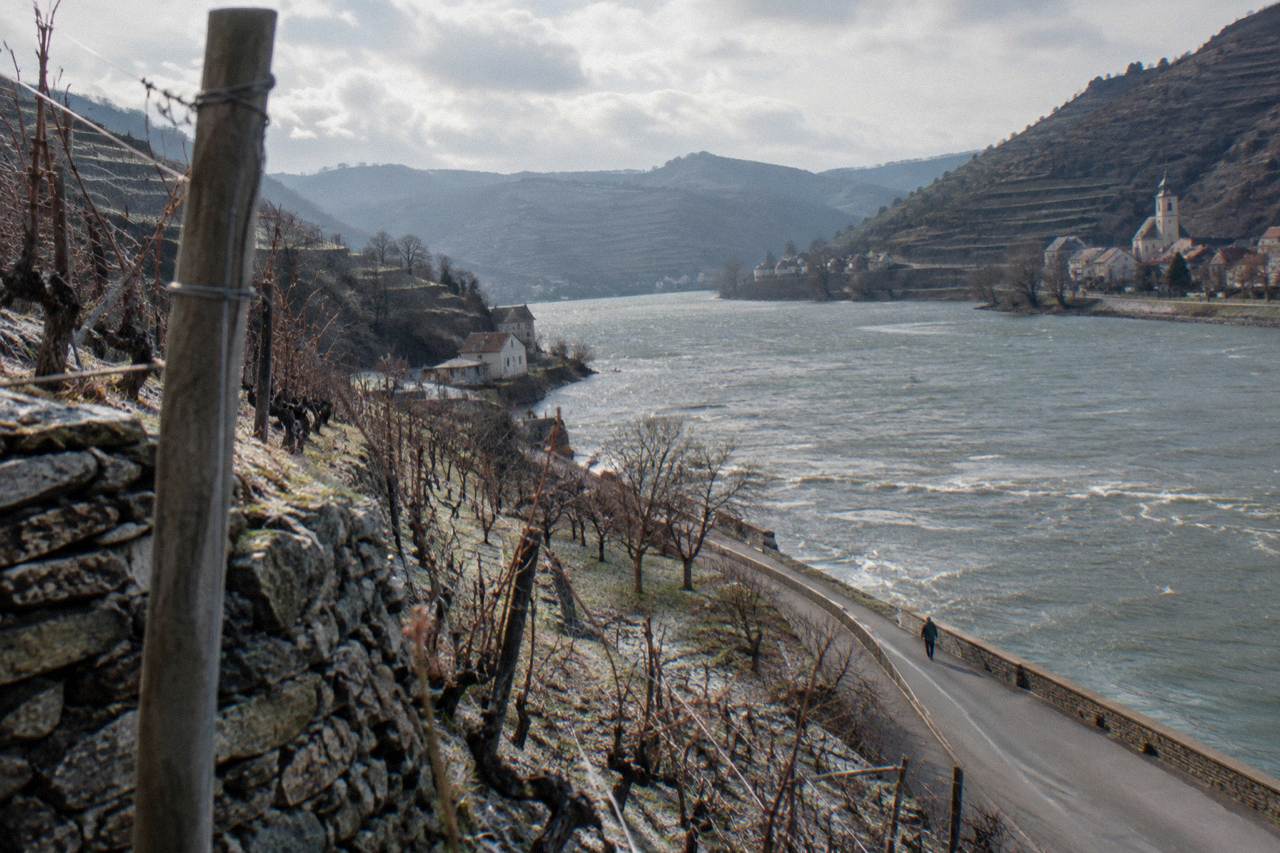
The bookable Wachau wine tasting bike day trip from Vienna runs roughly 11 hours and pairs a guided ride with tasting stops, all organised from the city. The valley's ship season runs 28 March to 1 November 2026, and apricot blossom peaks for 10 days to 3 weeks in late March to early April.
The Wachau Valley is the 30-some kilometre stretch of the Danube between Krems and Melk where the river narrows, the hills steepen, and every usable slope has been terraced into vineyards or planted with apricot trees. It is a UNESCO World Heritage landscape, and unlike many of those, you can ride straight through the middle of it on quiet riverside roads. Vienna sits close enough that a day trip works, and one bookable option does the whole thing as a guided ride. Since most rides begin or end in Krems, our guide to whether Krems deserves a stop covers bike rental, apricot season, and the easiest way to reach the town from Vienna.
This guide covers how the Wachau works by bike: what a wine-focused guided day from Vienna actually contains, when apricot season and the ship season fall, how cycling and tasting combine in practice, and what it costs to patch the trip together yourself. The short version: a guided day removes every decision, and the valley rewards riders who time it around blossom, harvest or the autumn wine season. If the Wachau leaves you wanting a longer ride, our comparison of the best European country for bike touring shows how Austria stacks up against its neighbors.
What Does A Wachau Wine Bike Day From Vienna Look Like?
The guided option is a full day, roughly 11 hours door to door, built around a bike ride through the valley with wine tasting woven in. The group travels from Vienna by train, picks up bikes locally, and rides between riverside villages and cellar doors before returning to the city. Tasting stops are part of the listing, and the operator sets the pace and the route.
The bookable day trip is the Wachau Valley Wine Tasting Bike Tour from Vienna. It is a shared tour, roughly 11 hours in total, and the listing frames it as a bike tour with wine tasting rather than a tasting with a bike attached. The riding sits in the middle of the day; the transfers to and from Vienna bracket it. For wine-curious visitors who want the valley without renting a car or decoding train and ferry timetables, that structure is the whole point.
What the day gives you that independent planning does not: a bike that is already there, a route that avoids the dull bits, and cellar doors that expect your group. What it does not give you: control. You ride at the group's pace and stop where the itinerary stops. If that trade sounds wrong, the self-planned version later in this guide covers trains, ferries and rental shops.
A word on how drinking and riding actually work on these tours. The tastings are part of the listing, but the operator decides how much is poured and when the riding resumes, and you should follow their lead on both. Nobody should treat a wine tour as a licence to ride a bike through a full afternoon of drinking. The guided format exists partly because someone else is watching the clock and the glasses. If you would rather taste freely, do it on a day you are not riding, or plan a long lunch stop and ride gently after.
Which Wine And Cycling Tours From Vienna Should You Compare?
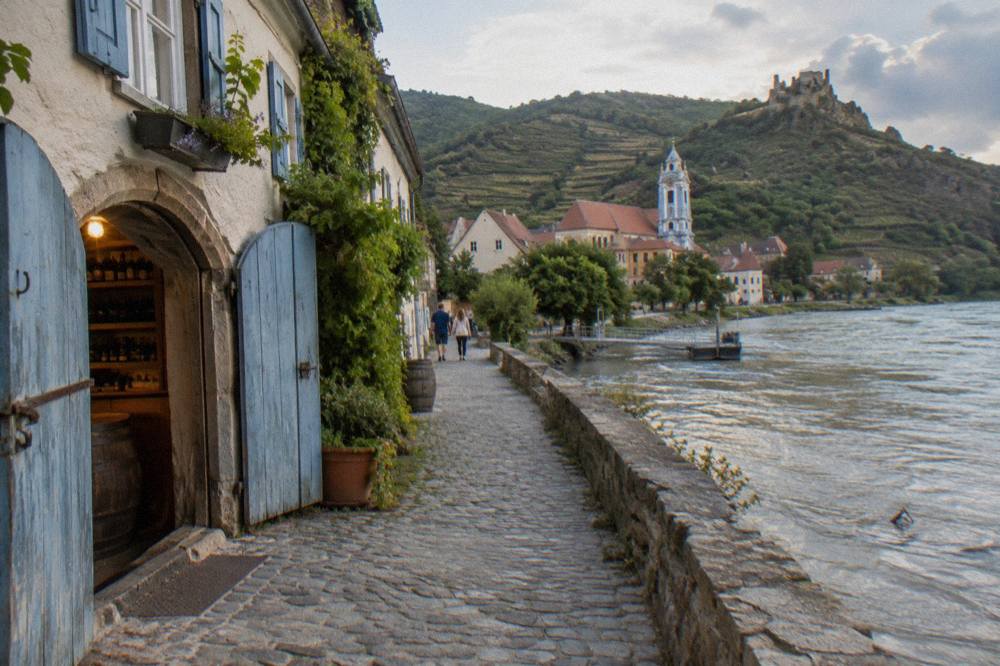
Three tours cover the wine-by-bike idea from Vienna: the full Wachau day trip of roughly 11 hours, a 4-hour e-bike wine tasting tour in and around Vienna, and a 4-hour e-bike wine culture tour along the Danube. They differ in distance, in where the wine comes from, and in how much of your day they take. Choosing between them is mostly choosing between the Wachau itself and Vienna's own wine culture. Whichever tour you choose, you will probably start your ride with a train trip, so our guide to bringing a bike on the train without surprise fees is worth a quick look first.
The full comparison looks like this:
| Tour | Duration | Format | Where the wine is | Best for |
|---|---|---|---|---|
| Wachau Valley Wine Tasting Bike Tour from Vienna | roughly 11 hours | shared day trip | Wachau Valley cellar doors | The full valley experience |
| Vienna Wine Tasting E-Bike Tour | 4 hours | shared, e-bike | Vienna's own wine regions | A half-day with tasting |
| E-Bike Wine Culture Tour | 4 hours | shared, e-bike | Danube-side wine culture, Vienna based | Wine context without a long day |
The half-day options deserve a fair hearing. Vienna has its own wine culture, the Heurigen taverns and hillside vineyards inside and just outside the city, and the Vienna Wine Tasting E-Bike Tour covers that in 4 hours on an e-bike. You are back in the city by mid afternoon. The E-Bike Wine Culture Tour rides the Danube side of Vienna and treats wine as the theme of the ride rather than the destination.
The Wachau day is a different animal. You spend real hours on transport, but you get the terraces, the apricot orchards and the river gorge that Vienna simply does not have. If this is your only day outside the city, the Wachau wins on landscape. If you have a packed Vienna itinerary and one free half day, the city-based wine tours are the honest fit.
Wine-curious visitors who want tasting without a full-day commitment may also find the Vienna e-bike tasting tour the easier yes, since everything happens within reach of your hotel. Check the operator's live listing for each option, because inclusions such as food, tasting counts and bike type sit in the booking details rather than in any summary.
When Is Apricot And Wine Season In The Wachau?
Apricot blossom typically runs late March to early April, with the peak lasting 10 days to 3 weeks; the harvest falls in early to mid July in an average year. Wine season stretches wider: the Wachau ship season runs 28 March to 1 November 2026, with the main season 25 April to 4 October. Every one of those windows is also a bike window.
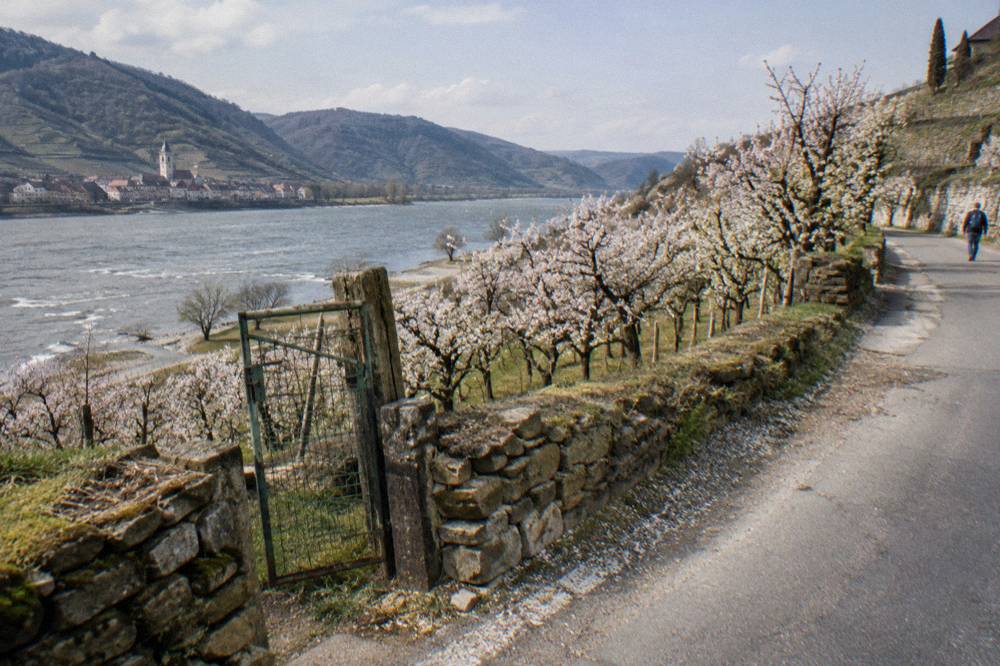
The blossom is the photogenic moment. For 10 days to 3 weeks in late March and early April the orchards turn white and pink, and the valley is at its freshest. It is also the least predictable window: a warm February can pull it early and a late frost can cut it short. Riders chasing blossom should keep the itinerary flexible and watch the valley's own reporting in the week before travel.
Harvest, early to mid July, is the second apricot moment. This is when Marillen, the Wachau apricot with protected geographical status, comes off the trees and into jams, schnapps and cakes in every village. The weather is a real factor then. Vienna recorded its first 40°C days and a record number of hot days in summer 2026, and the Wachau sits in the same heat zone. July riders should want an early start, shade at midday, and water.
For wine, autumn is the classic season. The grape harvest pulls activity into the cellar doors, the terraces turn colour, and the main ship season runs to early October. Late September into October is the sweet spot many riders land on by accident: stable weather, working wineries, and the river still busy enough that everything is open.
The shoulder edges matter too. Before late March and after early November, the valley's ship services close for the season, and some Heurigen and tasting rooms reduce their hours. A ride is still possible, but the combination of cycling, boats and wine doors is a seasonal product. Our month-by-month breakdown in best time to cycle in Vienna by month covers the same seasons from the Vienna end, and the logic transfers directly to the valley.

How Do Cycling And Wine Tasting Combine Safely?
On the guided tours, the operator controls the pacing: tastings are part of the listing, riding happens between stops, and the guide decides the rhythm. Tasting portions in the Wachau are typically small pours, not full glasses, and the format is closer to a moving tasting than a pub crawl. Follow the operator's lead on how much you drink before you ride.
This deserves plain language. Riding a bike after drinking is not a good idea, and nothing in this guide should be read as saying otherwise. What the wine bike format actually involves, on the tours sold here, is a structured day where tasting stops are scheduled and the operator manages the interval between pouring and pedalling. That structure is the safety mechanism. The list of tasting stops and their order sits in the booking details for each tour.
If you are planning your own day, the same principle applies with nobody enforcing it. A sensible self-guided pattern: ride the morning while you are fresh, take a long lunch with your most serious tasting, and keep the afternoon ride short and flat, which in the Wachau the riverside road mostly is. Save the bigger pours for the evening in Krems or back in Vienna. Alternatively, ride one direction and take the ship back with the wine inside you and the bike racked, a combination the valley is practically built for.
The e-bike option changes the effort but not the arithmetic. An e-bike flattens the terraced side valleys, which is genuinely useful in the Wachau, but it does not change how alcohol affects balance and judgement. Treat motor assistance and drinking as separate questions.
Two practical notes for families and mixed groups. The booking page states the age policy per tour. And if part of your group wants a serious tasting day, splitting the party, riders one way, tasters another, then rejoining by ship or train, is a normal Wachau move.
Can You Cycle The Wachau Independently From Vienna?
Yes, and the train is the key: Vienna to Melk Bahnhof trains run every 30 minutes with an average journey time of 51 minutes, so you can be at the western end of the valley in under an hour. From there the classic independent pattern is to ride Melk to Krems with the current, then take the train back from Krems. Rental shops in the valley supply bikes, including e-bikes.
The reverse direction, Krems to Melk, works just as well and pairs naturally with the train home from Melk. One Wachau rental in Spitz and Melk lists e-bikes at 38 EUR per day, which gives a realistic sense of the price band, though rental stock and rates vary by season, so check the shop directly. Donauschifffahrt options put the river into the itinerary: the DDSG Blue Danube season runs 28 March to 1 November 2026, and a Krems to Melk one-way ship ticket costs 40 EUR, or 49 EUR return.
| Independent leg | Typical cost | Notes |
|---|---|---|
| Train Vienna to Melk | fare on ÖBB, check current rates | every 30 minutes, about 51 minutes average |
| E-bike rental, valley shop | 38 EUR per day at one listed shop | other shops vary; book ahead in season |
| Ship Krems to Melk | 40 EUR one way, 49 EUR return | bike carriage per operator conditions |
| Spitz-Arnsdorf roll ferry | bicycle including rider 4.70 EUR | runs March to October, daytime hours |
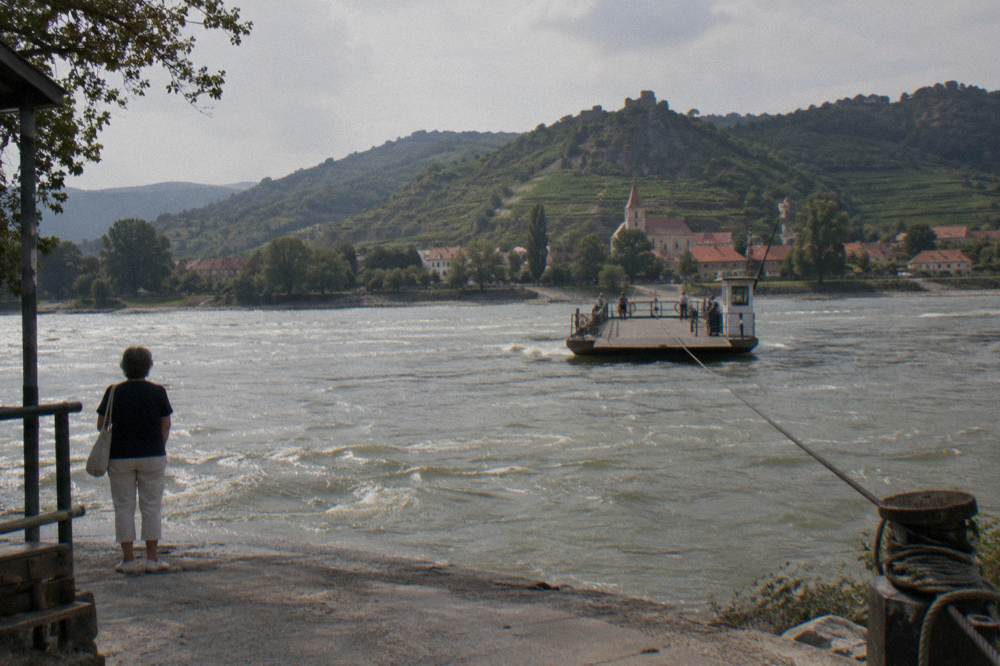
The roll ferry is the detail most first-time visitors miss. At Spitz, a small cable ferry crosses the Danube from the north bank to Arnsdorf on the south bank, and a bicycle with its rider costs 4.70 EUR. It runs from early morning to early evening between March and October, with later weekend hours. It exists because both banks are worth riding: the north bank carries the busier bike path and most wine villages, while the south bank is quieter and hillier with its own views.
There is also a packaged middle path. The Wachau-Ticket bundles the ÖBB train from Vienna, a DDSG ship between Melk and Krems in one direction, and entry to Melk Abbey, which covers the transport spine of a self-guided day in one purchase. Add a rental bike at either end and you have built most of a guided tour's skeleton yourself. Our longer route guide, Wachau Valley by bike from Vienna, walks the full itinerary village by village.
For riders eyeing the bigger picture, the valley is also the final scenic stage of the long Danube route; see how long is the Danube Cycle Path for where the Wachau sits in it.
How Much Does A Wine Bike Day In The Wachau Cost?
The guided day trip from Vienna is priced per person on the operator's live listing, and the current figure sits on the booking page. The independent version stacks up in euros: a 51-minute train from Vienna, e-bike rental at around 38 EUR per day from one valley shop, a 40 EUR one-way ship ticket if you sail, and a 4.70 EUR ferry crossing with a bike. Tasting fees are set by each cellar door.
Prices for the tours sold here are shown on their booking pages, and they move with season and demand, so this guide does not print a number the listing may have left behind. What is worth writing down is the shape of the comparison. The guided day is one price covering transport, bike, guide and the tasting framework; the independent day is four or five smaller payments you control individually, plus your own navigation.
| Cost item | Guided day trip | Independent day |
|---|---|---|
| Transport Vienna to valley | included | train fare, about 51 minutes to Melk |
| Bike | included | rental, e-bikes listed around 38 EUR per day |
| Wine tasting | stops included per listing | paid per cellar door, fees vary |
| Guide and route | included | you plan it |
| Return leg | included | train from Krems or Melk, or 40 EUR ship |
| Typical time cost | roughly 11 hours door to door | your call |
Tasting fees in the Wachau usually run a few euros per pour at a Heurigen counter and more for seated tastings at the top estates; check the room before you sit down, since policies differ between tavern-style and appointment-only cellar doors. Food is the same: a Heurigen spread is typically priced by the plate and can be as cheap or as lavish as you make it.
The guided tour earns its margin on the day's friction, not on the wine. You are buying the absence of a rental desk, a timetable and a route decision, plus a guide who knows which cellar door has space at 2pm on a Saturday in October. Whether that is worth the listing price depends on how much of your Vienna trip you are willing to spend inside a single valley.
For a cost framing that includes the Vienna-based wine and e-bike options side by side with regular city tours, our pricing guide, how much a Vienna bike ride costs, breaks the whole ladder down.
What Should You Not Miss Along The Wachau Ride?
The stops most riders remember are Melk Abbey above the river at one end, the apricot and wine villages of Spitz and Weissenkirchen in the middle, and the medieval lanes of Krems at the other end. The Spitz-Arnsdorf roll ferry, 4.70 EUR with a bike, links the two banks. The terraced vineyards themselves, the Riesling slopes above Spitz, are the landscape the whole valley is listed for.
Melk first, because most riders meet it at the start. The abbey is one of Europe's great baroque buildings, sitting on its rock above the town, and its entry is included in the packaged Wachau-Ticket if you go that route. Even from the outside, from the river path below, it frames the western gate of the valley.
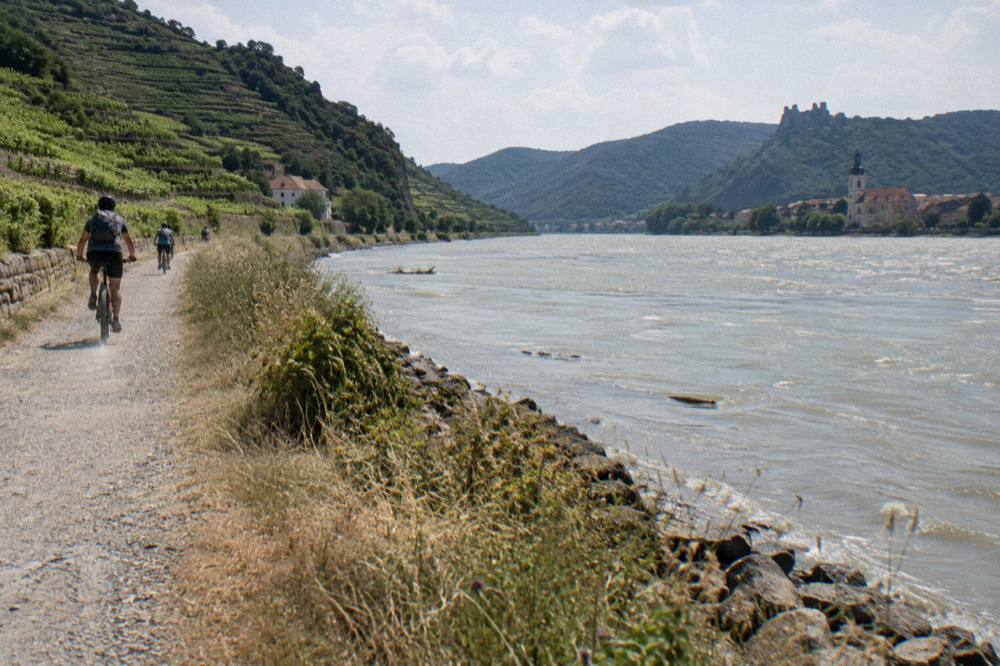
The middle stretch is the heart. Spitz, Weissenkirchen and Joching run into each other along the north bank, each with Heurigen courtyards, apricot farm shops and short, steep lanes climbing into the terraces. This is where a bike outperforms a car: you can stop on a whim, and the distances between villages are short. The roll ferry at Spitz is also here, waiting to swing you over to the quieter south bank for a different ride home.
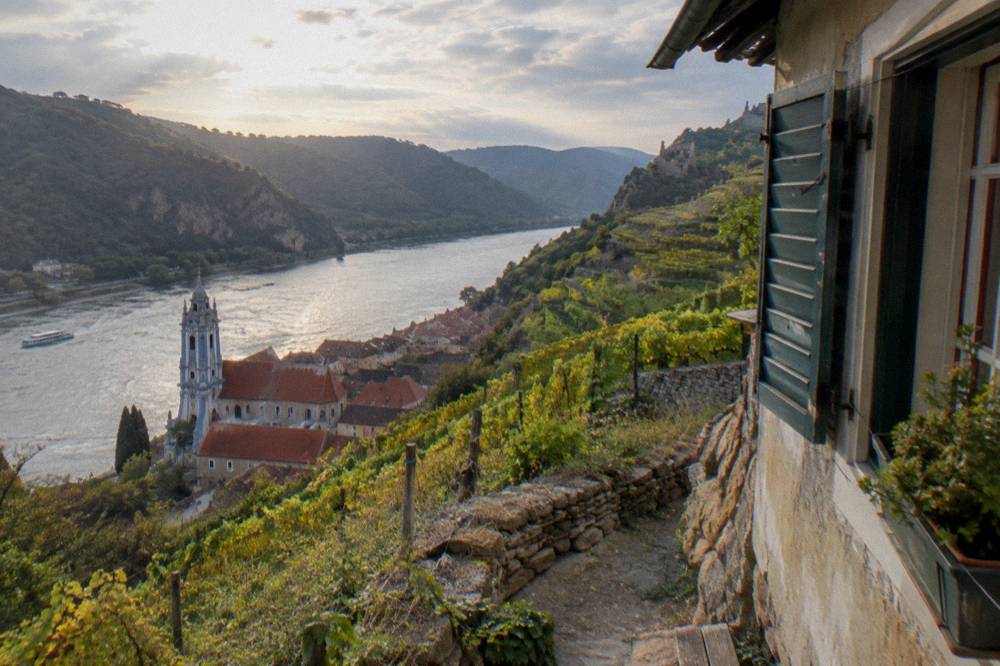
Krems closes the ride. The old town is compact and walkable, the wine museum tells the valley's story better than most, and the train home to Vienna leaves from here. Riders with energy left can continue east along the Danube a short way past Krems, but most days end with a glass in the old town instead.
Two seasonal notes. During blossom, late March to early April, the orchards between Spitz and Weissenkirchen are the densest colour. During the harvest window in early to mid July, farm shops are full of fresh Marillen and the apricot products that carry the valley's name, and a stop to load a pannier is a Wachau ritual. Neither needs booking; both need a bike rack you can trust.
Is A Guided Wine Tour Or An Independent Ride Better For You?
Pick the guided day if you want the Wachau in one booking, have a single day, or want the wine handled responsibly by someone running the clock. Ride independently if you already know what you want to taste, want to stop for hours in one village, or are riding with children whose pace a group cannot hold. Both formats deliver the same valley.
The honest dividing line is temperament. The guided tour, roughly 11 hours, is a full commitment, and it suits visitors who would rather buy the whole arc at once. Independent riders get to linger, to change the plan when a cellar door looks right, and to spend the money where they choose. What they give up is the guarantee of space at that cellar door and someone else carrying the logistics.
There is a middle option worth naming: the Vienna-based wine e-bike tours. They deliver the tasting-and-riding combination inside a 4-hour half day, with no valley transfer at all. Riders who are unsure whether they want a full wine day often use one as a test, then book the Wachau the following year. That is a reasonable sequence, not a compromise.
Whatever you choose, check the booking page for the details this guide cannot fix in place: the exact tasting stops, whether lunch is included, the bike type, and the cancellation terms. The valley itself is constant. The operator details are the part that moves. Bike Tours Vienna keeps the tour options current, and the seasons above tell you when to aim for.
Common Questions About Wachau Wine And Apricot Country By Bike
How Long Is The Wachau Wine Tasting Bike Tour From Vienna?
The guided day trip runs roughly 11 hours in total, including transfers from Vienna, the ride through the valley and the tasting stops. The riding portion is only part of that; check the itinerary on the booking page for the exact breakdown.
When Is Apricot Season In The Wachau Valley?
Blossom typically falls in late March to early April, with the peak lasting 10 days to 3 weeks. The harvest runs early to mid July in an average year, when fresh Wachau Marillen and apricot products fill the farm shops.
Can You Drink Wine And Still Ride A Bike In The Wachau?
The guided tours structure the day so tasting and riding are separated by time and managed by the operator, and tastings typically involve small pours rather than full sessions. Follow the operator's lead on pacing, and if you plan a serious tasting, do it at the end of the ride or on a day you are not cycling.
How Do I Get To The Wachau From Vienna Without A Car?
Trains from Vienna to Melk Bahnhof run every 30 minutes with an average journey time of 51 minutes. From Krems, regular trains return to Vienna. The Wachau-Ticket bundles the train with a Danube ship leg and Melk Abbey entry.
When Do The Wachau Ships And The Spitz Ferry Run?
The DDSG Blue Danube season in the Wachau runs 28 March to 1 November 2026, with the main season from 25 April to 4 October. The Spitz-Arnsdorf roll ferry operates from March to October in daytime hours; a bicycle with rider costs 4.70 EUR.
Are There Wine Bike Tours That Do Not Take A Full Day?
Yes. Two Vienna-based options run about 4 hours each on e-bikes: the Vienna Wine Tasting E-Bike Tour and the E-Bike Wine Culture Tour along the Danube. They cover Vienna's own wine culture rather than the Wachau itself.