Cycling Rules And Safety In Vienna
Vienna is one of Europe's calmer capitals to ride a bike in, but its rules have real edges: tram tracks to cross, a helmet law for children, staged construction on the Ringstrasse, and an E-moped ban on cycle paths that took effect in October 2026. Here is what the rules actually say and how they shape a safe ride.
Short answer
Vienna follows Austrian cycling law: ride on bike paths where signs direct you, use hand signals, and follow lights and priority like any vehicle. Children up to their 12th birthday must wear a helmet, and since May 2026 that extends to under-14s on e-bikes. Since 1 October 2026 E-mopeds are banned from cycle paths. Bikes ride the U-Bahn only in set hours, never trams or buses.
Vienna runs on a cycling network of roughly 1,811 kilometers, and the city treats bikes as traffic, not as pedestrians on wheels. That is the single idea behind almost every rule that follows. The city is adding around 12.5 kilometers of new cycling infrastructure across 33 projects in 2026 alone under its Radweg-Offensive, so the street you ride this year may not match a blog post from three years ago. The basics are stable though: signed bike paths where they exist, ordinary road rules where they do not, a helmet law for children, and a public transport system that accepts bikes only on its own narrow terms. Once the basics feel natural, the common cycling pitfalls in Vienna walks you through tram tracks, e-moped rules, theft, and the seasonal traps that catch visitors off guard.
This guide walks through the rules question by question, from lane markings to tram tracks to where you park at night. Where a rule changed recently, the change is flagged. Where something is genuinely not fixed in law, like lighting equipment details on a rental bike, the honest answer is to check the operator.
What Are The Basic Cycling Rules In Vienna?
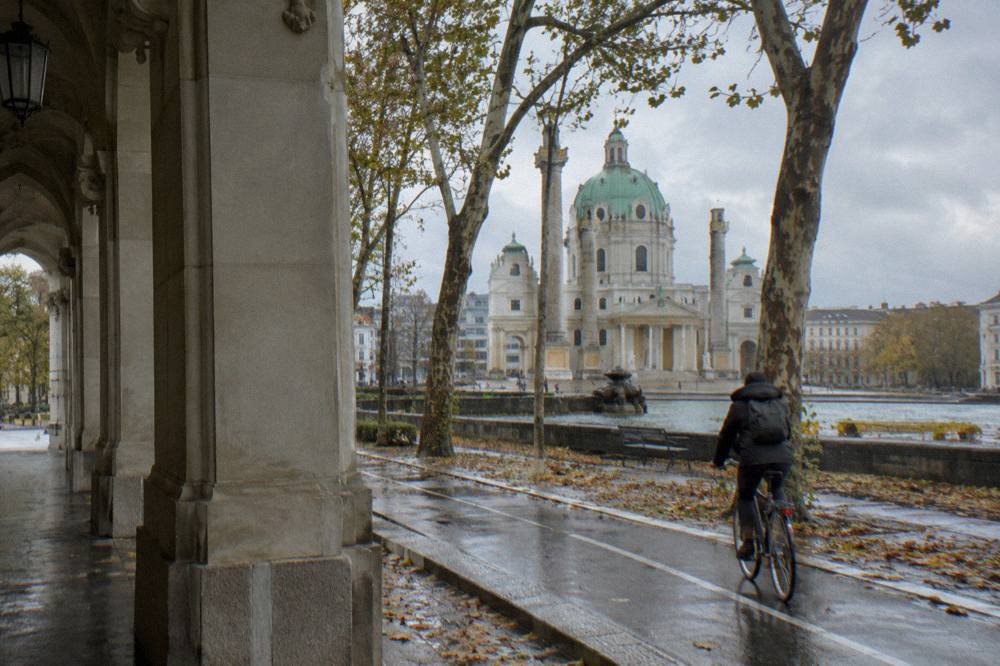
Cyclists in Vienna are subject to the Austrian road traffic code: ride on the right, obey traffic lights and priority signs, use hand signals before turning, and use a marked cycle path whenever a blue round sign with a white bike directs you to. Riding on sidewalks and in pedestrian zones is not allowed unless a shared-use sign permits it. One-way streets often open a contraflow lane for bikes, marked with a sign plus an arrow.
The blue circular sign is the one to watch. Where it stands, the cycle path is mandatory, and riding on the parallel road instead can draw a fine. Where the sign is absent, the road is yours like any vehicle. Vienna has spent years painting protected lanes, two-way paths and contraflow routes across the inner districts, and the city's official cycling pages keep the definitive summary of where you may ride, published by Stadt Wien.
Hand signals are expected and they work. An outstretched left arm before moving out or turning left gives the tram and the taxi behind you a clear read. Vienna drivers are, on the whole, used to bikes, but they read signals, not minds. If a situation feels wrong, dismounting and walking the bike through a junction on the pedestrian crossings is always legal and never a defeat.
Where Can You Legally Ride, And Which Paths Are Mandatory?
Mandatory paths are the ones marked with the blue circular bike sign; inside them you must stay, and leaving them to ride on the sidewalk is an offense. Advisory lanes and shared-use paths marked with a rectangular sign are open but optional. Parks and the Donauinsel carry their own house rules, and on the Danube Island the ordinary traffic rules apply, which surprises riders who assume a leisure island suspends them.
The distinction matters most in the inner city, where a mandatory path often runs between the sidewalk and a row of parked cars. Its exits are painted and signed; leaving it early to shortcut into a bus lane is the classic tourist mistake. On the Ringstrasse the bike path is currently being rebuilt in stages, with the first section between Schottentor and Franz-Josefs-Kai under construction since early October 2026, converting the old service road into a 4.50 meter wide two-way cycle path, with the first phase targeted for summer 2027. Until the stages finish, follow the posted diversions rather than a route app that has not caught up.
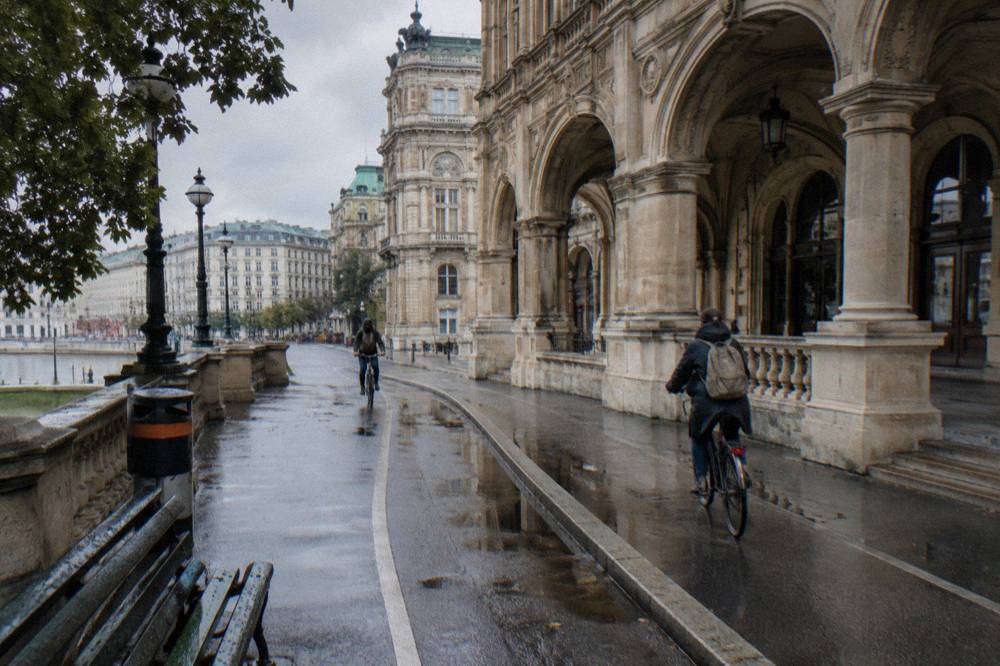
The Prater Hauptallee and the Donauinsel are the two places visitors most often ride traffic-free. The island offers up to 21 kilometers of paved cycling routes inside a 135 kilometer path network, and one section of the main path between Nordbruecke and Floridsdorfer Bruecke stays closed for water works until 2030, with cyclists diverted onto the Neue Donau path. For planning a relaxed loop, the guide to cycling the Prater and Donauinsel covers which entry points avoid the construction entirely.
For anyone who would rather have a local interpret the signs than decode them solo, a guided ride removes most of this friction at once.
Do You Have To Wear A Helmet In Vienna?
Austrian law requires a helmet only for children up to their 12th birthday, on any bicycle, including when they ride in a trailer or as a passenger. Since 1 May 2026 the duty was extended to children and youths under 14 riding e-bikes. From age 14 there is no general helmet duty on ordinary bicycles, but helmets are recommended at every age. Adults on e-bikes face no legal helmet requirement.
That is the whole law, and it surprises two groups: visitors from countries with no helmet rule for kids, who need to know their seven-year-old must wear one, and visitors who assume the e-bike duty covers adults too. It does not. The child rules are stated on the official government portal oesterreich.gv.at, and the city's cycling rules page adds the 2026 e-bike extension. If you rent a child seat or a trailer, ask the rental shop for a child helmet at the same time; family-focused rides are covered in detail in cycling in Vienna with kids.
For adults, the honest framing is this: Vienna's inner-city speeds are low, its paths are mostly separated, and no tour operator forces a helmet on you, but most guided operators offer them. Nervous riders, and anyone riding an e-bike for the first time, are the two groups for whom a helmet genuinely changes the day. An e-bike moves you faster than your reflexes expect, and the first hour is when the wobbles happen.
That first-hour problem has a neat solution: the Vienna guided e-bike tour runs 1.5 hours, long enough to learn the machine under supervision and short enough to stay fun. It is listed on our e-bike tour overview, and check availability if the idea of a supervised introduction appeals.
How Do You Cross Tram Tracks And Handle Priority?
Cross tram tracks at a sharp angle, as close to 90 degrees as the space allows, never parallel, and never brake while on the rail. Priority follows standard rules: trams always have priority over bikes, right-of-way-before-left applies at unsignalled junctions, and bikes yield to pedestrians on crossings. A shallow crossing angle in wet conditions is the classic way to lose control on rails.
The technique is simple and worth practicing on a quiet street before you need it. Relax your arms, stop pedaling, look behind, then turn across the rails decisively. A shallow angle lets the rail catch the tire's sidewall and pull the wheel into the groove; wet steel and wet pavement make it near-certain at low speed. Many of Vienna's bike lanes deliberately jog away from the road before a tram stop precisely so riders cross the rails square.
Priority works as it does for cars. At an unsignalled junction, traffic from the right goes first unless signs say otherwise, and a bike is traffic for this purpose. Trams are special: they have priority over everything, always, and a tram emerging from behind you will announce itself with a bell long before it is a problem. Pedestrian crossings belong to pedestrians, including the partially signalized ones common in the inner districts where walkers get a green phase separate from bikes.
| Situation | Who has priority | What to do |
|---|---|---|
| Tram approaching or departing a stop | Tram, always | Hold back, never overtake a stopped tram on the right at a boarding island |
| Unsignalled crossroads | Traffic from the right | Slow down and look right first |
| Bike lane meeting a road | Follow the lane's own give-way markings | Lanes are often painted with shark-teeth give-way lines |
| Pedestrian crossing | Pedestrians, once they step in or wait | Stop fully; do not weave through |
| Shared path with walkers | No formal priority in practice | Ring or call early, pass slowly and wide |
Riders who want the tram-dense inner districts explained while they ride rather than beforehand tend to do better on a classic guided loop; the 3-hour format crosses most of the track types with a guide calling the angles.
What Lighting And Equipment Does A Bike Need?
Austrian rules require a functioning bike at night and in poor visibility: a white headlight and red rear light, reflectors, and working brakes. A bell is required equipment. Rental bikes from established Vienna operators meet these requirements by default, and guided tours supply bikes that comply, so for most visitors the practical checklist is simply tires, brakes, seat height and a light check if riding after dark.
The detail worth knowing is that lights must be fixed to the bike in principle, not held or clipped to clothing, and that blinking modes are treated as a supplement rather than a substitute. If you rent privately or use bike share, check the front light before you roll off; WienMobil Rad bikes carry the required equipment, but a dead battery on a shared bike is your problem to notice at dusk, not at midnight. The same logic applies to child seats: they must be properly mounted, and the child must wear the helmet the law already requires.
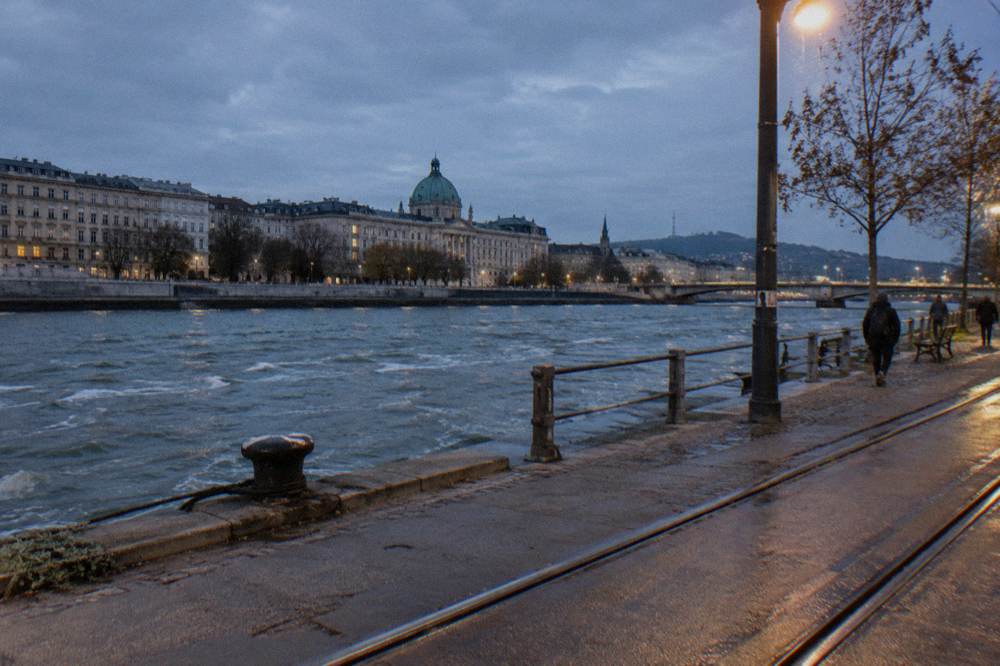
Winter riders have one more angle: Vienna clears a defined set of central, high-traffic bike paths as a priority in snow and ice, and the city publishes the winter clearing plan each season. Riding in December is entirely doable, and the guide to Vienna in winter and Christmas market season pairs the cleared routes with the markets themselves, which open from mid-November: the Rathausplatz market from 13 November and Schoenbrunn from 6 November 2026.
Can You Take A Bike On Public Transport?
Bikes ride the U-Bahn only, and only in set windows: weekdays 9:00 to 15:00 and from 18:30 to the end of service, all day on weekends and public holidays, free of charge. Bikes are prohibited on trams and buses entirely unless foldable. Inside stations the bike must be pushed, never ridden, escalators are off limits with a bike, and a maximum of two bikes applies per entrance area, with wheelchairs and prams taking priority.
There is one hard exclusion visitors trip over: the Wiener Linien conditions of carriage prohibit bikes with start-assist, cargo bikes, transport bikes and similar machines, so not every e-bike is a U-Bahn e-bike. The full rules sit in the official conditions of carriage, and the practical version is on the Wiener Linien helpcenter page on taking a bicycle on the U-Bahn. If your ride is a full e-bike tour machine, assume it stays street-level and plan the return accordingly.
| Mode | Bike allowed? | Conditions |
|---|---|---|
| U-Bahn | Yes | Weekdays 9:00-15:00 and after 18:30, all day weekends and holidays; pushed only, two per entrance area |
| Tram | No | Non-foldable bikes prohibited |
| Bus | No | Non-foldable bikes prohibited |
| U-Bahn escalators | No | Bikes must use stairs or lifts, pushed |
| Start-assist and cargo bikes | No | Prohibited under the conditions of carriage |
This is one area where a guided tour quietly wins: the operator returns you to the meeting point, or plans a route that never needs a train, so the carriage rules never enter your day. The comparison in rent a bike or join a guided ride works through the trade-offs in full.
For anyone combining islands, parks and river paths, the Danube Island and green parks e-bike tour is built around exactly the kind of route where the U-Bahn question would otherwise arise at the end of a tired afternoon.
Where Do You Park, And How Bad Is Bike Theft?
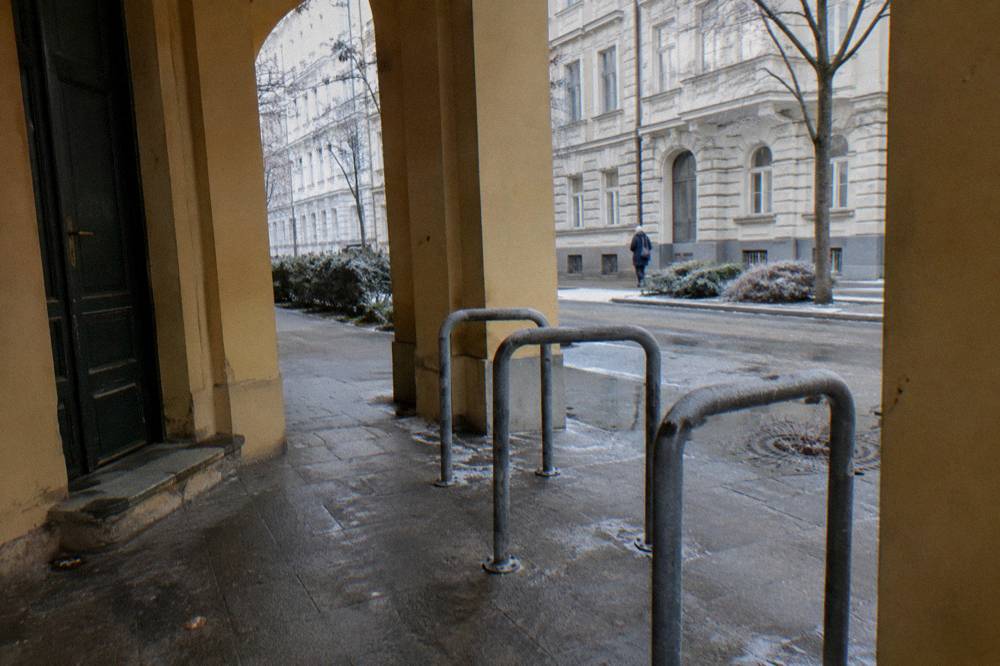
Park at the bike racks, dense in the inner districts and present at every U-Bahn station, and lock the frame, not just a wheel, to something fixed. Theft in Vienna is real but concentrated, hitting cheaply locked bikes left overnight on the street, while a decent lock at a rack in daylight is rarely troubled, so skip Ringstrasse railings and tram-stop furniture, which count as obstruction.
The lock matters more than the bike's price tag. A cable lock can be cut with pocket tools; a proper D-lock or chain, used through the frame and around the rack, moves you out of the opportunistic category entirely. If you rent, ask whether the shop includes a lock and what they charge for a lost one, and check the booking page where it is not stated. On guided tours the guide usually keeps the group parked together in sight during stops, which is one fewer thing to manage in a city you do not know.
E-scooters add a new parking wrinkle from the rider's side: shared scooters are capped at 250 vehicles in the Innere Stadt and other central zones, and no-ride and no-park zones now cover parks and parts of districts like Margareten. The rules for those machines, including a 0.5 per mille alcohol limit and helmets for riders under 16 since May 2026, sit on the city's scooter and roller rules page, and they apply to scooters, never to bicycles. Do not carry scooter rules over to pedal bikes in your head; they are separate regimes.
| Parking spot | Allowed | Notes |
|---|---|---|
| Bike rack | Yes | The default; at stations and throughout the inner districts |
| Private area without permission | No | Ask first |
| Inside a shop or courtyard | Only with permission | Museums and cafes vary; ask at the door |

What Changed In 2026 That Affects Your Ride?
Three changes matter: E-mopeds are banned from cycle paths since 1 October 2026, the helmet duty was extended to under-14s on e-bikes from 1 May 2026, and the Ringstrasse bike path entered staged reconstruction in October 2026, starting between Schottentor and Franz-Josefs-Kai with the first phase targeted for summer 2027. Separately, a new two-way path on Obere Donaustrasse links the 2nd and 20th districts continuously.
None of these is trivia. The E-moped ban means cycle paths are calmer than they were a year ago, which matters on commuter axes like the Northern Cycling Highway to Kagran. The helmet extension changes what families rent. And the Ringstrasse works mean the city's most famous riding corridor has moving parts: the city runs a diversion page for current works, and checking it the week you travel beats any printed route. The Danube Island closure works the same way: the Nordbruecke to Floridsdorfer Bruecke section stays shut until 2030, with a signed diversion via the Neue Donau.
There is also a drinking question visitors ask, and the honest answer is short: follow the operator's rules on any wine-inclusive ride and local rules when riding independently, and leave a meaningful gap between tasting and riding. Wine-country rides by bike are covered, with operator guidance, in Wachau valley by bike from Vienna, where the ride out to apricot country is its own day trip.
Is A Guided Tour Safer Than Riding Alone In Vienna?
For a first-time visitor, yes, meaningfully: a guide handles lane choice, tram-track angles, junction priority and parking, and the supplied bike meets the equipment rules by default. Riding alone in Vienna is perfectly manageable for a confident cyclist, but the first hour in a new city with tram rails and unfamiliar signage is where mistakes cluster, and a guide absorbs exactly that hour.
The trade-off is freedom, not safety. Alone you stop when you like, and Vienna's network of roughly 1,811 kilometers rewards wandering. Guided, you get interpretation, a bike that is legal after dark, and a group that parks together. Private options go further: a customizable private tour, 3 hours on classic bikes, lets a nervous rider set the pace and skip the busiest junctions entirely, which is the strongest version of the safety argument short of not riding at all.
Between the two extremes sits the shared 1.5-hour e-bike introduction, the format Bike Tours Vienna points nervous riders toward first: short, supervised, and over before fatigue or overconfidence arrives. Whatever you choose, the rules above are the whole of the legal picture, and none of them will surprise you twice.
Common Questions About Cycling Rules In Vienna
What Are The Basic Cycling Rules In Vienna?
Ride on the right, obey lights and priority, signal turns by hand, and use a marked cycle path whenever the blue circular bike sign makes it mandatory. Sidewalk riding is not allowed unless a shared-use sign permits it, and one-way streets often include a signed contraflow lane for bikes.
Do You Have To Wear A Helmet In Vienna?
Only children up to their 12th birthday must wear one, on any bicycle, plus children and youths under 14 on e-bikes since 1 May 2026. From age 14 there is no general helmet duty on ordinary bicycles, though helmets are recommended at every age.
Can You Take A Bike On The U-Bahn In Vienna?
Yes, free of charge, on weekdays between 9:00 and 15:00 and after 18:30, and all day on weekends and public holidays. The bike must be pushed inside stations, escalators are prohibited, and a maximum of two bikes applies per entrance area. Bikes with start-assist, cargo bikes and transport bikes are prohibited.
Are Bikes Allowed On Vienna Trams And Buses?
No. Non-foldable bicycles are prohibited on both trams and buses. Only the U-Bahn carries bikes, in the permitted time windows.
How Do You Safely Cross Vienna Tram Tracks?
Cross at a sharp angle, as close to 90 degrees as space allows, without braking on the rail, and never ride parallel to the groove. Wet conditions make shallow angles especially dangerous because the rail can catch the tire's sidewall.
What Changed For Cyclists In Vienna In 2026?
E-mopeds were banned from cycle paths from 1 October 2026, the child helmet duty was extended to under-14s on e-bikes from 1 May 2026, and the Ringstrasse bike path entered staged reconstruction from October 2026, starting between Schottentor and Franz-Josefs-Kai, with the first phase targeted for summer 2027.