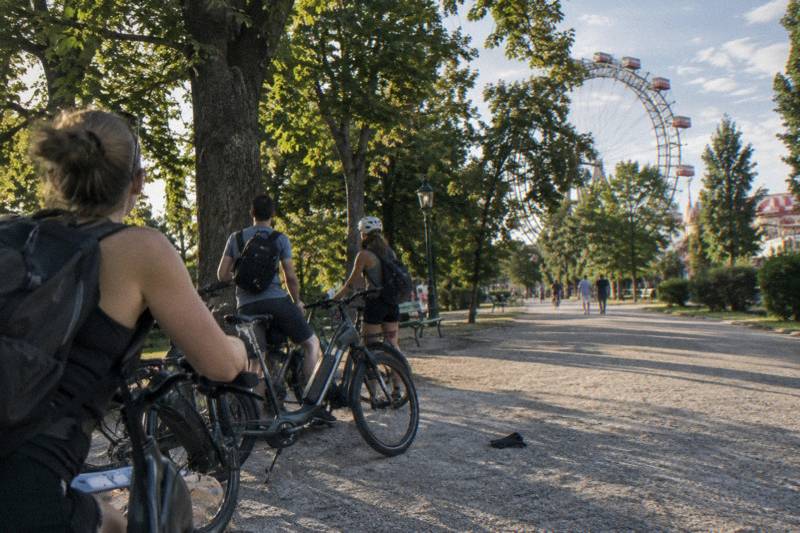
Vienna To Budapest By Bike
Two capitals, one river, roughly three to four days in the saddle. Here is what the ride from Vienna to Budapest actually asks of you, and where a Vienna-based guided tour fits the plan.
Short answer
Vienna to Budapest by bike is a multi-day ride of about three to four days following the Danube through Austria, Slovakia and Hungary. No operator on this site sells the full route, so it is a self-planned trip: you arrange bikes and overnight stops yourself, cross the border near Bratislava or Devín, and take a direct train back from Budapest. Start with a guided Vienna ride to test your legs.
Two capitals, one river, and one of Europe's most rideable valley corridors between them. The idea of pedalling from Vienna to Budapest sells itself easily: leave the Ringstrasse behind in the morning, follow the Danube through floodplain forest and small river towns, and roll into a different country's capital a few days later. The reality is a genuinely achievable trip, but it is a self-planned one, and the difference between a good version and a stressful version sits almost entirely in the preparation. This guide lays out what the ride involves, what it costs to think about, where the border sits, and how a guided Vienna day ride fits into the plan before you commit to three or four days of cycling. If you're still weighing how much time to give Vienna before the ride begins, our guide to how many days the city actually needs is a good place to start.
One thing to be clear about up front: no tour operator on this site sells the Vienna to Budapest route. It is not a bookable product here. What is bookable are the Vienna rides that build the skills and the confidence, and the day trips into the Wachau that show you what multi-day Danube cycling feels like. The long route itself is yours to plan, and that is exactly what makes it rewarding.
How Long Does The Ride From Vienna To Budapest Take?
Most riders plan three to four days in the saddle, not counting a rest or half-rest day, and the honest answer is that the exact daily distances depend on your route choice along the Danube, your fitness and the stops you allow yourself. No source in this site's research gives a verified kilometre total for the Vienna to Budapest ride, so treat any number you read elsewhere with care and plan from an official route planner or published Danube route guides. Three days suits confident riders who want long days and few stops. Four days is the more common plan, because it leaves room for Bratislava, Győr or a detour, and it keeps each day inside a range that still feels like a holiday rather than a race.
The riding itself is not what makes the trip long. The Danube valley between Vienna and Budapest is famously flat and largely traffic-protected, using dam-top paths, farm tracks and quiet lanes. What stretches the calendar is everything around the pedalling: coffee stops, a lunch that turns into two hours, a ferry or bridge crossing that needs timing, and the simple fact that you are carrying everything you wear overnight.
A sensible rhythm for a first multi-day trip looks like this:
| Plan shape | Days riding | Best for | Main trade-off |
|---|---|---|---|
| Fast | 3 | Fit riders, short trips | Long days, few stops, little slack for weather |
| Standard | 4 | First-time bike tourists | Balanced days, time for Bratislava and Győr |
| Relaxed | 5 | Families, e-bike cruisers | Short days, rest options, more booking logistics |
Weather matters more than distance on this route. Summer 2026 brought Vienna its first 40 degree days and a record number of heat days, and the long-term July average at Hohe Warte sits at 21.9 degrees. A July crossing is doable but demands early starts, midday shade and plenty of water; May, June and September are gentler propositions. If heat shapes your plans, the site's month-by-month planning piece on the best time to cycle in Vienna translates directly to the whole corridor.
What Route Does The Vienna To Budapest Ride Follow?
The ride follows the Danube downstream: out of Vienna along the Donauinsel and Lobau floodplain, past or through Bratislava in Slovakia, then across the Hungarian border and along the river through Győr toward Budapest, with the Szentendre bend as the classic final approach. That is the shape every route description agrees on. The details within each country vary by which bank you pick, which ferry or bridge you use near Bratislava, and whether you take the direct riverside alignment or a quieter detour through villages. Check a current Danube route guide for the day-by-day alignment, because riverside works and detours change season to season, as the Donauinsel closure above shows.
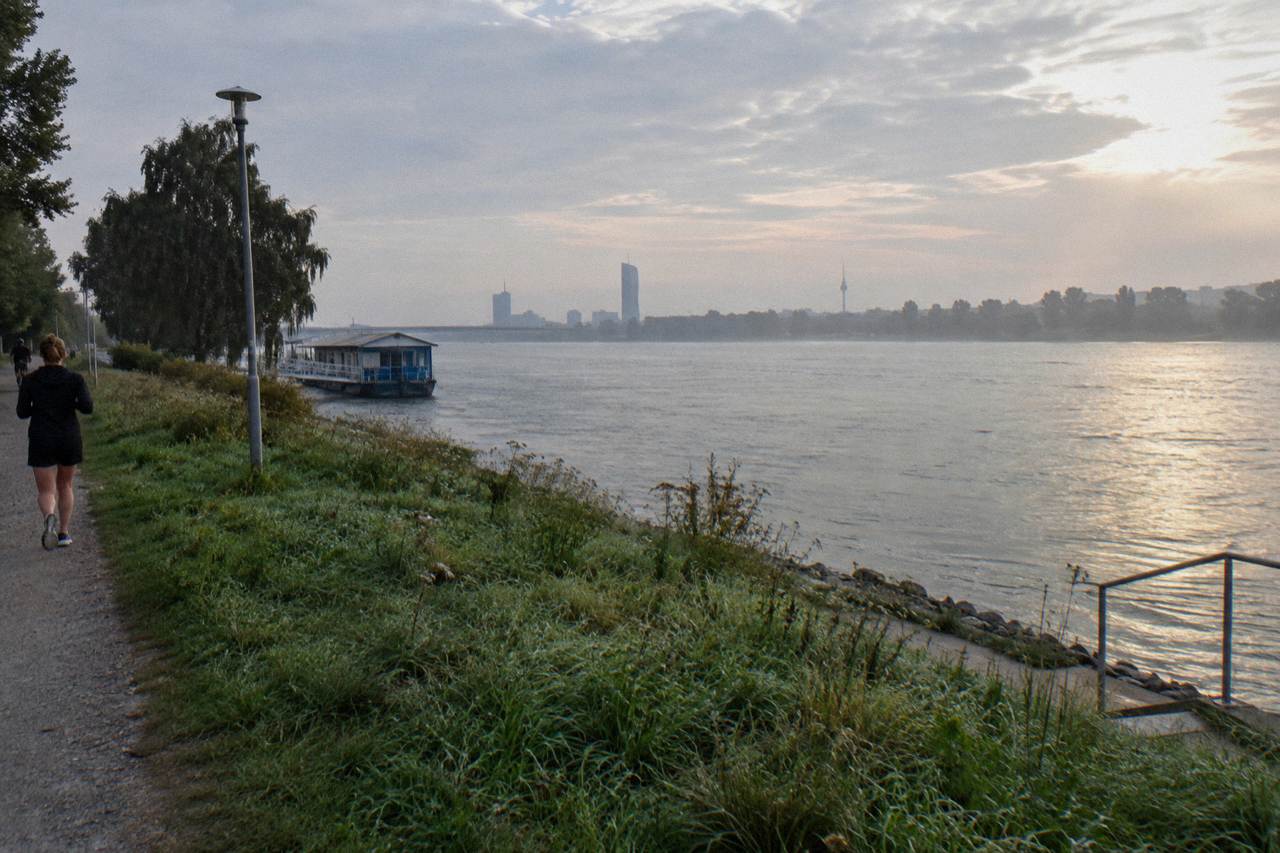
Leaving Vienna is the part this site knows best. Riders typically leave the centre via the Danube Canal or the Prater side and pick up the Donauinsel, the island with about 21 kilometres of paved cycling routes inside a 135 kilometre path network. The site's guide to cycling the Prater and Donauinsel covers the exit routes in detail, including the current closure and the Neue Donau diversion you may meet on the way out. South of the city the route passes the Lobau, part of the Donau-Auen National Park floodplain, on quiet embankment paths.
The Slovakian and Hungarian legs are where trip-planning discipline pays off. Key decisions you will make on the fly or in advance include:
| Route decision | Where it arises | What to consider |
|---|---|---|
| Which bank to leave Vienna on | Day one, city to Lobau | East via Donauinsel and Lobau, or canal-side southbound links; both converge downstream |
| Bridge or ferry near Bratislava | Day one or two | Border crossing options sit near the city; check current opening and bike access before committing |
| Bratislava stop | Day two | Worth a half day; castles, old town, easy riding in and out |
| Győr or Tata overnight | Day two or three | Győr is the bigger hub with more beds; Tata is quieter and lakeside |
| Szentendre bend approach | Final day | Riverside towns into Budapest, or the more direct alignment |
Two cautions from verified city rules travel with you. First, children up to their 12th birthday must wear a helmet on any bicycle in Austria, and a recent city rule change extends a helmet requirement to under-14s on e-bikes since 1 May 2026; follow the operator's word on any guided element and check local rules for the countries you cross. Second, if you use Vienna's U-Bahn to reach a start point with your bike, bikes are only permitted on weekdays between 9:00 and 15:00 and after 18:30, plus all day on weekends and public holidays, must be walked not ridden in stations, and cannot use escalators. Ordinary e-bikes follow the same rule; only bicycles with start-assist, cargo bikes and transport bikes are excluded.
Should You Ride It Yourself Or Start With A Guided Vienna Tour?
Ride the Vienna to Budapest route yourself, because no guided product covers it, but use a guided Vienna ride first as a shakedown: a three-hour city tour with the bike included costs from around $53 per person and tells you within one morning whether your saddle time, your fitness and your interest in Danube-flat riding justify a multi-day commitment. That figure is a planning reference from the operators' current city-tour pricing; check the live tour page for the exact price when you book. The shakedown logic is simple. A three-hour guided ride answers the questions a spreadsheet cannot: does your back tolerate three hours, does an e-bike suit you better than a regular bike, are you comfortable in a group, and does river-flat cycling actually hold your interest.
The classic option here is the Classic Vienna 3-Hour Guided Bike Tour, a shared city ride that includes the bike and covers the headline sights in one loop. It is the natural first purchase for someone whose real ambition is Budapest. If your shakedown morning reveals that pedalling is fine but hills are not, the e-bike family is the alternative, and an e-bike tour of the Danube Island and green parks, also three hours, previews exactly the kind of riverside flat riding that fills the Budapest route.
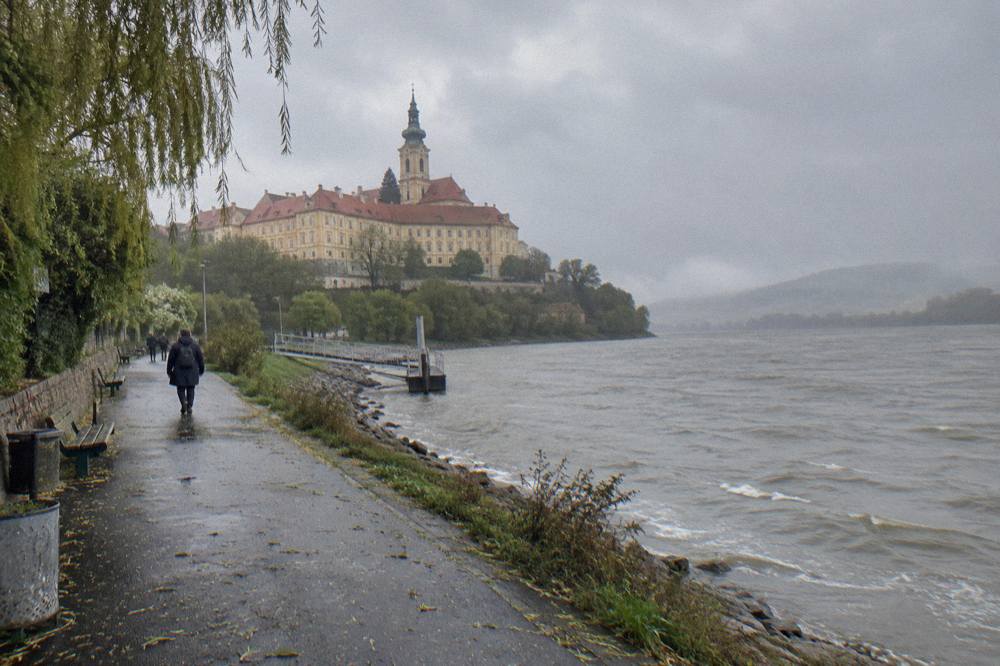
There is a middle option that deserves a serious look before you commit three days: a full-day guided ride out of Vienna. A Wachau Valley wine-tasting bike tour runs roughly 11 hours door to door, pairing a day of Danube cycling with tasting stops, and it is the closest bookable experience to what a day of the Budapest route feels like: river, vineyards, small towns, a schedule someone else manages. Riders who love the Wachau day almost always enjoy the Budapest ride; riders who find 11 hours with a group exhausting learn that cheaply, in one day rather than four. The site's deeper comparison of renting versus joining a guided ride works through the same trade-off for shorter trips.
For the long route itself, the DIY planning list is short but non-negotiable: a bike or e-bike you can ride for consecutive days, panniers or a bag transfer arrangement, booked beds in your overnight towns for the season you travel, a paper or offline route source, and a plan for the train back. E-bike riders should add charger logistics, because battery support across three days depends on overnight charging at each stop, which is worth confirming with every accommodation when you book.
What Does The Border Crossing Involve?
Both border crossings on this ride, Austria into Slovakia and Slovakia into Hungary, are internal Schengen crossings with no routine passport checks, and cyclists cross on ordinary bridges or river crossings near Bratislava and further downstream; carry your passport or ID card anyway, because spot checks remain legal within Schengen and operators and accommodations routinely ask for ID. The practical detail that matters to a cyclist is not paperwork but alignment: choose your crossing point before your last kilometres in each country, because the Danube is wide, bridges are infrequent, and a wrong-bank finish can add a meaningful detour.
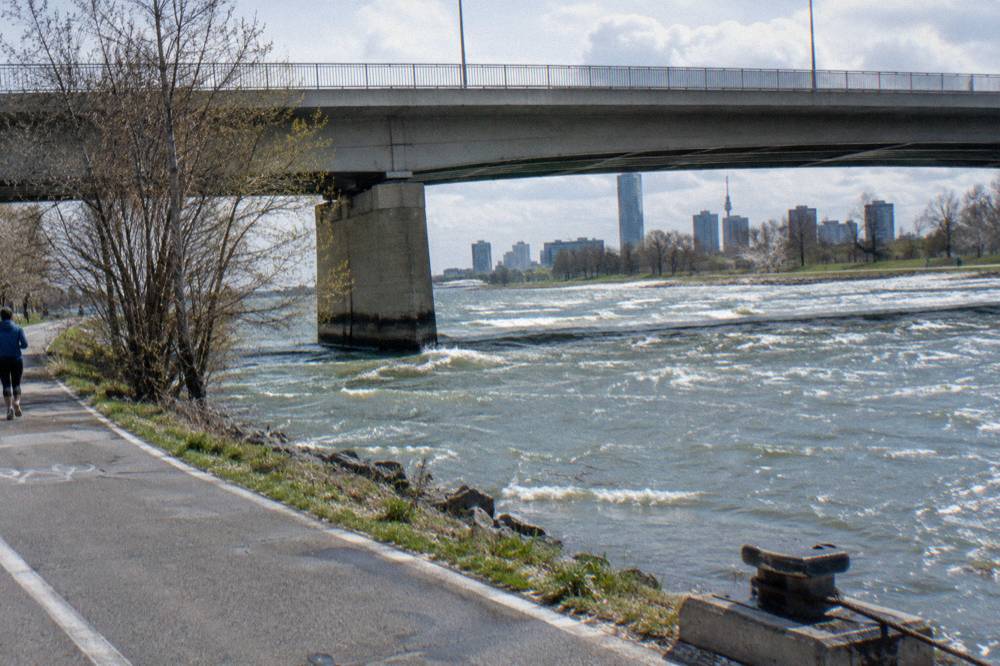
The first crossing, out of Austria, happens in the Bratislava area, where the ride leaves the Austrian floodplain and enters Slovakia. This is the border most Vienna bike tourists meet first, and it is well used by commuter and leisure cyclists alike. The second, into Hungary, comes after Bratislava as the route turns southeast. Neither involves customs, and neither requires anything from you that a car driver would face. The two things that genuinely catch riders out are wayfinding at the crossing itself, where signage languages change, and the fact that your phone data plan and your map app's coverage need to work in three countries.
A short checklist covers the crossing practicalities:
| Item | Status on this route | Note |
|---|---|---|
| Passport / ID card | Carry it | Schengen internal crossings, but spot checks are possible |
| Visas | Depends on nationality | Schengen rules apply across all three countries |
| Currency | EUR, then EUR, then HUF | Slovakia uses the euro; Hungary uses the forint |
| Bike paperwork | None for a private bike | Keep receipts for rented bikes when crossing |
| Insurance | Arrange before departure | Check that cycling is covered, including e-bikes |
Money is the detail people forget. Austria and Slovakia are both euro countries, so the first border changes nothing. Hungary is not, and cards are widely accepted in the towns on the route, but small cafés on the final day's riverside stretches may not be. E-bike riders should also confirm with the rental provider that taking the bike across two national borders is permitted at all, since rental agreements sometimes restrict where a bike may travel; that is a question for the booking page, not something to discover at a bridge.
How Do You Get Back From Budapest To Vienna?
The standard return is the direct train from Budapest to Vienna, a comfortable mainline connection with space for bicycles, and you should confirm the current bike-carriage rules and any reservation requirement with the railway operator before you travel, because bike policies on long-distance trains differ by service and can change. This site's verified facts cover Vienna's own transport rules in detail, but the Budapest to Vienna rail leg is an international service, and the only safe instruction is to check with the operator when you buy the ticket. Riders using Vienna's U-Bahn at the start of the trip should remember the city's own limits: bikes ride free only in the permitted off-peak windows, wheeled not ridden, with no escalators, and bikes with start-assist are not carried at all.
Planning the return before you ride out is one of those unglamorous decisions that defines the trip. Book a flexible return or leave the return open, decide whether you want to arrive back in Vienna in time for a final evening or overnight in Budapest first, and know which Budapest station your train uses with a bike. Railjet services between the capitals run frequently through the day, and the journey is short enough that most riders treat Budapest itself as the reward: an evening, a bathhouse, a morning along the Danube banks before boarding. If you plan to spend that final evening exploring on two wheels, our guide to how bike-friendly Vienna really is covers what a visitor can expect from the city's paths.
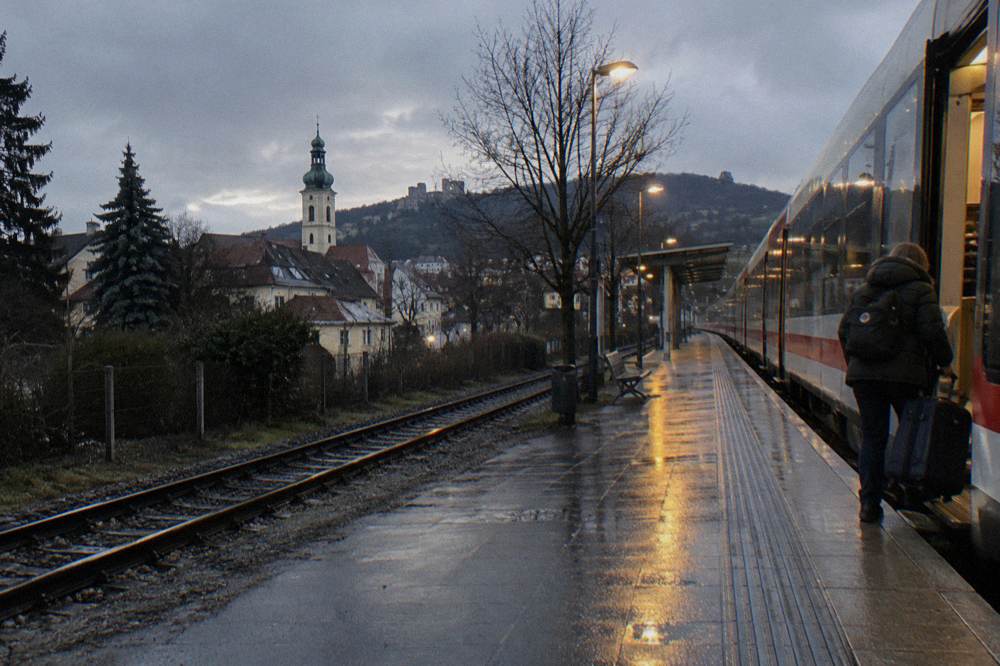
If a train straight back feels like wasted scenery, two alternatives exist. Some riders split the return with a stop in Bratislava, taking a train out and a train onward, which turns the homeward leg into a second short city visit. Others reverse the whole plan and ride Budapest to Vienna instead, finishing in the city they know, which has a quiet appeal: the Vienna arrival lets you roll down the Danube Canal into a familiar centre, and the site's guide to cycling the Danube Canal describes exactly that finish line. For a fuller picture of long-distance Danube riding in the other direction, the Passau to Vienna cycle route is the classic upstream companion trip.
What Does The Trip Cost Compared With A Vienna Day Ride?
The multi-day ride is a logistics budget, not a ticket price: you pay for bike rental across several days, three or four nights of accommodation, meals on the road and a train ticket back, while a guided Vienna day ride is a single per-person price, from around $53 for a three-hour city tour or a full day at the top end for a Wachau wine-tasting tour, with the bike always included. The table below frames the two options honestly. Note that the private and small-group Vienna tours are priced per person or per group depending on the product, and per-group prices must never be divided; the figures in tours data state the basis, and the booking page is the source for the current number. If the full ride to Budapest sounds like more trip than you want, the Vienna itinerary built around a guided bike day shows how to keep the cycling part on a smaller, cheaper scale.
| Cost line | Multi-day Vienna to Budapest | Guided Vienna day ride |
|---|---|---|
| Bike | Multi-day rental, arranged with a hire firm, e-bike surcharges apply | Included in the tour price |
| Guiding | Self-guided, your own navigation | Professional guide throughout |
| Accommodation | Three to four nights, booked in advance | None |
| Food | On your budget, three countries | Varies by tour; tasting tours include stops |
| Return | Train ticket from Budapest | Not needed, city loop or return transfer |
| Entry fees | Any sights you choose | As stated on the tour page |
One rental benchmark from the verified research: Vienna's own bike-share, WienMobil Rad, runs standard bikes at 0.80 euros per started 30 minutes capped at 20 euros per 24 hours, and e-bikes at 3.30 euros per started 30 minutes capped at 40 euros per 24 hours, so a full-share day is possible but a multi-day tour rental from a shop is usually the better instrument for this trip. One Donauinsel rental shop lists comfort bikes at 35 euros per day and e-bikes at 75 euros per day for a six to twelve hour hire; those are one shop's list prices, not a market average. For what a shorter ride in the city costs end to end, the site's cost guide on how much a Vienna bike ride costs breaks down the day-trip maths.

Is The Vienna To Budapest Ride Right For You?
It is right for you if you want a self-planned, flat, river-following journey through three countries and you are happy organising beds, bikes and a return train yourself; it is wrong for you if what you actually want is a guided experience, maximum sights per hour, or a first long ride with no planning burden, in which case a guided Vienna tour or a Wachau day trip delivers the Danube feeling in one bookable day. The dividing line is the planning appetite. Multi-day bike touring rewards people who enjoy the logistics, and punishes people who do not, in roughly equal measure.
The honest self-test has three questions. Can you ride three or four consecutive days at whatever daily distance you plan, with luggage? Are you comfortable finding your way in three countries with changing signage and currencies? And does a day of flat riverside riding, punctuated by small towns rather than headline sights, sound like your kind of day? Two yes answers out of three is a maybe. Three is a green light.
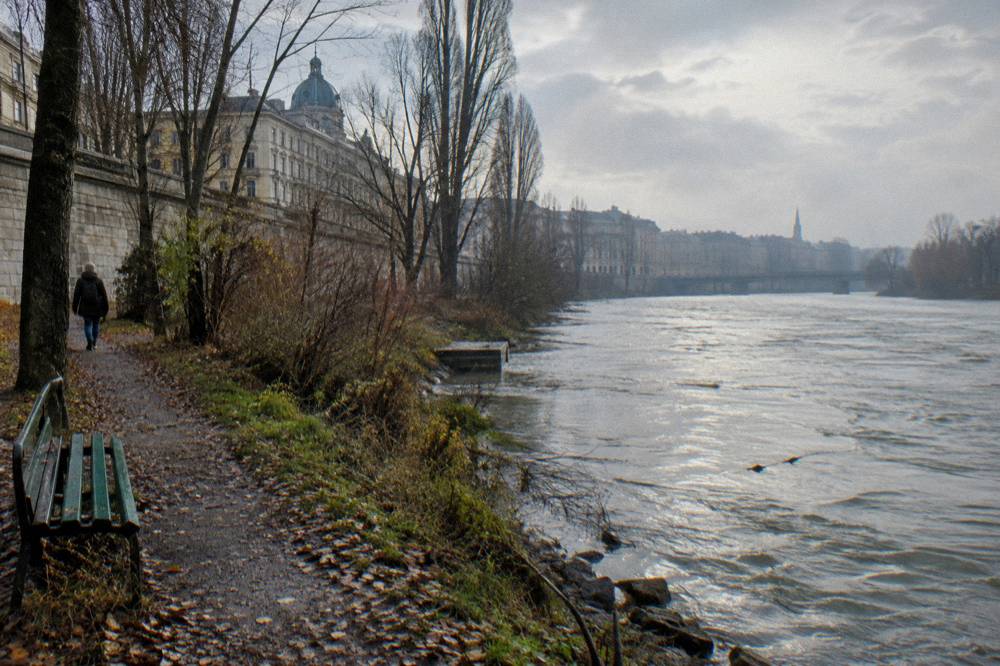
For riders who pass the test but want a dress rehearsal, the sequencing this site would recommend is a three-hour guided city tour first, then a full-day Danube-adjacent ride such as the Wachau wine-tasting tour, then the multi-day route. Each step is bookable, each includes the bike, and each answers a question the next one depends on. Riders who want the river but not the distance can stop at step two forever and miss nothing essential: the Wachau Valley by bike guide covers that world in depth.
What Should You Know Before Riding Out Of Vienna?
Vienna's own cycling infrastructure is in flux in a way that affects your first hours: the Ringstrasse bike path is being rebuilt in stages from October 2026 starting between Schottentor and Franz-Josefs-Kai, and a Donauinsel path section is closed until 2030 with a Neue Donau diversion, so check the city's official diversion page the day you ride. The city publishes a winter clearing plan for high-traffic bike paths too, which matters if your trip starts in the colder half of the year. Both facts come from the city's own transport pages, and the diversions page is the live source for what is open on any given morning.
The city's network context is encouraging. Vienna maintains about 1,811 kilometres of cycling infrastructure and added roughly 12.5 kilometres of new paths across 33 projects in 2026 alone, including a new two-way path on Obere Donaustrasse linking the 2nd and 20th districts, which sits squarely on the corridor a southbound rider uses toward the Danube. The Northern Cycling Highway, a seven-kilometre route via Praterstrasse, Lassallestrasse and Wagramer Strasse to Kagran, was completed in 2025 and gives a direct, protected run out toward the river's eastern side. Riders leaving the centre toward Hungary could do far worse than follow it.
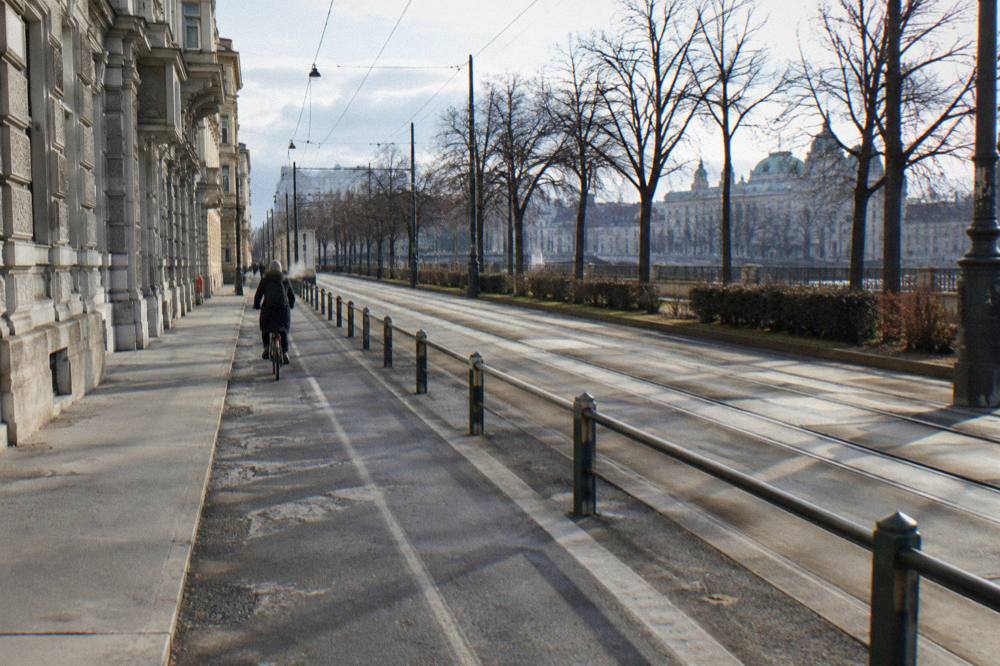
Season shapes the plan at both ends. The city's Christmas markets open from early November, with the Rathausplatz market running from 13 November and Schönbrunn's from 6 November, which makes a festive start or finish easy but brings shorter daylight and colder mornings. At the other extreme, summer 2026 set heat records. The shoulder months remain the sweet spot for long rides, and riders who want the river without the distance can preview it with the Danube Island e-bike tour, a three-hour shared ride through the island and green parks that mirrors the first hour of the Budapest route almost exactly.
Whether the full ride happens this year or next, the entry point is the same, and it is the one this site's publisher would put money on: a single guided morning in Vienna, on the classic three-hour city tour whose loop takes in the Ringstrasse and the Prater side with the bike included, tells you more about your readiness for Budapest than any amount of reading. Bike Tours Vienna covers that first ride, the day trips and the longer river routes; the three to four days down the Danube are yours to plan from there.
Common Questions About Cycling From Vienna To Budapest
How Long Does It Take To Ride From Vienna To Budapest By Bike?
Most riders plan three to four days of cycling, with a relaxed five-day version for families or e-bike cruisers. No verified source gives a single kilometre total for this exact route, so plan daily distances from an official Danube route guide rather than numbers quoted on travel sites.
Is The Vienna To Budapest Bike Route Flat?
The route follows the Danube downstream through valley floor and floodplain terrain, which is why it is popular with first-time bike tourists. It is broadly flat by touring standards, though specific gradients depend on the bank and detours you choose; check a current route guide for the alignment you pick.
Do You Need A Passport To Cycle From Vienna To Budapest?
Yes, carry one. Both crossings, into Slovakia and into Hungary, are internal Schengen crossings with no routine checks, but spot checks are legal and accommodations routinely ask for ID. Hungary also uses the forint, so plan for a currency change after Slovakia.
Can You Book A Guided Tour From Vienna To Budapest?
No tour on this site sells the full route; it is a self-planned, self-guided trip. The bookable stepping stones are a three-hour guided Vienna city tour from around $53 per person and a full-day Wachau wine-tasting bike tour, both with the bike included.
How Do You Get Back From Budapest With A Bike?
The standard return is the direct train between the capitals. Confirm current bicycle carriage rules and any reservation requirement with the railway operator when you buy the ticket, because international long-distance bike policies differ by service and change over time.
Are There Path Closures To Know About Leaving Vienna?
Yes. A Donauinsel path section between Nordbrücke and Floridsdorfer Brücke is closed until 2030 with a diversion via the Neue Donau path, and the Ringstrasse bike path is being rebuilt in stages from October 2026. Check the city's official diversion page on the morning you ride.