What Should You Not Miss In Vienna?
The Vienna sights first-time visitors should not miss, from the Ringstrasse and St. Stephen's to Schönbrunn, the Prater and Danube Island, with a bike tour pairing that covers the core in one morning.
The five things most visitors regret skipping are the Ringstrasse boulevard with its state buildings, St. Stephen's Cathedral in the old city, Schönbrunn Palace and its gardens, the Belvedere with Klimt's Vienna, and the green belt of the Prater and Danube Island. Vienna recorded 14.9 million overnight stays in the first nine months of this year, and the overwhelming majority cluster around exactly these sights. All five sit on flat, bike-friendly ground. Since all five cluster within easy cycling distance, you could comfortably cover them in one relaxed visit, and if you're wondering how much time to set aside, our guide to whether three days in Vienna is too much lays out a realistic pace.
That list is not controversial, but the way to see it is worth arguing about. Vienna's centre is compact on a map and slow on foot: cobblestones, one-way streets and a boulevard loop, the Ringstrasse, that runs a full circle around the old town. Walking the Ring alone eats half a day. The city's cycling network now measures about 1,811 kilometres, and the central sections are flat, separated from traffic in most places, and built so that a moderately confident rider can move between every major sight in minutes rather than hours.
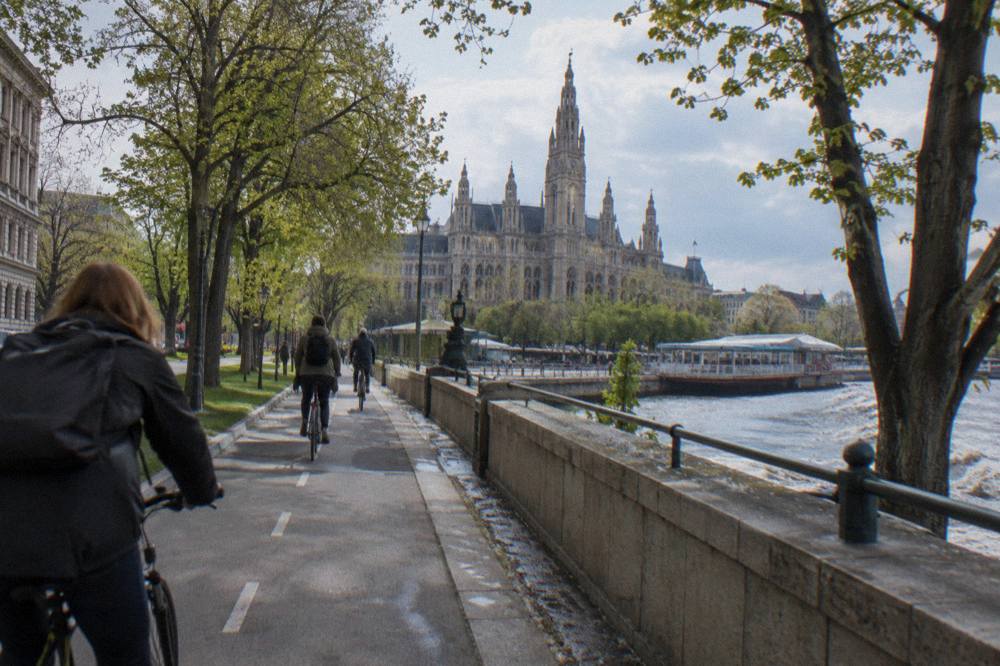
A guided ride is the most efficient first move. The classic guided bike tour of Vienna spends three hours with a local guide covering the central highlights, bike included, which makes it a orientation pass before you commit time to interiors like Schönbrunn or the Belvedere.
The rest of this article walks the unmissables district by district, with the practical bits: what tickets cost, what is under construction right now, and where the seasonal calendar changes the answer. Vienna is mid-way through its biggest ever centre-side cycling rebuild, so a couple of details below are genuinely time-sensitive. There is also the question of what to do with a bike between sights, which Vienna answers better than most European capitals.
The Ringstrasse, St. Stephen's And The Old City
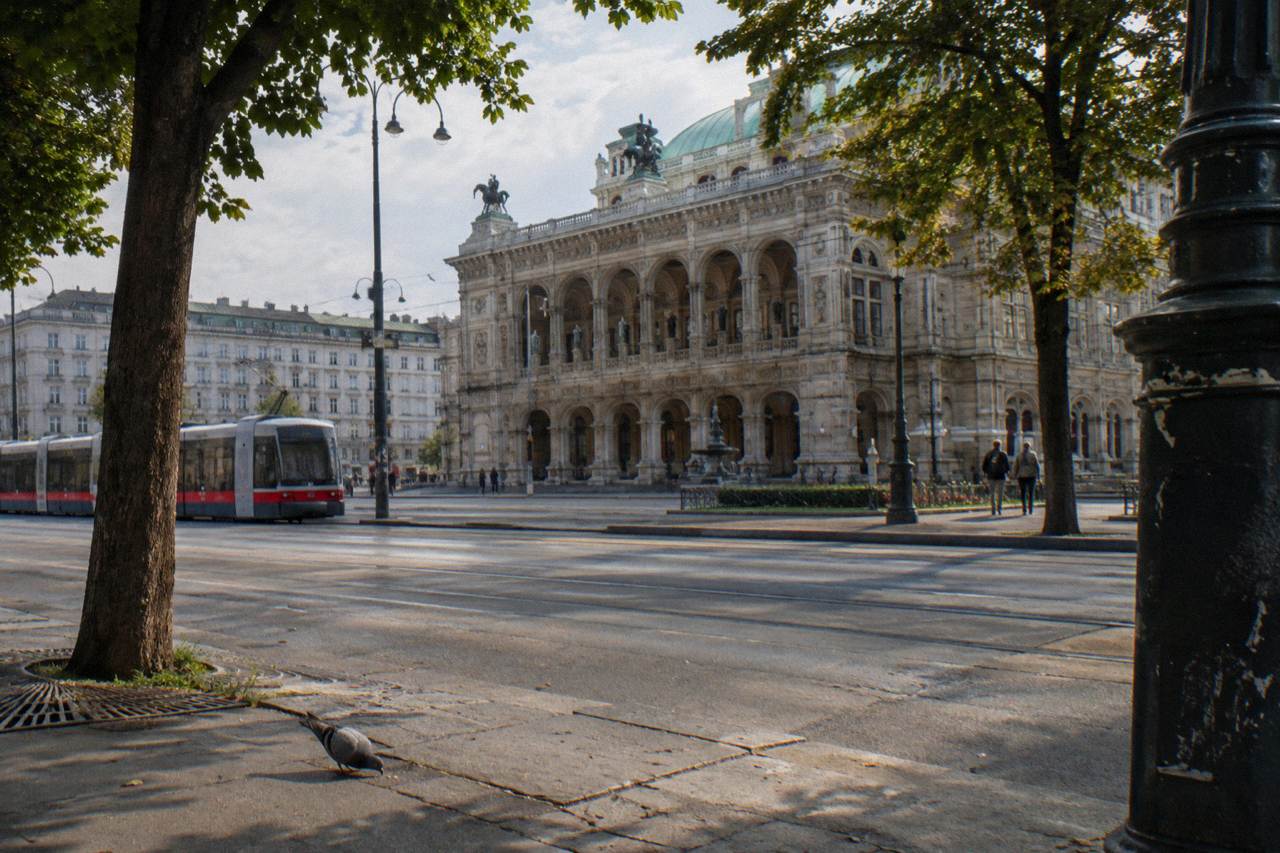
The single most efficient sightseeing circuit in Vienna is the Ringstrasse loop: a boulevard ring around the old town lined with the State Opera, the museums, Parliament and City Hall, with St. Stephen's Cathedral at its centre. You can ride the whole loop in well under an hour, see eight monumental buildings, and dip into the pedestrian core on foot afterwards. The Emperor ordered the ring built in the mid-nineteenth century on the old city walls.
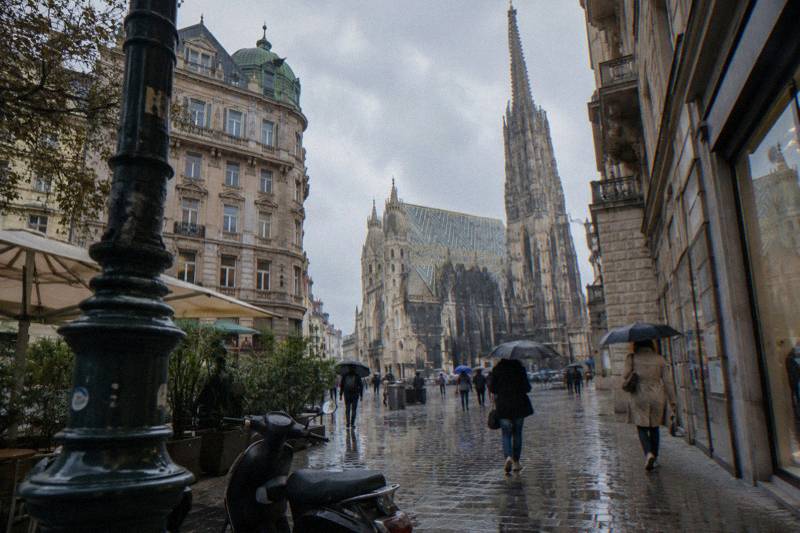
Start at the Opera, ride clockwise past the Kunsthistorisches Museum and the Naturhistorisches Museum facing each other across Maria-Theresien-Platz, then Parliament, City Hall, the Burgtheater and the university quarter back toward the Danube Canal. Every building is a photo stop, and none of them requires a ticket to appreciate from the boulevard. The cathedral, by contrast, deserves a walk inside; the Stephansdom quarter around it is Vienna's pedestrian heart, and it is a five-minute push from the Ring on foot.
One caveat matters right now: the Ringstrasse bike path is being rebuilt in stages. Construction began in early October on the first section, between Schottentor and the Franz-Josefs-Kai, converting the service road into a 4.50 metre two-way cycle path, with the first phase targeted for summer 2027. The city's official cycling pages carry the staging, and guided-tour operators reroute around the works; independent riders should expect short detours on the north side of the loop.
The redesign is worth understanding rather than resenting, because it is being built for exactly the kind of visitor this article is written for. The scheme converts the service roads into dedicated bike paths with proper separation from pedestrians, which means the loop becomes safer and more pleasant in stages. Until then, the working sections are signed, and the city publishes a diversion page for anything closed.
Our full route guide, cycling the Ringstrasse route, stops and timing, breaks the loop into stops with what each building is and when to go. The short version: morning light favours the museum quarter, late afternoon the Opera end.
Schönbrunn, Belvedere And The Museum Side
Schönbrunn Palace, the Habsburgs' summer residence, is the one big sight outside the centre you should not trade away, and the Belvedere is the one museum worth crossing town for even on a short visit. A Schönbrunn State Apartments ticket runs about 28 euros for adults, the Upper Belvedere 23 euros, and both gardens and the Belvedere courtyard can be enjoyed free. Schönbrunn sits about eight kilometres west of the centre, on flat, well-marked bike routes.
Schönbrunn's gardens are the underrated half: free to enter, enormous, and laid out for exactly the kind of slow rolling sightseeing bikes are good at. The palace itself needs a timed ticket and two to three hours if you take an audio guide. The Belvedere, closer in, holds the world's densest collection of Klimt, including the gold-period canvases most visitors come for; under-19s enter free and the Vienna City Card shaves the adult ticket to 21.50 euros, per the museum's own price page.
Getting between the two by bike is straightforward, and an e-bike removes the only argument against it. The city-highlights e-bike tour below covers the centre and hidden corners in three hours on pedal-assist bikes, which suits anyone saving legs for Schönbrunn's hillside Gloriette view.
Riders weighing pedal-assist against a regular bike for exactly this kind of day should read our comparison, e-bike or regular bike for seeing Vienna; the short answer is that Vienna is flat enough that the e-bike is comfort rather than necessity, until you add Schönbrunn's slopes.
If you would rather not own a bike for the whole stay, the city's bike-share system covers the gaps. WienMobil Rad runs more than 3,700 bikes, including 600 e-bikes, at over 250 stations across all 23 districts, with standard bikes from 0.80 euros per started 30 minutes capped at 20 euros per 24 hours. That is a practical middle path: a guided tour for the orientation day, share bikes for the short hops to Schönbrunn or the Naschmarkt afterward. Our bike share and city bikes in Vienna guide covers the tariffs in full.
The Prater, Danube Island And Green Vienna
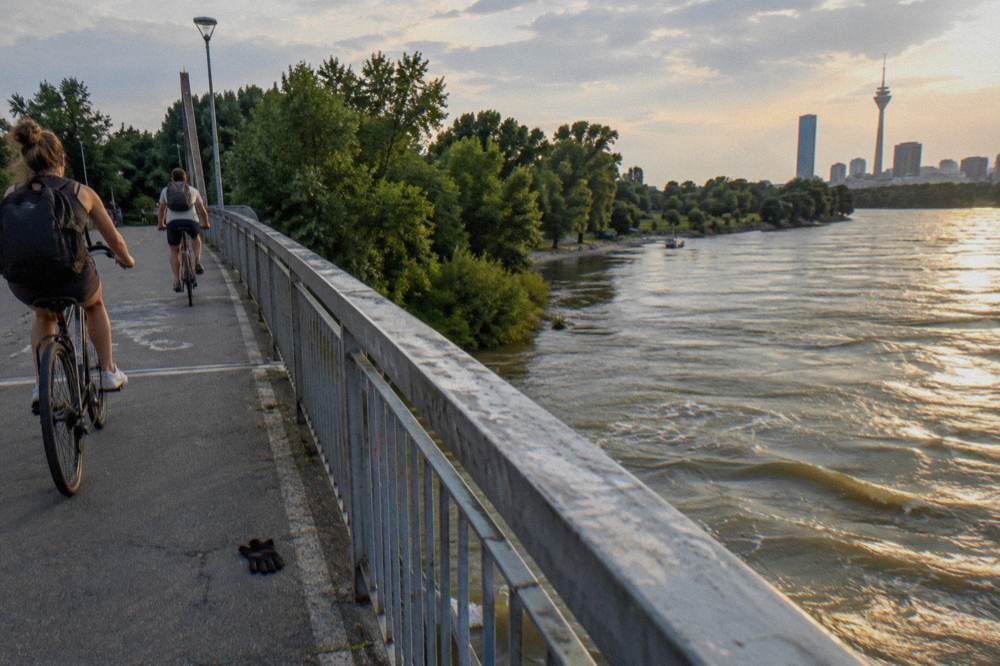
Vienna's green belt is the part most itineraries miss, and it is the part best seen by bike: the Prater with its giant wheel and chestnut avenues, and the Danube Island, a 21-kilometre ribbon of paved paths between the Danube and the New Danube. The island's full path network runs 135 kilometres. Both are free to ride, flat, and connected to the centre by the Danube Canal path in a short ride. If the Prater is where you'll start, our guide to what the Prater in Vienna is famous for covers the giant wheel, the old amusement park and the best bike routes through the woodland behind it.
The Prater's Riesenrad, the giant wheel from countless films, is the classic paid anchor: an adult ticket is 14.50 euros, a child ticket 6.50. But the Prater's real scale is the Hauptallee, the long straight chestnut avenue that has been a riding and promenading ground for centuries, car-free and busy with cyclists. The Danube Island beyond it is Vienna's beach and barbecue backyard, with bathing areas along the New Danube and a car-free path nearly the whole way. In a city of two million people, the island gives Vienna 42 kilometres of strand and protected nature, which is the statistic that surprises almost everyone who visits.
One closure to know about: the main island path between the Nordbruecke and the Floridsdorfer Bruecke is shut for water works until 2030, with riders diverted onto the Neue Donau path. The city's diversion page carries the details, and island tours simply use the riverside route.
Guided options reach this side too: the e-bike tour below pairs Danube Island and the green parks in three hours, which suits visitors who want the river side without plotting the route themselves. Our longer write-up, cycling the Prater and Danube Island, covers routes, entry points and where to swim.
Between the centre and the island lies the Danube Canal, and it deserves more than a glance on the way through. Its banks carry a continuous path lined with graffiti walls, river-side bars in summer and a string of open-air film and food spots, which makes it the natural connector between the Ring and the Prater rather than a corridor to hurry through.
Markets, Food And The Christmas Season
Vienna's calendar reshuffles the unmissables twice a year: in December, when the Christmas markets take over the Rathausplatz and the Schönbrunn forecourt, and in summer, when the open-air film and food culture moves to the Danube Island and the Canal. The main Christkindlmarkt on Rathausplatz runs from 13 November to 26 December, and the Schönbrunn market opens 6 November and runs into January. Both are free to wander.
The markets change the bike calculus: the Rathausplatz market sits directly on the Ring, so a December ride past City Hall delivers mulled wine and the lit City Hall Gothic in one stop. Schönbrunn's market frames the palace facade with a baroque backdrop most cities cannot match. Vienna is fielding 15 markets with more than 800 stalls in total this winter, so even a short stay will cross two or three of them by accident. Winter riding in Vienna is more workable than visitors expect, because the city prioritises winter clearing of central high-traffic bike paths and publishes a downloadable clearing plan, so the core paths stay rideable through cold snaps.
Food, independent of season: the Naschmarkt by the Kettenbruecke is the classic market strip, and the coffee-house culture, cake included, is itself a UNESCO-listed institution rather than a tourist trap. Budget a slow morning for one café sitting; Vienna rewards the stop as much as the ride. For month-by-month planning, see the best time to cycle in Vienna.
| Sight | What it is | Entry cost | Best reached |
|---|---|---|---|
| Ringstrasse loop | Boulevard ring of state buildings | Free from the street | Bike, one loop |
| St. Stephen's Cathedral | Gothic cathedral, old-city core | Free to enter (check the booking page for guided tours) | On foot from the Ring |
| Schönbrunn Palace | Habsburg summer palace and gardens | About 28 euros State Apartments; gardens free | Bike or U-Bahn, about 8 km west |
| Upper Belvedere | Klimt and Austrian art | 23 euros adults; free under 19 | Bike from the centre |
| Riesenrad, Prater | Giant wheel and chestnut avenues | 14.50 euros adults; avenue free | Bike via Danube Canal path |
| Danube Island | 21 km of paved island paths | Free | Bike, car-free paths |
Note the pattern in the right-hand column: every unmissable except the palace interiors is best reached on two wheels, and even Schönbrunn is a flat ride. The entry costs add up quickly if you plan interiors at every stop, so most visitors pick one or two paid entries and treat the rest as street-level sights, which is where the bike earns its keep.
How A Bike Tour Ties The Highlights Together
A three-hour guided bike tour is the most efficient single move for a first Vienna day, because it covers the Ringstrasse, the cathedral quarter, the Danube side and the green belt in one loop that would take two days on foot. The classic guided tour includes bike and guide; small-group and e-bike versions cover comparable ground. Doing it on day one orients you for everything you choose to enter afterward. If the tour's quick pass along the river leaves you wanting more, our guide to whether the Danube deserves a dedicated visit explains which stretch rewards a longer look and how a guided e-bike ride covers it.
This is the honest case for booking a ride rather than renting solo on a short visit: the value is not the bike, it is the guide's routing through a centre that is mid-rebuild, plus the pace. Bike Tours Vienna compares the formats side by side, but the shape of the decision is simple. If you want a classic loop with commentary, the three-hour classic tour is the reference point. If you want fewer fellow riders, the small-group version caps the group. If you are saving legs for palace interiors, the e-bike version does the same ground with assist.
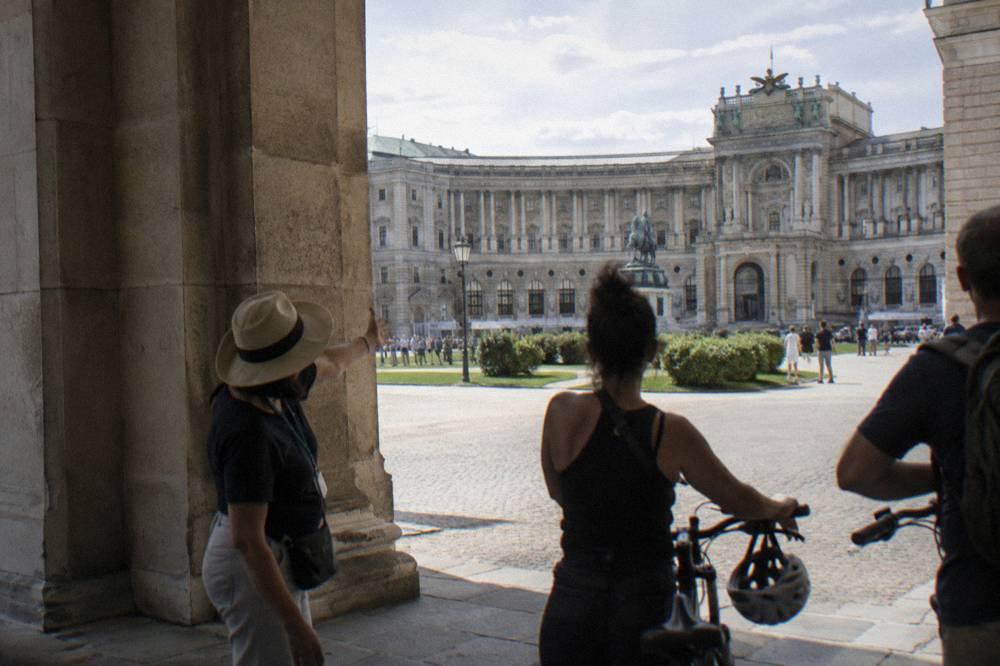
Meeting points, inclusions and current prices are on each booking page, and the seasonal detail worth checking is the start time, since December rides shift to daylight-friendly slots around the markets. Family logistics matter too: children up to their twelfth birthday must wear a helmet on any bicycle in Austria, and a recent rule change extends the duty to under-14s on e-bikes, so check what the operator provides for kids before you book. Our cycling in Vienna with kids guide covers the rest.
For visitors with more days, our three days in Vienna with one bike day itinerary shows how to split the palaces, the museums and the green belt without rushing any of them.
Common Questions About Vienna
What Should You Not Miss In Vienna?
The Ringstrasse loop with its state buildings, St. Stephen's Cathedral, Schönbrunn Palace and gardens, the Belvedere's Klimt collection, and the green belt of the Prater and Danube Island. All sit on flat, bike-friendly ground, and a three-hour guided bike tour covers the core of that list in a single morning.
Is Vienna Good For Seeing By Bike?
Yes. The centre is flat, the cycling network runs about 1,811 kilometres, and the major sights cluster inside a compact ring. The Ringstrasse path is being rebuilt in stages, so expect short detours on the north side until the first phase completes in summer 2027.
How Much Do The Main Vienna Sights Cost To Enter?
The State Apartments at Schönbrunn run about 28 euros, the Upper Belvedere 23 euros with free entry for under-19s, and the Riesenrad 14.50 euros for adults. The Ringstrasse, the cathedral's interior, Schönbrunn's gardens and the whole Danube Island are free.
What Is The Best Time Of Year To Visit Vienna?
For markets, from mid-November through Christmas: the Rathausplatz market runs 13 November to 26 December and Schönbrunn's opens 6 November. For riding and the river island, late spring through early autumn. July can be hot, and the city recorded its first 40-degree days this summer.
Do I Need A Guided Bike Tour In Vienna?
Not strictly, but it compresses a two-day walking itinerary into three hours and routes around current construction. If you ride independently instead, check the city's diversion page for the Ringstrasse works and the Danube Island closure before plotting your loop.