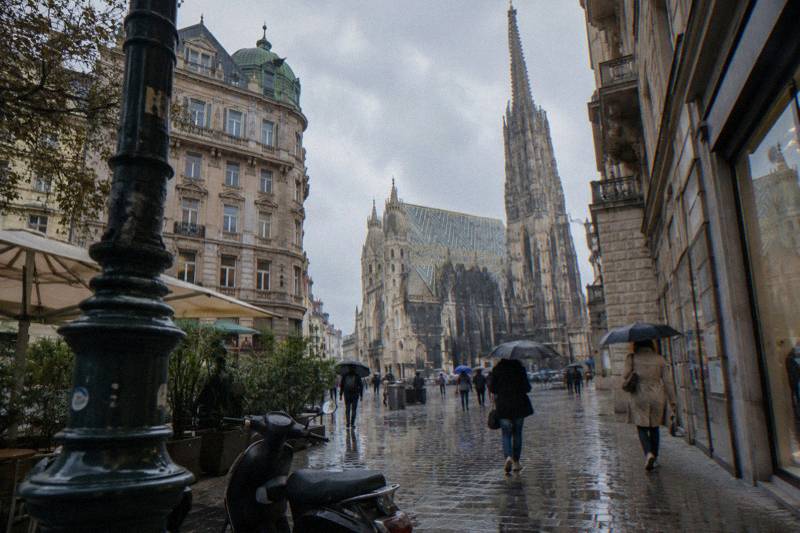
Cycling The Danube Canal In Vienna
The Danube Canal is Vienna's most urban ride: flat, continuous, lined with street art and summer bars, and linking the Nussdorf waterfront to the Prater. Here is what the path covers, how it behaves, and how it fits into a bigger day on two wheels.
Short answer
The Danube Canal path runs through central Vienna from the Nussdorf area to the Prater side, roughly flat and separated from traffic. Guided 3-hour city rides that take in the canal start from about $53 per person, and the canal links directly to the Ringstrasse, the Prater and the Danube Island network of about 1,811 km of routes.
The Danube Canal is not the Danube. That distinction confuses plenty of first-time visitors, and it matters for cyclists: the canal is the narrow, regulated arm that hugs Vienna's inner districts, while the river itself swings wide around the Danube Island and the Neue Donau further east. For a rider, the canal is the more interesting of the two. Its embankments carry a continuous path through the middle of the city, past graffiti walls, beach bars and century-old lock architecture, and it connects cleanly to the Ringstrasse on one end and the Prater on the other. Plenty of riders first reach the canal at the end of the long ride down from Germany, and the Passau to Vienna cycle touring guide covers that journey stage by stage, from the Wachau to the arrival at the Prater.
The canal path is also the piece of Vienna cycling infrastructure that has benefited most from the city's recent building spree. Vienna's total cycling network now measures about 1,811 kilometres, and 2026 alone brought roughly 12.5 kilometres of new paths under the city's Radweg-Offensive program. Not all of that touches the canal, but the push to close gaps and connect major axes has made the riverside corridors the backbone of everyday cycling here. This guide walks the route end to end, explains the etiquette that keeps it workable, and shows how a guided tour can fold the canal into a loop with the Ringstrasse and the Prater.
Where Does The Danube Canal Path Start And Finish?
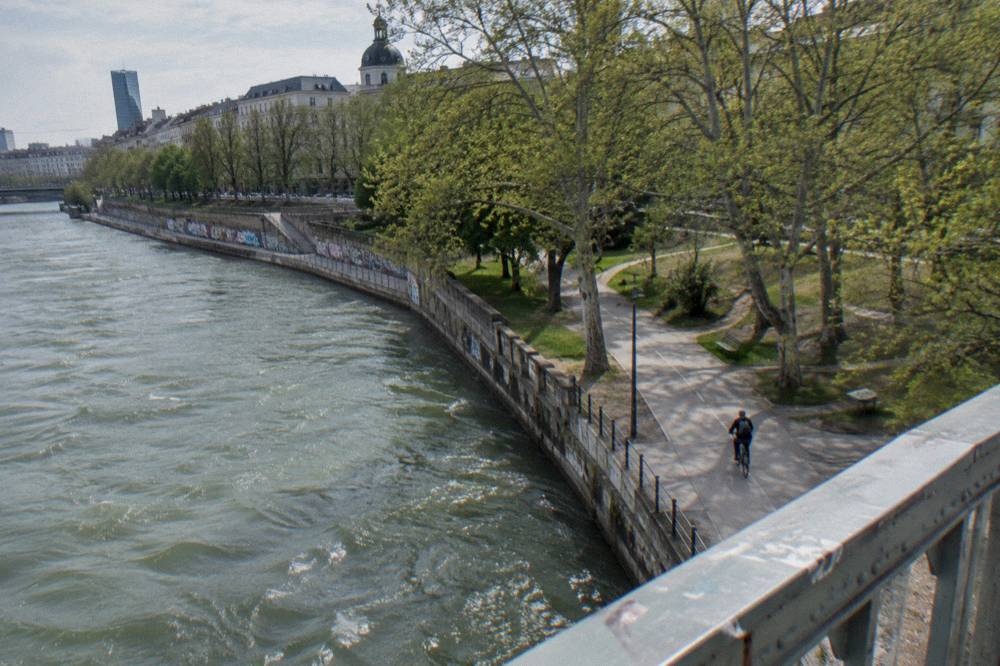
The canal path runs along both embankments of the Danube Canal from the Nussdorf lock area in the north-west, where the canal leaves the Danube, through the city centre to where it rejoins the river near the Prater and the Danube Island in the east. Most riders treat the stretch between the Rossauer Barracks area and the Urania building near the Praterstern as the classic segment, because that is where the street art, the bars and the landmark views concentrate. The full corridor is continuous, flat and separated from car traffic for almost its entire length, which is why locals use it as a commuter artery as much as a sightseeing route.
At the Nussdorf end, the canal begins at a lock and weir complex where the Danube splits, and the surrounding area has a village-like, waterside character that feels far from the boulevards. Heading downstream, the path passes under a sequence of bridges, each with its own personality, and the embankment walls become a running gallery of murals and tags that the city tolerates and, in places, actively curates. Toward the eastern end the character shifts again: the contours flatten out, the trees of the Prater close in on the right bank, and the path spills you out near the Praterstern and the giant Riesenrad wheel, one of Vienna's best-known landmarks.
Which side you ride matters less than you might think, because bridges let you cross at will, but the north-east bank generally carries more of the bar and beach-club scene in summer, while the opposite bank is quieter and links more directly to the Ringstrasse at the Augarten and Rossau ends. If your aim is a single uninterrupted ride from end to end, pick one bank and stay on it, crossing only when something on the far side draws you. There is no official direction of travel; the path is two-way and marked, and both banks are legal to ride in both directions.
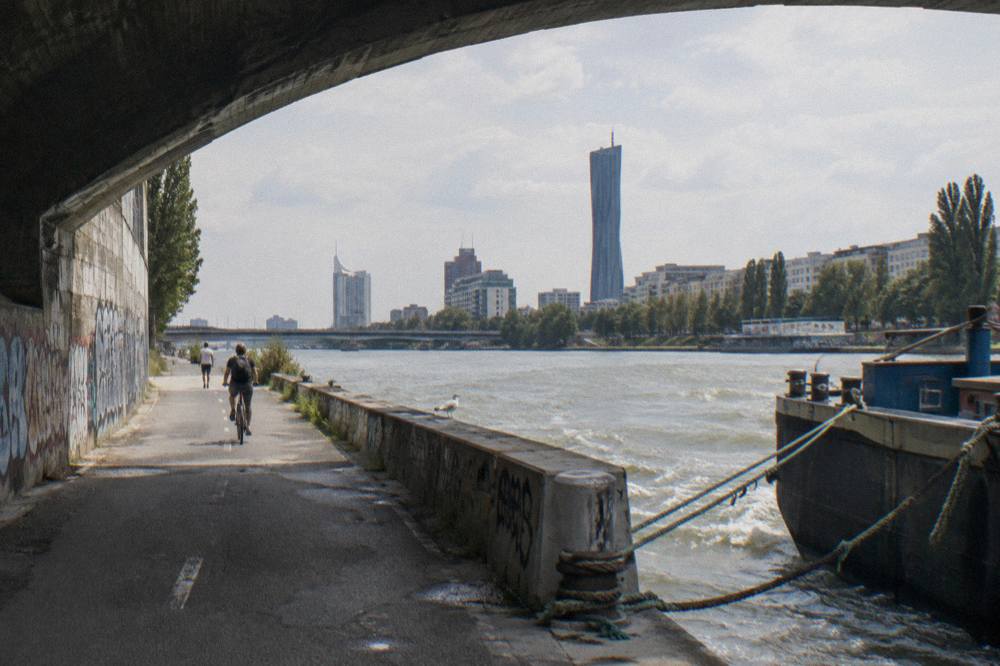
Riders planning a bigger loop should know how the canal fits the wider network. The western end connects toward the Ringstrasse corridor, and the eastern end opens onto the Prater and, beyond it, the Danube Island with its roughly 21 kilometres of paved cycling routes inside a 135-kilometre path network. Our guide to cycling the Prater and Danube Island covers that side in detail, and the piece on Ringstrasse route stops and timing handles the boulevard leg. Chain the three together and you have a full day of riding on traffic-separated paths.
What Will You Actually See Riding The Danube Canal?
The canal's signature sights are its graffiti and mural walls, the summer beach bars and kiosks sunk into the embankment, the lock and bridge architecture, and the steady backdrop of Vienna's rooftops, ending at the Prater with the Riesenrad ferris wheel. Unlike the Ringstrasse, whose monuments sit at polite intervals, the canal delivers its sights continuously: there is rarely a stretch of more than a few hundred metres without something painted, poured, floated or lit up. The street art in particular changes year to year, because the walls are a living surface that the city repaints and reclaims in cycles.
A rough inventory of what the corridor holds, end to end:
| Segment | What dominates | Why riders stop |
|---|---|---|
| Nussdorf to Rossauer Barracks | Lock and weir structures, quieter embankments | Waterside calm, old industrial texture |
| Rossau to Schwedenplatz | Densest mural walls, beach bars, kiosks | Photography, drinks, crossing bridges |
| Schwedenplatz to Urania | Bridge architecture, bar scene, city views | Closest access to the inner city |
| Urania to Praterstern | Greening banks, Prater trees, the Riesenrad | Entering the Prater, end-of-ride landmark |
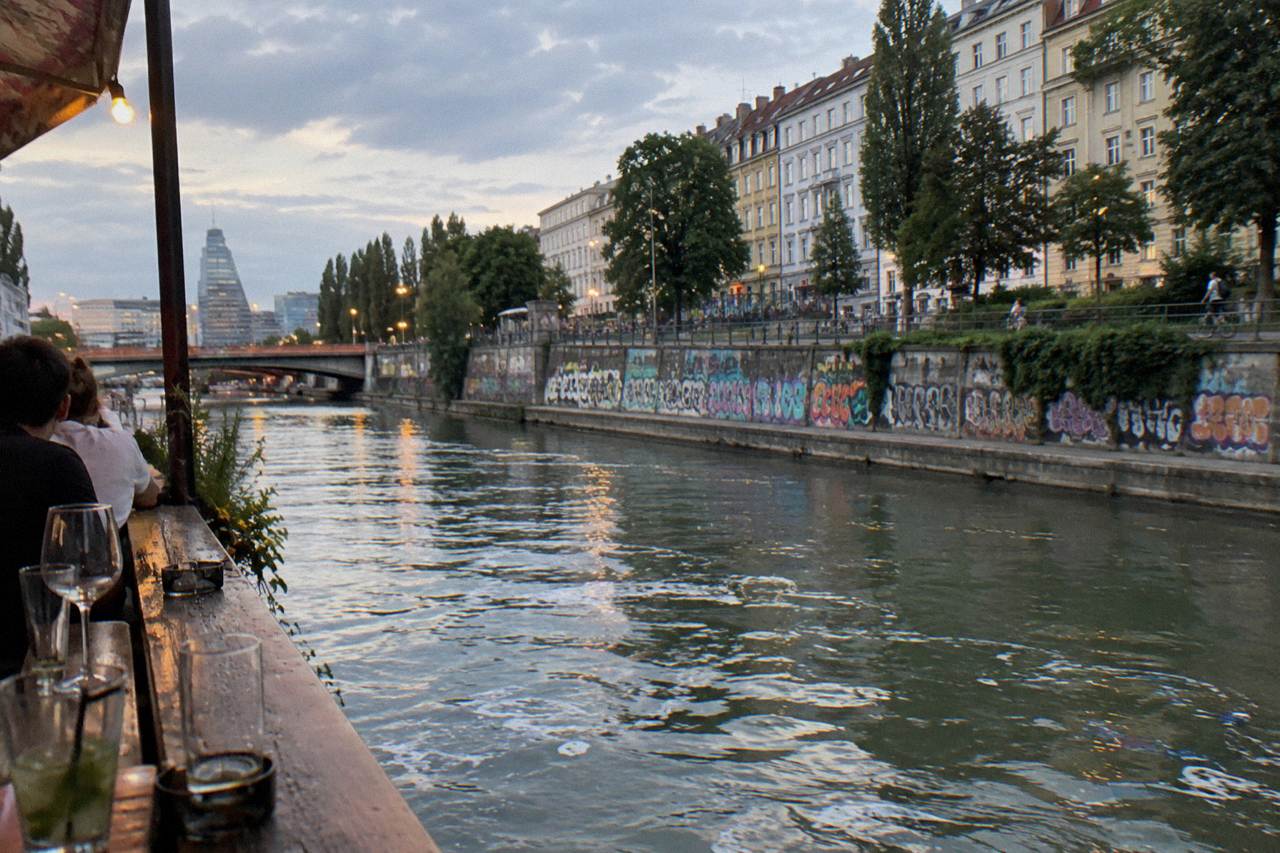
The bar scene deserves its own word. From late spring, operators open seasonal beach clubs and kiosks along the water, some built directly into the embankment arches, and the path's summer evenings belong as much to people with drinks as to people with bikes. That is charming and occasionally chaotic: a rider passing the busiest bar stretches on a warm Friday evening should expect crowds on the path itself and ride accordingly. In winter the bars largely close, the walls stay, and the corridor becomes a fast, quiet commuting route that the city prioritises for winter clearing on its high-traffic bike paths.
The graffiti question comes up a lot. Nothing about the walls feels neglected; Vienna treats the canal embankments as an accepted canvas, and sections are periodically repainted with large organised murals. For visitors, the practical effect is that the canal looks nothing like the postcard Vienna of palaces and cafés, and that contrast is exactly why many riders rank it above the more famous sights. It is the city as it actually uses its waterway.
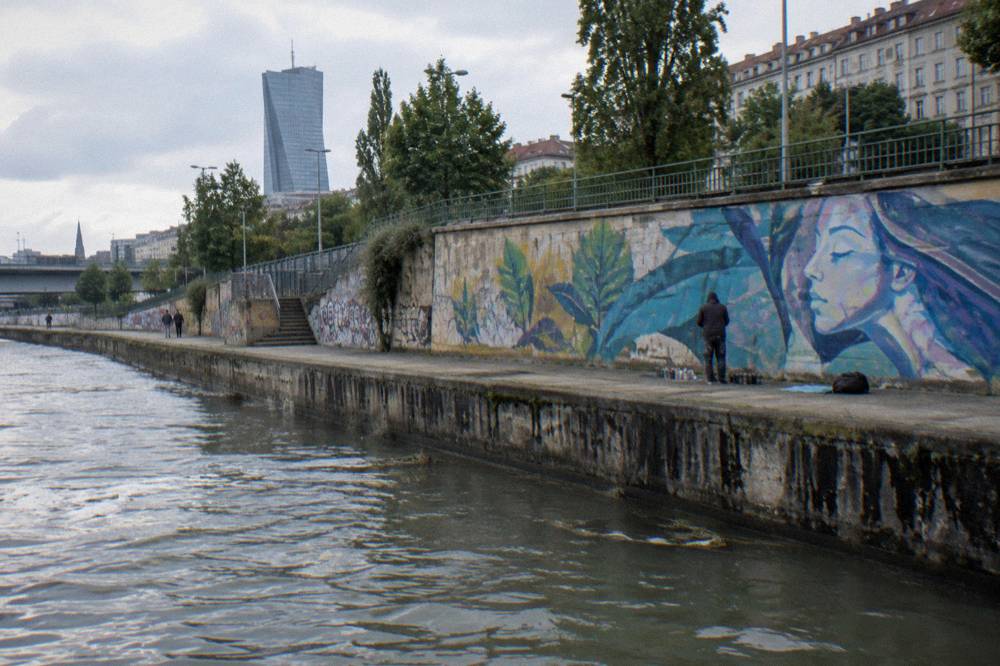
This mix of grit and landmark views is why canal-curious visitors often prefer a tour that links the canal to the Ringstrasse rather than riding the waterway alone. A guided loop folds both corridors into one narrative: monuments first, street art second, with a guide explaining which emperor built what and which wall was painted by whom. The three options below cover that combination in different formats and price points.
The Classic Vienna 3-hour guided tour is the reference point: a shared, classic-bike ride that treats the canal as one leg of a centre-focused loop. Its exact price and meeting point are shown on the booking page. Riders who want the canal tied to green space rather than boulevards can jump to the Danube Island e-bike option in the same band, which pairs urban riverside riding with the island's car-free network.
Is The Danube Canal Path Good For Beginners And Families?
Yes, the canal path suits beginners and, with care, families, because it is flat, two-way and separated from car traffic for nearly its whole length, but the crowded central stretches between Schwedenplatz and the Urania demand slow speeds and steady attention. Confident twelve-year-olds handle it easily in the quieter hours. The difficulty is never gradient or traffic; it is density, because on a summer evening the busiest sections behave like a shared pedestrian street, with dogs, prams, drinks and distracted walkers all in motion.
Etiquette on the canal path is genuinely local knowledge, so it is worth stating plainly:
- Ride on the right, pass on the left, and ring or call out before passing, since pedestrians drift.
- Slow to walking pace through the bar stretches and any crowd; this is expected, not optional.
- Expect runners with headphones and e-scooter riders sharing the corridor, since e-scooters are legal on bike paths in Vienna subject to their own rules.
- Dismount only if genuinely gridlocked; the path is a bike path and riding it is normal.
Children add a helmet consideration. Austrian rules require children up to their 12th birthday to wear a helmet on any bicycle, and since 1 May 2026 the city states this duty extends to children and youths under 14 on e-bikes, a recent change worth confirming with any tour operator before booking. Adults have no general helmet obligation from age 14, though wearing one is recommended. Operators differ on what they provide, so check the booking page for helmet availability for kids. More of these guides are collected on Bike Tours Vienna.
For families weighing the canal against other options, it helps that the corridor sits between two of Vienna's easiest big rides. The Prater's broad tree-lined avenues begin where the canal ends, and they absorb beginner wobble far better than a narrow riverside lane. Our guide to cycling in Vienna with kids compares the routes that suit different ages, and the canal usually lands there as a "ride it, but pick your hour" recommendation rather than a free-for-all.
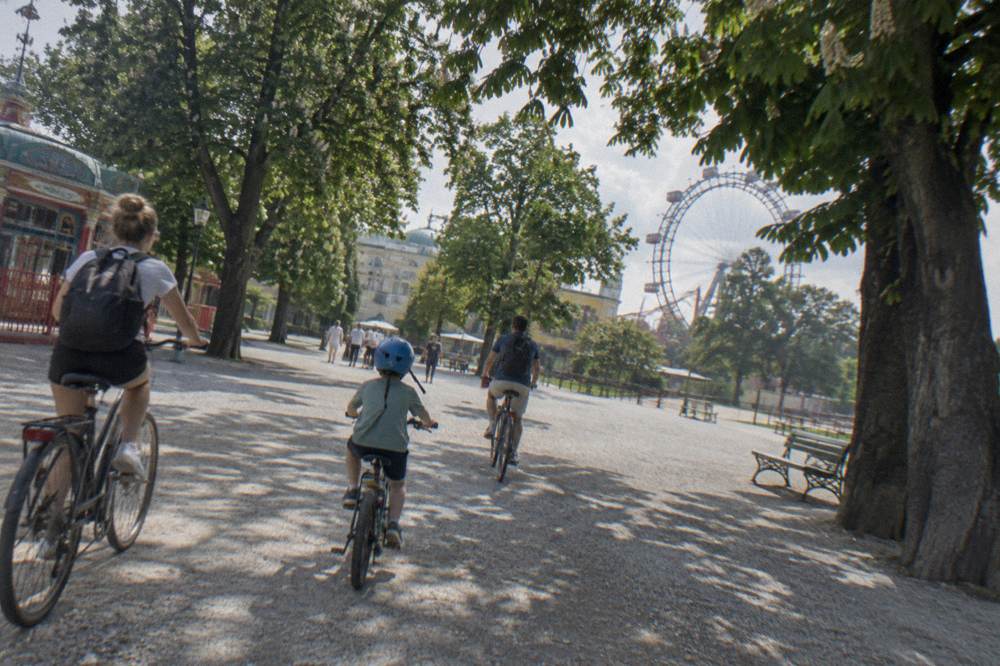
Choosing a guided ride instead of going alone removes most of the judgement calls above, because the guide sets the pace and the hour. If you are leaning that way, this is the decision point.
A shared 3-hour tour keeps the price per person reasonable, and bikes are included in the listed options, so there is nothing to rent separately. Free cancellation applies, which matters when Vienna's summer heat swings hard: the city recorded its first 40-degree days and a record number of heat days in 2026, and a morning slot beats an afternoon one in July and August. More on timing below.
When Is The Best Time Of Day To Ride The Canal?
Early morning and late morning on weekdays are the calmest windows, mid-afternoon works outside peak summer heat, and the golden hour before sunset is the most beautiful but also the busiest, as the bar scene and after-work crowds fill the central embankments. The corridor never closes and is lit along its urban stretches, so the constraint is comfort and crowd tolerance rather than access. In the hottest months, the city's own climate numbers argue for early starts: Vienna's long-term average July temperature sits at 21.9 degrees, but recent summers have run far above that, with 2026 setting records.
Season matters as much as hour. Spring and early autumn give the best balance of empty path and open bars, with the beach clubs typically operating through the warm months. In late autumn and winter the bars shut, the murals remain, and the canal becomes a utility ride; Vienna publishes a winter clearing plan that prioritises central high-traffic bike paths, so the corridor stays rideable through cold snaps in a normal year. Anyone planning a winter trip can read more in our guide to Vienna in winter and Christmas market season, since the Rathausplatz market opens on 13 November 2026 and the canal makes a quiet alternative to the market crowds.
How Does The Canal Connect To The Ringstrasse And The Prater?
The canal's western embankments link into the Ringstrasse corridor around the Rossau and Urania ends, and its eastern mouth opens directly onto the Prater's avenue network near the Praterstern, so the three form one continuous traffic-separated loop around the inner city. This connectivity is the canal's real strategic value: a rider can cover Vienna's imperial facades and its street-art waterfront in a single outing without ever mixing with general traffic. The connections are signed, and the worst complexity you face is a bridge crossing or a short shared section.
Two current projects change the picture and are worth knowing before you plan. First, the Ringstrasse bike path is being rebuilt in stages, with work beginning in early October 2026 on the section between Schottentor and Franz-Josefs-Kai, converting the service road into a 4.5-metre two-way cycle path, with the first phase targeted for summer 2027; during the works, follow the city's diversion information rather than assumptions. Second, on the far side of the Prater, a section of the Danube Island main path between the Nordbruecke and Floridsdorfer Bruecke stays closed for water works until 2030, with riders diverted via the Neue Donau path. Neither closure touches the canal itself, but both sit on routes that canal riders commonly extend into.
The wider network is growing in the canal's favour. A new two-way cycle path on Obere Donaustrasse opened in 2026, connecting the 2nd and 20th districts continuously, and the seven-kilometre Northern Cycling Highway via Praterstrasse to Kagran was completed in 2025, both of which make reaching the canal corridor easier from the north-east. Riders who arrive with their own bikes should also note the transport rules: bicycles travel free on the U-Bahn only in the permitted hours, wheeled rather than ridden, with no escalators, and non-foldable bikes are not allowed on trams and buses at all, per Wiener Linien conditions of carriage.

Can A Guided Tour Include The Danube Canal?
Yes, several guided rides include the canal as part of a central Vienna loop, typically within a 3-hour shared tour on classic bikes or e-bikes, and a guided 3-hour city ride starts from about $53 per person. The canal rarely gets a tour to itself, because it is one leg of the natural centre circuit rather than a standalone destination. What varies between options is what the operator pairs with it: the Ringstrasse's monuments, the Prater's green avenues, or the Danube Island's riverside network.
The format differences are worth understanding before you book:
| Tour format | What it pairs with the canal | Who it suits |
|---|---|---|
| 3-hour shared classic-bike city tour | Ringstrasse landmarks and centre sights | First-time visitors wanting the overview |
| Small-group city tour, max 12 riders | Same circuit, smaller group | Riders who dislike big tour groups |
| 3-hour e-bike city tour | Centre sights plus hidden corners with motor assist | Anyone wary of Vienna's few climbs or the distance |
| E-bike Danube Island and green parks tour | Canal-adjacent riverside plus the island network | Green-space lovers and photographers |
| Private customizable tour | Whatever route you agree with the guide | Families and riders with specific wishes |
Whichever format fits your riding style, our guide to the sights you simply should not miss in Vienna helps you plan what to see once the wheels stop.
Shared 3-hour city rides are the workhorse format, and the canal's graffiti stretch is a standard highlight on them, usually positioned mid-tour after the monumental Ringstrasse section for deliberate contrast. One review pattern that recurs across the city-tour options is praise for guides who explain the street art's history, which suggests the canal leg carries real narrative weight rather than being transit between sights. Check the booking page for each option's meeting point, since operators start from different central locations and the meeting point is stated there.
The Vienna City Bike Tour is a 3-hour shared ride covering the classic centre, and like its peers it treats the canal as a centrepiece rather than a connector. For riders who want the water and the green east of the city instead, the e-bike Danube Island tour in the selection band earlier pairs riverside paths with parkland. E-bike formats matter on the canal too, not for hills, since there are none of consequence, but because the island and Prater extensions add real distance to a day.
Riders comparing guided formats more broadly can read our breakdown of renting versus joining a guided ride, and the comparison of e-bikes versus regular bikes for seeing Vienna. The short version for the canal specifically: a regular bike is entirely sufficient for the corridor itself, and e-bikes earn their keep only when the island, the Prater's full length or a Wachau day trip enter the plan.
What Does A Canal Ride Cost Compared To A Guided Tour?
Renting costs from 0.80 euros per started 30 minutes on WienMobil Rad bike share, capped at 20 euros per 24 hours, one rental shop lists a comfort bike at 35 euros per day and an e-bike at 75 euros per day, while guided 3-hour city tours start from about $53 per person with the bike included. Self-guided riding is cheaper for a single short outing; guided tours become competitive the moment you want bikes, route knowledge and a narrative bundled together, and private tours are priced per group rather than per person, which changes the arithmetic for parties of four or more.
| Option | Cost basis | What is included |
|---|---|---|
| WienMobil Rad standard bike | 0.80 euros per started 30 min, capped 20 euros / 24 hours | Bike share bike, no lock-up needed |
| WienMobil Rad e-bike | 3.30 euros per started 30 min, capped 40 euros / 24 hours | Bike-share e-bike |
| Donauinsel rental shop comfort bike | 35 euros per day (6 to 12 hours), one shop's list price | Rental bike for the day |
| Donauinsel rental shop e-bike | 75 euros per day (6 to 12 hours), one shop's list price | Rental e-bike for the day |
| Guided 3-hour city tour | From about $53 per person | Bike, guide, route |
Passholders get a meaningful discount on bike share: with a Wiener Linien annual pass or a KlimaTicket, the standard bike tariff drops to 0.37 euros per started 30 minutes capped at 10 euros per 24 hours. Casual visitors will not have those passes, but the standard cap of 20 euros per 24 hours still makes a full canal-and-Prater day on a share bike competitive with a shop rental. Note that the share system's pricing and the shop prices above are separate things; the shop figures are one operator's list, not a market average. For the Prater half of that day out, our guide to the Prater's ferris wheel, fairground, and woodland paths explains what to see there and how to cover it by bike.
Against those self-guided numbers, a guided tour's value is not the bike, it is the routing and the stories, plus the removal of every etiquette and navigation decision this guide has described. Riders who intend to cycle only once in Vienna usually come out ahead with a guide; riders planning two or more days of riding usually come out ahead renting. Our fuller cost breakdown in how much a Vienna bike ride costs runs the numbers across a week.
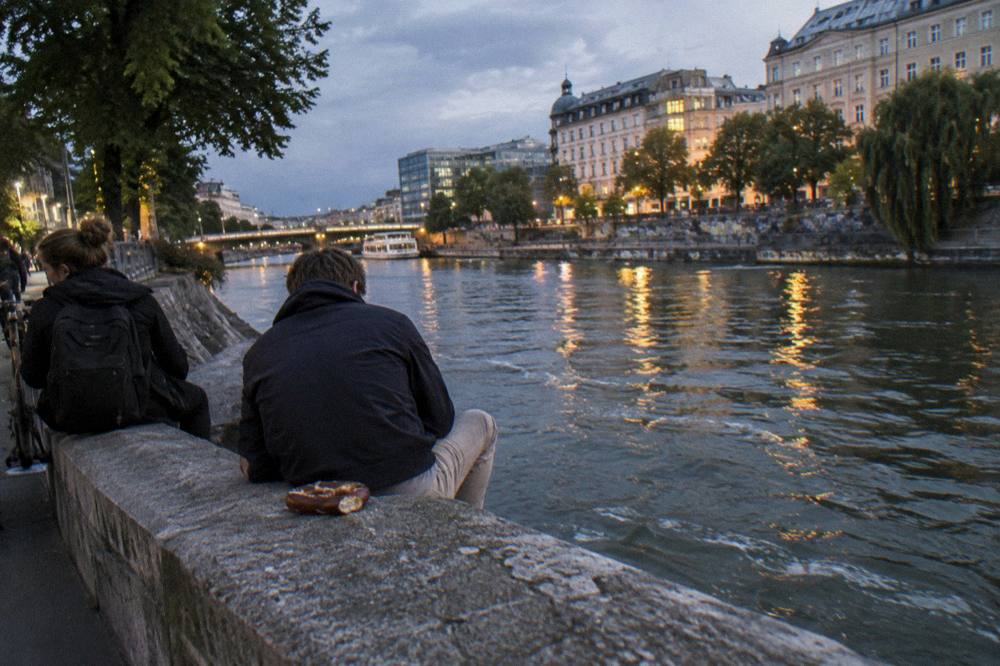
For riders set on the green east rather than the monumental west, there is a third guided format that treats the water as the whole point.
That e-bike riverside ride covers the Danube's park routes in a 3-hour shared format and sits closest in spirit to a canal ride extended to full river scale. Whatever option appeals, the practical advice is the same: book the morning slot in summer, check the booking page for the meeting point and helmet policy, and ride the canal's busy central stretch at walking pace with a bell ready. The corridor rewards patience more than speed.
Whether you go alone or with a guide, the three rides below are the strongest fits for a canal-centred visit to Vienna, and each links the water to a different second act.
Common Questions About The Danube Canal By Bike
Where Does The Danube Canal Path Start And Finish?
The path runs continuously along both embankments from the Nussdorf lock area in the north-west, where the canal leaves the Danube, to the Prater end near the Praterstern and the Danube Island in the east. Both banks are two-way, and bridges let you switch sides at will.
Is The Danube Canal Path Good For Beginners And Families?
Yes, it is flat, two-way and separated from car traffic almost throughout. The crowded central stretches between Schwedenplatz and the Urania need slow speeds and patience, so beginners should ride them outside the evening bar hours. Children up to their 12th birthday must wear a helmet, and since 1 May 2026 the city states the duty extends to under-14s on e-bikes.
When Is The Best Time Of Day To Ride The Canal?
Early and late morning on weekdays are calmest, while the golden hour before sunset is the most atmospheric but busiest, as the beach bars and after-work crowds fill the central embankments. In peak summer, start early: Vienna recorded its first 40-degree days and a record number of heat days in 2026.
Can A Guided Tour Include The Danube Canal?
Yes. The canal is a standard leg on 3-hour shared city tours, which pair it with the Ringstrasse monuments, and e-bike tours extend the riverside theme to the Danube Island's green network. A guided 3-hour city ride starts from about $53 per person with the bike included; confirm the meeting point on the booking page.
What Does A Canal Ride Cost Compared To A Guided Tour?
WienMobil Rad bike share costs 0.80 euros per started 30 minutes capped at 20 euros per 24 hours, one rental shop lists a comfort bike at 35 euros per day, and guided tours start from about $53 per person with the bike included. Short self-guided rides are cheapest; tours win on value once you want routing and a guide bundled in.
How Does The Canal Connect To The Ringstrasse And The Prater?
The western embankments link into the Ringstrasse corridor around the Rossau and Urania ends, and the eastern mouth opens directly onto the Prater's avenues near the Praterstern. Note that the Ringstrasse bike path is being rebuilt in stages from October 2026, so follow the city's diversion information for that leg.