What Is The Prater In Vienna Famous For?
The Prater is famous for the Wiener Riesenrad, its historic amusement park and the huge green woodland behind it. Here is what to see, what it costs and how to see it by bike.
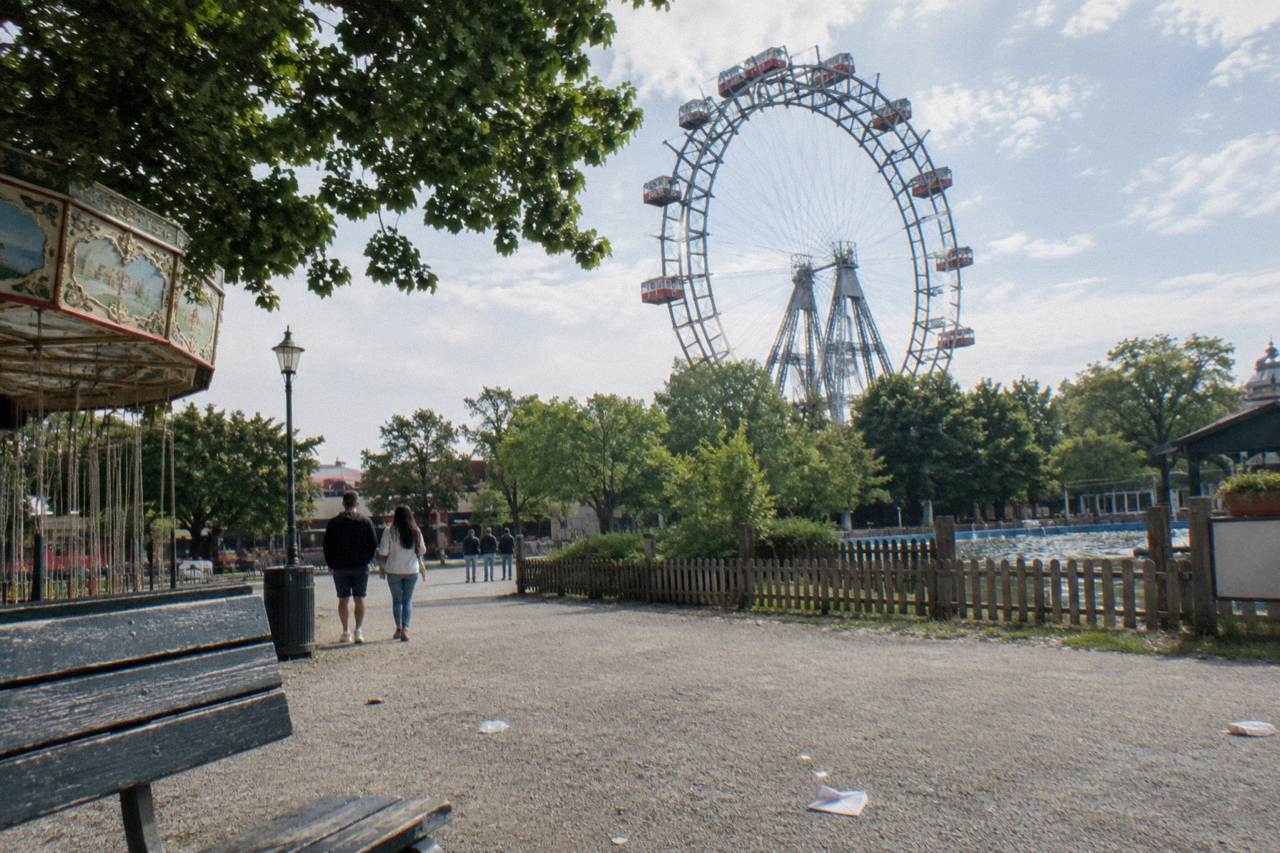
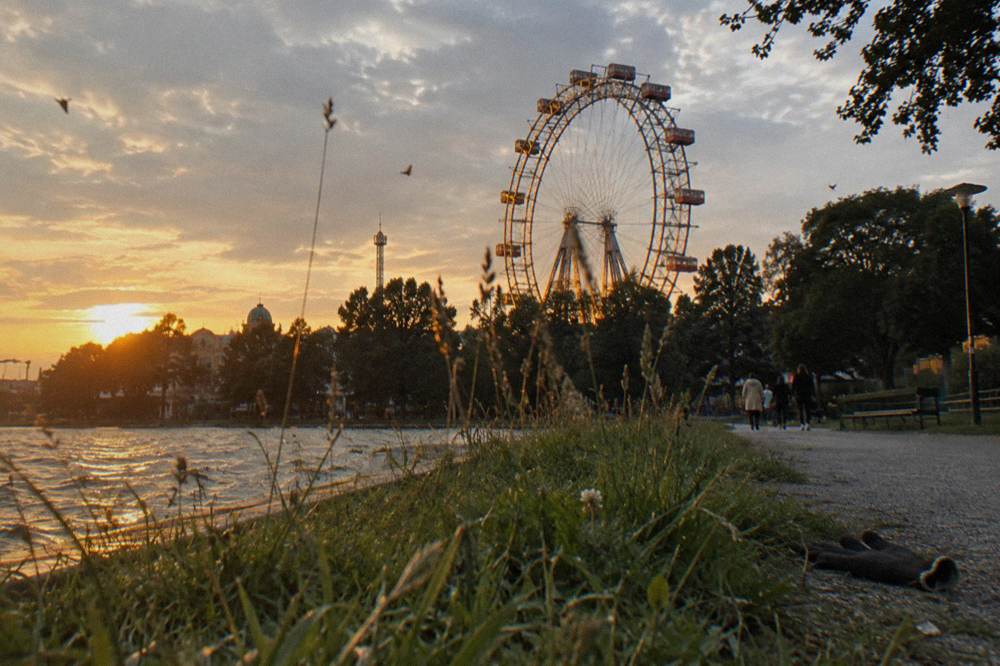
The Prater is famous for three things at once: the Wiener Riesenrad, the giant ferris wheel that has defined the Vienna skyline for generations and appeared in classic films; the Wurstelprater, the historic amusement park of rides, food stalls and knocking shops of laughter that spreads around its base; and the green Prater behind it, a broad avenue-and-woodland park that stretches for kilometres toward the Danube and Danube Island. For a cyclist, the third part is the quiet headline. The main avenue is flat, car-light and wide, and it links directly to the Danube Island network of about 135 kilometres of paths, with up to 21 kilometres of asphalted cycling routes on the island itself, according to the city's own figures. Few European capitals hand you a ferris wheel and a river island in one uninterrupted ride.
The name covers more ground than most visitors expect. What most people picture, the ferris wheel and the rollercoasters, is the Wurstelprater, a compact funfair that opens seasonally and charges per ride. Behind it lies the green Prater, the former imperial hunting ground that the monarchy opened to the public long ago, a ribbon of chestnut avenues, meadows and woodland. Beyond that again, the landscape rolls on to Danube Island, the artificial island the city built as part of its flood protection, which now carries beaches, walking trails and that dense cycling network.
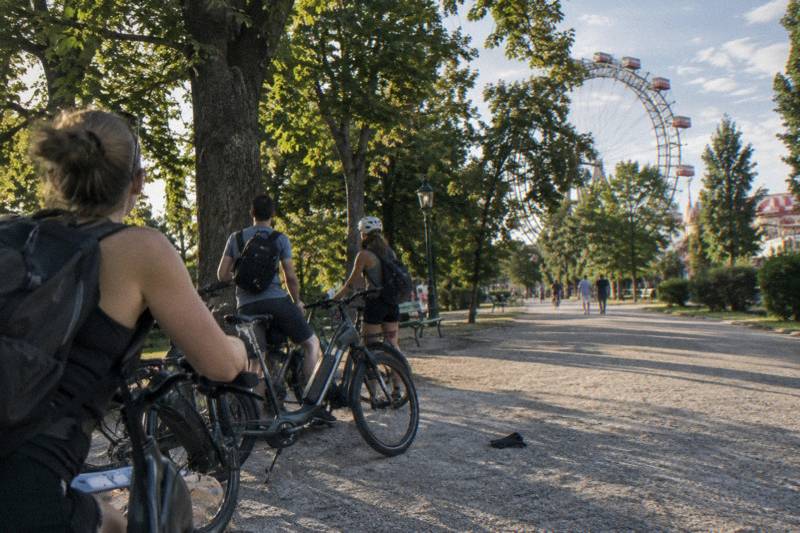
That layering is why the Prater keeps its fame. It is not one attraction but a gradient, from the loudest corner of Vienna to one of its quietest, and the whole gradient is rideable. On a summer evening the main avenue fills with families on rental bikes, inline skaters and horse-drawn fiakers, while a few hundred metres into the woods the only sound is leaves.
For riders who want the full arc without working out the connections themselves, the Vienna: E-Bike Tour with Danube Island & Green Parks is built exactly around this territory. It is a shared 3-hour e-bike ride, its price and meeting point are on the booking page, and it saves you the guesswork of linking the park to the island paths on your own.
How Does A Bike Ride Reach The Prater?
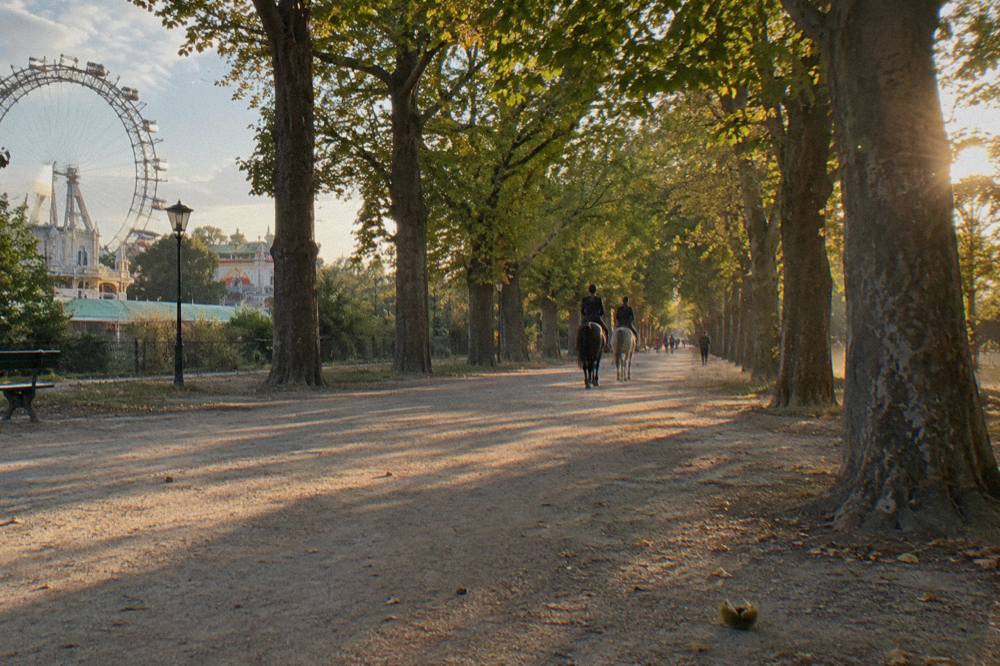
Most guided rides that include the Prater approach it from the city centre, roll along the Danube Canal or the Ring, then enter the park along the Hauptallee, the straight, tree-lined avenue that is the spine of the green Prater. From there the route opens onto Danube Island, whose path network the city measures at about 135 kilometres in total. The cycling the Prater and Danube Island guide breaks the terrain down stop by stop if you would rather ride it self-guided. The avenue is closed to through car traffic, which is why so many Viennese learn to ride here, and why guided groups of mixed confidence do well on it.
If you are riding under your own steam, bike-share is a realistic option for this one. WienMobil Rad, the city system run by Wiener Linien, stations bikes in all 23 districts, and its standard tariff works out at 0.80 euros per started 30 minutes, capped at 20 euros per 24 hours per rental. The e-bike tariff is higher, at 3.30 euros per started 30 minutes with a cap of 40 euros. Holders of a Wiener Linien annual pass or KlimaTicket pay less under the Mix tariff. For the full walkthrough of registering, unlocking a bike, and deciding whether a guided tour beats bike share, see our step-by-step guide to renting a city bike in Vienna.
| Option | What it costs | Notes |
|---|---|---|
| WienMobil Rad standard bike | 0.80 EUR per 30 min, capped 20 EUR per 24 h | Per rental, stations citywide |
| WienMobil Rad e-bike | 3.30 EUR per 30 min, capped 40 EUR per 24 h | Higher rate, fewer e-bikes |
| WienMobil Rad annual subscription | 63 EUR per year | First 30 minutes of each trip free |
| Donauinsel rental shop comfort bike | 35 EUR for 6 to 12 hours | One shop's listed day price |
| Donauinsel rental shop e-bike | 75 EUR for 6 to 12 hours | One shop's listed day price |
A guided ride bundles the bike, the helmet decision and the route into one price, which is why many first-time visitors start there. The classic shared option, the Classic Vienna 3-Hour Guided Bike Tour, covers central highlights on a regular bike; the e-bike variants do the same distance with less effort. Check the booking pages for what each includes, since inclusions and meeting points vary between operators.
One structural note worth knowing before you plan: a section of the main path on Danube Island between the Nordbruecke and the Floridsdorfer Bruecke stays closed for water works construction until 2030, and cyclists are diverted via the Neue Donau path. The city maintains a diversion page for exactly this kind of closure, and it is worth a glance before any island ride.
Why Is The Riesenrad So Iconic?
The Wiener Riesenrad earns its iconic status as one of the oldest surviving ferris wheels in the world, a landmark whose fame reaches far beyond its home city. Its global reputation was sealed by classic post-war cinema, most memorably the Orson Welles scene filmed inside its cabins, which turned the wheel into an instantly recognizable symbol. It is not the tallest wheel in Europe anymore, but its silhouette over the tree line is the image on a thousand Vienna postcards, and riding it remains the single most famous thing to do in the Prater. A full rotation takes some minutes at walking pace, and the cabins are the old-fashioned enclosed kind, not the glass-floor variety of newer wheels.
The pricing is simple and published by the Prater operator. An adult ticket is 14.50 euros, a child ticket for ages 3 to 14 is 6.50 euros, and combi tickets exist, for example with the Liliputbahn, the small railway that loops the park, at 16 euros for adults. The operator lists the current 2026 ticket prices and combinations on its own page, which is where the figures above come from.
Around the wheel spreads the Wurstelprater itself: rollercoasters, ghost trains, candy stalls and beer gardens. Entry to the park grounds is free; you pay per ride or per attraction, which makes it easy to wander through even if you never board anything. The atmosphere is more Coney Island than theme park, deliberately so, and the park is at its best in the early evening when the lights come on.
The Wurstelprater's season and hours shift with the weather and school holidays, so check the operator's page before promising anyone a specific ride. The green Prater behind it, by contrast, is a public park and never closes, which is why cyclists treat the funfair as the doorway rather than the destination.
What Is The Green Prater Like To Ride?
The green Prater is a long, flat expanse of avenues, meadows and woodland running from the funfair toward the Danube, with the Hauptallee as its car-free spine, and it is widely considered the most relaxed riding in central Vienna. The avenue is broad enough that pedestrians, horses, skaters and bikes sort themselves out without much friction. Off the avenue, gravel and dirt tracks thread through the woods toward the Old Danube and the Neue Donau, firmer under tyre than they look on the map. There is no meaningful climbing anywhere in the park, which is the honest answer to why families and first-time riders end up here.
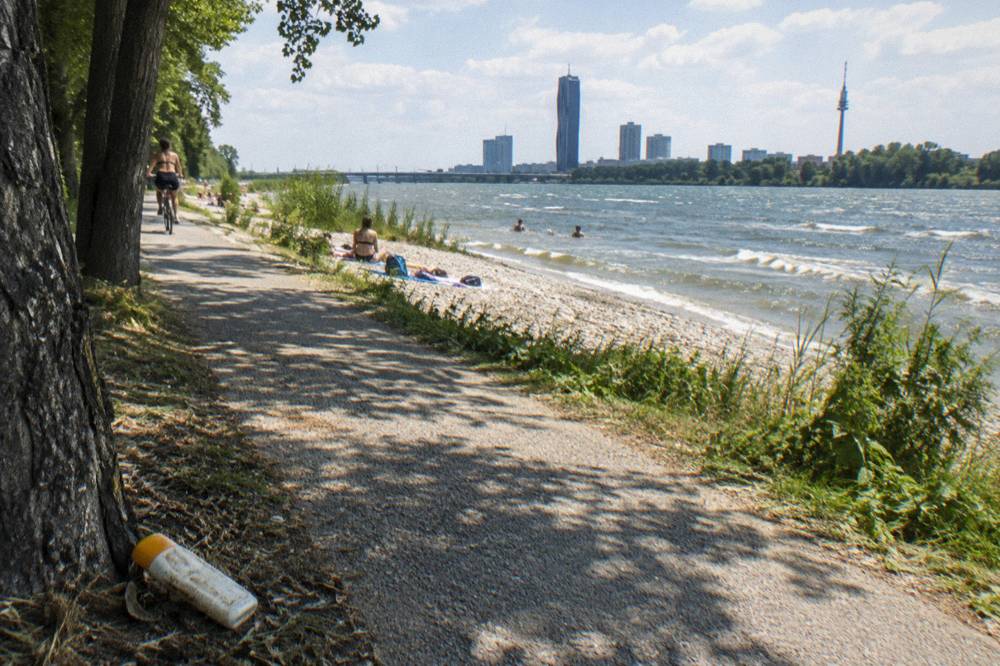
The terrain data backs the reputation. The city describes Danube Island as covering 3.9 square kilometres, threaded by that 135-kilometre path network, and markets the whole river corridor as giving a million-person city 42 kilometres of strand, its word for waterfront. On a July afternoon the beaches on the island fill up fast, and the tree cover on the Prater side is a real mercy.
Two local habits are worth matching. Critical Mass Vienna rides on the third Friday of every month, gathering in the early evening, and the loop sometimes rolls through the Prater avenues; it is a celebration ride, not a race, and visitors join freely. And on Car-Free Day each September, a single public transport ticket doubles as a full-day pass, which pairs neatly with a day you plan to end by bike.
Practical rules are few but real. Children must wear a helmet on any bicycle up to their 12th birthday, and since 1 May 2026 the city says the duty also covers children and youths under 14 on e-bikes; from 14 there is no general obligation, only a recommendation. A separate change means e-mopeds are banned from cycle paths since 1 October 2026, which regular cyclists will notice as quieter, saner paths. The city's cycling rules page states both.
When Is The Best Time To Visit The Prater?
Late April through early October is the core season, when the funfair runs at full tilt, the island beaches are open and the paths are dry; May, June and September give the best balance of warmth and thin crowds, while July and August bring heat that peaks in the afternoon. Vienna's long-term July average at the Hohe Warte station is 21.9 degrees, but averages hide the edges: the summer of 2026 delivered the city's first 40-degree days and a record number of heat days, which is a real argument for riding in the morning and treating the afternoon as beer-garden time.
Winter flips the equation. The funfair thins out and the wheel runs a quieter service, but the avenues stay open and the city prioritises clearing snow from central high-traffic bike paths, publishing a downloadable winter plan of which routes get cleared. If a cold-weather visit coincides with the Christmas season, the big markets open in November, the Rathausplatz one from 13 November and Schoenbrunn from 6 November 2026, and our Vienna in winter and Christmas market season guide covers how the two pair up.
The event calendar shapes a few weekends. The Donauinselfest, the free island festival, filled the Danube Island with crowds over three days in early July 2026; during festival weekends the island paths are technically open but not much fun to ride. The Vienna City Marathon closes central streets for a morning each spring, and the Bike Festival with its RADpaRADe takes over Rathausplatz in late March. None of these are reasons to skip the city, just reasons to check dates before you promise yourself a quiet island loop.
For a season-by-season read on temperatures, clothing and which weeks give you the paths to yourself, see the best time to cycle in Vienna by month guide, which goes deeper than a blog post can.
What Does A Prater Visit Cost?
Entry to the Prater grounds and the green park is completely free, so simply being there costs you nothing; you only pay for the extras, meaning you pay per attraction in the funfair, per rental when you take a bike, or one tour price if you join a guided ride. The wheel at 14.50 euros for adults is the anchor expense, and everything else is à la carte. A self-guided day on a bike-share bike can cost as little as a few euros if you dock often, while a full-day rental-shop e-bike from one Donauinsel shop lists at 75 euros for 6 to 12 hours, which sits at the top of the realistic range for a day built around the park. A family of four combining the wheel with a couple of hours on share bikes can do the whole afternoon for well under 50 euros. Before you settle on a share bike, a shop rental, or a guided ride, our guide to bike rental prices in Vienna compares all three.
| Item | Price | Basis |
|---|---|---|
| Prater grounds and green Prater | Free | Public park |
| Wiener Riesenrad adult | 14.50 EUR | Per ride |
| Wiener Riesenrad child, 3 to 14 | 6.50 EUR | Per ride |
| Riesenrad and Liliputbahn combi | 16.00 EUR | Adult combo |
| WienMobil Rad standard bike | 0.80 EUR per 30 min | Capped 20 EUR per 24 h |
| Donauinsel shop comfort bike | 35 EUR | 6 to 12 hours, one shop's list |
Two cost notes from the wider city budget. Vienna's local tourism tax rose to 5 percent of the accommodation charge from 1 July 2026 and rises again to 8 percent from 1 July 2027, so room rates creep up independently of anything you do at the Prater. And if you use the U-Bahn to reach the park with your own bike, standard bikes travel free but only in the permitted windows: weekdays 9:00 to 15:00 and after 18:30, all day on weekends and public holidays, pushed never ridden, and never on escalators. Bikes with start-assist motors are excluded from carriage altogether under the operator's conditions, and non-foldable bikes are not allowed on trams and buses at all.
The guided-tour option replaces itemised costs with one price. Tours that touch the Prater and Danube Island run on e-bikes and regular bikes at shared-group rates, with private options priced per group; the figures sit on each booking page, since operators adjust them seasonally. What the tour price reliably buys is the bike itself, a guide and the route, so the only extras are funfair rides and food.
Is The Prater Worth It Without The Rides?
Yes, and for many visitors the rides are the smaller half of it: the green Prater and Danube Island give you several flat, traffic-calmed kilometres of riding, swimming beaches, woodland and riverside bars without a single ticket to buy. The funfair is famous, but fame is not the same as being the best part. On a bike you can sample the ferris wheel for the view, then spend the rest of the day in the quiet that begins a few hundred metres east of it.
That is also the honest pitch for the guided e-bike ride. The Vienna: E-Bike Tour with Danube Island & Green Parks spends its 3 hours on exactly this split, central sights first, then the river side, with the bike and the guide included. Riders who prefer regular bikes or a pure city-highlights loop have equivalents in the classic 3-hour tour and the city highlights e-bike tour. All three appear below so you can compare them side by side before committing.
Whichever way you go, the Prater rewards the low-effort approach: arrive early or late, ride the avenue, swim if it is warm, and let the wheel be one stop among several rather than the whole day. Vienna built the park to be strolled and ridden at leisure, and it still works best that way. The city's own Danube Island leisure page lists the sport and swimming facilities if you want to plan the island half in detail.
For the broader question of how these routes fit a full city itinerary, Bike Tours Vienna breaks the options down by format and price elsewhere on the site.
Common Questions About The Prater
What Is The Prater In Vienna Famous For?
The Prater is famous for the Wiener Riesenrad, one of the oldest ferris wheels in the world, the historic Wurstelprater amusement park around it, and the large green woodland park stretching behind it toward the Danube, which offers some of the flattest, most relaxed cycling in the city.
How Much Does The Riesenrad Cost?
An adult ticket is 14.50 euros and a child ticket for ages 3 to 14 is 6.50 euros. Combi tickets with the Liliputbahn start at 16 euros for adults. The operator's page carries the current prices.
Is Entry To The Prater Free?
Yes. The park grounds and the green Prater are a public park with free entry and no closing time. You pay per ride or attraction inside the Wurstelprater funfair.
Can You Cycle Through The Prater To Danube Island?
Yes, the route is flat and largely car-free, running from the Hauptallee through to the island path network of about 135 kilometres. One main-path section on the island is closed for construction until 2030 with a signposted diversion via the Neue Donau path.
When Is The Best Time To Visit The Prater?
May, June and September balance warm weather with thinner crowds. July and August can be very hot, with the city recording its first 40-degree days in summer 2026, so ride early. Winter keeps the park open, with the city clearing snow from central high-traffic bike paths.