Is It Worth Going To The Danube In Vienna?
A straight answer on whether Vienna's Danube side deserves your time, what each stretch offers, and how a guided e-bike ride covers it.
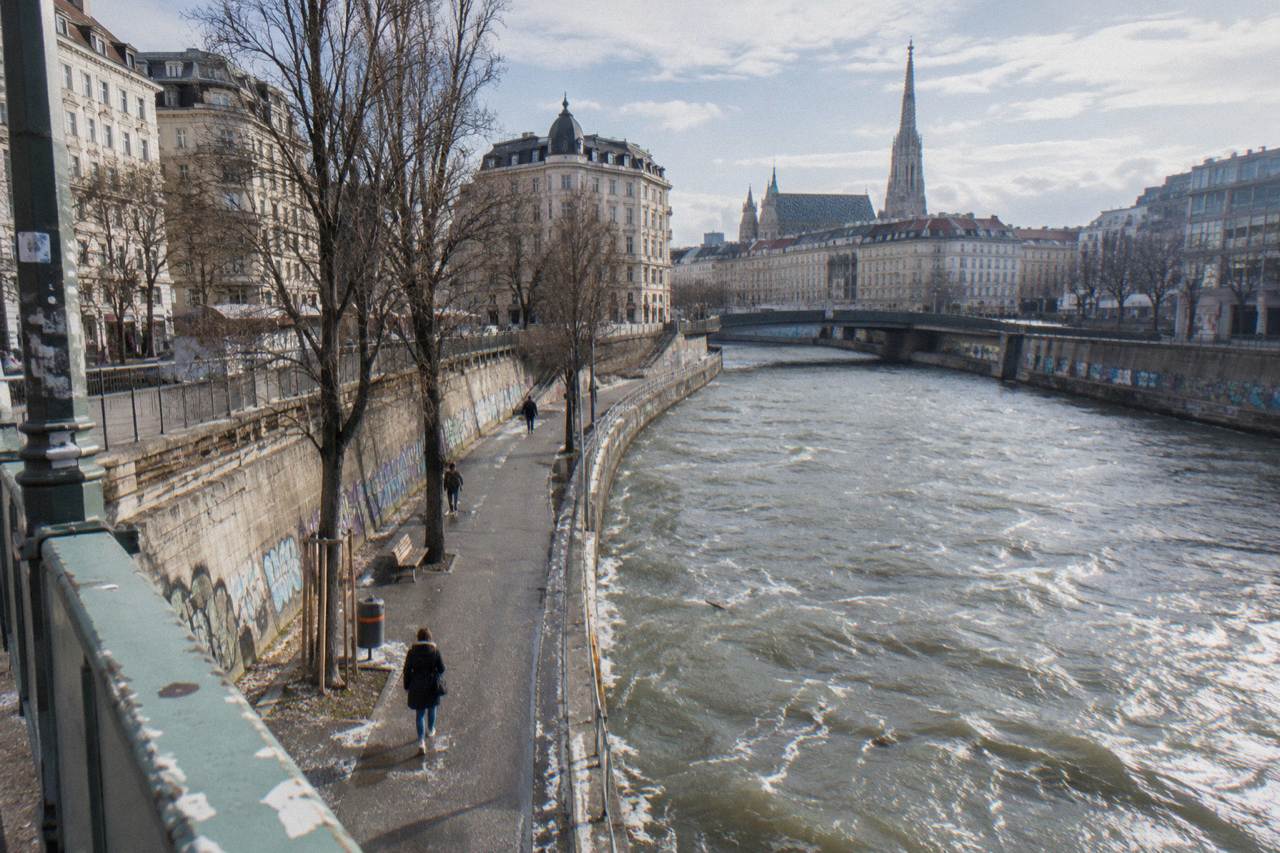
Yes, if you go to the right stretch. The Danube River proper, with the Danube Island beside it, is one of Vienna's best free experiences: 42 kilometres of shoreline, about 21 kilometres of paved cycling routes on the island alone, and swimming beaches reachable by bike from the centre in under an hour. The Danube Canal near the centre is a different thing entirely, a narrow urban waterway better known for street art than river views.
Most visitors confuse the two, arrive at the canal, wonder why everyone raved about the Danube, and leave. That is the trap. The real river runs past the Uno City towers and the Danube Island on the city's north-eastern edge, and it is wide, blue on a good day, and lined with paths that carry you miles from traffic. The city's own figures describe the island as 3.9 square kilometres crossed by a 135 kilometre path network, which is a scale most people do not expect from a city district.
The honest short version: if you have one day in Vienna, see the centre first. If you have two or more, or you are travelling with kids, or you simply want the local summer Vienna, the Danube side earns its half day. A bike is the fastest way to make that half day count, because the interesting parts are spread along several kilometres of bank and island path. This site, Bike Tours Vienna, exists partly for that reason.
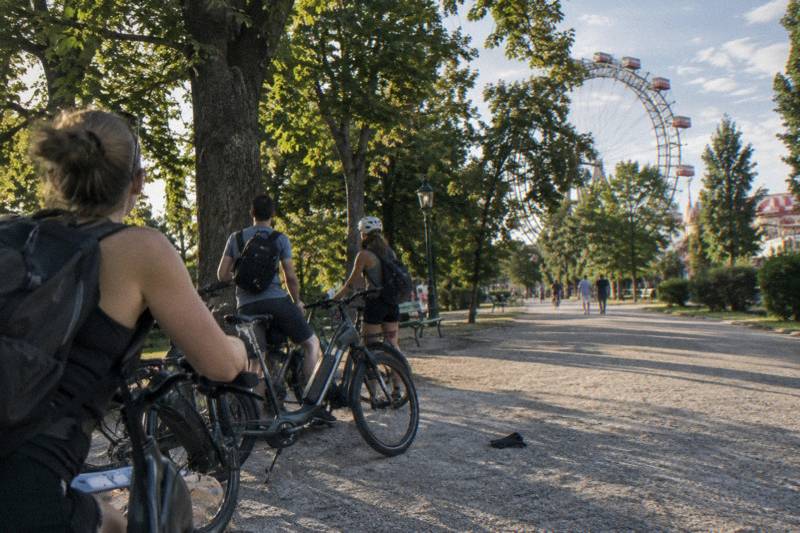
For readers who want a guided option, the most direct pairing is the Vienna e-bike tour with Danube Island and green parks, a 3-hour shared ride built exactly around the water-and-parks side of the city. The e-bike part matters more than it sounds: the route from the centre to the island crosses enough open ground that pedal assistance turns a workout into a sightseeing ride. Details like the meeting point and price are on the booking page, and the listing describes what is included.
What Is The Danube In Vienna, Exactly?
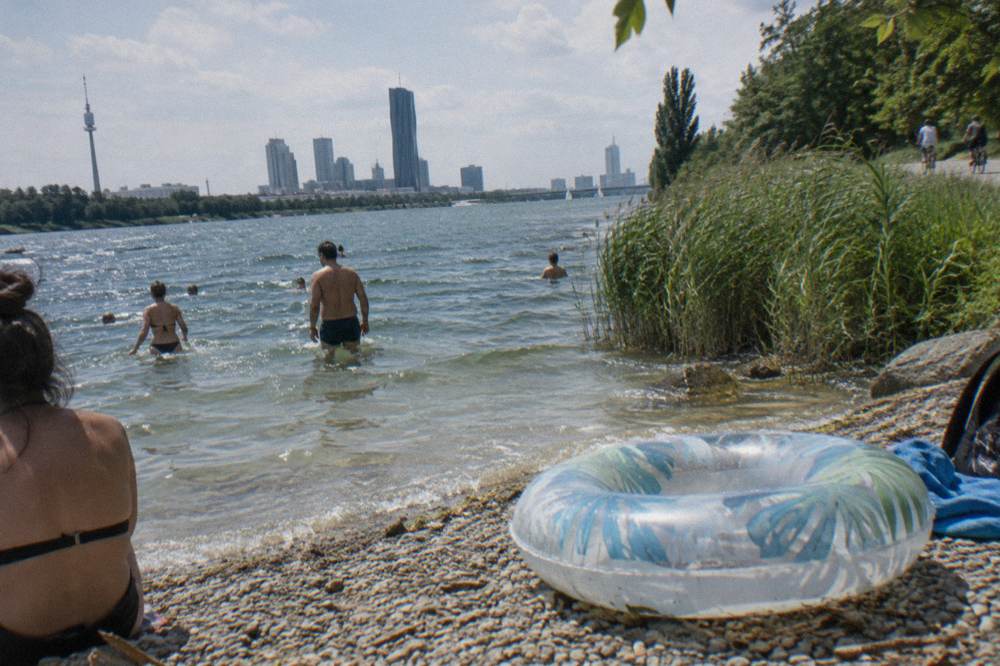
Vienna's Danube is three separate waters, not one. The Danube Canal is a regulated arm through the inner districts. The Danube proper is the shipping river beyond the 2nd district. The Neue Donau is a parallel side channel, and the Danube Island sits between the two, built as a flood protection barrier and now the city's biggest leisure space.
The canal is the one you stumble onto by accident. It hugs the edge of the old town, its retaining walls are a rotating gallery of murals, and its quays host bars in summer. It is worth twenty minutes on a walk. It is not the river people picture when they hear "Danube".
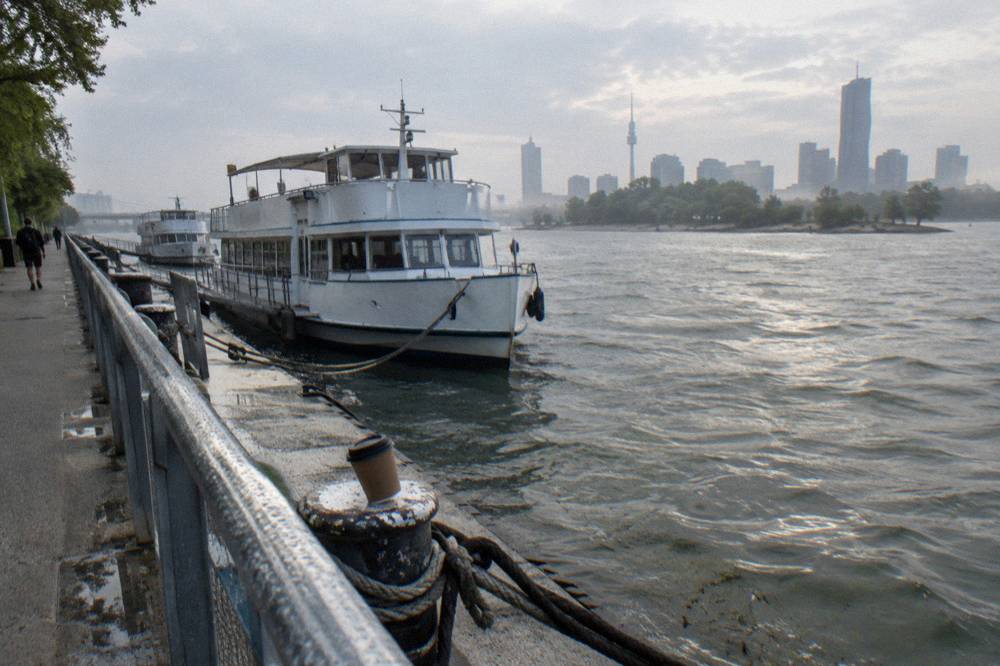
The river itself starts feeling real around the Mexikoplatz and the DDSG ship landing, then opens out past the Uno City glass towers. Across the main channel, the Danube Island runs for kilometres between the river and the Neue Donau, the calm backwater where most Vienna residents actually swim, grill and laze. The city describes the island as giving a million-person city 42 kilometres of strand and nature reserve, and that is the number that should recalibrate your expectations. Our guide to cycling the Danube Canal covers the urban stretch if that is the part that appeals.
If the island and river banks sound like your half day, the guided e-bike option above covers that exact territory in about three hours without you needing to plan a route. Check the booking page for the current price and the free-cancellation terms before committing.
Is The Danube Island Worth The Ride Out?
Yes, and it is the single best-value free thing on Vienna's Danube side. The island offers about 21 kilometres of paved cycling routes inside a 135 kilometre path network, plus beaches, water play areas and shady groves, all at no entry cost. You only pay for food, drink or a rental bike.
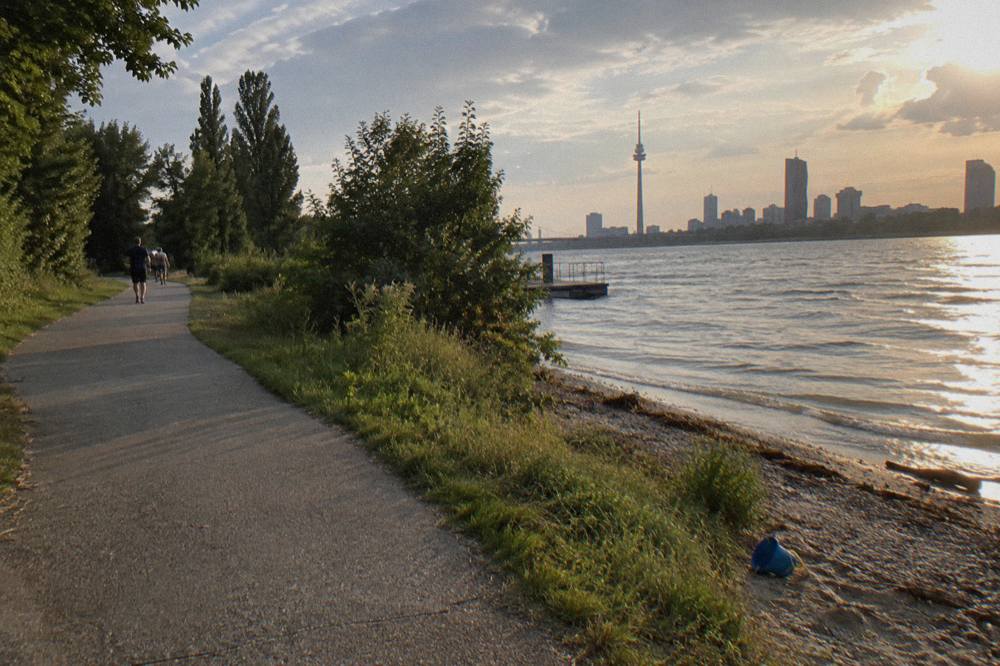
Locals treat the island as their beach. On a July weekend the meadows fill with picnics and the waterline with swimmers, and the cycle path along the Neue Donau carries a steady flow of families on rental bikes. The island was engineered for flood control, which is why it is long, narrow and flat: perfect cycling geometry, with no climbs and no car traffic across most of its length. One planning note: a section of the main island path between the Nordbruecke and the Floridsdorfer Bruecke stays closed for water works until 2030, with cyclists diverted via the Neue Donau path, so check the city's diversion page before you set a route. If the island's easy riding tempts you to try the longer route, our guide to how flat the Danube Cycle Path really is covers which stretches still ask for effort and whether an e-bike makes sense for your day out.
The island also hosts the city's biggest events, which cuts both ways. The Donauinselfest drew huge crowds over three days in July, and on those weekends the paths are people-first, not bike-first. Away from event dates it is the calmest cycling in Vienna. If you are planning around the water side generally, our Prater and Danube Island cycling guide maps how the two green spaces connect, since the Prater's tree-lined avenue runs almost directly down to the river.
When Is The Best Time To Go To The Danube?
May to early September is the honest window for swimming and beach weather; late April, May, September and early October are the best months for cycling it. The river side is enjoyable year-round, but the island's whole point, water and meadows, is a warm-weather pleasure.
Vienna's summers have gotten genuinely hot. The city recorded its first 40 degree days and a record number of heat days in summer 2026, and the long-term average July temperature at Hohe Warte sits at 21.9 degrees. On days like that, the Danube Island is not a nice-to-have, it is where the city cools off, and a ride out along the water with a swim stop is the rational plan rather than the scenic one.
Spring has its own argument. Paths are quiet, the water is high, and the heat has not arrived. Autumn colours along the Neue Donau run late into October, and Vienna clears central high-traffic bike paths of snow in winter on a published winter plan, so hardy riders can use the river paths even in the cold months. For month-by-month detail, see the best time to cycle in Vienna.
How Much Does A Danube Visit Cost?
The river and island themselves cost nothing to visit. Your real costs are the bike, transport and food. A guided Danube-side e-bike tour is priced per person on the booking page; a solo day using bike-share runs from 0.80 EUR per started 30 minutes on a standard WienMobil Rad bike, capped at 20 EUR per 24 hours.
| Option | What it covers | Cost basis |
|---|---|---|
| Visit on foot | River bank and island paths, beaches, views | Free |
| WienMobil Rad standard bike | Bike-share, all 23 districts, over 3,700 bikes | 0.80 EUR per 30 minutes, capped at 20 EUR per 24 hours |
| WienMobil Rad e-bike | Pedal-assist share bike | 3.30 EUR per 30 minutes, capped at 40 EUR per 24 hours |
| Rental shop day hire | One Donauinsel shop lists a comfort bike at 35 EUR, an e-bike at 75 EUR for 6 to 12 hours | Per bike per day |
| Guided e-bike tour with Danube Island | 3 hours, guide and e-bike, booking-page price | Per person |
If you fancy swapping the city riverbank for vineyard views, our guide to Krems and the Wachau wine country covers how to plan that ride from Vienna.
The share-bike figures come from the operator's published tariffs, and the day-hire row is one shop's list near the Danube Island, not a market average. Annual-pass and KlimaTicket holders pay less on the mix tariff, 0.37 EUR per 30 minutes on standard bikes with a lower cap. If you are weighing guided against independent, the rent or join a guided ride comparison walks through the full trade-off.
How Do You Get To The Danube With A Bike?
Ride there, or take the U-Bahn. The ride from the centre along the canal-side path and through the Prater is flat and signed. With the U-Bahn, standard bikes travel free on weekdays between 9:00 and 15:00 and after 18:30, and all day on weekends and public holidays, wheeled rather than ridden, with escalators off limits.
The fine print matters more than usual. Bikes must be pushed inside stations, a maximum of two bikes fits per entry area, and trams and buses do not take non-foldable bikes at all. The conditions of carriage do allow ordinary bikes and e-bikes on the U-Bahn outside weekday rush hours, pushed rather than ridden. Bikes with start-assist, cargo bikes and transport bikes are barred, so check your model before planning a train return. Our cycling rules and safety guide collects the full rule set, including the helmet requirement for children up to their 12th birthday.
One detail that surprises visitors: the U1 line drops you at Donauinsel station in the middle of the island itself, so a car-free day there needs no bike at all if you would rather walk. The Praterstern interchange is the other useful entry point, sitting between the Prater and the river corridor. Cyclists arriving from the centre will cross the construction zone for the Ringstrasse redesign, which is being rebuilt in stages from October 2026 with temporary layouts around Schottentor and Franz-Josefs-Kai. Once your route to the river is sorted, a look at the sights first-time visitors should not miss in Vienna helps you fit the rest of the city around your island day.
Should You See The Danube On A Guided Ride Or Alone?
Go guided if you want the Danube Island plus the green-park corridors in one loop without planning your own route; go alone if you want to swim, linger and set your own pace. A guided e-bike ride covers the distance side of the equation in about 3 hours; an independent day wins on flexibility and costs only the bike hire.
The Danube side is the one part of Vienna where the independent option is genuinely easy: flat, signed, car-light and hard to get lost on, since the water is always a landmark. What a guide adds is interpretation and routing efficiency, the stories behind the Uno City towers, the island's flood-control history, the quiet cut-throughs, and a loop that strings the river, the island and the green belt together without backtracking. For travellers with limited German or limited time, that packaged loop is the difference between seeing the Danube and understanding it.
If your priority is the centre first and the Danube second, the classic 3-hour guided city tour covers the historic core and its landmarks, and you can spend a separate half day on the water side. Riders who prefer electric assistance across both halves have the city e-bike tour as well.
Whichever way you go, check the booking page for what is actually included: bike type, helmet availability, meeting point and the cancellation window vary between operators, and the listing is the authority on each. Prices for all three tours above are stated per person on their booking pages, so compare them there rather than trusting any third-party summary, including ours.
Is The Danube In Vienna Worth It For Families?
Yes, and arguably more so than for solo sightseers. The Danube Island is traffic-calmed, flat and built around water play, children up to their 12th birthday must wear a helmet on any bicycle under Austrian rules, and the family cycling infrastructure is among the best in the city.
The island's design does the parenting for you: no through traffic, wide paths, beaches with shallow entry points, and food stands spaced along the length. Families make up a large share of the riders on the Neue Donau path precisely because a wobble or a stop to watch a heron carries so little risk here compared with the Ringstrasse. Our cycling in Vienna with kids guide covers seats, trailers and the helmet law in detail.
One recent rule change to know: since 1 May 2026 the helmet requirement also applies to children and youths under 14 on e-bikes, per the city's traffic rules page, so a family e-bike day needs helmets for everyone in that age band. Operators of family tours can usually supply children's helmets; ask before booking rather than assuming. And if your visit lands in the cold months, the winter and Christmas market season shifts the calculus, since the island quiets down while the city centre heats up.
Common Questions About The Danube In Vienna
Is It Worth Going To The Danube In Vienna?
Yes, if you go to the river proper and the Danube Island rather than stopping at the canal. The island offers 42 kilometres of shoreline, about 21 kilometres of paved cycling routes and free beaches, all reachable by bike or the U1 line from the centre.
Can You Swim In The Danube In Vienna?
Not in the main shipping channel. Swimming happens in the Neue Donau, the calm backwater beside the Danube Island, where the city's beaches and water areas sit. The island is the local summer swimming spot and entry is free.
How Far Is The Danube From Vienna City Centre?
The Danube Canal touches the inner districts, but the river and island sit about a 20 to 30 minute U-Bahn ride from the centre, with the U1 stopping at Donauinsel station on the island itself. By bike the ride from the centre through the Prater is flat and signed; we state no exact time since it depends on your pace and start point.
Can You Cycle Along The Danube In Vienna?
Yes, extensively. The Danube Island alone carries about 21 kilometres of paved cycling routes inside a 135 kilometre path network, and river-side paths connect toward the Danube Cycle Path corridor. One island section between Nordbruecke and Floridsdorfer Bruecke is closed for works until 2030 with a signed diversion via the Neue Donau.
Is The Danube Island Free To Visit?
Yes. The island is a public flood-protection and leisure space with no entry fee. You pay only for food, drink or a bike, and the U1 reaches it directly.