Is Austria Good For Cycling?
Austria has about 1,811 kilometers of cycle network in Vienna alone, Danube routes, and alpine climbs. Here is what makes it a strong cycling country.
Yes, Austria is genuinely good for cycling, and unusually so. The capital alone runs about 1,811 kilometers of cycling network, the Danube cycle path crosses the whole country on flat, signed riverside routes, and a national infrastructure program added around 12.5 kilometers of new bike paths in Vienna in 2026 alone. Between city riding, river valleys and alpine climbs, most riders find a level that suits them. Since the capital is where most riders start, our guide to biking in Vienna covers what the network actually feels like on the ground.
That is the short answer, but the honest version has more texture. Austria combines three things that do not always coexist: dense urban cycling infrastructure, long-distance signed routes along rivers, and serious mountain terrain for anyone who wants it. The flat Danube corridor is one of the most beginner-friendly long-distance routes in Europe, while the alpine regions demand climbing legs and, increasingly, e-bikes. If you're planning around those flat riverside paths, our guide to Danube cycling times from Vienna explains how the terrain shapes a realistic daily schedule.
The country also treats cycling as transport policy rather than a hobby. Vienna's city administration publishes cycling statistics, clears priority bike paths of snow in winter with a downloadable plan, and has been rebuilding major axes like the Ringstrasse into wider, separated paths. That institutional backing is what separates a cycling-friendly country from one that merely has some bike lanes.
For visitors, the practical entry points are easy: a guided city ride or a wine-country day trip from Vienna. A 3-hour guided city bike tour in Vienna costs from $53 per person, and the country's flagship regions, the Danube valley and the Wachau, sit within a short train ride of the capital. If you're weighing Austria against its neighbors before committing, our breakdown of which European country wins for bike touring compares the top contenders route by route.
Where Are Austria's Best Regions To Ride?
The standouts are the Danube corridor from Passau through Vienna and on toward Budapest, the Wachau wine valley west of Vienna, and the network around Vienna itself, about 1,811 kilometers of paths in the capital alone. Carinthia's lakes and Salzburg's river routes add alpine-flavored alternatives. Each region suits a different rider.
The Danube is the spine of Austrian cycle tourism. It is flat, continuously signed, and lined with towns at sensible intervals, which is why so many first-time cycle tourists choose it. Our Danube cycle path from Passau to Vienna guide covers the most-ridden upstream stretch in detail. The river keeps going past Vienna toward Slovakia and Hungary, so the route scales to whatever time you have: a day, a week, or a full tour.
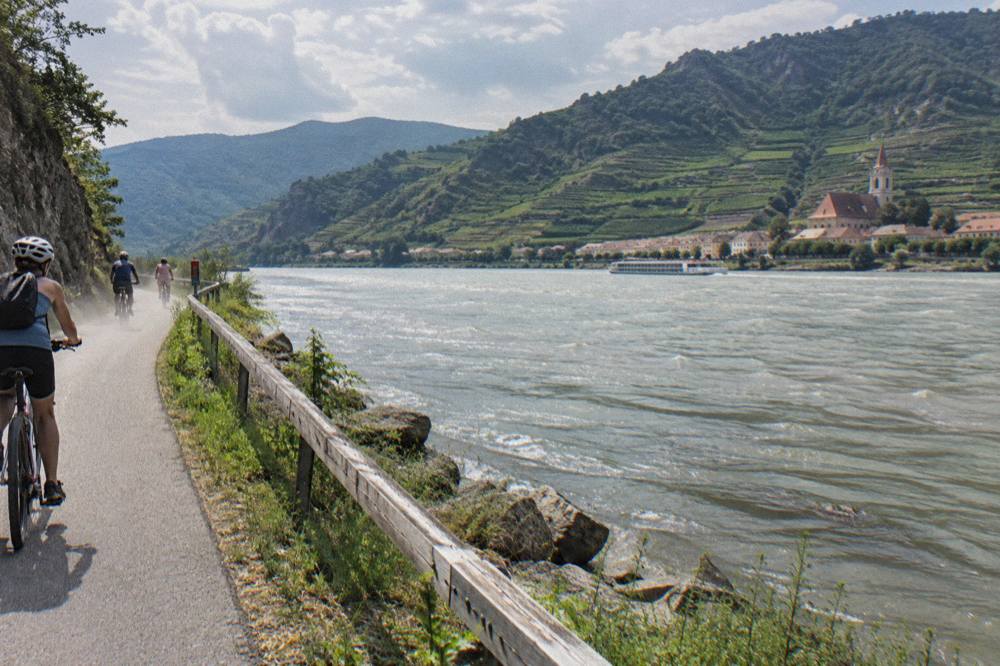
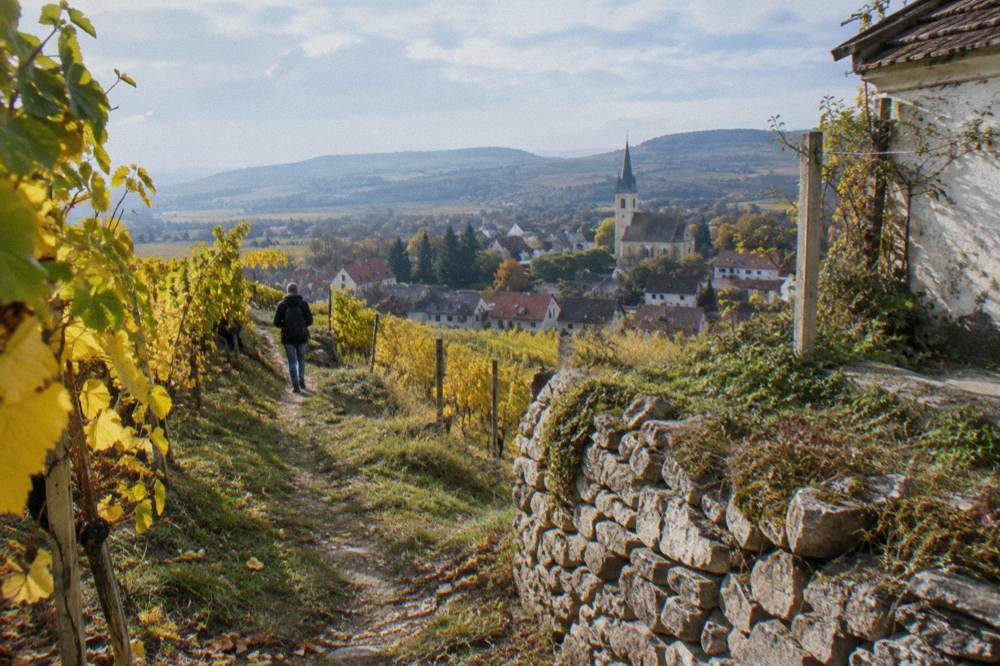
The Wachau is the Danube's most photogenic 40-odd kilometers: terraced vineyards, apricot orchards, abbey towns like Melk, and a roll-on roll-on ferry at Spitz that carries a bicycle with its rider for 4.70 EUR. It is close enough to Vienna to ride as a long day trip, which is exactly what the Wachau Valley Wine Tasting Bike Tour from Vienna does, a roughly 11-hour outing that pairs the riding with tastings. The Wachau Valley Wine Tasting Bike Tour from Vienna (check availability) is the simplest way to do it without planning ferries and train times yourself.
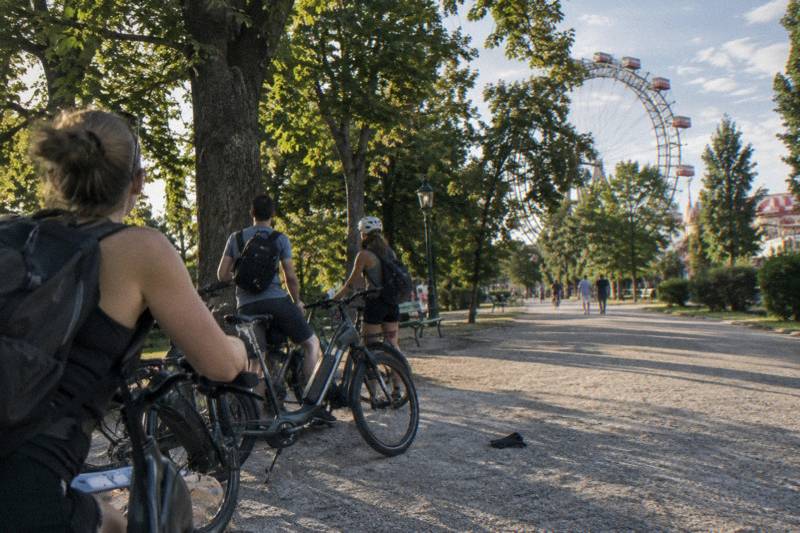
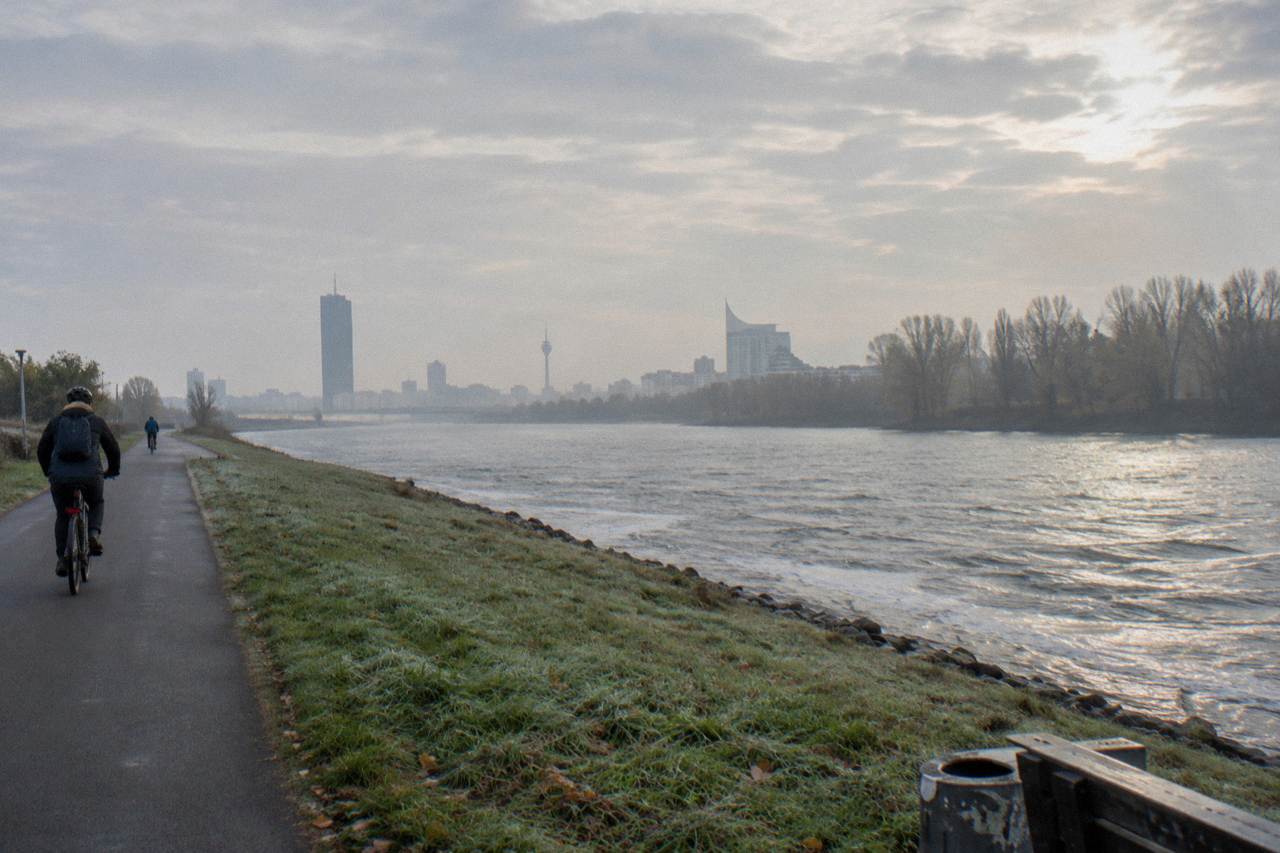
Vienna itself is a destination in its own right. Beyond the center, the Danube Island offers about 21 kilometers of paved cycling routes within a 135-kilometer path network, and the Prater gives riders car-free tree-lined avenues minutes from the old town. Our cycling the Prater and Donauinsel guide maps the options.
Alpine Austria is the third tier. Carinthia and Salzburgland offer lake circuits and valley routes with mountain backdrops, and Tyrol's Inn Valley runs a well-signed valley path that avoids the worst climbing. E-bikes have opened these regions to riders who would never have attempted them on a standard bike, and rental fleets reflect that shift.
| Region | Terrain | Best for | Character |
|---|---|---|---|
| Danube corridor (Passau to Vienna and beyond) | Flat riverside | First-time tourers | Long, signed, serviced |
| Wachau valley | Flat to gentle | Wine and scenery day trips | Vineyards, villages, ferries |
| Vienna and surroundings | Flat urban | City sightseeing, families | 1,811 km network, bike share |
| Salzburg and lake districts | Rolling to hilly | Leisure riders | Lakes, river paths |
| Tyrol and alpine valleys | Valley-flat with climbs | E-bikers, fit riders | Mountains, scenery |
How Cycling-Friendly Is Vienna As A Capital?
Very. Vienna runs about 1,811 kilometers of cycling network, is adding around 12.5 kilometers of new paths across 33 projects in 2026 under its Radweg-Offensive, and operates the WienMobil Rad bike-share system with more than 250 stations across all 23 districts. The city clears priority paths of snow in winter.
The infrastructure is not just long, it is being actively rebuilt for quality. Construction on the first section of the Ringstrasse redesign began on 5 October 2026 between Schottentor and Franz-Josefs-Kai, converting the service road into a 4.50 meter wide two-way cycle path with pedestrian areas separated out. A new two-way path on Obere Donaustrasse in Leopoldstadt opened in 2026, connecting the 2nd and 20th districts continuously, and the seven-kilometer Northern Cycling Highway via Praterstrasse and Lassallestrasse to Kagran was finished in 2025. You can read the city's own network figures on the Stadt Wien cycling statistics page.
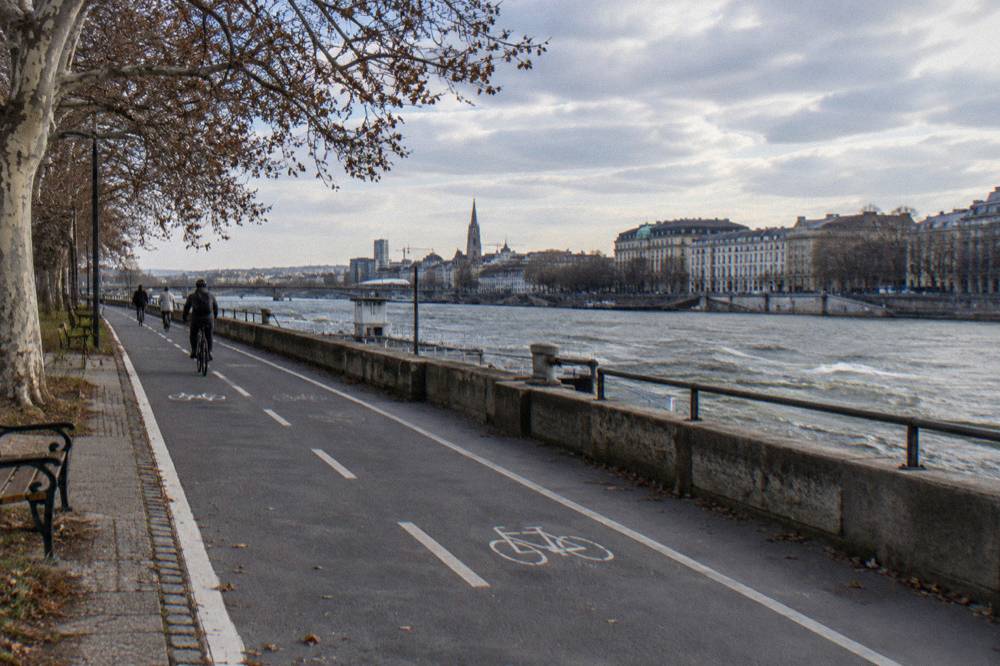
For visitors the friendliness is practical. Standard WienMobil Rad bikes cost 0.80 EUR per started 30 minutes, capped at 20 EUR per 24 hours, with e-bikes at 3.30 EUR per 30 minutes capped at 40 EUR. Riders with a Wiener Linien annual pass or KlimaTicket pay reduced rates. Bikes ride free on the U-Bahn in the permitted windows, weekdays 9:00 to 15:00 and after 18:30, plus all day on weekends and public holidays, though bikes must be pushed, never ridden, inside stations and escalators are off limits. Our bike share and city bikes in Vienna guide walks through the system.
The cycling culture shows up in the calendar too. Critical Mass rides leave Schwarzenbergplatz on the third Friday of each month, the Bike Festival with its RADpaRADe fills Rathausplatz in spring, and the Vienna City Marathon each April doubles as a reminder of how routinely the city hands its streets to human-powered movement.
If you would rather have someone else handle the bike, the route and the commentary, the Classic Vienna: 3-Hour Guided Bike Tour covers the core sights at a relaxed pace, and e-bike riders have a dedicated option in the Vienna: E-Bike Tour with Danube Island & Green Parks, which extends the standard city loop out to the island and its green corridors.
What Does The Danube Offer Cyclists?
The Danube offers Austria's easiest and most famous cycling: a flat, continuously signed riverside route linking Passau, Linz, Melk, Krems and Vienna, with ship and ferry connections that let you skip sections, including a Melk to Krems ship for 40 EUR one way and the Spitz roll-on ferry at 4.70 EUR with a bicycle.
The river is the reason Austria works for cycle touring at all. Water flows downhill, so riverside paths stay gentle, and the Danube's are wide, paved for most of the Austrian stretch, and punctuated with towns roughly every hour of riding. Accommodation, repairs and food sit along the whole corridor, which removes the two hardest parts of touring logistics.
The Wachau section, between Melk and Krems, is the highlight most riders remember. The DDSG ships run the valley through the season from late March to early November, so a tired rider can put the bike on board and cruise. The Spitz-Arnsdorf roll ferry crosses the river year-round daylight hours and is a beloved quirk of the route. If you are weighing the whole question of which stretch to prioritize, our piece on the best part of the Danube to cycle compares them.
Getting to the river from Vienna is simple. Trains toward Melk run every 30 minutes with an average journey time of about 51 minutes, and regional trains accept bikes outside weekday peak hours, so a one-way ride and a train back is a standard day plan. Our Wachau valley by bike from Vienna guide covers the planning in full.
When Is The Best Season To Cycle In Austria?
April through October is the core cycling season, with July and August warmest but busiest, spring and autumn quieter, and a long shoulder season on the Danube where ships run from late March to early November. Vienna winters stay rideable on cleared priority paths, and the Christmas market season brings its own slow-riding appeal.
Spring comes early to the Danube valley. The Wachau apricot blossom typically runs late March to early April, with the peak lasting ten days to three weeks, and it is the prettiest window in the whole region, vineyards frosted white and pink against the river. The harvest of those same apricots lands early to mid July in an average year.
Summer is peak season and, increasingly, hot. Vienna recorded its first 40-degree days and a record number of heat days in summer 2026, against a long-term July average of 21.9 degrees at Hohe Warte. Prudent summer riding shifts to mornings and riverside routes where shade and water are constant. The Danube Island, with its beaches and swimming access, is where Viennese riders go when the city bakes.
Autumn is arguably the best-kept secret. September and October bring stable weather, wine season in the Wachau, thinner crowds, and the river ships still running until early November. Even late in the year, the Christmas markets open the next cycling chapter: the Rathausplatz market runs from 13 November and the Schönbrunn market from 6 November 2026, and our Vienna in winter and Christmas market season guide explains how winter riding works when snow arrives.
What Rules Should Cyclists Know In Austria?
Children up to their 12th birthday must wear a helmet on any bicycle, and since 1 May 2026 the duty also covers children and youths under 14 on e-bikes; adults have no general helmet requirement, though wearing one is recommended. E-mopeds are banned from cycle paths since 1 October 2026.
A few rules shape a visitor's ride more than the rest. The helmet law matters for families: if you are riding with children in Austria, helmets are a legal requirement up to the 12th birthday, including in trailers. From age 14 there is no general duty, but the official advice at every level of government is to wear one at any age. Check the city's own rules for cyclists page for the current wording, and ask your tour operator about their helmet policy.
Bikes on public transport follow strict conditions. On the U-Bahn, both standard bikes and e-bikes travel free in the permitted windows, Mon-Fri 9:00-15:00 and from 18:30, plus all day on weekends and holidays, and must be pushed inside stations; only bikes with start-assist motors, cargo bikes and Segways are barred. Non-foldable bikes are not allowed on buses or trams at all. For tour riders this rarely matters, since operators supply the bike, but independent riders planning a train-assisted day should confirm bike carriage when buying tickets.
Two 2026 changes affect shared infrastructure. E-mopeds are now classified as motor vehicles and prohibited from bike paths, which has made cycle lanes calmer for pedal cyclists. And the Ringstrasse bike path is being rebuilt in stages, with the first section between Schottentor and Franz-Josefs-Kai under construction since early October 2026, so central routes shift as work advances; the city's diversion page is the reference. On wine rides, follow the operator and local rules on alcohol rather than any assumption about limits.
Should You Book A Guided Tour Or Ride Independently?
For a short visit, a guided tour usually wins: a 3-hour city tour costs from $53 per person with bike and guide included, and it removes route-finding, bike rental and rule-learning in one step. Independent riding pays off for longer stays, the Danube corridor, or riders confident with a map and the bike-share system.
The guided case is straightforward. Vienna's sights sit on a ring around a medieval core, and a guide compresses days of solo navigation into three hours, with the stories attached. The Classic Vienna: 3-Hour Guided Bike Tour is the archetype, and e-bike versions suit riders who want the same ground with less effort. For wine country, the Wachau Valley Wine Tasting Bike Tour from Vienna bundles a roughly 11-hour day, bikes included, tastings, and the logistics of getting 80 kilometers west and back.
The independent case is also real. Bike Tours Vienna exists because the city rewards riding it, and once you know the network you may prefer your own pace. A day rental in Vienna runs from around 35 EUR for a comfort bike at one Donauinsel rental shop, with e-bikes at 75 EUR for a 6 to 12 hour day at the same shop, and bike share covers shorter hops cheaply. Our rent a bike or join a guided ride in Vienna guide lays out the trade-offs, including when a tour is cheaper than it looks.
For the Danube and the Wachau, hybrid plans work well: ride one way, put the bike on the ship or train back. The Wachau-Ticket bundles the train from Vienna, the DDSG ship between Melk and Krems, and Melk Abbey entry, which suits riders who want the valley's highlights without carrying panniers. One Wachau rental in Spitz and Melk lists e-bikes at 38 EUR per day, though check availability in the harvest season when local demand peaks.
Whatever you choose, book the ride before you build the rest of the day around it: guided tours have set start times and the popular windows fill first, and the same is true of ship connections in the Wachau.
Common Questions About Cycling In Austria
Is Austria Good For Cycling?
Yes. Vienna alone maintains about 1,811 kilometers of cycling network, the flat Danube corridor crosses the entire country on signed riverside paths, and the city adds new separated infrastructure every year, around 12.5 kilometers across 33 projects in 2026. Between city rides, the Wachau wine valley and alpine e-bike routes, most riders find a level that fits.
When Is The Best Time Of Year To Cycle In Austria?
April through October is the core season. The Wachau apricot blossom peaks late March to early April, July and August are warmest but busiest and increasingly hot, and September and October bring wine season with thinner crowds. The Danube river ships run from late March to early November, and Vienna keeps priority bike paths cleared of snow through winter.
Do I Have To Wear A Helmet When Cycling In Austria?
Children up to their 12th birthday must wear a helmet on any bicycle, and since 1 May 2026 the duty also covers children and youths under 14 on e-bikes. From age 14 there is no general helmet requirement, but wearing one is officially recommended at every age. Tour operators set their own policies, so check the booking page.
Can I Take A Bike On Austrian Public Transport?
In Vienna, standard bikes ride free on the U-Bahn on weekdays from 9:00 to 15:00 and after 18:30, and all day on weekends and public holidays. Bikes must be pushed inside stations and escalators are prohibited. Bikes with start-assist, cargo bikes and similar are not carried, and non-foldable bikes are not allowed on trams or buses. For longer trains, confirm bike carriage with the operator.
Is The Danube Cycle Path In Austria Flat?
The Austrian Danube corridor is flat riverside riding for most of its length, continuously signed, and lined with towns at regular intervals. The Wachau section between Melk and Krems adds gentle undulation and the scenery most riders come for. Ship and ferry connections let you skip any section, with the Melk to Krems ship at 40 EUR one way.
How Much Does A Guided Bike Tour In Vienna Cost?
A 3-hour guided city bike tour in Vienna costs from $53 per person. Wine-country day trips run longer, roughly 11 hours for the Wachau tour from Vienna, and private tours are priced per group rather than per person, so check the basis on the booking page before comparing.