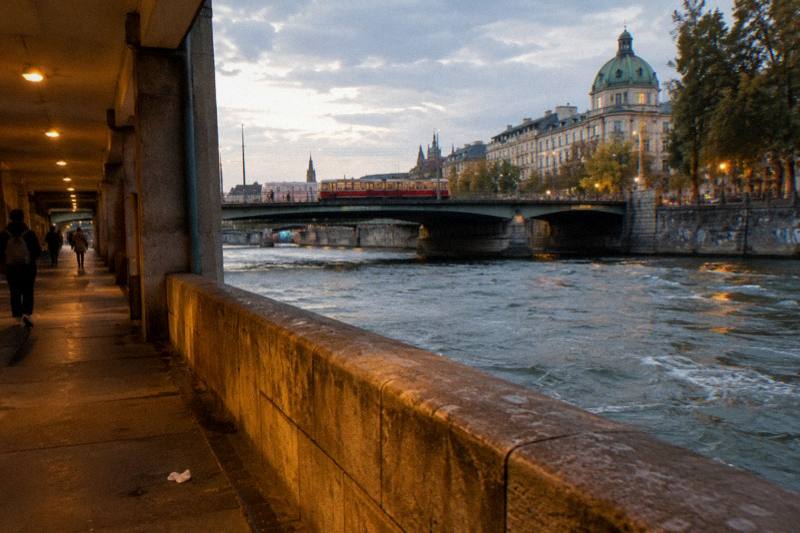
Bike Share And City Bikes In Vienna
Vienna's bike share system, WienMobil Rad, puts several thousand bikes and a growing pool of e-bikes at stations across all 23 districts. Here is what it costs, where the system works best, and when a guided ride does the job better.
Short answer
WienMobil Rad standard bikes cost 0.80 euros per started 30 minutes, capped at 20 euros per 24 hours; e-bikes cost 3.30 euros per started 30 minutes, capped at 40 euros. Stations sit in all 23 districts. For a first visit that covers the Ringstrasse, the Prater and stories behind the sights, a guided ride often beats self-guided short hops.
Vienna runs one of the most practical bike share systems in Central Europe. The old Citybike Wien scheme that long-time visitors remember is gone; it was replaced by WienMobil Rad, run by the city's transport operator Wiener Linien, and the network now reaches every one of the city's 23 districts. The city's own cycling page puts the fleet at about 3,000 bikes, while a more recent press report counts over 3,700 including several hundred e-bikes, so the honest summary is several thousand bikes and growing.
Bike share answers one specific question well: how do I cross the city centre cheaply, right now, without waiting for a tram? It does not answer a different question: how do I actually see and understand Vienna? That second job belongs to a guided ride, where a local guide, a route already planned and a bike already included do the work. This guide covers both, with real prices for the share system, the rules that catch visitors out, and an honest look at where each option wins. The comparison matters more than most visitors expect, because Vienna's cycling network, about 1,811 kilometers long, makes almost any short hop pleasant, which can tempt you into spending a day on logistics when a guide would have done it better. And if you want to swap city streets for a riverside route, our guide to cycling along the Danube shows exactly what that longer ride looks like.
What Is Bike Share In Vienna And How Does It Work?
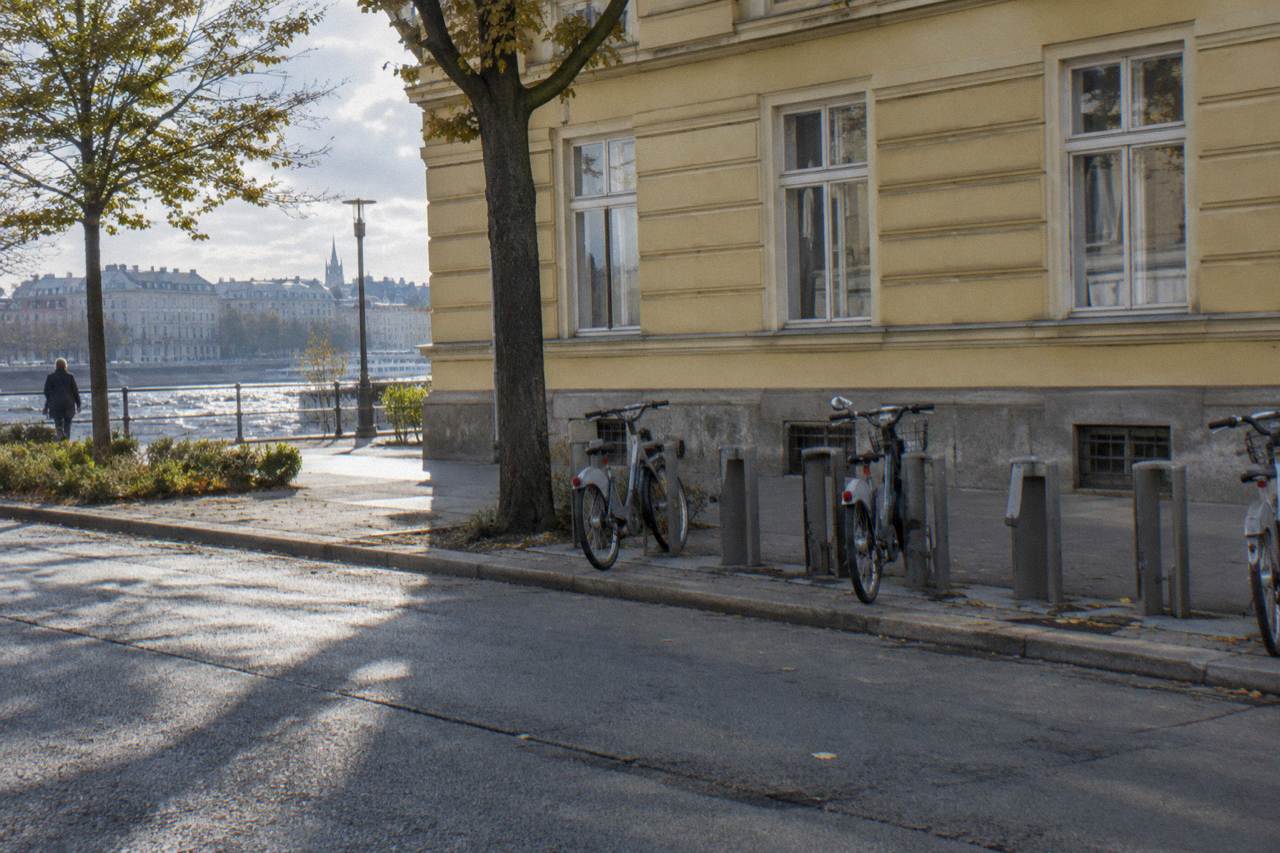
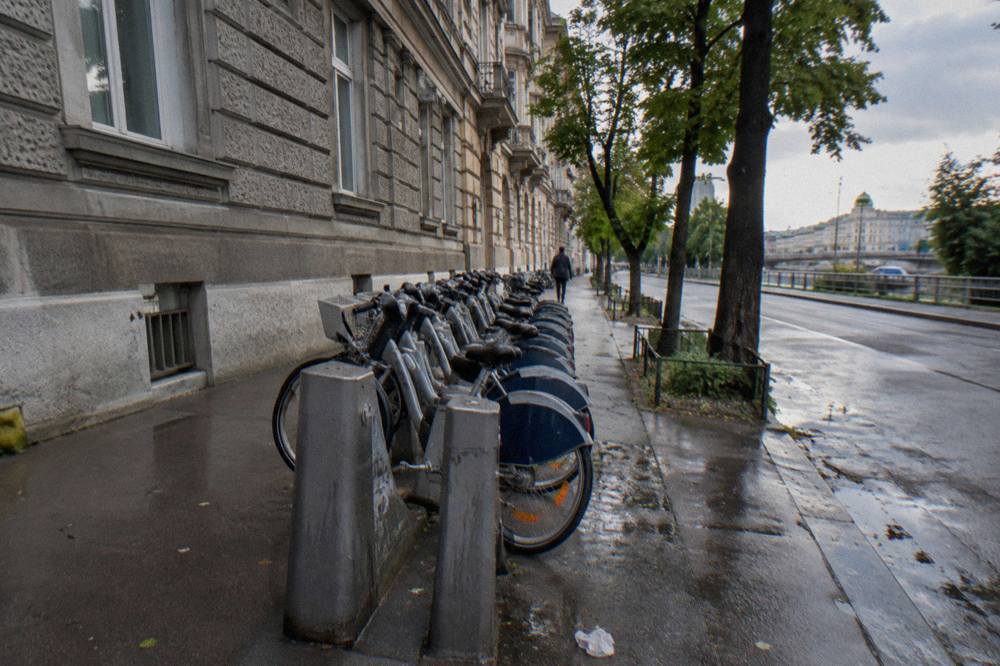
Bike share in Vienna means WienMobil Rad, the dock-based system operated by Wiener Linien across all 23 districts, with more than 250 stations holding several thousand bikes, including a few hundred e-bikes. You register, unlock a bike at a station, ride it, and return it to any station in the network. The old Citybike Wien name and system no longer exist.
Registration happens through the operator's app or website, and a ride is billed by the half hour. The mechanics are simple: find a station on the map, unlock a bike with the app, ride, then dock it at any station when you are done, at which point billing stops. Because the system is dock-based, you do not have to return a bike to where you started, which makes one-way trips across the centre genuinely useful, say from a hotel near the Ringstrasse to a museum in the Museumsquartier and back by tram on a day ticket.
The fleet has two tiers that matter for planning. Standard bikes are cheap and fine for flat, short hops; the city core between the Ringstrasse and the Danube Canal is almost entirely flat, so a standard bike covers most visitor itineraries. E-bikes, a smaller pool within the fleet, cost more per half hour but flatten the longer rides, for example out toward the Prater or up to the vineyards on the city's western edge. Stations are dense in the inner districts and thinner but present in the outer ones, per the city's own description of the network.
There is a catch worth stating plainly. A share bike is a tool, not a tour. Nobody tells you which Ringstrasse building you are passing, why the Danube Canal walls are worth stopping for, or where the best coffee break on the route sits. If your goal for a day in Vienna is understanding the city rather than merely moving through it, a classic guided ride fills the gap that no rental, docked or otherwise, can. If you would rather weigh all the rental options first, the companion page on whether to rent a bike or join a guided ride in Vienna breaks the decision down further.
How Much Does WienMobil Rad Cost Per Ride?
A standard WienMobil Rad bike costs 0.80 euros per started 30 minutes, capped at 20 euros in any 24 hours; an e-bike costs 3.30 euros per started 30 minutes, capped at 40 euros. Holders of a Wiener Linien annual pass or KlimaTicket pay a lower mix tariff of 0.37 euros per 30 minutes on standard bikes.
Those figures come from the operator's own price page, and the caps are the part most visitors miss. Billing is per started half hour, so a 31-minute ride costs two units; but the daily caps mean a full day of hopping on and off a standard bike never exceeds 20 euros, and the mix tariff caps at 10 euros per 24 hours for eligible pass holders. An annual subscription, 63 euros per year, includes the first 30 minutes of every trip free, which suits residents more than visitors.
For a visitor, the honest arithmetic looks like this: two or three short hops in a day on a standard bike, say 90 minutes of total riding time, costs under 5 euros. That is hard to beat with any other mode of transport, and it is faster than walking between sights inside the Ringstrasse. The e-bike tariff changes the maths at longer distances; three hours of e-bike riding reaches the cap, at which point a day rental from a shop, or a guided tour with a bike included, becomes the better structure.
| Option | Price | Cap | Best for |
|---|---|---|---|
| Standard bike, pay per ride | 0.80 EUR per started 30 min | 20 EUR per 24 h | Short hops inside the Ringstrasse |
| Standard bike, mix tariff (annual pass or KlimaTicket) | 0.37 EUR per started 30 min | 10 EUR per 24 h | Pass holders making many trips |
| E-bike, pay per ride | 3.30 EUR per started 30 min | 40 EUR per 24 h | Longer rides toward the Prater or the hills |
| E-bike, mix tariff | 2.30 EUR per started 30 min | Listed by the operator | Eligible pass holders |
| Annual subscription | 63 EUR per year | First 30 min free per trip | Residents and long stays |
Set that against the shop-rental alternative. One rental shop near the Danube Island lists a comfort bike at 35 euros for a 6 to 12 hour day and an e-bike at 75 euros for the same period; those are one shop's list prices, not a market average, but they show the pattern. Bike share wins on short hops, shops win when you want one bike all day with no docking pressure, and guided rides win when you want the bike, the route and the commentary bundled. For the bundled version, the three options below span that spread.
When Does An E-Bike On Bike Share Make Sense?
An e-bike from the share fleet makes sense when your ride leaves the flat core: climbing to the western vineyards, crossing to the Danube Island, or covering the Ringstrasse and the Prater in one loop. At 3.30 euros per started half hour it is roughly four times the standard tariff, so the payoff is distance and hills, not convenience.
The geography decides this for you. Everything inside the Ringstrasse and along the Danube Canal is flat, and a standard bike handles it without effort. The moment your route turns west toward the Vienna Woods or the hillside vineyards of the 19th district, or stretches into a long loop that pairs the city centre with the green spaces along the Danube, the motor earns its tariff. Riders who can hold a Wiener Linien annual pass or a KlimaTicket get the lower mix tariff, 2.30 euros per started 30 minutes on e-bikes, which softens the arithmetic further.
Battery and availability are the practical limits. The e-bike pool is a few hundred machines out of a fleet of several thousand, so on a busy weekend afternoon the nearest station may hold only standard bikes. There is no way to reserve a specific bike in a dock system, which is a genuine difference from a guided e-bike ride, where the operator brings a charged bike to a stated meeting point for every participant.
That difference is why the comparison is not only about price. A guided e-bike option such as the 3-hour e-bike tour of Danube Island and green parks removes both failure modes at once: the bike is there, charged, and the route across the island and the park belt is already chosen. Share e-bikes reward riders who are flexible about timing and route; guided rides reward riders who are not.
Where Can You Ride A City Bike In Vienna?
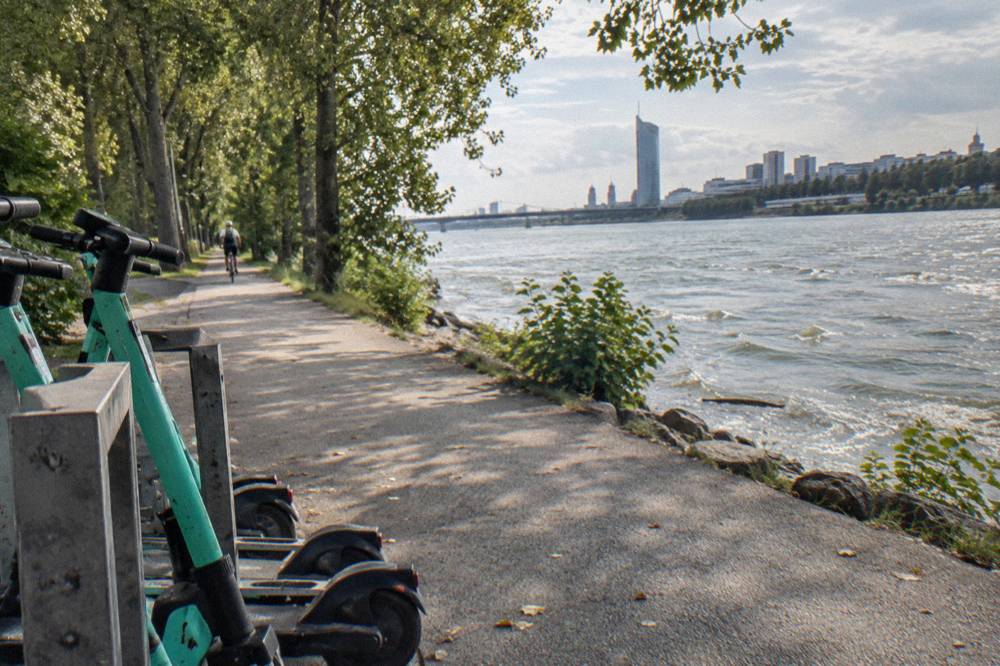
A city bike in Vienna reaches about 1,811 kilometers of cycling network, with the classic visitor loop running the Ringstrasse boulevard, out through the Prater, and along the Danube Canal or Danube Island. All three sit within an easy standard-bike ride of the centre, mostly on separated paths. If you're wondering how a full day of cycling fits into the rest of your visit, our guide to how many days Vienna really needs shows how to balance saddle time with the old town and a palace.
The Ringstrasse is the natural first ride and the one most visitors take. The boulevard circles the old city on the line of the former city walls, passing the State Opera, the Burgtheater, the Rathaus and the university in one loop. It is also the corridor under the most construction right now: the city began rebuilding the Ringstrasse bike path in stages in early October 2026, starting between Schottentor and Franz-Josefs-Kai, converting the service road into a 4.50 meter two-way cycle path, with the first phase targeted for summer 2027. Until the works finish, expect diversions on sections of the ring and check the city's diversion page before you ride. The full route background, stop by stop, sits in the cycling the Ringstrasse route guide.
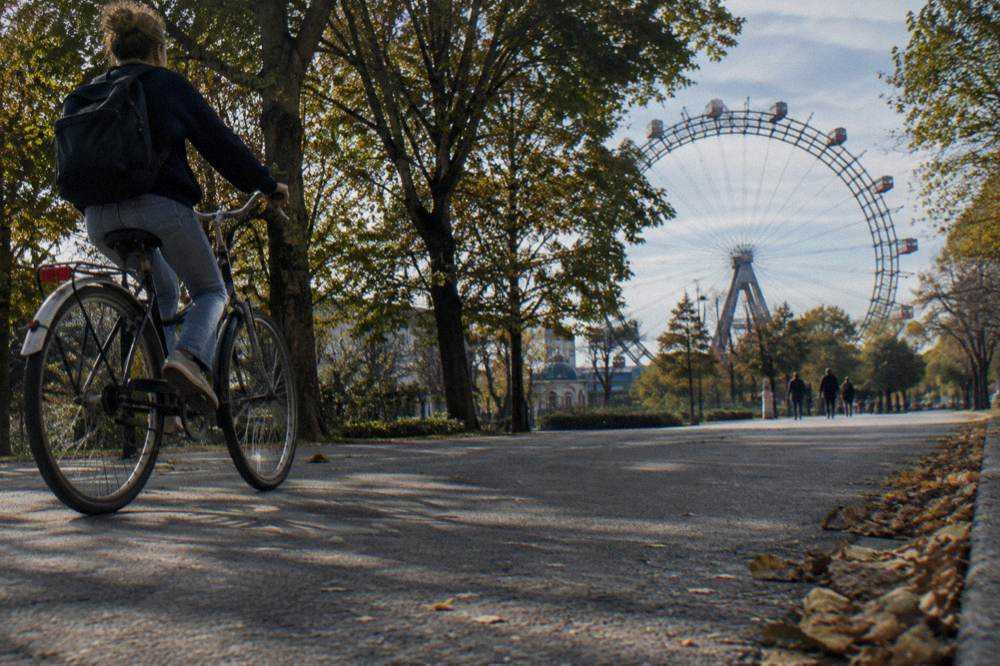
The Prater, east of the centre, is the other easy win: a huge public park with the Riesenrad ferris wheel at its entrance and long straight tree-lined avenues that are a pleasure at any pace. The Danube Island adds a third layer, about 21 kilometers of paved cycling routes inside a 135 kilometer path network on the island, though note the section of the main path between Nordbruecke and Floridsdorfer Bruecke stays closed for water works until 2030, with riders diverted via the Neue Donau path. None of these need a motor; all of them are better with someone explaining what you are looking at.
| Route | Terrain | Bike that fits | Watch out for |
|---|---|---|---|
| Ringstrasse loop | Flat, boulevard riding | Standard bike or e-bike | Staged path rebuild into 2027, diversions in place |
| Prater avenues | Flat, long straight lines | Standard bike | Weekend pedestrian traffic on main alley |
| Danube Island paths | Flat, about 21 km paved routes | Standard bike or e-bike | Closed main-path section until 2030, diverted via Neue Donau |
| Danube Canal | Flat, riverside | Standard bike | Shared sections with pedestrians at busy times |
| Western vineyards and Vienna Woods | Climbing | E-bike strongly advised | Fewer docks the further west you go |
Bike Share Or A Guided Ride: Which Fits Your Day?
Bike share fits short, self-directed hops inside the flat core at under 5 euros for 90 minutes of riding. A guided ride fits a first visit, a fixed half day, or any trip where you want the Ringstrasse, hidden courtyards and the stories behind them delivered in one structured loop with a bike and helmet included.
The decision turns on what your day is for. If you already know Vienna, or you are pinballing between a museum, a cafe and a shop, a share bike is close to free and always waiting. If the day is one of your few in the city and you want to leave it understanding the place, the guided format compresses hours of route-planning and guesswork into a single loop. A 3-hour classic guided ride through the centre covers the headline sights with a guide narrating; a shorter 1.5-hour e-bike option suits a tight schedule; and a longer highlights ride fills a half day. Whichever format you pick, the riverside is the stretch most riders underestimate, so read our guide to whether the Danube in Vienna deserves your time before you plan the route.
| Format | Time commitment | Bike included | Guidance | Typical rider |
|---|---|---|---|---|
| WienMobil Rad standard bike | Any, billed per 30 min | No, pay per ride | None | Confident repeat visitors |
| WienMobil Rad e-bike | Any, capped daily | No, pay per ride | None | Riders heading to hills or the island |
| Classic guided bike ride, 3 hours | Half day | Yes | Live guide | First-time visitors |
| Short guided e-bike ride, 1.5 hours | Under 2 hours | Yes | Live guide | Tight schedules |
Families and groups tilt the table further toward guided or private options. Share bikes are sized for adults, children's bikes are not part of the fleet, and a group of five riders hunting for five free docks at the same station in July is a real frustration. A customizable private bike tour sidesteps all of it, with the route shaped around your group; the family angle is covered in more detail in the guide to cycling in Vienna with kids.
What Rules Catch Riders Out In Vienna?
Three rules catch visitors: children under 12 must wear a helmet on any bike, and since May 2026 riders under 14 must wear one on e-bikes; non-foldable bikes are banned from trams and buses; and on the U-Bahn, bikes ride only in set hours, pushed not ridden, with no escalators. E-mopeds are banned from cycle paths since October 2026.
The helmet law is the one that matters for families. Children up to their 12th birthday must wear a helmet on any bicycle, including as passengers in trailers or child seats; there is no general helmet duty from age 14, though helmets are recommended at every age. A recent rule change extends the duty to children and youths under 14 riding e-bikes, effective 1 May 2026, per the city's traffic rules page; check with your tour operator or rental shop about what they provide for children, since provision varies.
Public transport carriage is the other trap. Standard bicycles may be carried on the U-Bahn free of charge on weekdays between 9:00 and 15:00 and after 18:30, and all day on weekends and public holidays; inside stations bikes must be pushed, escalators are off limits, and a maximum of two bikes per entry area applies, with wheelchairs and prams having priority. Standard bikes and ordinary e-bikes are carried on the U-Bahn in the permitted hours, pushed not ridden. Only start-assist, cargo and transport bikes are barred under the conditions of carriage. Trams and buses do not take non-foldable bikes at all. The full background is in the cycling rules and safety guide.
One more change reshapes the paths themselves: since 1 October 2026, e-mopeds are classified as motor vehicles and prohibited from bike paths, which quietly makes Vienna's cycle network calmer for actual cyclists. The city also prioritises winter clearing of central high-traffic bike paths and publishes a downloadable plan of which routes stay rideable through the cold months, worth a look if a December trip is on your mind.
How Do Seasons Change The Bike Share Decision?
Bike share works from spring through autumn and stays usable in winter on the city's cleared central paths, but the seasons change the ride itself: summer 2026 brought record heat to Vienna, and the Christmas market season from mid-November crowds the Ringstrasse with pedestrians, making early mornings and guided off-peak routes the smarter choice.
Vienna's climate is kind to cyclists for most of the year, with a long-term July average of 21.9 degrees at the Hohe Warte station. That average hides the recent reality: the summer of 2026 delivered the city's first 40-degree days and a record number of heat days. In hot spells, plan rides before late morning, lean toward the shaded Prater avenues and the Danube Island breeze, and treat the e-bike tier as a way to arrive at the swimming areas less cooked. Water fountains and shade are easier to find on the island than inside the dense core.
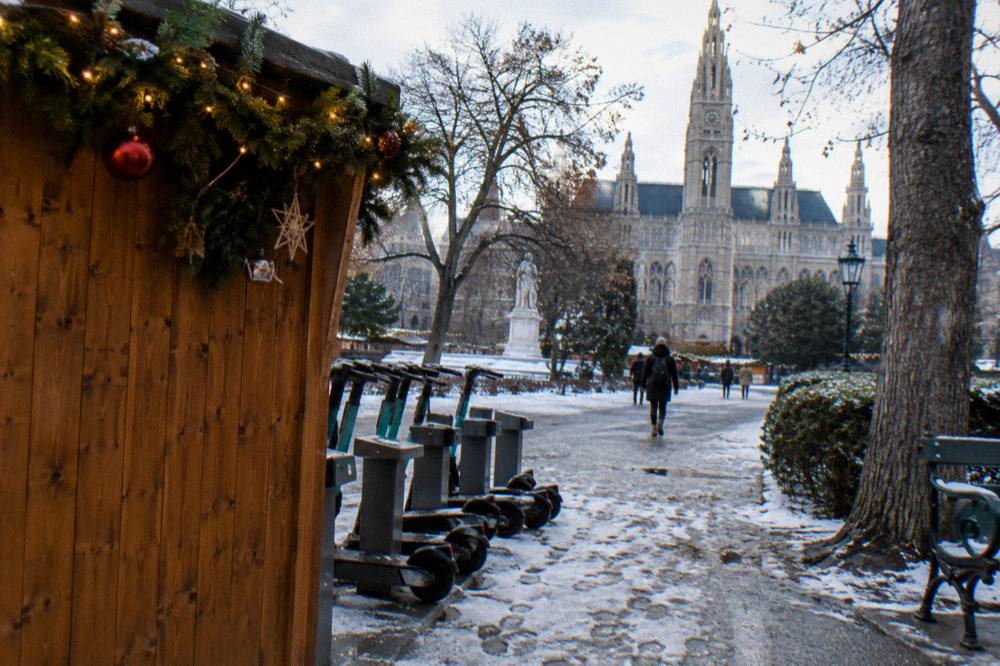
The winter period flips the priorities. The Wiener Christkindlmarkt on Rathausplatz opens 13 November and runs to 26 December 2026, and the market at Schoenbrunn opens 6 November, so from mid-November the Ringstrasse and its squares fill with stalls and foot traffic, shrinking the comfortable cycling space around the Rathauspark. Share bikes keep running, and the city clears its high-traffic central paths of snow first, but a winter visit pairs better with a guided ride whose guide routes around the crowds than with improvised dock-to-dock hops. The winter picture, market by market, is covered in the Vienna in winter and Christmas market season guide.

Whichever way the season points you, the structure of the decision does not change. Bike Tours Vienna exists because the guided format solves problems that docks cannot: a guaranteed bike, a route tuned to the weather and the crowds, and a local voice between your ears. Use the share fleet for the in-between hours, the trip back to the hotel, the dash across town when the tram is slow. Use a guide for the day you actually want to remember.
For that day, these are the three rides that pair best with a bike-share trip: the 3-hour classic loop for the full centre, the city highlights ride as the same-family alternative, and the short e-bike option as the price-and-time contrast.
Common Questions About Bike Share In Vienna
What Is Bike Share In Vienna Called?
WienMobil Rad, operated by Wiener Linien, the city's transport operator. The previous Citybike Wien system ended and was replaced by WienMobil Rad, with stations in all 23 districts and a fleet the city describes at about 3,000 bikes.
How Much Does A Vienna City Bike Rental From The Share System Cost?
A standard bike costs 0.80 euros per started 30 minutes, capped at 20 euros per 24 hours. E-bikes cost 3.30 euros per started 30 minutes, capped at 40 euros. Holders of a Wiener Linien annual pass or KlimaTicket pay a lower mix tariff.
Can I Take A Share Bike On The U-Bahn?
Standard bikes ride free on the U-Bahn on weekdays between 9:00 and 15:00 and after 18:30, and all day on weekends and public holidays, pushed not ridden and never on escalators. Bikes with start-assist motors are prohibited under the operator's conditions of carriage, and non-foldable bikes are not allowed on trams or buses at all.
Do Children Need A Helmet On A Bike In Vienna?
Yes. Children up to their 12th birthday must wear a helmet on any bicycle, including as passengers. Since 1 May 2026, riders under 14 must also wear a helmet on e-bikes. There is no general helmet duty from age 14, though helmets are recommended for everyone.
Is Bike Share Cheaper Than A Guided Bike Ride?
For short hops, yes: 90 minutes of standard-bike riding costs under 5 euros. For a full day or a first visit, the comparison flattens, because the standard-bike daily cap is 20 euros while a guided 3-hour ride includes the bike, the route and a guide. Check the operator's listing for current tour pricing.
Where Does Bike Share Work Best In Vienna?
Inside and just outside the Ringstrasse, where stations are dense and the terrain is flat, and on one-way trips across the centre. Longer loops toward the Prater, the Danube Island or the western vineyards suit e-bikes or a guided ride better.