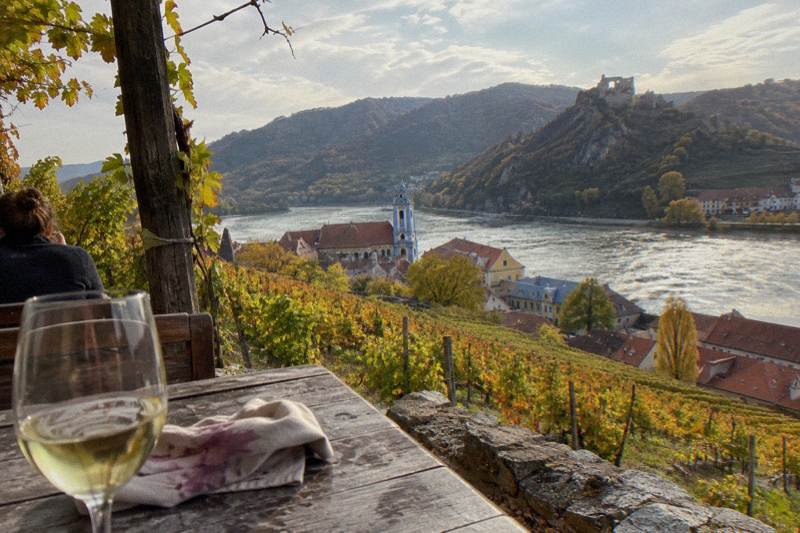
Wachau Valley By Bike From Vienna
The Wachau is the stretch of the Danube that Vienna locals save for a day off: terraced vineyards, apricot orchards, abbey towers and a river that does the route-finding for you. Here is how to build the day, by bike, starting from a Vienna train platform.
Short answer
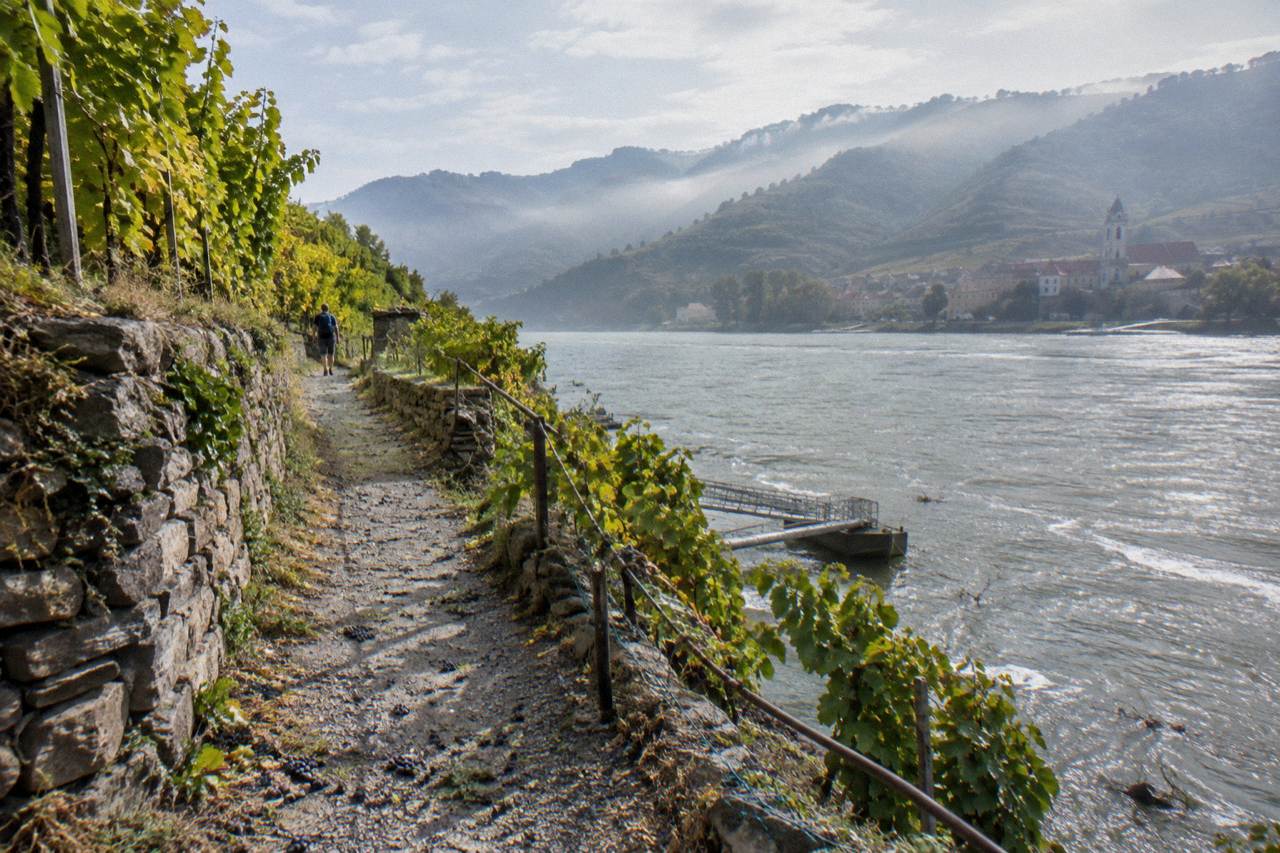
Trains from Vienna reach Melk in about 51 minutes and run roughly every 30 minutes, so the valley is an easy day trip. The classic ride is about 36 km between Krems and Melk on mostly flat riverside paths, with a roll ferry at Spitz charging 4.70 EUR for a bicycle with rider. E-bikes make the vineyard detours painless.
The Wachau Valley is the 36-or-so kilometres of the Danube between Krems and Melk where the river narrows, the vineyards climb terraced hillsides, and every second village has an apricot product it is quietly proud of. Vienna sits close enough that this is a genuine day trip: a train in the morning, a riverside ride at your own pace, and a train home in the evening. This guide lays out how the day fits together, what the route and the ferries actually involve, and where a guided tour earns its fee. And if you want to know why people rave about the apricots, the Riesling, and the riverside villages along the way, this guide to what the Wachau Valley is famous for has the answers.
The decision most readers face is simple. Either you assemble the day yourself, train ticket plus rental bike plus a rough plan, or you book a guided wine-tasting bike tour that departs Vienna and handles every moving part. Both work. The self-made version gives you freedom on timing; the guided version gives you a route someone else has already debugged, plus a cellar visit you did not have to negotiate in German. For the full apricot-and-abey picture, see our longer Wachau wine and apricot country ride companion piece.
How Do You Get From Vienna To The Wachau Valley?
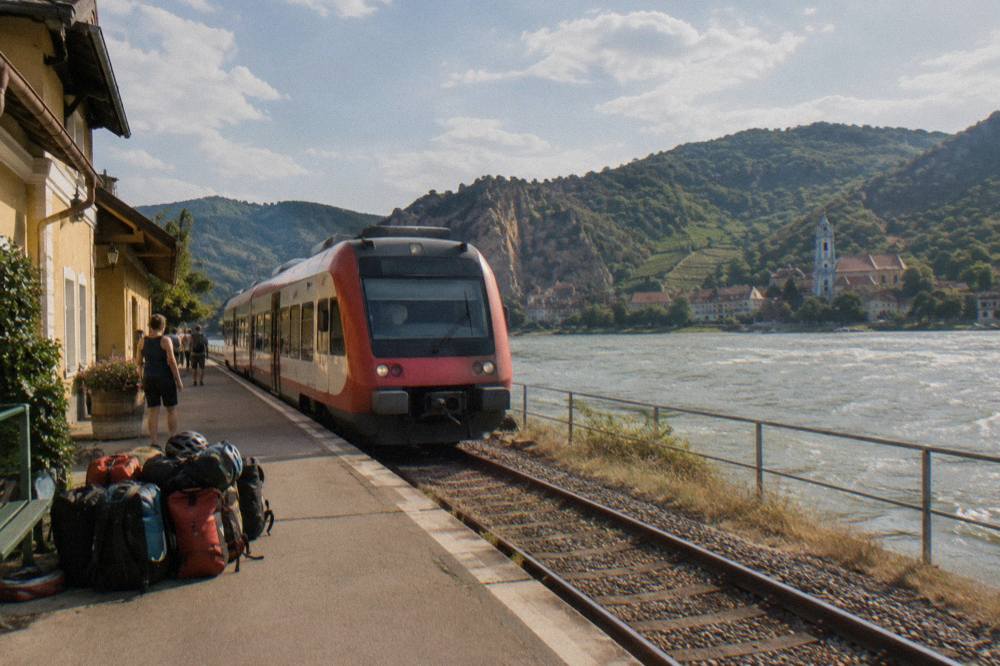
The practical answer is the train: Vienna to Melk Bahnhof runs roughly every 30 minutes with an average journey time of about 51 minutes, and Krems is served by regional trains on the other end of the valley. Ride the valley one way, Melk to Krems or the reverse, and take the train back from wherever you finish. The whole transfer, door to dock, costs less than a Vienna dinner.
Most riders start at one abbey and finish at the other. Melk, upstream, is the baroque landmark with the famous abbey towering over the river; Krems, downstream, is the old wine town with the better rail connections back toward Vienna. Because the trains run so frequently on the Vienna to Melk leg, the Melk start is the more forgiving one: if you miss a connection you have not lost the day, you have lost half an hour.
Direction matters less than people assume. The river gradient in the Wachau is gentle, and the prevailing thinking among cycle tourists is that downstream, Melk toward Krems, feels marginally easier, but neither direction is a grind. What actually shapes the day is where you put the hills: the flat riverside path hugs the Danube the whole way, while the vineyard-side detours, the ones with the views and the cellar doors, are where the climbing lives. Riders who want the views without the effort rent e-bikes, and the rental shops in Krems and Spitz know exactly why. If the Wachau is just one leg of a longer trip, the Danube Cycle Path from Passau to Vienna planning guide covers how to string the flat riverside days together all the way into the city.
The options for the transfer stack up like this:
| Way in | Travel time | Notes |
|---|---|---|
| Train, Vienna to Melk Bahnhof | About 51 minutes average | Roughly every 30 minutes; the most forgiving start |
| Train, Vienna to Krems | Regional connection | Better return links toward Vienna; best for downstream-start doubters |
| Wachau-Ticket combo | Train plus ship plus abbey | ÖBB train from Vienna, DDSG ship Melk-Krems or reverse, Melk Abbey entry |
| Guided tour transfer | Included in the day | The wine-tasting bike tour from Vienna handles transport, roughly 11 hours total |
Two practical notes on tickets. First, bikes travel on ÖBB regional trains but the bike fare and reservation rules vary by train type, so check with the operator before you assume your rental bike rolls on for free. Second, if you would rather not assemble the day at all, there is a combined Wachau-Ticket that bundles the ÖBB train from Vienna, a DDSG ship between Melk and Krems in one direction, and Melk Abbey entry, a sensible option if you want to ride one way and float the other. The DDSG Blue Danube Wachau shipping page carries the current sailing days.
What Does The Wachau Bike Route Actually Look Like?
The core route is about 36 km between Krems and Melk, mostly on flat, dedicated riverside cycle paths with short on-road sections through the villages. The memorable stops, in whichever direction you ride, are Melk Abbey, the wine villages of Spitz and Weissenkirchen, the ruined fortress of Aggstein's ridge line above the river, and the old lanes of Krems itself. Most riders finish in four to five unhurried hours. If you're thinking of extending the ride beyond the valley, our guide to cycling times along the Danube route helps you sketch a realistic schedule.
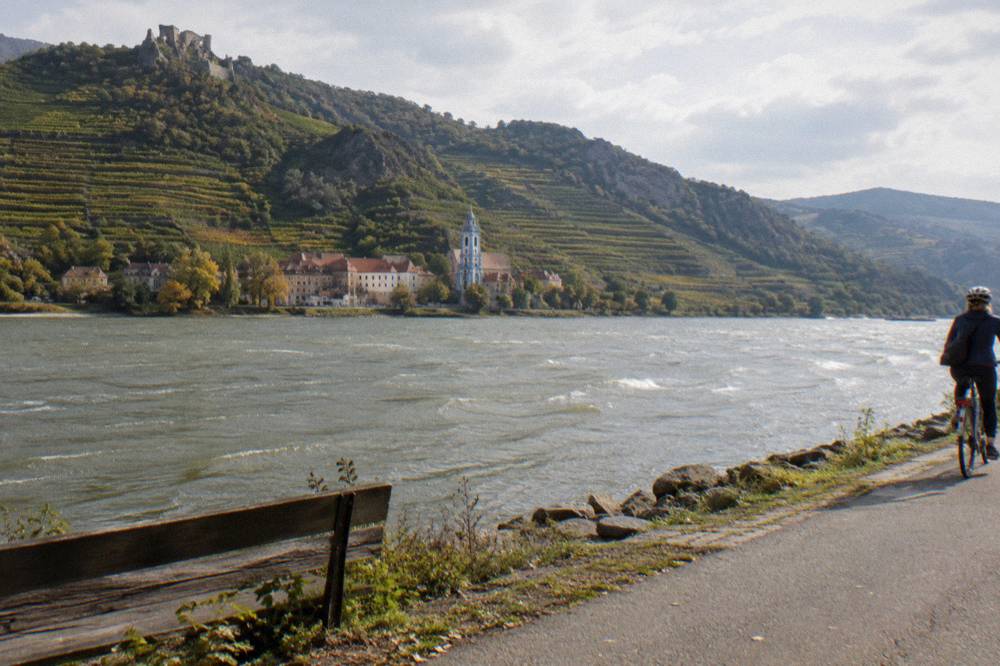
The path stays close to the water for almost the whole distance, which is why this ride appears on so many Danube itineraries: you never have to find your own way, you just follow the river. Traffic is a mix of long-distance cycle tourists rolling the Danube Cycle Path, day trippers on rentals, and local cyclists threading between villages. In the villages the route dips onto quiet streets, past cellar doors and apricot farm shops, and this is where the day slows down in the best way.
The ferry hop in the middle is a small pleasure worth planning around. The Spitz-Arnsdorf roll ferry crosses the Danube between March and October, running Monday to Friday from 06:15 to 19:00 and weekends from 08:15, and it charges 4.70 EUR for a bicycle including rider, 3.10 EUR for a foot passenger. The crossing takes minutes and connects the north-bank path with the south side, where some of the quieter stretches and the Aggstein ruin access sit. If your guidebook is a few years old, re-check the schedule: seasonal services like this shift their hours, and the Spitz-Arnsdorf ferry page posts the current operating window.
One thing this route is not: a wilderness ride. The Wachau is a cultivated, lived-in valley, a UNESCO cultural landscape precisely because people have been terracing these hillsides for centuries of wine and apricots. You are riding through a working landscape with taverns in it, which is arguably the point.

E-Bike Or Classic Bike For The Wachau?
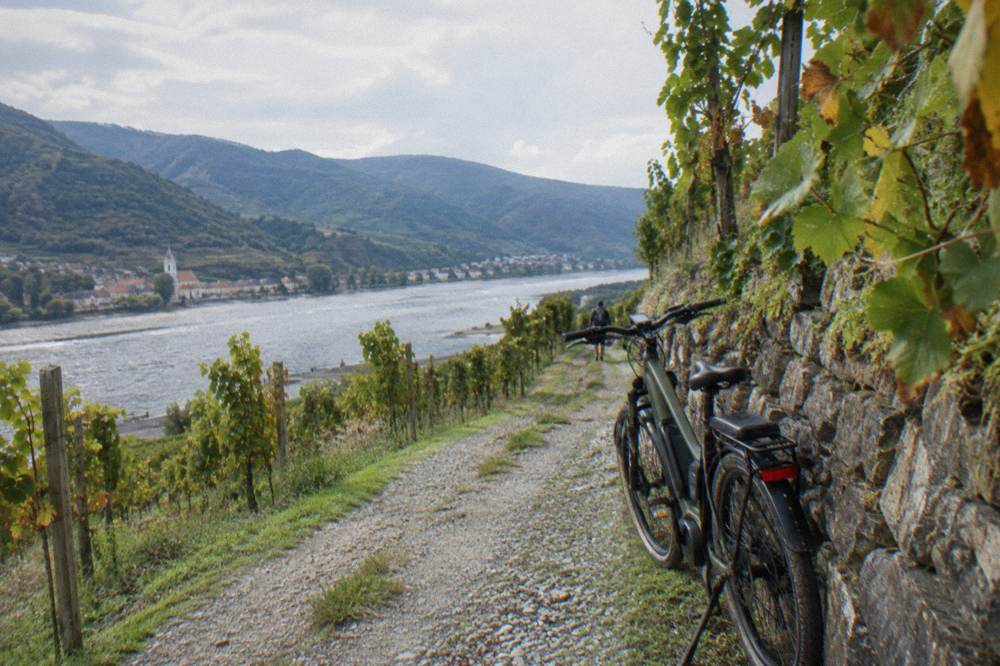
For the flat 36 km riverside line, a classic bike is completely enough and most riders are glad of the exercise. Rent an e-bike if you plan to climb into the vineyards, visit Aggstein, or stack several cellar stops into one day, since the terraces are where every metre of elevation in this valley lives. E-bike day rental in the valley runs about 38 EUR at one Spitz and Melk shop.
The honest trade-off is energy management. The riverside path is so gentle that an e-bike there can feel like wearing a lifejacket in a paddling pool. But the Wachau's best material is uphill of the river: the viewpoints, the small producers, the Fortress trail. Riders on e-bikes do the valley differently, more detours, more stops, a longer lunch, and consistently report being happier at kilometre 30. Riders on classic bikes get a satisfying tiredness and a stronger claim on the dessert wine.
Rental pricing in the valley gives you a sense of the spread. One Wachau operator lists e-bikes at 38 EUR per day; a Danube Island shop back in Vienna lists comfort bikes at 35 EUR and e-bikes at 75 EUR for a six-to-twelve-hour day. Treat these as individual shop prices, not a market average, and book ahead in the apricot blossom weeks and harvest season, when the small fleets go fast. The Vienna side of that comparison, renting in the city versus renting in the valley, is covered in our rent or join a guided ride guide.
What Does A Guided Wachau Bike Tour From Vienna Include?
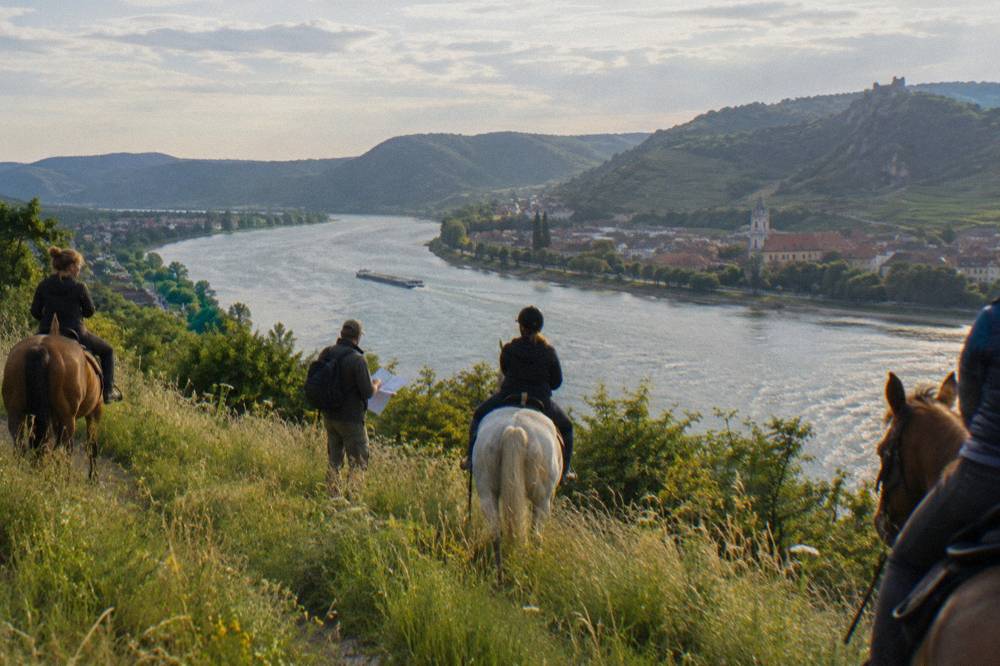
The bookable guided option is a Wachau Valley wine-tasting bike tour departing Vienna that runs roughly 11 hours door to door, combining transport from the city, the ride through the valley, and wine tasting along the way. It suits travellers who want the Wachau without the train schedules, rental counters and cellar-door logistics. Price and current inclusions are on the tour's booking page.
That 11-hour figure is the number that surprises people, and it should: this is a full-day commitment, not a half-day excursion. The tour bus or transfer out of Vienna, the ride itself, tasting stops, and the return add up. What you buy with a guided day is the removal of every decision point, which matters more in wine country than almost anywhere else, because the person who is not picking the route and not driving home is the person who enjoys the Grüner Veltliner properly. The rest of the planning pages sit on Bike Tours Vienna.
The trade-offs are the usual ones for guided rides. You move at the group's pace, you stop where the itinerary stops, and you see a curated Wachau rather than your own. Solo trippers and the time-poor tend to come out ahead; stubborn improvisers tend to prefer the self-assembled day described above. If Vienna itself is your real focus and the Wachau is a maybe, an in-city alternative is the Danube-side wine culture e-bike tour, a roughly four-hour ride that touches river and vine themes without leaving the capital, or read what the Wachau Valley is famous for before deciding whether the day trip is worth it to you at all.
For riders who like the guided idea but want a private format, there is also a private gravel bike tour from Vienna that reaches castles and wine country in a full day. Its review count is still modest, so judge it on the itinerary rather than a rating, and check its booking page for price and dates.
When Is The Best Season To Ride The Wachau?
The sweet spots are late April to early June and September to early October, when the weather is settled, the vineyards are at their best, and the ships and ferries are running. Apricot blossom typically peaks for only 10 days to 3 weeks between late March and early April; harvest lands in early to mid-July; and the Danube ship season closes in early November, which caps the ride-and-float combinations.
Blossom season is the valley's famous fortnight and the most crowded, most photogenic time to go. The exact peak shifts with the spring, so if the blossom is your reason for the trip, watch the local reports rather than the calendar and treat the whole late-March window as provisional. September is the connoisseur's pick: harvest build-up in the vineyards, warm water-side lunches, and the light that photographers keep coming back for.
The ship timetable is the quiet constraint on autumn plans. The DDSG Wachau season runs to 1 November, with the main sailing period between late April and early October, so a ride-one-way, sail-the-other day stops being possible after that date even though the bike paths themselves stay open all year. A Krems to Melk one-way ship ticket is 40 EUR, 49 EUR return, if you want the floating half of the day. Winter riding in the valley is possible on mild days, but you lose the ferries, most taverns shorten hours, and the terraces are bare; our Vienna winter and Christmas market cycling piece is the better use of a cold-weather bike day.
Season timing inside Vienna matters too, since your day starts there. The details are in the best month to cycle in Vienna, but the short version: avoid stacking a Wachau day onto a July heatwave week, Vienna recorded its first 40-degree days in the summer of 2026, and the valley offers less shade than you would guess from the photos.
Here is how the valley's year runs, roughly:
| Period | What is happening | Ride notes |
|---|---|---|
| Late March to early April | Apricot blossom, peak lasts 10 days to 3 weeks | Photogenic and busy; ferries running, book rentals early |
| Late April to early June | Settled weather, main ship season under way | One of the two sweet spots |
| Early to mid-July | Apricot harvest | Valley at its most productive; also peak heat risk |
| September to early October | Harvest build-up in the vineyards, main sailing to 4 October | The connoisseur's window |
| Early November | Danube ship season closes 1 November | Riding still possible; ride-and-float combinations end |
| Winter | Ferries stopped, tavern hours shortened, bare terraces | Mild-day riding only; better ideas exist in Vienna |
What Will A Wachau Bike Day Trip Cost?
A self-assembled day runs the train fare both ways plus roughly 38 EUR for a valley e-bike day rental, plus 4.70 EUR for the ferry and whatever you spend in the taverns. A guided wine-tasting bike tour replaces all of that with one price on the booking page. Budget from about 60 EUR per person for the lean self-made day, before wine.
The table below puts the pieces side by side. Figures are what the named sources list, not averages; train fares depend on the connection and any regional cards, so treat the rail line as the variable to check on the day.
| Cost item | Typical figure | Basis and source |
|---|---|---|
| Train, Vienna to Melk | About 51 min journey | Regional trains, roughly every 30 minutes; fare varies by connection |
| E-bike rental, Spitz or Melk | 38 EUR per day | One Wachau rental operator's listed price |
| Spitz-Arnsdorf ferry | 4.70 EUR | Bicycle including rider, foot passenger 3.10 EUR |
| Ship, Krems to Melk | 40 EUR one way, 49 EUR return | 2026 DDSG season pricing |
| Guided wine-tasting bike tour from Vienna | Price on the booking page | Roughly 11 hours, bikes and tasting per the tour description |
| Vienna City Card (if staying on) | 19 EUR for 24 hours | Core-zone transport plus attraction discounts |
Two ways to trim the budget. Skip the ship and ride both directions of a shorter valley segment, Krems to Spitz and back is a satisfying half-loop with the ferry making it a circuit. Or start from Krems rather than Melk and simply ride as far as lunch takes you; nothing about this valley obliges you to reach the far abbey.
How Do You Put The Whole Day Together?
A reliable shape for the day: take a morning train to Melk, give the abbey the first hour, ride the 36 km downstream at leisure with a ferry hop and one long tavern lunch, finish in Krems mid-to-late afternoon, and take a regional train back to Vienna in time for dinner. Build in one buffer hour for a cellar stop you did not plan, because in the Wachau you always make one.
The most common mistake is over-scheduling. Riders who book a specific return train at a specific minute end up skipping the very stops they came for. Book the day flexibly instead: the frequent Melk-side trains mean the return from Krems is rarely a problem, and the valley's whole appeal is that it rewards stopping. Work out your clothing and packing from our what to wear and bring on a Vienna bike ride checklist; the valley is a degree or two warmer than Vienna in summer and the riverside wind is real.
A sample timeline for the classic Melk-to-Krems day:
| Time of day | What you are doing |
|---|---|
| Early morning | Train from Vienna to Melk Bahnhof, about 51 minutes |
| Mid morning | Melk Abbey visit, then pick up bikes or set off on your own |
| Around noon | Riverside riding through Spitz, ferry hop, long tavern lunch |
| Mid afternoon | Weissenkirchen and the vineyard detours, or the straight river line |
| Late afternoon | Arrive Krems, wander the old lanes, return train to Vienna |
| Evening | Back in Vienna in time for dinner, pleasantly tired |
If you would rather compare this day trip against a longer river project, the Danube Cycle Path from Passau ends in Vienna and passes straight through the Wachau, so a taste of the valley often becomes the reason people book the full route later. Our Passau to Vienna Danube cycle path guide covers that bigger version.
And if the Wachau day confirmed that you like wine on two wheels, Vienna itself has an in-city version: a roughly four-hour wine-tasting e-bike tour that reaches the vineyard hills on the capital's own edge, no train required.
For the classic question of whether Krems itself deserves more than a train platform, is Krems worth visiting? has the honest answer, and it is usually yes.
Common Questions About A Wachau Bike Day Trip
How Do You Get From Vienna To The Wachau Valley For A Bike Ride?
Take the train. Vienna to Melk Bahnhof connections run roughly every 30 minutes with an average journey time of about 51 minutes, and Krems is served by regional trains at the other end of the valley. Most riders train to one abbey town, ride the roughly 36 km valley route, and train back from the other.
Is The Wachau Bike Route Flat?
The riverside path between Krems and Melk is mostly flat and gentle in both directions. All of the real climbing is on the vineyard-side detours and the trail up toward the Aggstein ruin, which is why many riders rent e-bikes for the day.
Can You Take A Bike On The Ferry In The Wachau?
Yes. The Spitz-Arnsdorf roll ferry operates March to October, Monday to Friday from 06:15 to 19:00 and weekends from 08:15, and charges 4.70 EUR for a bicycle including rider. Re-check the schedule before you rely on it, as seasonal hours shift.
E-Bike Or Classic Bike For The Wachau Valley?
Classic is fine for the flat 36 km river line. Choose an e-bike if you want the vineyard terraces, the fortress trail, or several cellar stops in one day. One Spitz and Melk rental operator lists e-bikes at 38 EUR per day.
Is There A Guided Wachau Bike Tour From Vienna?
Yes. A Wachau Valley wine-tasting bike tour departs Vienna and runs roughly 11 hours, covering transport, the ride and wine tasting. Check the tour's booking page for the current price, inclusions and cancellation terms.
When Is The Best Time To Cycle The Wachau?
Late April to early June and September to early October, when the ferries and Danube ships are running and the vineyards look their best. Apricot blossom peaks for just 10 days to 3 weeks between late March and early April, and the Danube ship season ends in early November.