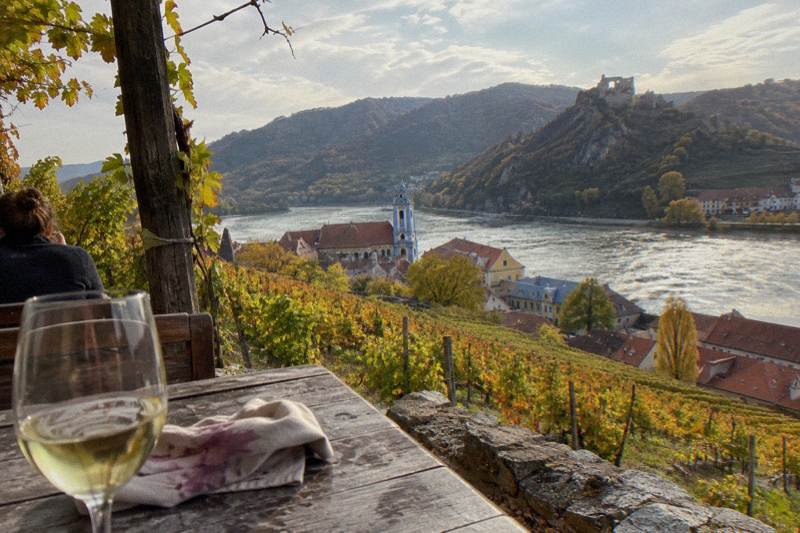
What Is The Best Part Of The Danube To Cycle?
The Wachau Valley between Krems and Melk is the stretch of the Danube cyclists call the best, and here is why, plus how to ride it from Vienna on a guided day tour or on your own.
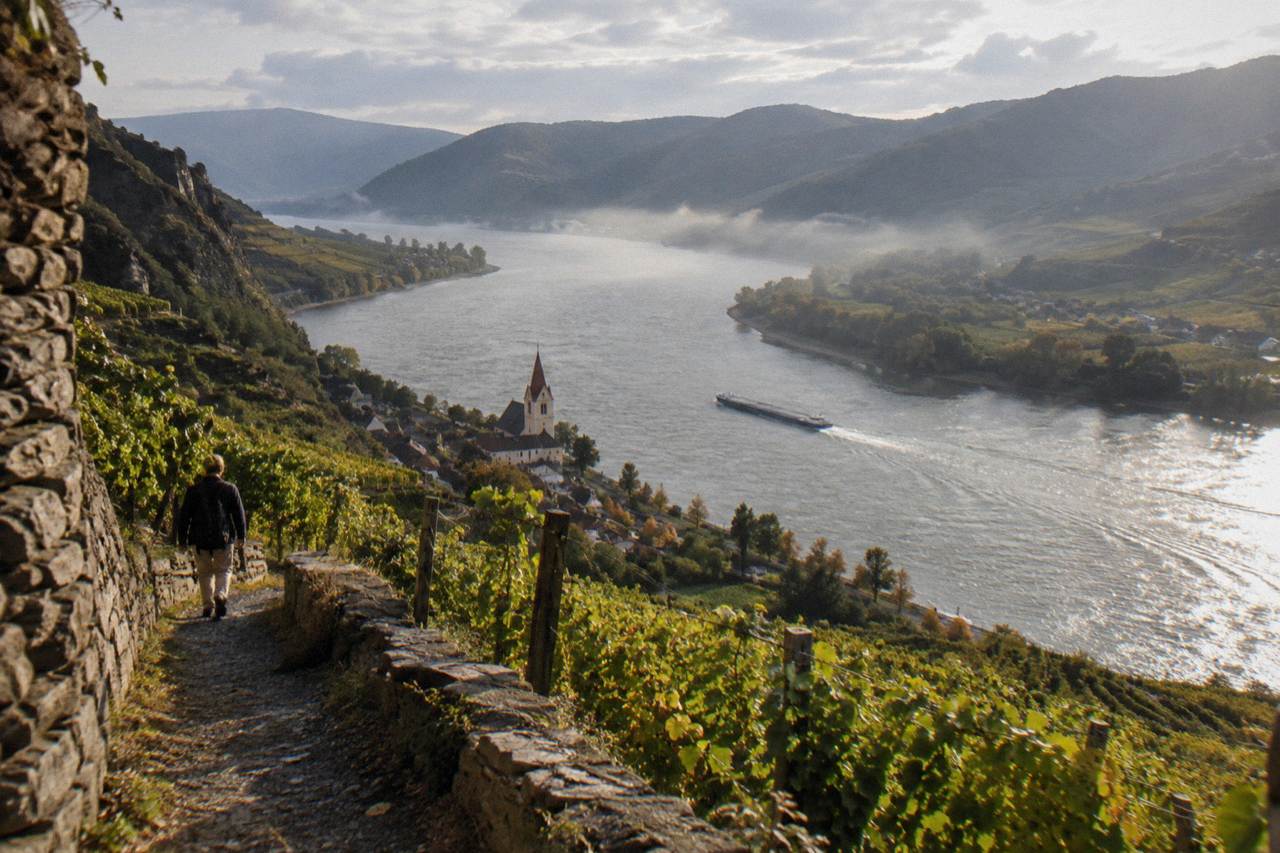
The best part of the Danube to cycle is the Wachau Valley in Austria, the roughly 40 kilometre stretch between Krems and Melk where the river narrows between terraced vineyards, apricot orchards and clifftop ruins. The path is almost flat, traffic-free and served by trains, ships and a roll ferry, so you can shorten or extend the day at almost any point. The vineyards and riverside villages you roll through have their own stories, and our guide to what the Wachau Valley is famous for goes deeper on the wines, orchards and castles you pass along the way.
Cyclists debate this question seriously, because the Danube Cycle Path is one of Europe's long-distance classics and no single answer satisfies everyone. German families love the wide, lazy Bavarian reaches. Long-distance riders talk about the gorges near the Slovak border. But when the question is which stretch delivers the most scenery, wine and story per pedal stroke, the Wachau is the answer that keeps winning, and it has the visitor numbers to show for it.
The valley is a UNESCO World Heritage landscape, and the reason is visible from the saddle: dry-stone terraces built for viticulture over centuries, baroque villages pressed against the riverbank, and watchtower ruins sitting above the water on both sides. The cycle path hugs the Danube almost the whole way, crossing between the left and right banks so the views keep changing.
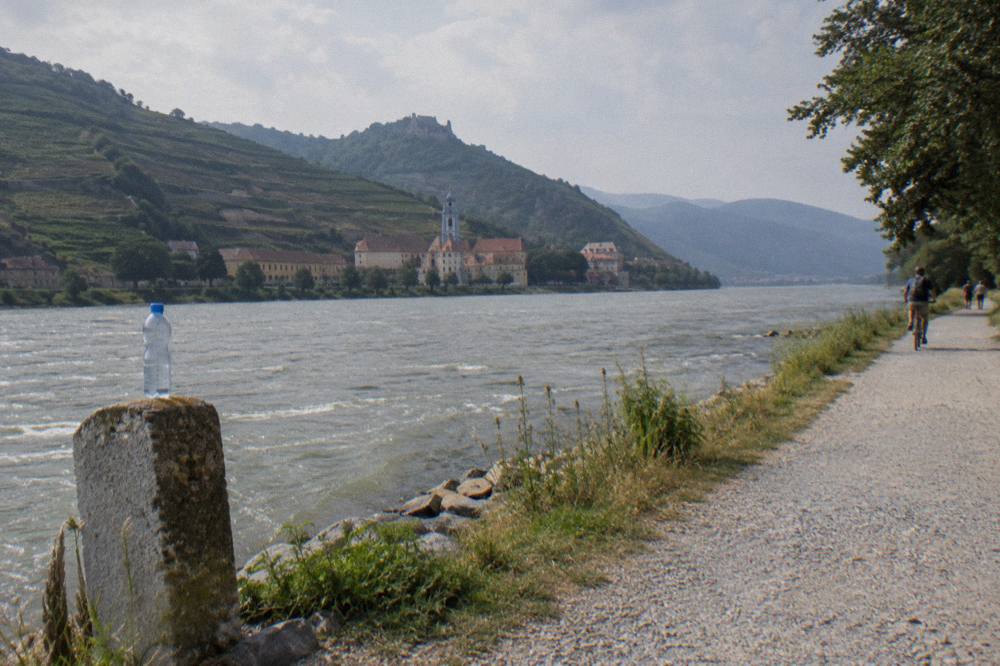
It is also the easiest "best stretch in Europe" to sample, because Vienna sits barely an hour away by train. You can leave the city in the morning, ride the heart of the valley in the afternoon and be back for dinner, or hand the whole day over to a guided tour and let someone else handle the bikes and the logistics. If you're curious how the rest of the river compares, our guide to cycling the Danube's banks and islands covers which stretches are actually rideable and what a self-guided day looks like.
Why Does The Wachau Beat Every Other Stretch?
The Wachau concentrates everything people cycle the Danube for into one short, flat, forgiving section: scenery, wine, apricots, monasteries and river crossings, all within a 40 kilometre corridor that can be ridden in either direction in a single day. Bigger stretches offer more kilometres; none offer more per kilometre.
Compare it honestly with its rivals. The German-Austrian upper Danube between Passau and Linz is lovely but long, with sections where the river widens and the riding becomes a test of patience rather than a pleasure. Below Vienna, the path pushes toward Hungary through floodplain forest that is flat, green and quiet but repetitive over a full day. The Wachau simply packs more variety into less distance. To see how that variety plays out day by day, our stage-by-stage Passau to Vienna cycling guide shows where the highlights fall and how to time them.
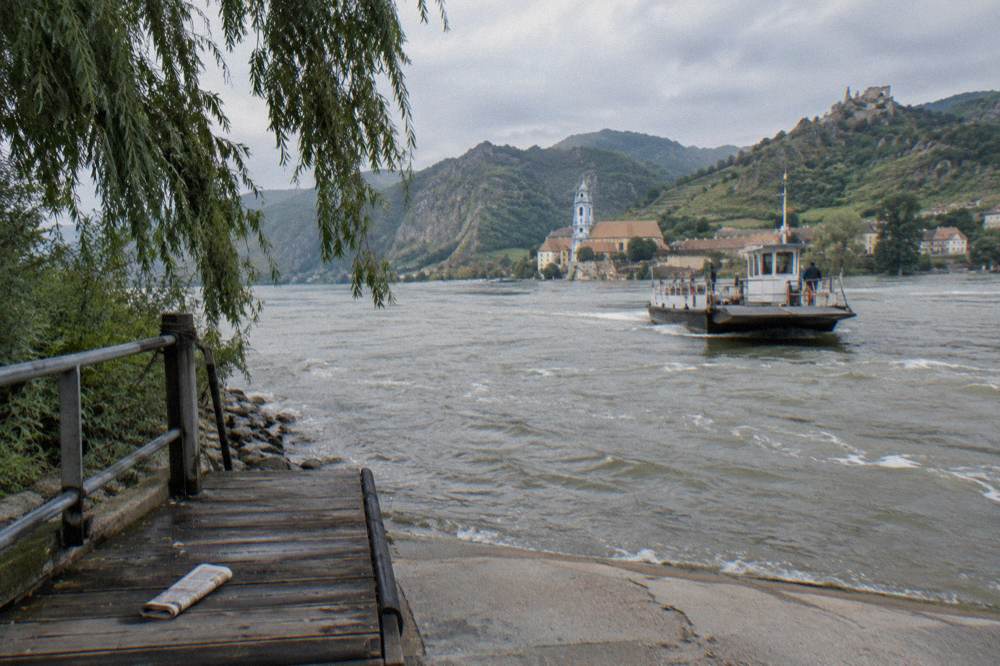
The villages are the difference. Krems and Dürnstein on the north bank, Weissenkirchen and Spitz further up, each is a wine town with cobbled lanes and heurigen courtyards rather than a mere waypoint. Dürnstein is the famous one, where the blue-and-white baroque tower of the abbey church rises over the river and the castle ruin above is tied to the story of Richard the Lionheart's imprisonment. You can climb to the ruin on foot if you lock the bike, and the climb is worth the lock.
Then there are the crossings. The Spitz-Arnsdorf roll ferry, a cable-guided platform that hauls itself across the river, takes bicycles including the rider for 4.70 EUR and runs from early morning to 19:00 or later depending on the day, which turns a linear ride into a loop of your own design. You can read the crossing details on the ferry's schedule page.
The apricot calendar gives the valley two distinct peak seasons. Blossom usually runs late March into early April, turning the terraces white and pink for somewhere between ten days and three weeks. Harvest lands in early to mid-July, when the villages sell everything from apricot jam to apricot schnapps from roadside stands.
What Does A Day In The Wachau Actually Look Like?
A typical day starts with a train from Vienna to Krems or Melk, a ride along one bank of the valley with a winery or two along the way, a ferry or bridge crossing, and a return by rail or by ship. The full ride between the two towns fits comfortably in a day at a relaxed pace, with long stops for lunch and tasting.
The classic shape is to start in Melk, home to the immense baroque abbey that anchors the western end of the valley, and ride downstream east toward Krems. Doing it in that direction means the largest sight comes first, when legs are fresh, and the finish line is a town with a rail station, wine bars and a direct line back to Vienna. Trains between Vienna and Melk Bahnhof run roughly every 30 minutes with an average journey time of about 51 minutes, so the logistics bend to your schedule rather than the reverse.
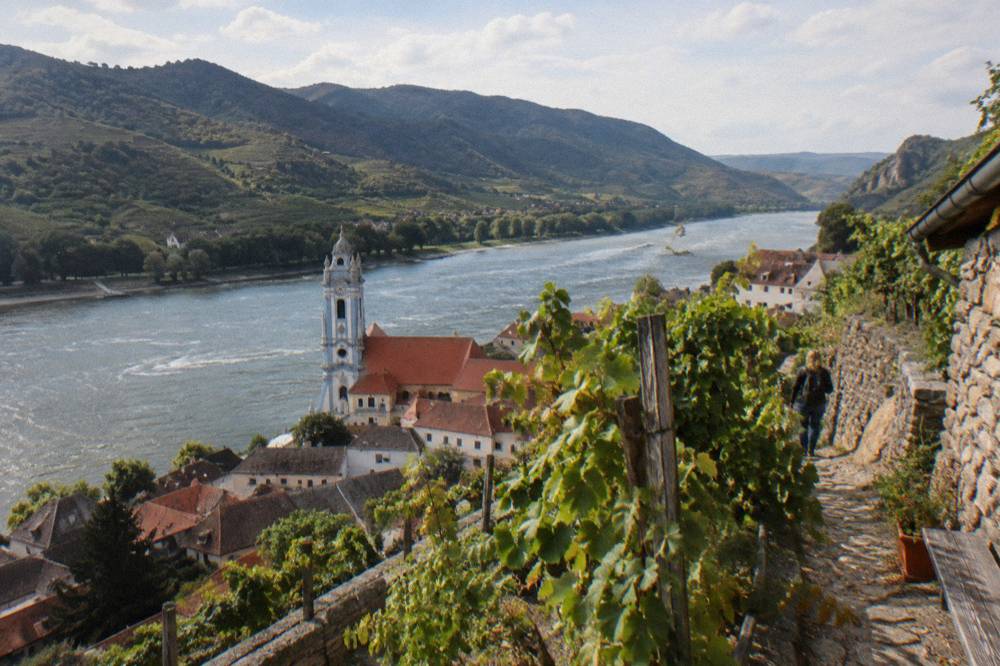
Riders who want the water to carry them back can pair the bike with the DDSG ships, whose Wachau season runs from late March to early November. A one-way Krems to Melk ship ticket costs 40 EUR, or 49 EUR return, and the boat glides past every terrace you just pedalled past. The combined train, ship and abbey-entry ticket sold for the valley bundles all three if you would rather buy once.
If you prefer to let an operator build the day, the Wachau Valley Wine Tasting Bike Tour from Vienna does exactly this circuit in roughly 11 hours door to door, with bikes and tastings arranged for you. It is the answer for riders who want the valley's best section without renting a bike, reading a rail timetable or booking ferry slots.
| Way to ride the Wachau | Time from Vienna | Best for | What you arrange yourself |
|---|---|---|---|
| Train plus own rental bike | About 1 hour by rail | Independent riders | Bike rental, route, return train |
| Guided wine-tasting bike day tour | Roughly 11 hours door to door | Wine lovers, first-time visitors | Nothing beyond the booking |
| Train, ship and abbey combi ticket | Day trip, mixed transport | Sightseers who want variety | Lunch and any cycling |
| E-bike rental plus train | About 1 hour by rail | Riders easing into the distance | Rental, charging, route |
Rental pricing in the valley is worth a quick note: one operator in Spitz and Melk lists e-bikes at 38 EUR per day, and a Krems operator has offered e-bikes by the half-day and full-day in the past, but rental prices move with the season, so treat those as single-shop figures and confirm before you travel. For everything the cluster does not state, the booking page is the honest source.
Is The Vienna Stretch Of The Danube Worth Riding Instead?
Yes, but for different reasons. Vienna's Danube waterfront, the Danube Island and the Danube Canal are urban riding: flat, fast, dotted with bathing beaches, bars and modern architecture. As a taste of cycling the Danube in half a day it is excellent, and as scenery it cannot compete with the Wachau's vineyard terraces.
The city's riverside network is genuinely good by European capital standards. Vienna counts roughly 1,811 kilometres of cycle infrastructure in total, and the Danube Island alone carries about 21 kilometres of paved cycling routes inside a larger 135 kilometre path network on the island. The island was built as a flood protection structure and turned into the city's backyard beach, with 42 kilometres of shoreline in total.
One practical caution for planning: a section of the island's main path between the Nordbruecke and Floridsdorfer Bruecke is closed for water works construction until 2030, with cyclists diverted via the Neue Donau path, so check the city's diversion page before you set a route. The rest of the island ride is unaffected.
The Danube Canal through the city centre is the other half of Vienna's river riding, lined with graffiti walls, river-side cafés and the buildings of the Urania and the Hundertwasser-adjacent districts. It is the stretch most Vienna bike tours touch, because it connects the old town to the Prater and the island without a single serious climb.
If your question is whether to spend your one cycling day in the city or on a train to the Wachau, the honest answer splits by appetite: urban atmosphere, coffee and architecture in Vienna; wine, water and villages in the Wachau. Riders with two days do both. Our longer comparison of the valley route is in the guide to cycling the Wachau Valley from Vienna.
When Is The Best Season To Cycle The Wachau?
Late April to early October is the reliable window, with the DDSG ship season running 28 March to 1 November and its main season 25 April to 4 October. April brings apricot blossom, July brings harvest and the busiest paths, and September combines warm water, ripe grapes and thinner crowds, which is why many regulars call it the sweet spot.
Each month trades something for something. March can be bright but raw, and the blossom window is short and hard to time from abroad. Midsummer is warm, lively and full, and on the water the ships run at full frequency, but the middle hours of the day get hot on exposed terraces and the tasting courtyards fill early. Vienna itself recorded its first 40 degree days in the summer of 2026, a reminder that heat planning matters on the continent's rivers now more than it used to.
Autumn is the connoisseur's pick. The grape harvest is underway, the light comes in low across the river, and the valley's wine villages hold their harvest festivals. The water stays warm enough for a swim off the island beaches near Vienna well into September. By late October the vines turn colour, the crowds thin to locals, and the boats sail their last weeks before the season closes in early November.
Winter riding on the valley path is possible in mild years but the ships, ferry and most heurigen courtyards close or shrink their hours, which removes much of what makes the Wachau the Wachau. If a winter trip is what you have, Vienna's own riverside paths are the better target, and the city clears its central high-traffic bike paths of snow on a published winter plan.
How Do You Get From Vienna To The Best Stretch?
Take a direct train from Vienna to Krems or Melk, both about an hour away, with Melk trains running roughly every 30 minutes. Guided day tours cover the same ground in a coach or van with bikes and tastings included, roughly an 11-hour day. The choice is between rail independence and a tour's zero-setup convenience.
For independent riders the sequence is simple: book a rental bike in Krems, Spitz or Melk in advance, take an early train, ride one bank, cross by the Spitz-Arnsdorf roll ferry or one of the bridges, and return by rail or ship. Doing the whole valley is a full day; doing Krems to Spitz and back is a gentler half-loop that keeps the best scenery.
For riders who would rather not assemble the day from parts, the guided options start in Vienna and come in two flavours. The full Wachau wine-tasting day pairs the riding with cellar visits and runs roughly 11 hours. Closer to home, an e-bike wine culture tour of about 4 hours and a Danube Island and green parks e-bike tour of about 3 hours both ride Vienna's own riverside, which suits travellers with a half day rather than a whole one.
The e-bike question comes up often, and in the Wachau the answer is flattering to the valley: the main path is flat enough that a standard bike is fine, but an e-bike buys you the detours, the extra winery, the climb to the Dürnstein ruin without dread, and arrival at the train station without jelly legs. In Vienna the terrain is flat, so the e-bike choice there is about comfort and distance rather than hills.
Whichever way you go, Bike Tours Vienna keeps the current guided options, prices and inclusions on their tour pages, and the details that change month to month, like exact tasting stops and departure times, are always worth a quick look at the booking page before you commit.
Common Questions About The Best Danube Cycling Stretch
What Is The Best Part Of The Danube To Cycle?
The Wachau Valley between Krems and Melk in Austria. It is roughly 40 kilometres of flat, traffic-light riding past vineyard terraces, apricot orchards, baroque villages and river crossings, all reachable in about an hour by train from Vienna.
Is The Danube Cycle Path Flat In The Wachau?
Yes, the valley path is essentially flat and well surfaced, following the riverbank almost throughout. The only real climbs are optional detours such as the footpath up to the Dürnstein castle ruin, which you do on foot after locking the bike.
Can You Cycle From Vienna To The Wachau In A Day?
You can, but most riders do not. The practical pattern is to take the train from Vienna to Krems or Melk, about an hour, ride the valley, and return by train or ship. Guided day tours from Vienna cover the whole outing in roughly 11 hours with bikes and tastings included.
When Does The Wachau Ship Season Run?
The Danube ships in the Wachau operate from 28 March to 1 November, with the main season from 25 April to 4 October. Outside those dates the boats, the roll ferry and many winery courtyards close or shorten their hours.
Do You Need An E-Bike For The Wachau?
No. The main route is flat enough for a standard bike. An e-bike adds comfort for detours, extra winery stops and the end-of-day ride to the station, but it is a convenience rather than a need.