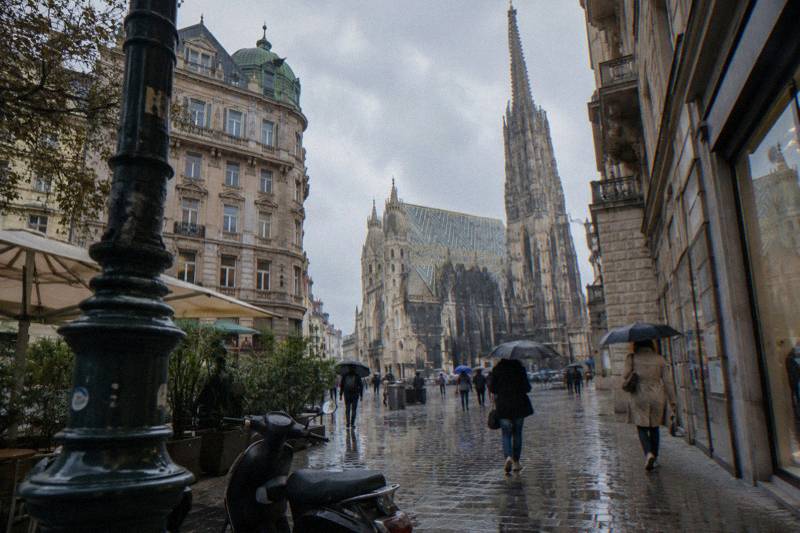
What To Wear And Bring On A Vienna Bike Ride
Vienna rewards riders who pack light and layer well. Here is what to wear, what to carry and what you can leave behind because the tour already provides it.
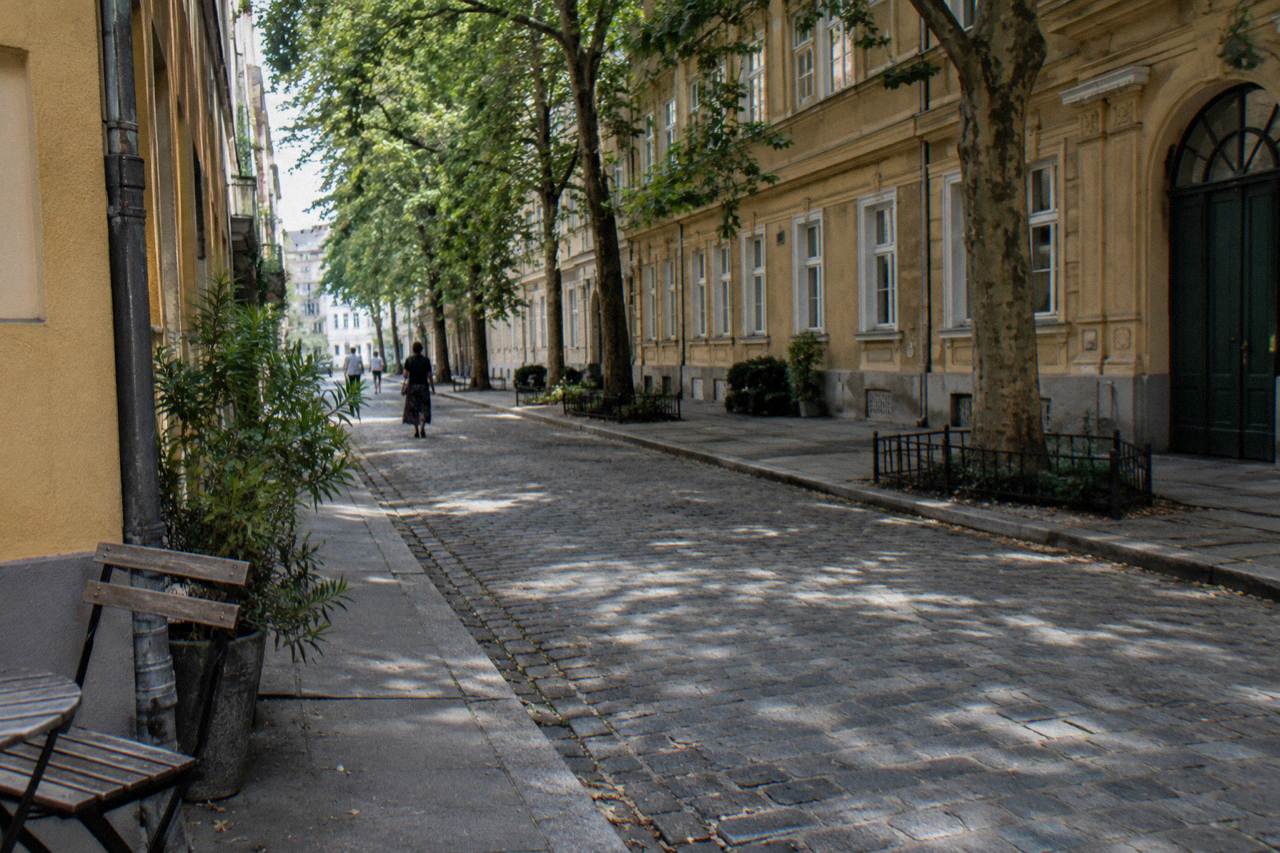
Short answer
Wear layers you can shed, closed shoes with grip, and bring sun protection, water, ID and a small bag. Most Vienna guided rides supply the bike and a helmet, and run about 3 hours. Check the booking page for anything extra, since inclusions vary by operator and by season.
Vienna's cycling network runs to about 1,811 kilometers of routes, and a good share of the riding visitors do happens on flat, paved paths between the Ringstrasse, the Danube Canal and the Prater. That flatness shapes what you wear more than distance does. A three-hour city ride is gentle, but Vienna's weather swings hard between seasons: the city recorded its first 40 degree days and a record number of heat days in summer 2026, while winter rides run on paths the city clears of snow on a published priority plan. Dress for changeability, not for extremes, and you will be comfortable on almost any ride here. If a few days of city riding leaves you wanting more, the Vienna to Budapest by bike guide covers the border crossing, the train back, and whether to ride it yourself or go with a guided tour.
This guide walks through clothing, footwear, weather, bags and documents, then covers what a guided tour already supplies so you do not duplicate it. Throughout, where a detail varies by operator, the honest answer is to check the booking page, because inclusions and meeting arrangements differ tour to tour.
What Should You Wear Cycling In Vienna?
Dress in two to three light layers you can remove one at a time, with a breathable base against your skin and something windproof on top. Vienna's riding is flat and mostly slow, so you generate less heat than a hill ride would, and riverside paths along the Danube can turn breezy even on mild days. Avoid heavy cotton next to skin, it holds sweat.
A base layer that moves moisture away from your skin, a mid layer such as a light fleece or knit, and a packable windshell cover the majority of Vienna days from spring through autumn. The windshell earns its place on the Danube Island and along the Danube Canal, where open water means moving air. Legs work fine in ordinary trousers or leggings; the bikes on Vienna city tours are upright city models, not racing machines, so padded cycling shorts are unnecessary for a three-hour spin.
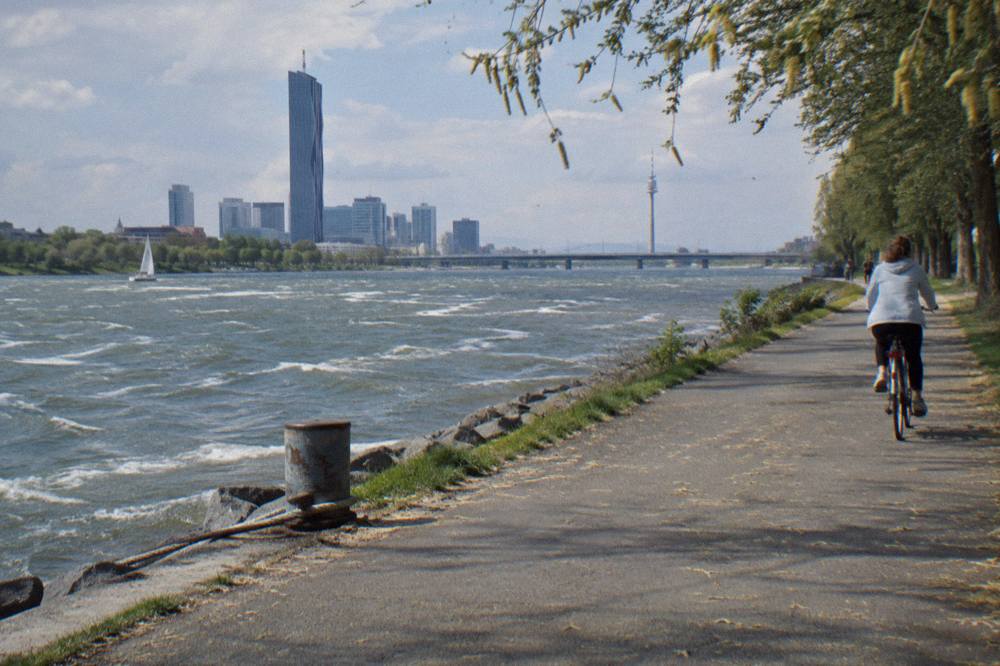
Colour matters more than riders expect. Vienna's busiest cycling axes, including the Ringstrasse, mix bikes, pedestrians and trams, and being visible at dusk near the Praterstern or under the canal underpasses helps. A bright outer layer does the job; you do not need specialist hi-vis clothing for a city ride. If a city ride leaves you tempted to carry the bike further afield by rail, our guide to bike charges on Vienna's trains spells out what rides free and what costs extra.
Season shifts the base outfit. In July and August, plan around heat: the long-term average July temperature at Hohe Warte is 21.9 degrees, but recent summers have pushed far past that, so loose, light-coloured clothing and sun cover matter. From November through February, the math reverses: warm gloves, a hat that fits under a helmet, and a scarf matter more than a heavy coat, because your torso stays warm while your hands freeze. The monthly breakdown in Vienna's best cycling months by season helps you match the wardrobe to the calendar.
| Season | Typical layers | Extra item worth packing |
|---|---|---|
| Spring (Mar to May) | Base layer plus light mid layer | Packable rain shell for showers |
| Summer (Jun to Aug) | Loose, light-coloured, breathable | Sun hat, sunglasses, extra water |
| Autumn (Sep to Nov) | Base layer, mid layer, windshell | Light gloves for morning starts |
| Winter (Dec to Feb) | Warm base, insulating mid, windproof outer | Gloves, under-helmet hat, scarf |
What Shoes Work Best For A Vienna Bike Ride?
Wear closed, flat-soled shoes with grip: trainers, light hiking shoes or city sneakers all work. Avoid flip-flops, loose sandals, slick leather soles and brand-new shoes that have not been broken in. Vienna tour bikes use flat pedals with no clips, so any shoe that stays on and grips a pedal is fine, and you will dismount often at stops.
City tours in Vienna stop frequently, at squares, palace forecourts and viewpoint stops, so your shoes need to walk cobblestones as well as pedal. Cobblestones in the first district punish thin soles. A shoe with a little structure, like a trainer or a walking shoe, handles both jobs; a stiff cycling shoe is overkill and awkward on foot.
Sandals deserve a specific warning, not because they are forbidden but because they expose toes to pedals and to gravel on riverside paths. If you ride in summer and insist on sandals, choose a pair with a heel strap. High heels and stiff dress shoes are the other common mistake among visitors who book a tour between a museum and dinner: they slip on pedals and make dismounts awkward.
Wet weather changes the shoe calculus. Vienna's paths drain reasonably well but painted surfaces and tram rails become slick in rain, and a wet leather sole is close to ice under a cycling shoe. A rubber-soled shoe with tread is the safe call on any day with rain in the forecast. If you are planning a family ride, the footwear and helmet questions for children are covered in detail in cycling in Vienna with kids.
If you are weighing whether a guided ride or self-rental suits your kit and confidence, the comparison in rent a bike or join a guided ride in Vienna lays out the trade-offs, including what each option expects you to bring yourself.
What Do You Need To Bring On A Guided Ride?
Bring photo ID, a filled water bottle, sun protection, your phone plus a power bank for long days, any personal medication, a card or a little cash, and a small day bag. Add a light rain layer from spring to autumn. Everything else, the bike, helmet and typically a basket or bag mount, comes with the tour, but verify inclusions on the booking page.
The ID point matters more in Vienna than many visitors expect. Operators of guided tours routinely check that participants match their booking, and if anything goes wrong on the ride, from a medical issue to a lost-card situation, ID simplifies everything. Austrian law also expects cyclists to carry identification in practice, since police can ask for it.
Water is the second essential. A three-hour city ride in July heat dehydrates people who would never notice it on a winter ride, and after the record heat of summer 2026 it is worth taking seriously. Most tour bikes have bottle mounts or a basket, and Vienna's tap water is excellent, mountain spring water straight from the tap, so refilling is easy at any fountain or café stop.
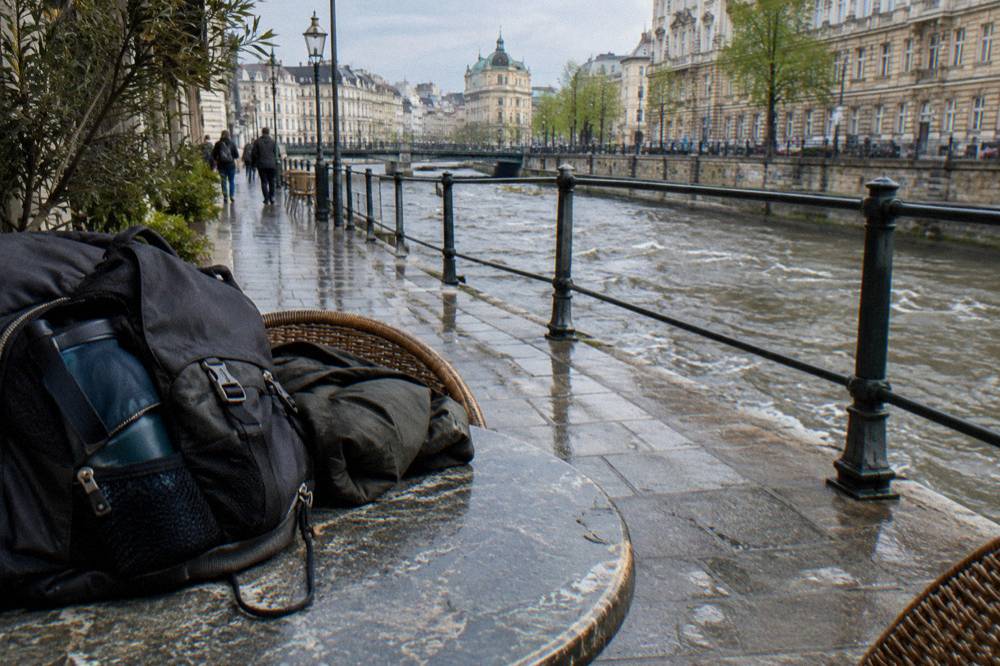
A phone mount deserves a mention of its own. Riders who navigate independently love them; riders on guided tours do not need one, because the guide sets the route. If you do bring a mount, check that it clamps to a city bike's handlebar, some are shaped for sport bars. On a guided ride, a phone in a zipped pocket is the better setup, both for photos at stops and for not staring at a screen while trams pass on your left.
Sun protection is the item most often skipped and most often regretted. The Ringstrasse and the Danube Island offer long unshaded stretches, and the wind of a moving bike hides how much sun you are taking. Sunglasses, sunscreen on face and neck, and a cap under the helmet cover it.
| Item | Why it earns its place | Notes |
|---|---|---|
| Photo ID | Booking checks and any incident on the ride | Passport or national ID card |
| Water bottle | Heat on unshaded boulevards and riverside paths | Tap water in Vienna is potable spring water |
| Sunscreen and sunglasses | Wind hides sun exposure on long straights | Reapply at a mid-ride stop |
| Phone plus power bank | Photos, maps, tour contact | Zipped pocket beats handlebar mount on a guided ride |
| Light rain shell | Showery weather spring through autumn | Packs down small, fits a basket |
| Personal medication | Allergies, asthma, any routine prescription | Include a headache remedy for heat days |
Once this kit is packed, the Vienna itinerary built around a single bike day helps you slot the ride into your best-weather day and plan the rest of your visit around it.
What Does The Guide Supply On A Guided Ride In Vienna?
On a typical Vienna guided tour, the operator supplies the bicycle, a helmet, and a guide with the route and stops; the description of the classic 3-hour city tour lists the bike and helmet as included, and meeting point details on its booking page. E-bike tours supply the e-bike and typically a lock. Food, drinks and entry tickets are usually your own cost.
Treat that as the pattern rather than a promise. Inclusions vary: a wine-tasting e-bike tour names its tasting in the listing, while a plain city highlights tour does not include food. Meeting points also vary tour to tour, and the meeting point address for each ride is on its booking page, so read it before you set out rather than guessing at a central square.
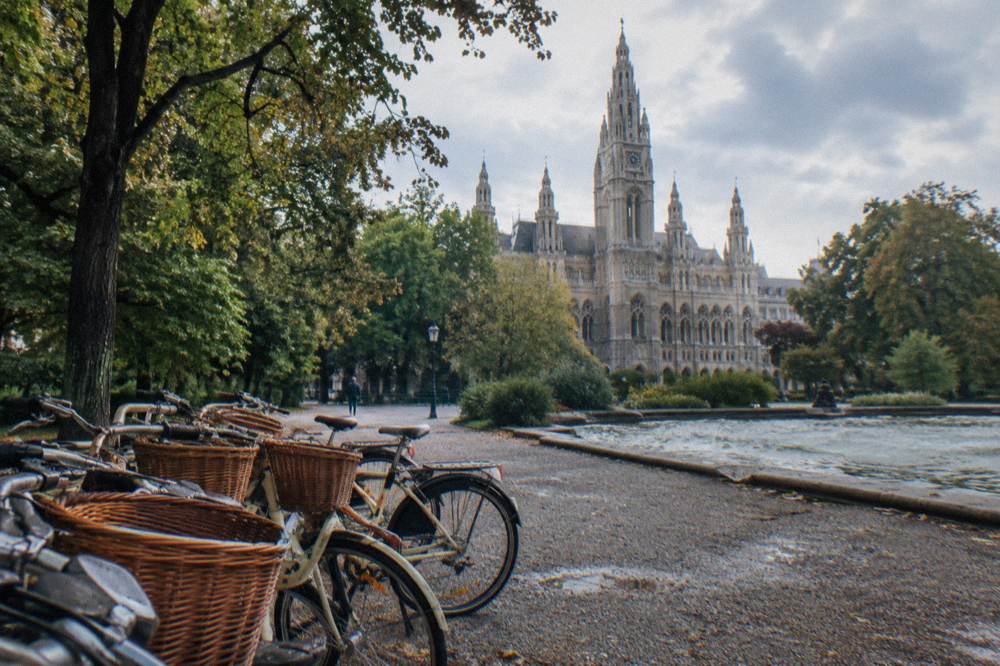
The practical consequence for packing is simple: you do not need to bring a lock, a pump, a spare tube or lights. The operator handles the equipment side. What you bring is yourself, dressed right, with the small personal kit from the previous section. Riders who prefer to go independent can rent instead, and one rental shop near the Danube Island lists a comfort bike at 35 EUR and an e-bike at 75 EUR for a day, which sets a sense of the self-guided alternative.
For rides that cross into wine country, the kit list barely grows. The Vienna wine tasting e-bike tour covers about 4 hours of e-bike riding with a tasting stop, and the only wardrobe difference from a city ride is that a slightly warmer layer helps once the sun drops over the vineyards. Follow the operator's guidance on tasting and riding, and pace yourself for the ride back. If it appeals, Check availability before the season fills up.
How Do You Dress For Rain, Wind And Cold In Vienna?
For rain, a packable waterproof shell beats an umbrella, which is unsafe and useless on a bike. For cold, layer hands and head first: gloves, a thin hat under the helmet and a scarf hold warmth better than a thicker coat. Vienna's wind bites hardest along the Danube and the canal, so keep a wind layer even on mild days.
Rain in Vienna is usually showery rather than all-day, and a light shell stuffed in your bag handles most of it. Waterproof trousers are only worth it for committed winter riders or long day trips like the Wachau; on a three-hour city tour you can usually wait out a shower at a café, which is a genuinely Viennese move. Shoes matter in rain, as covered earlier, because slick soles on painted path surfaces are the real hazard, more than the water itself. The rest of the planning pages sit on Bike Tours Vienna.
Cold-weather riding rewards the extremities. From roughly November through March, gloves are non-negotiable, and a thin beanie or headband under the helmet keeps ears functional. The city clears its central, high-traffic bike paths of snow as a priority in winter and publishes a downloadable plan of which routes stay rideable, which means a winter ride in Vienna is a real option, not a stunt, as long as you dress for it. The seasonal detail is in Vienna in winter and Christmas market season.
Wind deserves respect out of proportion to its speed. The Danube Island and the corridor along the Neue Donau funnel moving air, and an e-bike at assist speed into a headwind cools you fast. This is one quiet argument for e-bikes in cooler months: less sweat generation on the way out, no chill on the way back.
| Condition | Wear | Skip |
|---|---|---|
| Showery rain | Packable waterproof shell over a light mid layer | Umbrella, jeans in heavy rain |
| Steady wind | Windshell, close-fitting layers | Loose scarves that flap |
| Cold (under 5 degrees) | Gloves, under-helmet beanie, warm base | Thick coat alone with bare hands |
| Ice risk | Treaded shoes, steady pace | Slick soles, sudden braking |
How Do You Handle Vienna's Summer Heat On A Bike?
Ride in the morning, cover skin rather than exposing it, and carry more water than feels reasonable. Summer 2026 brought Vienna its first 40 degree days and a record number of heat days, and unshaded stretches of the Ringstrasse and the Danube Island add reflected heat. A cap under the helmet and a wettable neck scarf make a real difference.
The timing advice is the strongest lever. A tour starting in the morning finishes before the early-afternoon peak; a tour starting at midday in July is a different experience. When booking, look at start times, and in hot months prefer the earlier slot. The shade map of central Vienna is decent on side streets but poor on the grand boulevards and the island.
Loose, light-coloured, breathable clothing beats exposed skin for long rides, because moving air on bare, sunscreened skin still accumulates heat over hours. A thin long-sleeved sun shirt or a light shirt over a base layer is the touring standard for good reason. Sunglasses protect eyes from both sun and the grit the canal paths occasionally throw up.
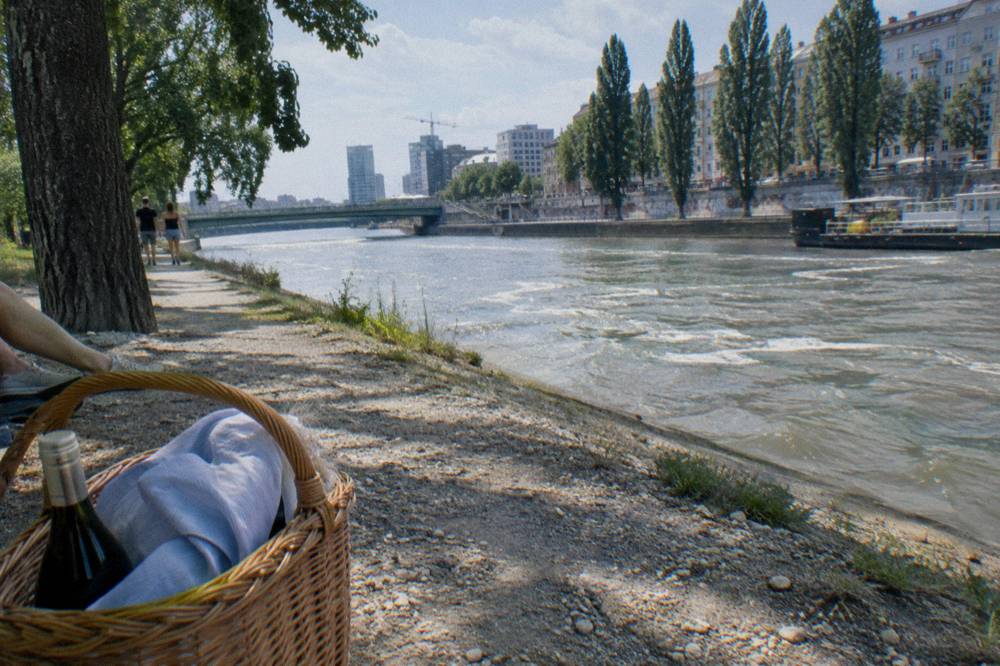
Water again, because it is the failure mode: refill at stops rather than rationing, Vienna's drinking fountains run potable mountain water. If anyone in your group is prone to heat headaches, a small electrolyte sachet weighs nothing. And if the forecast is extreme, remember that tour operators, not you, make the call on weather changes, so check the operator's cancellation terms rather than assuming.
Do You Need A Helmet In Vienna?
Legally, children up to their 12th birthday must wear a helmet on any bicycle, and since 1 May 2026 that duty extends to children and youths under 14 on e-bikes. From age 14 there is no general helmet duty, though helmets are recommended at every age. Guided tours typically supply helmets, and adults can choose whether to wear one.
That is the official position from Austria's government services portal and the city's cycling rules page, and it is worth reading precisely: there is no adult helmet law, but the duty for young riders is real and it now covers e-bikes specifically following the May 2026 change. If you are riding with children on a family tour, bring or request children's helmets when you book, since operator stock of small sizes is not unlimited.

For adults, the practical advice on this site is consistent: wear one. Vienna's traffic is calm by big-city standards but trams are silent, tram rails are slippery at angles, and the mix of pedestrians and bikes on shared paths produces occasional tangles. A helmet costs you nothing on a tour, since the operator supplies it, so the usual reasons to skip one do not apply. More on conduct and equipment rules is in Vienna cycling rules and safety.
Can You Take Bags And Backpacks On A Guided Ride In Vienna?
Yes, a small backpack or a tote that fits the bike's basket is fine on a guided tour, and most city tour bikes carry a basket or rack. Keep it light, under about five kilograms, because heavy bags shift your balance, and keep valuables in zipped pockets rather than an open basket where stops are crowded.
The failure mode with bags is not permission, it is size. A weekend suitcase has no place on a bike; a day pack does. If you are leaving luggage at a hotel, most tours start near the centre, so time your checkout and the ride sensibly. Operators of private and customizable tours can sometimes accommodate more, and the customizable private bike tour is the natural fit if your group wants a route built around a specific stop or a slower pace for baggage-heavy days. If that flexibility is what you need, Check availability and raise your requests with the operator.
Documents and valuables follow the same logic as any city: passport or ID card on you, wallet in a zippered pocket, phone secured. Vienna is a low-crime city and bike theft is the main property risk, not pickpocketing at tour stops, but an open basket on a crowded square is still an open basket. The city's bike-share option, WienMobil Rad, runs over 3,700 bikes including 600 e-bikes at more than 250 stations, with standard bikes from 0.80 EUR per started 30 minutes capped at 20 EUR per 24 hours, if you ever want a self-guided backup ride without any gear at all.
What About Riding In Winter Or Christmas Market Season?
Pack for cold hands and early darkness: gloves, a hat under the helmet, reflective or bright layers, and lights if riding independently. Vienna's Christmas markets open in mid-November, with the Rathausplatz market from 13 November and the Schoenbrunn market from 6 November 2026, and winter rides between them are viable on the city's priority-cleared paths.
The Christmas market season is genuinely one of Vienna's better riding windows. The crowds thin on the paths, the central routes are the ones the city clears of snow first, and a ride between markets, ending at a punch stand, is a fine evening. Dress for it as a winter walk plus wind: the layering section above applies, with emphasis on gloves and something reflective, since darkness falls early and shared paths stay busy.
Weather cancellations in winter are rarer than visitors fear, because Vienna's winters are more grey than white, but they can happen. Check the operator's terms on weather changes when booking rather than on the morning of, and note that ice, not snow, is the condition that stops rides.
A guided three-hour city tour remains the easiest winter format, since the operator handles the equipment in cold conditions. The classic Vienna guided city ride covers the core sights in one loop, and its booking page states the meeting point and what is included before you commit.
Whichever way you ride, the preparation does not change: dress in layers, wear shoes that grip, carry ID, water and sun protection, and leave the heavy gear to whoever is supplying the bike. Vienna is a flat, forgiving, well-pathed city to cycle, and the riders who enjoy it most are the ones who packed as if the weather might change mid-ride, because in Vienna it sometimes does.
Common Questions About What To Wear On A Vienna Bike Ride
What Should I Wear Cycling In Vienna?
Two to three light layers with a breathable base and a packable windshell, plus closed shoes with grip. Vienna's riding is flat, so padded cycling kit is unnecessary; dress for the weather changing rather than for athletic effort.
Do I Need To Bring A Helmet On A Vienna Bike Tour?
Usually not. Guided tours typically supply helmets with the bike. Children up to their 12th birthday must wear one by law, and since May 2026 the duty also covers riders under 14 on e-bikes, so request children's sizes when booking.
Can I Bring A Backpack On A Guided Bike Tour?
Yes. A small day pack or a tote that fits the bike's basket works fine. Keep it light, and keep your ID, wallet and phone in zipped pockets rather than an open basket at crowded stops.
What Shoes Are Best For A Vienna Bike Ride?
Trainers or light walking shoes with flat, grippy soles. You will dismount often on cobblestones, so avoid flip-flops, slick leather soles and stiff dress shoes, and pick something with tread if rain is forecast.
How Do I Dress For A Vienna Ride In Summer Heat?
Ride in the morning if you can, cover skin with loose light fabric rather than baring it, and carry more water than feels necessary. Vienna recorded its first 40 degree days in summer 2026, so sun protection and early starts are worth planning around.
What Does A Vienna Guided Bike Tour Supply?
Typically the bicycle, a helmet and the guide with a set route and stops; the listing for each tour states its meeting point and exact inclusions. Food, drinks and any attraction entry tickets are usually your own cost.