How Does Renting A Bike Work?
Renting a bike in Vienna works through bike-share stations, rental shops, or guided tours that include the bike: here is how each option works, what it costs, and how a guided ride fits in.
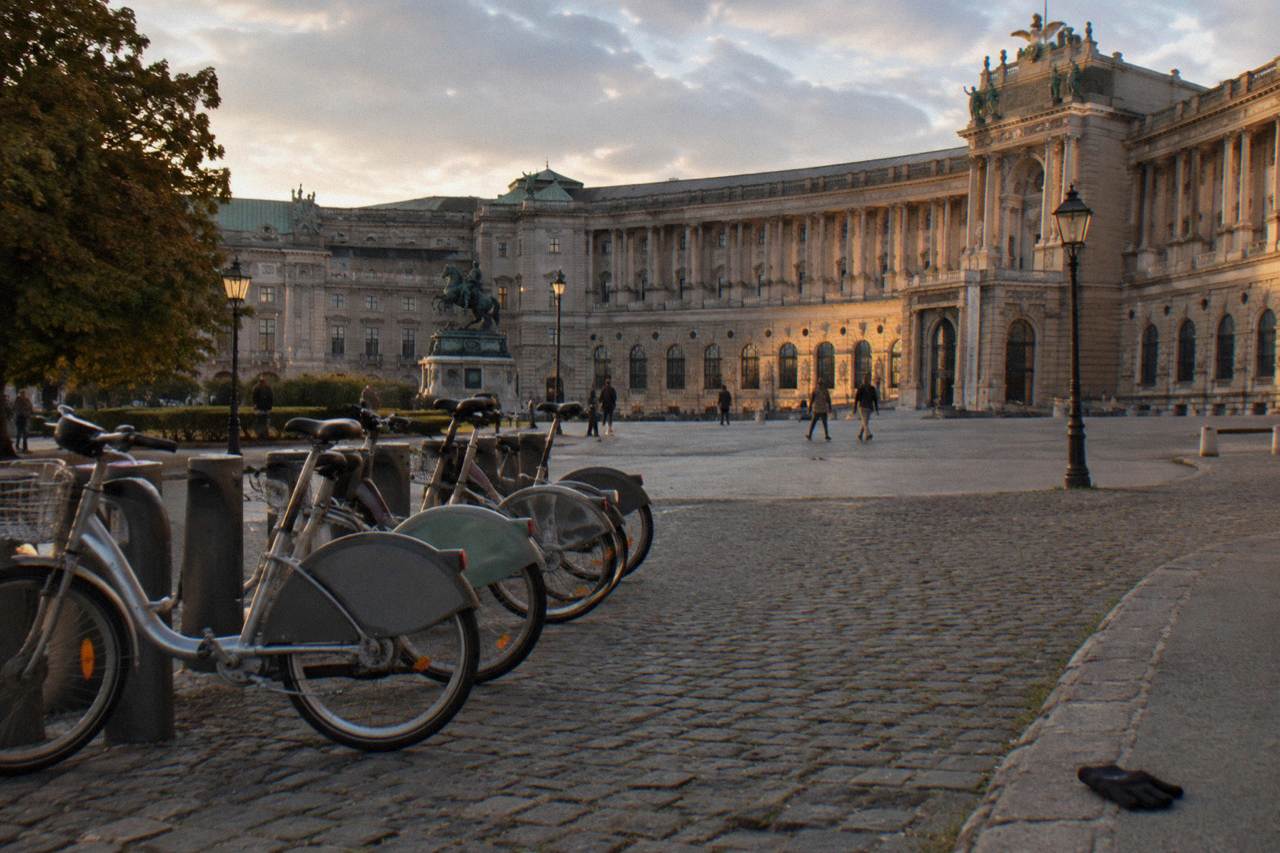
Renting a bike in Vienna works one of three ways: you can unlock a bike-share bike with an app at one of more than 250 stations, book a bike from a rental shop for a set period, or join a guided tour where the bike is included in the price. Bike-share rides start at 0.80 euros per started 30 minutes for a standard bike, capped at 20 euros per 24 hours. Before you decide between bike-share, a rental shop, or a guided tour, see our guide to bike rental prices in Vienna for a full cost comparison.
The mechanics differ more than most people expect. Bike-share, run in Vienna as WienMobil Rad by Wiener Linien, is self-service: you find a station, unlock a bike in the app or with a card, ride, and return it to any station in the city. There is no shop counter, no staff member checking the seat height, and no paper contract. You pay by the started half hour unless you hold a Wiener Linien annual pass or a KlimaTicket, in which case a cheaper mix tariff applies, at 0.37 euros per started 30 minutes for a standard bike, capped at 10 euros per 24 hours. The system runs on over 3,700 bikes, including 600 e-bikes, at more than 250 stations across all 23 districts.
A rental shop works the other way round. You choose the bike, someone adjusts it, you leave a deposit or an ID, and you pay for a block of time, typically a day. One rental shop at the Donauinsel lists a comfort bike at 35 euros for 6 to 12 hours and an e-bike at 75 euros for the same window, which gives a realistic sense of what a full day of shop hire costs in the city. Those are one shop's list prices, not an average.
The third route is the one travellers overlook: a guided tour that includes the bike in the ticket. You book, you turn up at a stated meeting point, and the operator brings the bikes, the helmets where offered, and the route. The Classic Vienna: 3-Hour Guided Bike Tour is the clearest example on this site: three hours, a guide, and the bike in the price, which removes every step below about apps, stations and deposits. For many first-time visitors that is the whole appeal.
If you would rather go self-guided, the rest of this page walks through each option as it actually works, step by step, with the costs and the catches. We also have a detailed companion piece on renting a city bike in Vienna if you want the station system in full depth.
What Actually Happens When You Rent From A Station?
You register once in the WienMobil Rad app or at the station terminal, select a bike, unlock it, and the billing clock starts. You can return the bike at any station in the city, not just the one you took it from, and the rental ends when you dock it properly. Standard bikes cost 0.80 euros per started 30 minutes, e-bikes 3.30 euros per started 30 minutes.
Registration is the only genuinely fiddly part. You need the app and a payment card, and the first unlock usually asks you to confirm your account by a code sent to your phone. After that, renting is a two-minute job: the app shows you a map of stations with bikes available, you walk to one, you either scan a code on the bike or pick a bike number at the terminal, and the lock releases.
Return matters more than pickup. A bike-share rental only ends when the bike is correctly docked at a station, and the app confirms the end of the trip. If you lean the bike against a station without locking it in, the clock keeps running and the cap keeps counting. E-bikes have their own tariff, at 3.30 euros per started 30 minutes standard, capped at 40 euros per 24 hours, or 2.30 euros per started 30 minutes on the mix tariff for holders of eligible passes, so an accidental overnight lock-out on an e-bike is a real bill.
There is also a subscription angle that frequent riders should know about. A standard annual subscription costs 63 euros per year and includes the first 30 minutes of every trip free, which changes the maths entirely if you plan to hop between sights over several days. For a single weekend, the pay-as-you-go tariff is usually the better fit. Once you've picked your tariff, our guide to free sights and cycling routes around Vienna shows how little you actually need to spend once the bike is sorted.
| Option | How you get the bike | What you pay | Where it ends |
|---|---|---|---|
| WienMobil Rad standard bike | Unlock in the app at any station | 0.80 euros per started 30 min, capped at 20 euros per 24 hours | Docked at any station |
| WienMobil Rad e-bike | Unlock in the app at any station | 3.30 euros per started 30 min, capped at 40 euros per 24 hours | Docked at any station |
| WienMobil Rad with annual pass or KlimaTicket | Same app, mix tariff | 0.37 euros per started 30 min standard, capped at 10 euros per 24 hours | Docked at any station |
| Rental shop | Counter, deposit or ID, staff adjusts the bike | One shop lists 35 euros comfort bike, 75 euros e-bike for 6 to 12 hours | Back at the same shop |
| Guided tour | Bike handed over at the meeting point | Included in the tour price, check the booking page for the figure | At the tour's endpoint |
The official tariff page explains the full structure, including the e-bike rates and the subscription, and it is worth a read before a longer stay: Wiener Linien WienMobil Rad tariffs.
What Does A Guided Ride Change About Renting?
A guided ride removes the rental step entirely: the operator supplies the bikes at a stated meeting point, fits you to one, and takes it back at the end. You book a time slot the way you book any activity, and the bike, the guide and the route arrive as one package. The Classic Vienna: 3-Hour Guided Bike Tour runs on exactly this model, with the bike included. If a guided ride sounds appealing but you're unsure where it should take you, our look at whether the Danube side deserves a place on your list gives you a straight answer.
For someone asking how renting works because the whole process feels like friction, this is the honest alternative. There is no app to install, no station map to study, no tariff cap to remember, and no risk of paying for a bike that did not dock. The listing states a three-hour duration and a guided format, and the booking page carries the current price, the meeting point and the inclusions, which is where those details live and stay current.
The trade-off is freedom. A rental bike or a bike-share bike is yours for the window you paid for, so you can stop for an hour at a coffeehouse and let the clock run or hold a day rate. A guided ride moves on a schedule: you follow the guide, you stop where the tour stops, and you hand the bike back when the tour ends. Riders who want the Ringstrasse, the Prater side and the Danube waterfront in one sweep, with someone narrating it, get more out of the guided format than out of three separate half-hour rentals.
A middle path exists too. Short guided e-bike rides, like the Vienna: Guided E-Bike Tour at 90 minutes, work as a low-commitment first ride: the bike is included, the loop is short, and you learn the city's cycling rhythm before you rent anything on your own. Check the booking page for its price and meeting point, which the listing keeps current.
What Do You Need To Bring Or Show When Renting?
For bike-share you need a phone, the app and a payment card, nothing else. For a rental shop you need an ID or passport for the deposit and payment, and shops typically ask riders to be adult or accompanied for e-bikes. For a guided tour you bring yourself, water, and weather-appropriate clothes; the operator supplies the bike and states on the booking page what else is included.
Helmets deserve a specific note because the rules changed recently. Children up to their 12th birthday must wear a helmet on any bicycle in Austria, and a recent rule change extends a helmet duty to children and youths under 14 on e-bikes since 1 May 2026. From age 14 there is no general helmet duty, though helmets are recommended at every age. Rental shops and tour operators supply or rent helmets on their own terms, so check the operator's policy when you book, especially with children in the group. Our page on cycling rules and safety in Vienna covers this in more depth.
Deposits vary by shop. Some take a cash deposit, some hold a card imprint, some keep an ID document for the rental window, and a few skip the deposit for lower-value comfort bikes and only hold one for e-bikes. None of this is negotiable at the counter, so bring the card you intend to pay with and a photo ID, and expect the ID to stay with the shop until the bike comes back.
What to wear matters less than people fear. Vienna is a flat, compact city and most central riding is on cycle paths, not mountain trails. Closed shoes beat sandals, a layer for wind along the Danube beats a heavy coat, and panniers or a basket, which shops usually offer, beat a backpack on a warm day. In summer 2026 the city recorded its first 40-degree days and a record number of hot days, so water and sun protection are not optional in July and August.
When Is Renting A Bike Worth It Versus Booking A Tour?
Renting beats a tour when you want flexibility and plan to ride all day, since a 20-euro bike-share daily cap or a flat shop rate undercuts any tour price once you set your own stops. A tour wins for a first visit, when the bike, route and commentary arrive together. On a two or three day break, many visitors do one guided ride, then rent.
The honest arithmetic depends on how you travel. A visitor who wants to see the Ringstrasse, cross to the Donauinsel and loop back through the Prater in a single day gets enormous value from a shop rental at one listed day rate, because the bike-share cap plus station hunting would cost similar money with more friction. A visitor whose day is really two short hops between museums, with long stops, pays far less on bike-share's half-hour tariff than any day rate or tour. The full index of guides sits on Bike Tours Vienna.
Guided rides pay back differently. The Classic Vienna: 3-Hour Guided Bike Tour covers, in one block, the route-finding, the traffic confidence and the historical context that a self-guided rider spends hours assembling, and the bike arriving at the meeting point means the rental question never comes up. For travellers on a first visit with limited time, that is usually the deciding factor rather than price.
There is also a seasonal angle. Winter in Vienna is rideable, and the city clears central high-traffic bike paths of snow as a priority, with a published winter clearing plan. But December visitors come for the Christmas markets, the Rathausplatz one opening 13 November and the Schoenbrunn one 6 November, and a guided three-hour ride in the cold competes badly with a mulled wine stand. Summer visitors have the opposite problem: heat. Early-morning rentals or a guided morning slot are the comfortable answers.
How Do Returns, Damage And Problems Work?
Bike-share ends only when the bike docks and the app confirms the trip has closed; if a bike is faulty, you dock it and report it in the app, and most systems credit the faulty segment. Rental shops inspect the bike on return and charge for damage beyond normal wear, with the deposit released once the bike checks out. Guided tours sidestep all of it: the operator's staff collect the bikes at the endpoint and handle everything.
The faulty-bike drill is worth knowing in advance. On a bike-share system, a flat tyre or a broken gear mid-trip means you dock the bike at the next station, mark it as defective in the app if the option appears, and take another. Do not ride a broken bike to your destination, because the clock runs until it docks. On a shop rental, a mid-day mechanical failure means a call to the shop, and policies differ: some bring a replacement, some ask you to return, and a good shop tells you this at handover. Ask before you ride out.
Theft is the fear most renters voice and the one with the clearest answer: on a shop rental you are typically liable for the bike if it is stolen while unlocked, and shops reduce or waive liability with their own locks used properly. Lock the frame to something fixed, not the wheel to the frame. On bike-share the exposure is tiny, because a docked bike is the operator's problem the moment it locks in.
Lost keys, late returns and out-of-hours drop-offs all cost extra at most shops, sometimes a full extra day. If your plans include a late train, say so at handover and ask what the shop's last return time is and whether an overnight fee applies. These are shop policies, not city rules, so they genuinely differ door to door.
Can You Take A Rented Bike On Public Transport?
You can take a standard bicycle on the Vienna U-Bahn only, free of charge, on weekdays between 9:00 and 15:00 and after 18:30, and all day on weekends and public holidays, and it must be pushed, never ridden, inside stations. Bikes are not allowed on trams or buses unless foldable. Ordinary e-bikes are allowed on board; only start-assist models are barred.
The rules are strict and uniformly enforced. Escalators are off limits with a bike, you carry a maximum of two bicycles per entry area, and wheelchairs and prams always have priority. The conditions of carriage bar only start-assist bikes, cargo bikes and transport bikes outright, so a standard pedal-assist e-bike travels on the U-Bahn like any bicycle in the permitted hours. That matters for planning a Danube-side itinerary: if you rent an e-bike for the day, the ride home is on the bike, not on the train. Wiener Linien publishes the exact conditions, and the official cycling page restates the practical side: Stadt Wien cycling information.
This is one of the quiet advantages of the guided format again. Tours that finish far from their start, like rides out to the Danube Island and green parks, are planned by the operator with the return in mind, whereas a self-guided renter on an e-bike who rides 20 kilometres out has to ride 20 kilometres back.
One planning note for long-distance riders: fares and rules for taking bikes on national rail services are separate from Vienna's urban rules and are not covered by the city sources here, so check the rail operator directly for any day trip by train. Our piece on taking a bike on the train goes into what is known.
Which Renting Route Suits Which Traveller?
Short city hops between sights suit bike-share at the half-hour tariff. A full self-planned day, especially out to the Donauinsel or along the Danube Canal, suits a shop rental at a day rate. A first visit, a family, or anyone who wants the ride narrated suits a guided tour with the bike included. E-bike versions of each suit anyone deterred by distance or hills.
Families should lean guided or shop. Bike-share's app, dock discipline and per-bike accounts make it clumsy with children, and the child helmet rule applies regardless. Shops rent kids' bikes and often child seats or trailers, and private family-format tours exist on the operator side. Age minimums for e-bikes and tours are operator policies, so the booking page is the place to confirm them.
Confidence is the hidden variable. Vienna is one of Europe's calmer cycling capitals, with roughly 1,811 kilometres of cycling network and 33 new projects adding around 12.5 kilometres in 2026 alone, but a first-timer facing a busy junction near the Ring still feels it.
Budget travellers should note the cheapest realistic day: bike-share capped at 20 euros per 24 hours, versus one shop's listed 35-euro comfort bike day rate and 75-euro e-bike day rate. Against that, the guided three-hour classic tour, priced on its booking page, buys a completely different product: not wheels, but wheels plus a route and a guide. Deciding which product you actually want is the real first step of renting.
Common Questions About Renting A Bike
How Does Renting A Bike Work?
You register in the WienMobil Rad app, unlock a bike at any of more than 250 stations, and pay per started 30 minutes, capped per 24 hours. Rental shops instead hand you a bike at a counter for a day rate with a deposit. A guided tour includes the bike in the ticket, handed over at the meeting point.
Do I Need An App To Rent A Bike In Vienna?
For the bike-share system, yes: registration and unlock run through the app with a payment card. Rental shops and guided tours need no app, just a booking or a walk-in with photo ID.
What Happens If A Rented Bike Breaks During My Ride?
On bike-share, dock the bike at the nearest station and take another, reporting the defect in the app. At a rental shop, call the shop: policies differ between replacement delivery and return. On a guided tour, the guide or support staff handle it.
Can I Take A Rental Bike On The U-Bahn?
Standard bikes ride free on the U-Bahn only, on weekdays between 9:00 and 15:00 and after 18:30, plus all day on weekends and public holidays, pushed not ridden. Trams and buses do not take non-foldable bikes. On the U-Bahn, ordinary e-bikes are fine; only start-assist models are excluded.
Not per hour, usually: bike-share caps at 20 euros per 24 hours and shop day rates are comparable. A guided tour costs more but includes the bike, the guide and the route. Whether that is cheaper depends on whether you value your own planning time at zero. Yes. Children up to their 12th birthday must wear a helmet on any bicycle, and since 1 May 2026 the duty extends to children and youths under 14 on e-bikes. Ask the rental shop or tour operator about helmet supply when booking.Is A Guided Tour Cheaper Than Renting?
Do Children Need A Helmet On A Rented Bike?