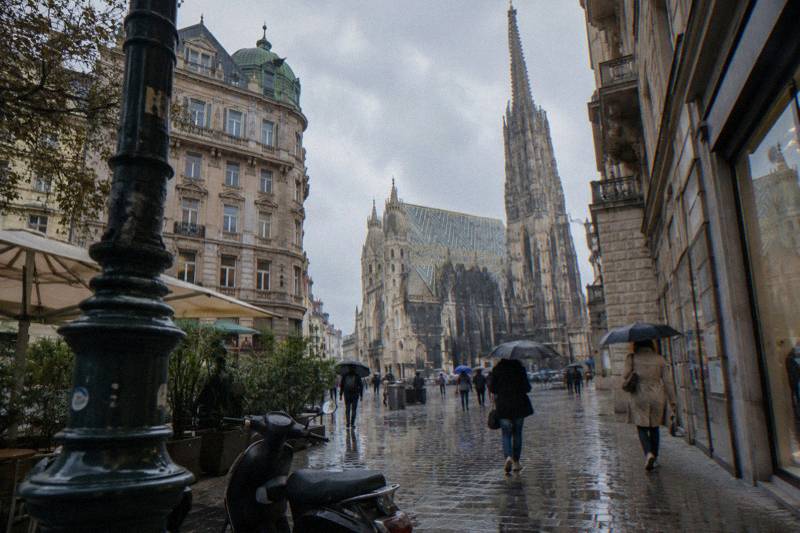
What Is The Classic Guided Bike Tour Of Vienna?
A plain answer to what the classic three-hour guided bike tour of Vienna is, what it covers, what it costs and who it suits, with seasonal timing and alternatives.
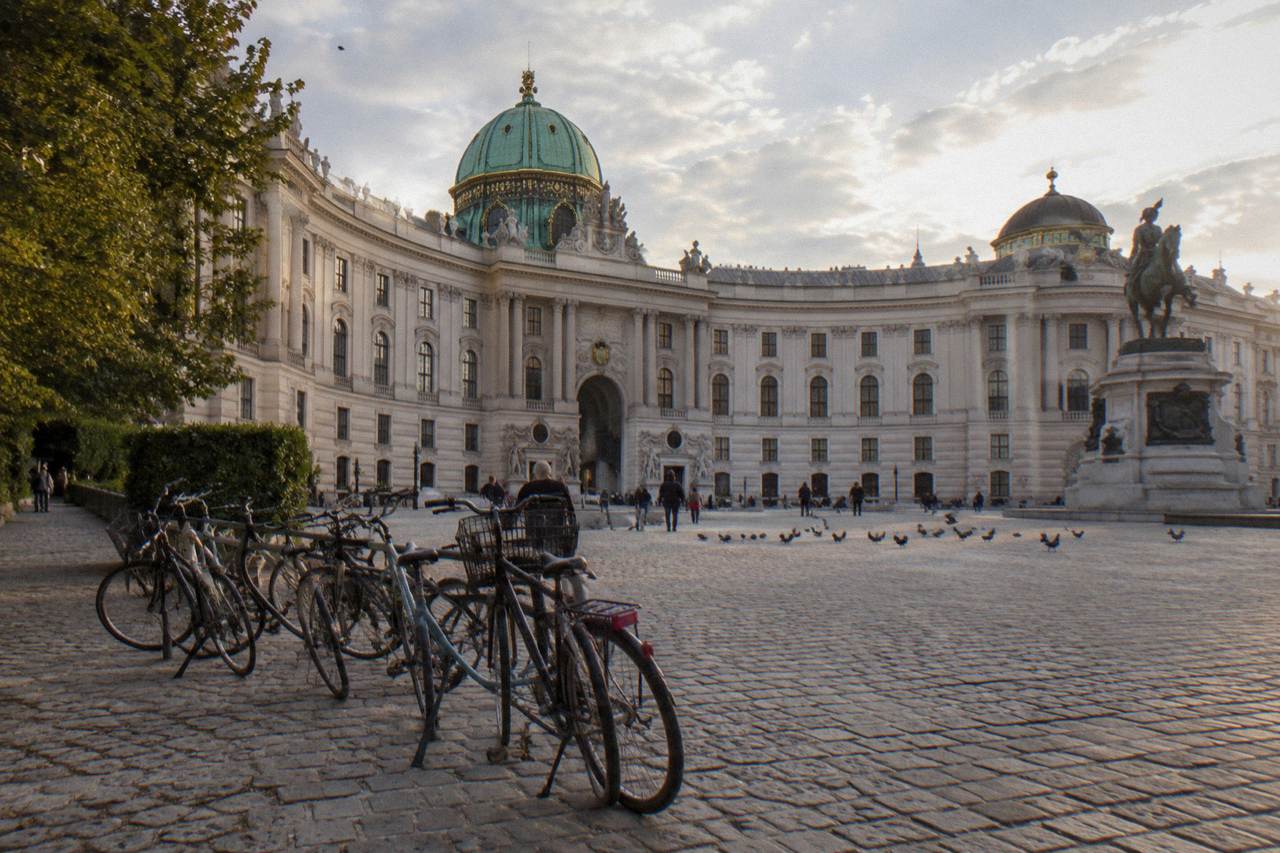
The classic guided bike tour of Vienna is a shared, roughly three-hour city ride on a regular bicycle with a live guide, built around the headline sights of the centre and the Ringstrasse. The tour that carries the name, Classic Vienna: 3-Hour Guided Bike Tour, uses classic bikes, runs in a shared group, and includes the bike for the ride. The current price, group size and start times sit on the booking page. If the tour leaves you wondering how much time the city deserves, our guide to whether a few days in Vienna is too much helps you plan the rest of your stay.
It is the format most people mean when they ask about a "bike tour of Vienna": one meeting point in the centre, a guide who narrates as you roll, a dozen or so riders, and a route that stitches together the State Opera, the Hofburg, St. Stephen's Cathedral and the green edges of the Ringstrasse. Vienna's cycling network runs to roughly 1,811 kilometres in total, per the city's own figures, but you only touch a small, flat, well-surfaced slice of it. Nobody arrives sweaty. Nobody needs training. The pace is set by a guide who stops, talks and rolls on, which is why the format suits first visits better than any self-planned loop. Many tours finish by rolling into the Prater, and our guide to the Prater explains what the park is famous for and how to ride through its woodland.
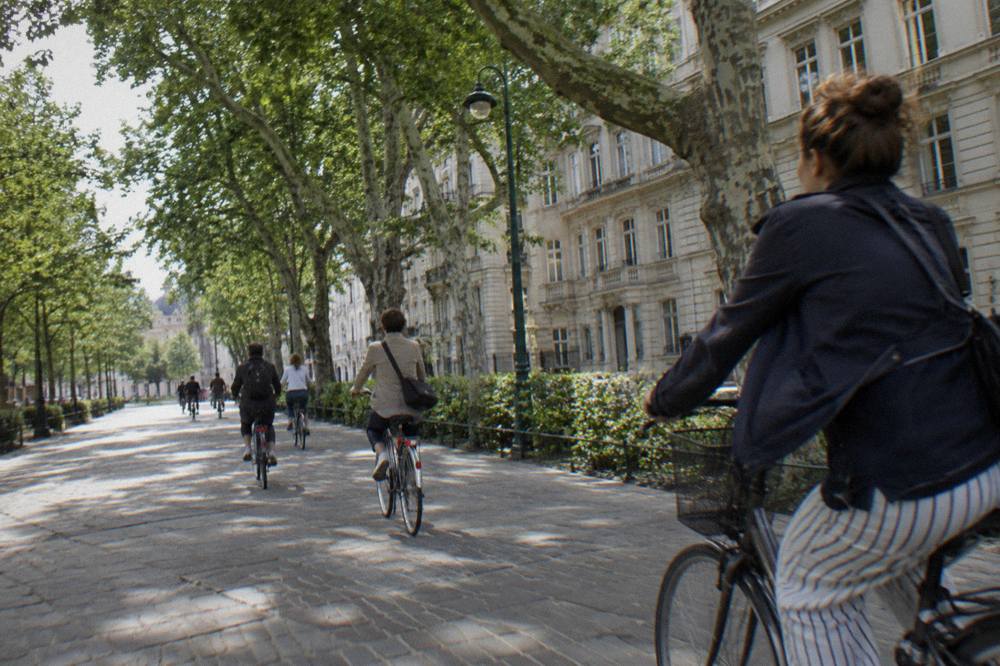
Two things distinguish the classic tour from everything else on offer. First, the bike: a regular, non-electric bicycle, which is genuinely enough for central Vienna because the terrain between the Ringstrasse and the Danube Canal is forgivingly flat. Second, the shared format: you join an open group rather than booking a private guide, which keeps the per-person cost down and the mood social. If you are weighing that trade-off more broadly, the guide on renting versus joining a guided ride works through it in detail.
What Does The Three-Hour Route Actually Cover?
A classic three-hour route spends its time on the compact historic core: the Ringstrasse boulevard with its state buildings, the Hofburg area, the cathedral quarter around St. Stephen's, and a stretch of green space such as the Prater or the Danube Canal banks. The exact stops and their order vary with the guide, traffic and season, so treat any named list as indicative and confirm specifics on the booking page.
The logic of the route is simple: central Vienna's big sights sit close together, and a bike covers the gaps between them faster than feet ever will. A three-hour window is enough for the Ringstrasse's showcase arc, the opera, the museums quarter, a cathedral stop and a roll through parkland, with pauses for the guide's commentary at each. The Ringstrasse itself is in the middle of a staged rebuild that began in early October 2026 on the Schottenring section, converting service roads into a dedicated two-way cycle path with the first phase targeted for summer 2027, so a route that hugs the Ring today may weave more than it did two years ago. That is a guide's problem to solve, not yours, and operators adjust. For the route in detail, the dedicated Ringstrasse cycling route guide breaks down the stops and timing.
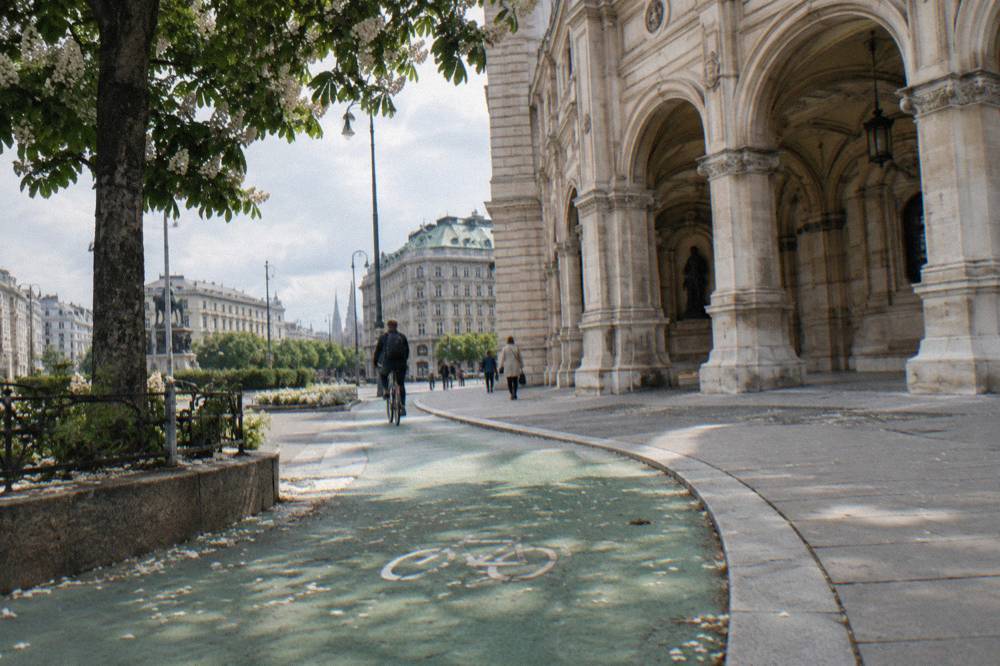
Weather shapes the ride more than the map does. Vienna recorded its first 40-degree days and a record number of hot days in summer 2026, and guides shift start times and shade stops accordingly in high summer. In late autumn and winter the central high-traffic bike paths are prioritised for clearing, per the city's winter plan, so the core stays rideable when side paths do not. The classic tour runs year-round in principle, but the experience in January, with the Christmas markets packed away after late December, is a different product from a May evening ride. Ask the operator what a winter departure looks like before booking one.
What the ride feels like, in practice, is a rolling commentary rather than a workout. Expect to mount and dismount several times as the group moves between pedestrian zones, to stand with the bike while the guide talks at each stop, and to ride short hops of a few minutes between them. Comfortable everyday shoes and ordinary clothes are all you need. Riders who imagine a sporty cycling outing are picturing the wrong product; the classic tour sits closer to a walking tour that happens to cover four times the ground.
One honest gap worth naming: a shared three-hour ride keeps to the centre and its immediate green fringes. If what you actually want is the Danube Island or the riverside park network further out, an e-bike format or a longer ride serves that better, and the Prater and Danube Island guide covers that terrain.
How Much Does It Cost, And What Is Included?
A three-hour guided city bike tour in Vienna starts around $53 per person, per current operator pricing for the City Highlights guided tour, with the classic tour's own price on its booking page. The bike for the ride, a live guide and a shared group are the core inclusions; helmets, hotel pickup and food are typically not, and each tour's inclusions list on its booking page is the final word. If city streets leave you curious about the river, our guide to Vienna's Danube side explains what a guided e-bike ride along it covers.
The price you see is almost always per person on the shared tours, and it buys the format, not extras. Here is how the main city-highlight rides compare on the facts that matter at booking time.
| Tour | Duration | Bike | Format | Price basis |
|---|---|---|---|---|
| Classic Vienna: 3-Hour Guided Bike Tour | 3 hours | Classic bike | Shared | Price on the booking page |
| Vienna: City Highlights Guided Bike Tour | 3 hours | Bike type not stated on the listing | Shared | From $53 per person |
| Vienna Highlights Small-Group Bike Tour | 3 hours | Bike type not stated on the listing | Shared, small group | Price on the booking page |
| Highlights of Vienna: Private Bike Tour with Licensed Guide | 2 to 6 hours | Classic bike | Private | Priced per group, on the booking page |
Two traps catch buyers here. The first is assuming "guided" means private: on the shared tours you ride with whoever books that slot, and if you want a guide to yourself you are buying a different product, priced per group. The second is assuming the bike type is standard: several listings do not state whether you get a regular bike or an e-bike, and the distinction matters for comfort on a warm day. Where the listing is silent, check the booking page before you pay, and see the site's comparison of e-bikes versus regular bikes for Vienna if you are unsure which you want.
Budget a little beyond the ticket itself. Riders often tip the guide at the end, which is customary but not required, and you may want a bottle of water on a warm afternoon. Everything else, the bike, the guide and the route, is inside the listed price. Compared with assembling the same day from parts, a day rental from a shop can cost less in cash but nothing in the way of commentary, and one rental shop near the Danube Island lists comfort bikes at 35 euros for a 6 to 12 hour day, so the premium on a guided tour is really buying the guiding. The site's breakdown of what a Vienna bike ride costs runs the full arithmetic.
For riders who keep deliberating, the e-bike version of the highlights ride covers similar ground with pedal assist, which is the single most common upgrade people make after their first classic ride.
Classic Bike Or E-Bike: Which Guided Format Suits You?
For the flat central core, a regular bike is entirely sufficient and is what the classic tour provides; an e-bike earns its premium when you are covering the Danube Island, the green park loops or a hot-day itinerary, or when a rider in your group wants less effort. Vienna's terrain does not force the choice, your route and the season do.
Central Vienna between the Ringstrasse and the canal is forgiving: short gradients, long flat boulevards, and a guide pacing the group to chat, not to sprint. On that terrain the classic bike is not a compromise, it is simply the right tool. The case for pedal assist is distance and heat. Summer 2026 pushed Vienna into record hot territory, and a 40-degree afternoon turns a three-hour ride into an endurance event on a regular bike that it never becomes on an e-bike. Assist also matters if your planned day includes the island paths, where the paved cycling routes alone run up to about 21 kilometres, or the longer wine-orientated rides out of the city. The wider set of guides lives on Bike Tours Vienna.
| Riding goal | Better fit | Why |
|---|---|---|
| First visit, headline sights, flat core | Classic shared tour | Regular bike covers the centre easily, lowest cost |
| Hot season, longer loops, Danube Island | E-bike tour | Assist absorbs distance and heat |
| Families or mixed fitness groups | E-bike or private classic | Keeps the group together at one pace |
| Full custom route, own pace, photography stops | Private tour | Guide and route adapt to you, priced per group |
A practical note on rules: children up to their 12th birthday must wear a helmet on any bicycle in Austria, and the city states that since 1 May 2026 this also applies to children and youths under 14 on e-bikes. From 14 there is no general helmet duty, only a recommendation. Family bookings should confirm helmet provision with the operator, since inclusion varies. The city's own cycling rules page lays out the current requirements at Stadt Wien's cycling regulations.
Adults riding the classic tour are free to ride bare-headed by law, though many operators offer helmets on request; if you want one, say so at the meeting point rather than assuming. A small day bag with water, sunscreen in the warm months and a light layer for the wind along the canal covers everything else the route demands.
When Is The Best Season To Take One?
May, June, September and early October give Vienna its best balance of daylight, mild temperatures and path conditions for a guided ride; July and August bring heat that shifts tours to earlier starts, and November through February shortens the day but keeps the winter-cleared central paths rideable. Christmas market season adds a reason of its own from mid-November.
The seasonal rhythm is predictable and worth planning around. Spring arrives with reliably rideable weather and longer evenings. High summer now carries real heat risk: after the record summer of 2026, booking the earliest morning departure is the sane move, and operators report adjusting stops for shade. The Wiener Christkindlmarkt on Rathausplatz runs from 13 November to 26 December 2026, and the Schonbrunn market opens 6 November and runs into early January, so a late-autumn ride can end in a market with a warm drink, which is a genuinely good version of this tour. The trade-off is short daylight and cold fingers, so gloves and layers earn their place, as the site's packing guide for a Vienna bike ride wardrobe explains.
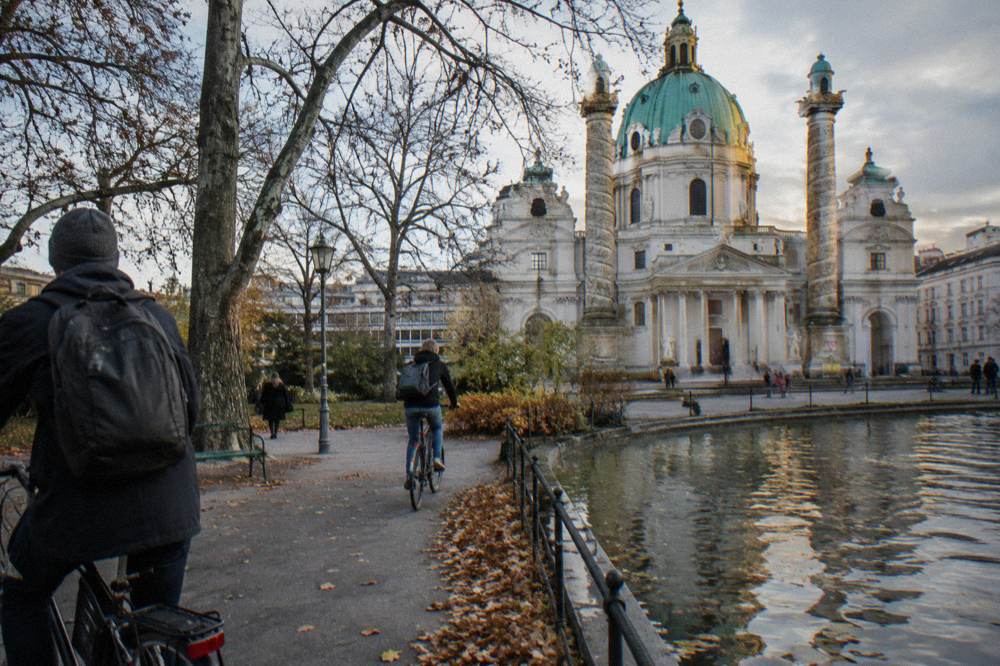
Crowd logic matters less for a bike tour than for a museum, because a rolling group does not queue, but it still matters. Peak visitor pressure tracks the summer months, when the city's overnight stays run at record levels, and a shared group in July feels different from the same group in October. If your dates are flexible, the shoulder months give you the same route with more room on the path and a guide who is less hurried. Rain risk is lowest in the shoulder season too, which matters more than it sounds: a dry three hours in September is simply a better product than the same route through a March shower.
How Does The Classic Tour Compare With The Small-Group Alternative?
The classic shared tour and the small-group highlights tour cover near-identical ground in three hours; the difference is group size and price, with the small-group ride capping numbers lower for a quieter, more personal commentary, typically at a higher per-person cost. If you want the guide's ear and easy questions, pay for the small group; if you want the overview at the lowest cost, the classic shared tour is the pick.
Both formats work. The classic tour's open group is social and inexpensive, and for most first-time visitors it is the right amount of Vienna. The small-group ride, capped by its operator, suits travellers who ask a lot of questions, photographers who want stops the guide does not usually make, and anyone for whom a crowd of strangers on bikes sounds like work. Beyond both sits the private option, where the guide, the route and the pace are yours, priced per group rather than per person. If you are weighing that step up, the site's guide to private guided cycling in Vienna lays out the operators and the price logic.
A useful deciding question is how you like to hear a city. If you want the broad story, told once, with the freedom to drift mentally through a big group, the classic tour delivers exactly that. If you want to interrupt, ask about the building you noticed, or linger at a stop, smaller is better, and the premium buys more than comfort, it buys access to the guide. Neither answer is wrong, and since the routes are near-identical, you are choosing a social format, not a destination.
Common Questions About The Classic Guided Bike Tour
What Is The Classic Guided Bike Tour Of Vienna?
It is a shared, roughly three-hour guided ride on a regular bicycle through Vienna's central sights, with the guide, the group and the bike for the tour included in one per-person price. The Classic Vienna: 3-Hour Guided Bike Tour is the tour that carries the name; the current price, group size and start times are on its booking page.
How Long Does The Tour Take?
The classic tour is listed at 3 hours, as are the comparable City Highlights and small-group rides. A private highlights version with a licensed guide is listed at 2 to 6 hours, chosen at booking. Always confirm the duration for your specific date on the booking page.
Is The Bike Included, Or Do I Rent One Separately?
On the guided tours, the bike for the duration of the ride is part of the package; you do not rent separately. Helmets, food, drinks and hotel pickup are typically not included, and the inclusions list on each booking page is the final word.
Is Vienna Flat Enough For A Regular Bike Tour?
Yes, for the central core. The ground between the Ringstrasse, the Hofburg, the cathedral quarter and the Danube Canal is essentially flat, and a regular bike is entirely sufficient. E-bikes earn their premium on longer loops such as the Danube Island or on hot summer days.
Can Children Join The Classic Tour?
Family participation depends on the operator's minimum age and bike sizes, so check the booking page. Note that children up to their 12th birthday must wear a helmet on any bicycle in Austria, and since 1 May 2026 that duty extends to under-14s on e-bikes. The site's guide to cycling in Vienna with kids covers the practicalities.
What Happens If It Rains On The Day?
Policy varies by operator: some run in light rain with a slower pace, others offer rescheduling. Check the cancellation and weather terms on the booking page before you pay, and treat the forecast for your date, not the season average, as your guide.